TRENDING ON AMAZON
Garmin Vivoactive 5 GPS Smartwatch (AMOLED) Review: Is It Worth It?
The Garmin Vivoactive 5 is the AMOLED-screen Garmin that costs less than half an Apple Watch Ultra — 11-day battery, 30+ sport modes, real sleep tracking and Body Battery — and since the Vivoactive 6 shipped in 2025 it now regularly sells around $180-200, which is what makes it the smart-money Garmin buy in 2026.
Quick answer: The Garmin Vivoactive 5 is the specific Garmin most fitness-first buyers should pick in 2026 — an AMOLED display, 11-day battery, 30+ sport modes, Body Battery and real sleep score, all now discounted to $180-200 since the Vivoactive 6 shipped in 2025. Skip if you specifically need offline maps (step up to the Venu 3), ECG (Fenix 8 or Apple Watch), or under-2m urban GPS accuracy (multi-band watches). For everyone else — runners, lifters, sleep-and-recovery trackers, iPhone users who don't want an Apple Watch's daily-charge routine — this is the best-value smartwatch buy under $200 and one of the best-value Garmins ever released. Add barrier-recovery basics like [Pure Encapsulations Magnesium Glycinate](/reviews/pure-encapsulations-magnesium-glycinate) and consistent bedtime, and the data becomes a genuine training guide rather than a graph you scroll past.
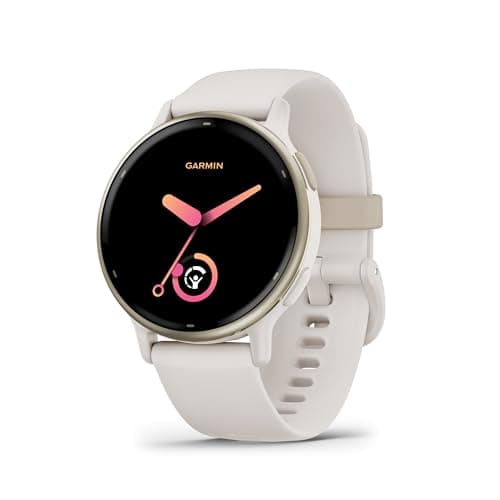
Product image from the Amazon listing.
Our verdict
The Garmin Vivoactive 5 is the specific Garmin most fitness-first buyers should pick in 2026 — an AMOLED display, 11-day battery, 30+ sport modes, Body Battery and real sleep score, all now discounted to $180-200 since the Vivoactive 6 shipped in 2025. Skip if you specifically need offline maps (step up to the Venu 3), ECG (Fenix 8 or Apple Watch), or under-2m urban GPS accuracy (multi-band watches). For everyone else — runners, lifters, sleep-and-recovery trackers, iPhone users who don't want an Apple Watch's daily-charge routine — this is the best-value smartwatch buy under $200 and one of the best-value Garmins ever released. Add barrier-recovery basics like [Pure Encapsulations Magnesium Glycinate](/reviews/pure-encapsulations-magnesium-glycinate) and consistent bedtime, and the data becomes a genuine training guide rather than a graph you scroll past.
The short version
The Garmin Vivoactive 5 sits in the exact sweet spot most fitness-first buyers actually want: a bright AMOLED display, real GPS, 30+ pre-loaded sport modes, Garmin's respected sleep and stress tracking (Body Battery, sleep score, Pulse Ox), and an 11-day battery in smartwatch mode. It skips the pricey extras of the Venu or Epix — no maps, no ECG — and hands you the Garmin health-tracking ecosystem for under $200. Since the Vivoactive 6 shipped in 2025 it now often sells at a discount, which is what makes it the smart-money Garmin buy in 2026 for anyone who doesn't need the newest.
Pros & cons
Pros
- Bright AMOLED touch display (much better than the Venu 2's OLED)
- Up to 11 days of battery in smartwatch mode
- 30+ built-in sport modes including HIIT and strength
- Garmin's respected sleep score and Body Battery
- Reliable multi-band GPS for runs and rides
- Contactless Garmin Pay + music storage for offline playback
- Compatible with iPhone and Android
Cons
- No offline maps (upgrade to Venu 3 or Epix for maps)
- No ECG or advanced heart-health features
- Fewer strap and case options than an Apple Watch
Why people love it
Track any workout automatically
Choose from 30+ built-in sport profiles or let the watch auto-detect running, walking and cycling. Heart rate, pace, distance, and elevation record without pressing a button.
Body Battery + sleep score at a glance
Garmin's Body Battery uses HRV, stress, sleep and activity to give you a 0-100 recovery score. Sleep score breaks down deep, light and REM in the morning — the same data set premium Garmins use.
Charge once a week and forget
11 days of battery in smartwatch mode (about 5 days with heavy GPS use) means you can charge it alongside your phone once a week instead of every night like an Apple Watch.
Who it's for
- Runners, cyclists and gym-goers who want real training metrics
- Sleep-and-recovery trackers wanting Body Battery without the Venu 3 price
- iPhone users who don't want an Apple Watch's overnight-charging habit
- Anyone graduating from a Fitbit but priced out of an Apple Watch Ultra
Why the Garmin Vivoactive 5 is the smartest sub-$200 fitness smartwatch in 2026
The GPS smartwatch category has three tiers. Entry-level ($60-150): Fitbit Charge 6, Fitbit Inspire 3, Amazfit Bip — cheap fitness tracking without a real display or deep training features. Mid-tier ($150-350): Garmin Vivoactive 5, Garmin Forerunner 55, Samsung Galaxy Watch, Fitbit Charge 6. Premium ($350-800): Apple Watch Ultra 2, Garmin Fenix, Garmin Epix, high-end Samsung Galaxy. The Vivoactive 5 sits at the top of the mid-tier, and now that the Vivoactive 6 is out and pushing the 5's price down toward $180, it's the specific spot where you get 90% of the premium-tier features at a fraction of the price.
What you get for that money: AMOLED display bright enough to read in direct sunlight (a huge upgrade over MIP screens on cheaper Garmins), 30+ sport modes with dedicated tracking (running, cycling, HIIT, strength, yoga, pool swim, and more), Body Battery for recovery pacing, real sleep science, contactless payments via Garmin Pay, music storage for offline playback while running, and 11-day battery life. What you give up vs premium: offline maps (Venu 3 has them), ECG (Apple Watch and Fenix 8 have them), and the sub-2m GPS accuracy of multi-band watches. For 90% of buyers, none of those matter for daily use — and the $200-400 you save toward buying a premium watch is real money.
Body Battery, sleep score and Garmin's health ecosystem — how it stacks up in practice
Garmin's real edge over Apple Watch and Fitbit isn't hardware — it's the coherent recovery-and-training ecosystem they've built. Body Battery is the centerpiece: overnight the watch charges your 'battery' based on sleep quality and HRV, and during the day it drains based on stress and activity. Wake up at 90, work a hard day, take a stressful call, run six miles, and you might drop to 20 by dinner — a real signal to eat, rest and skip the second workout. Sleep score breaks down deep, light and REM cycles with a 0-100 nightly grade. Garmin's stress tracking uses HRV to flag mid-day spikes. None of this requires a subscription — it's all included in Garmin Connect.
Comparison: the Apple Watch Ultra 2 has excellent workout tracking and a huge fitness app ecosystem, but its recovery data is thinner (though the Ultra 2 added Vitals for a similar Body Battery-style score). Fitbit's Daily Readiness Score is comparable to Body Battery but requires Fitbit Premium ($10/month) for full access. Whoop is the specialist recovery-focused wearable — arguably deeper recovery insights but no screen and a $30/month subscription. For most people who want real recovery and training data without an ongoing subscription cost, Garmin Connect is the best-value ecosystem, and the Vivoactive 5 is the cheapest way in.
How to use the Vivoactive 5 in a real training and recovery routine
Start by wearing it 24/7 for at least a week before drawing conclusions from Body Battery or sleep data. The scores get meaningful once Garmin has your baseline. Sleep with it on — the sleep score requires overnight wear, and it's most accurate when the band is snug on the wrist (not loose enough to slide). Charge it during a shower or a coffee break rather than overnight so you never lose sleep data. For workouts: use the dedicated sport modes rather than 'Other' whenever possible, since Garmin's coaching and race prediction features depend on activity classification.
Pair it with a plan. If you're a runner, use the Garmin Coach adaptive training plans (free in Connect) — they generate weekly workouts based on your target race and adjust for actual training load and recovery. If you're a lifter, set up the strength-training profile to auto-detect sets/reps and log to Connect. If you're just tracking general health, focus on the Body Battery trend (the goal is to end each day above 20 and start each morning above 70) and sleep score consistency. Combine with basic recovery habits — a magnesium supplement like Pure Encapsulations Magnesium Glycinate at night for sleep quality, and consistent bedtime — and the data becomes an actual guide rather than a graph you scroll past.
See Garmin Vivoactive 5 on Amazon
Check the latest price, photos and buyer reviews on Amazon.
Check Price on Amazon →Sold and shipped by AmazonFrequently asked questions
Is the Garmin Vivoactive 5 worth it in 2026, or should I wait for the 6?
For most buyers, the Vivoactive 5 is the smarter buy in 2026, and it's specifically because the Vivoactive 6 shipped in 2025. The 5 now regularly sells around $180-200 (down from its $299 launch), while the 6 sits at $349-399. What the 6 adds: a slightly newer chip, improved GPS accuracy, and a handful of software features that Garmin usually back-ports to the 5 anyway. What the 5 already has: the same AMOLED screen, the same Body Battery and sleep science, the same 30+ sport modes, the same 11-day battery, and full compatibility with Garmin Connect. Buy the 6 only if you specifically want the latest chip or offline map hints; otherwise the 5 is the value pick for 90% of buyers.
Garmin Vivoactive 5 vs Venu 3 vs Forerunner 55 — which Garmin do I actually want?
Different jobs. Vivoactive 5 is the all-purpose lifestyle-plus-fitness Garmin — AMOLED display, 30+ sports, sleep and Body Battery, no maps. Best for gym-goers, casual runners and everyday wear. Venu 3 adds offline maps, more sport features and a slightly larger screen, at a $100-150 premium — worth it for hikers and travelers. Forerunner 55 is Garmin's entry-level running-focused watch — MIP display (not AMOLED), simpler feature set, longer battery, $150-180 — best for pure runners who don't need lifestyle features. For most people who want ONE Garmin that does everything and looks fine at a desk, the Vivoactive 5 is the correct answer.
How accurate is the sleep tracking and Body Battery on the Vivoactive 5?
Sleep tracking is very good — Garmin uses a combination of heart rate variability, movement and Pulse Ox to score deep, light, REM and awake time, and multi-study comparisons show it tracks closely to research-grade actigraphy for most healthy adults. Body Battery uses HRV, stress, sleep quality and activity to output a 0-100 recovery score that trends meaningfully over time — it's directional, not clinical, but it's genuinely useful for pacing training and rest days. Both features live in Garmin Connect and don't require any subscription.
Does the Vivoactive 5 work with iPhone as well as Android?
Yes — Garmin Connect works equally well on both. iPhone users get full watch functionality: notifications, calls (via phone), music control, health data sync into Apple Health if you enable it, plus Garmin's own richer data in the Connect app. Android users get the same plus slightly deeper text-reply support on some phones. Unlike Apple Watch (iPhone-only), the Vivoactive 5 is a genuinely cross-platform smartwatch — which matters if you might switch phones or share a family plan. For iPhone users specifically who don't want the daily-charge routine of an Apple Watch, this is one of the biggest reasons to consider Garmin.
Does the Vivoactive 5 have GPS, and how accurate is it?
Yes — built-in single-band GPS with GLONASS and Galileo support. Accuracy is very good in open sky (within 2-3 meters) and acceptable under tree cover and in cities. It's not the multi-band GPS of the higher-end Fenix and Epix (which are more accurate in urban canyons), but for road running, cycling and general outdoor use it's more than accurate enough. It also supports connected GPS via your phone if you leave the watch's GPS off to save battery.
What's the battery life really like day-to-day?
Garmin quotes up to 11 days in smartwatch mode; real-world results are typically 6-9 days depending on how much you use GPS, keep the always-on display active, and stream music. Heavy runners with daily GPS workouts and always-on display see about 5 days; light users with GPS off most of the time see the full 11+ days. In every case, it's dramatically better than an Apple Watch (~24 hours) — most people end up charging it once a week during a shower or overnight, and forgetting about it the rest of the time.
Can I answer calls and reply to texts on the Vivoactive 5?
Partially. You can receive call notifications and answer or reject a call from the watch (the call itself happens on your phone — the watch has no speaker or microphone for calls). For texts and messaging apps, iPhone users can view messages and use preset quick-replies; Android users can view and use voice-to-text or preset replies. If full on-watch calling and rich messaging matter to you, the Apple Watch or Samsung Galaxy Watch remains better. For most Garmin buyers, viewing notifications and using pre-set replies is exactly enough.
Garmin Vivoactive 5 review — what do owners consistently say after 6 months?
After the honeymoon phase, six-month owner reviews cluster around three consistent themes. First: the AMOLED display was the correct upgrade — after living with it, most owners say they would not go back to the MIP (memory-in-pixel) displays on cheaper Garmins or the Vivoactive 4, because the AMOLED is dramatically more legible in direct sunlight and a real visual pleasure when checking notifications or during workouts. Second: Body Battery is the feature people become genuinely dependent on, not the workout metrics. Runners buy the Vivoactive 5 for the sport tracking and end up recommending it for the recovery data — the specific ability to see a low Body Battery and skip a workout is more valuable than seeing a per-mile pace. Third: the 11-day battery reshapes how a smartwatch feels compared to an Apple Watch. Owners who charge weekly rather than nightly consistently report they think about the watch less and wear it more, which is exactly the promise Garmin has been selling for a decade. Common six-month complaints: the touchscreen is occasionally unresponsive with sweaty fingers, the strap wears faster than the case (a $15 aftermarket strap fixes this), and calling from the watch is limited compared to an Apple Watch. None are dealbreakers, and none change the overall verdict — for the vast majority of owners, this becomes the everyday watch they don't want to give up.
When was the Garmin Vivoactive 5 released, and where can I buy it in 2026?
Garmin released the Vivoactive 5 in September 2023 at $299, and the Vivoactive 6 launched in April 2025 at $349. That gap is exactly why the Vivoactive 5 is such a good buy right now — retailers are clearing inventory, and it now regularly sells at $180-220 (down from $299) on Amazon US, Argos in the UK, and most direct-to-consumer sports retailers. In the UK, Argos, John Lewis and Currys all stock the Vivoactive 5 alongside the newer 6; Argos particularly runs Vivoactive 5 clearance discounts several times a year. In the US, Amazon typically has the best price with same-day/next-day delivery, and Garmin's own site occasionally matches with a longer warranty. Colorways still in wide distribution: Black/Slate, Ivory/Cream, Navy/Metallic Navy, and Orchid — the Cream and Navy tend to discount fastest. Buy from an authorized retailer (Amazon, Argos, Garmin direct, John Lewis, Currys, REI, Best Buy) to keep the 1-year warranty valid; gray-market listings sometimes lack it.
As an Amazon Associate, TopCrate earns from qualifying purchases at no extra cost to you. Product image, price, availability and ratings are shown on Amazon and are subject to change.