TRENDING ON AMAZON
Sony ZX Series Wired On-Ear Headphones (MDR-ZX110) Review: Is It Worth It?
The $10 wired on-ear headphone Sony has been selling for a decade — 30mm drivers, 120g weight, folding hinges, one AUX plug, no batteries to charge and nothing to pair.
Quick answer: Yes — the Sony MDR-ZX110 is worth $10-15 for anyone who wants a decent, plug-in-and-forget wired headphone from a name brand. 30mm drivers deliver neutral sound with slightly thin bass, they weigh a shockingly light 120 grams, they fold flat for a bag, and there's no battery, app, pairing, or firmware update to fail. Not the pick if you want deep bass, all-day comfort, or wireless freedom — for that, spend $100+ on TWS earbuds or an over-ear. But as the backup pair for the desk, the kid's Chromebook, the airplane trip or the office cubicle, this is the wired headphone that's earned its ten-year run.
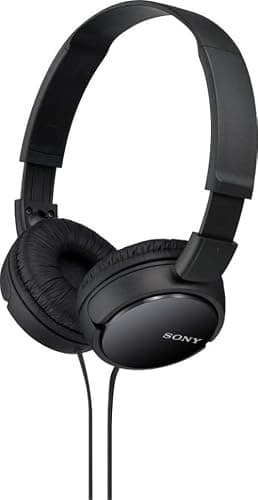
Product image from the Amazon listing.
Our verdict
Yes — the Sony MDR-ZX110 is worth $10-15 for anyone who wants a decent, plug-in-and-forget wired headphone from a name brand. 30mm drivers deliver neutral sound with slightly thin bass, they weigh a shockingly light 120 grams, they fold flat for a bag, and there's no battery, app, pairing, or firmware update to fail. Not the pick if you want deep bass, all-day comfort, or wireless freedom — for that, spend $100+ on TWS earbuds or an over-ear. But as the backup pair for the desk, the kid's Chromebook, the airplane trip or the office cubicle, this is the wired headphone that's earned its ten-year run.
The short version
The Sony MDR-ZX110 is the answer to a question that stopped being asked and then started being asked again: what if I just want a decent pair of headphones that plug in and work? At around $10-15, it's one of the least-expensive Sony products still on sale, and it's also one of the most-reviewed headphones on Amazon — hundreds of thousands of buyers who wanted a spare set for the desk, the gym locker, the kid's homework, the office cubicle, or the plane before wired airline audio inputs went out of fashion. It uses 30mm dynamic drivers, weighs 120 grams, folds flat for a bag, and connects with a plain 3.5mm cable. There's no app, no pairing, no battery, no firmware update, no subscription. It's the headphone Sony made for the person who doesn't want the headphone to be a project.
Pros & cons
Pros
- Genuinely inexpensive — usually $10-15
- 30mm dynamic drivers with 12-22,000 Hz frequency response
- 120g weight — one of the lightest on-ear pairs sold
- Swivel-fold design fits in a bag pocket
- No battery, no pairing, no app — just plug in and play
- Ten-year-plus product with tens of thousands of consistent reviews
Cons
- Thin bass compared to over-ear pairs with larger drivers
- On-ear (not over-ear) — some pressure after long sessions
- Non-detachable cable — if it fails, the headphone is done
Why people love it
Plug the cable in
Insert the built-in 3.5mm plug into any headphone jack — laptop, tablet, in-flight seat, or a USB-C adapter for modern phones.
Put them on and play
There's no pairing screen or app. The 30mm drivers start playing the moment audio reaches the plug.
Fold flat for storage
The swivel hinges collapse the earcups flat so the headphones tuck into a backpack pocket, laptop sleeve, or drawer.
Who it's for
- Anyone who wants a $10 backup pair for the desk, office or gym
- Parents buying a first pair for a child's school Chromebook
- Travelers who still fly airlines with wired-only in-seat audio
- People burned by lost, discharged or firmware-broken Bluetooth pairs
Why the Sony MDR-ZX110 is still a bestseller ten years after launch
The MDR-ZX110 originally launched in the mid-2010s and by any normal consumer-electronics logic should have been discontinued years ago. Instead it's one of Sony's longest-running skus — because it fills a use case the industry mostly stopped serving. When smartphones lost headphone jacks and TWS earbuds ate the mid-range wired market, an entire category of buyer got left behind: parents buying headphones for a kid's school Chromebook, students in dorm rooms, travelers stuck with wired-only airplane audio, office workers who wanted a pair to leave permanently at the desk without worrying about batteries, and older buyers who wanted headphones that just worked without a pairing menu. The MDR-ZX110 quietly became the default answer for all of those.
The physical design also aged unusually well. At 120 grams it's one of the lightest on-ear pairs Sony has ever made, which matters for the head-fatigue problem heavier headphones have. The 30mm drivers deliver neutral, honest sound with a very slight bass roll-off — nothing offensive at any frequency and everything you need for voice, music and video. The swivel-fold hinges collapse the pair flat enough to slip into a backpack pocket. The plastic build is honest and doesn't pretend to be premium — reviewers know exactly what they're getting. And the price stays at $10-15 year after year, which turns it into an easy 'sure, add to cart' item alongside a case of AA batteries or replacement AirPod tips.
Sony MDR-ZX110 vs TWS earbuds, cheap Bluetooth on-ears, and premium wired options
The market for cheap headphones split into three lanes over the last decade. Lane one — TWS earbuds like AirPods, Bose QuietComfort or Beats Studio Buds — dominates the daily-carry slot for most people, at $100-250 with wireless freedom, noise cancellation, and multi-device pairing. Lane two — cheap Bluetooth on-ears at $20-50 — attempts to deliver a poor-man's version of the TWS experience but usually gives you flimsy build, mediocre battery life, and a 2-3 year lifespan before the battery dies. Lane three — cheap wired pairs like the MDR-ZX110 — abandons wireless entirely in exchange for a headphone that will still work in a decade with no charging, no app, no pairing.
The pick depends on the specific use case. Daily-carry-in-a-pocket, workouts, phone calls, mobility: TWS wins by a mile — this is the wrong category. Desk pair, backup pair for a bag, kid's homework, school Chromebook, plane trips, or you specifically hate the idea of a subscription-app-firmware-battery product: MDR-ZX110 wins by a wider mile at 5-10% of the price. Cheap Bluetooth on-ears are almost always the wrong buy compared to either — they combine the downsides of both categories (battery life issues + poor sound + short lifespan) and rarely justify their price. Skip that lane entirely.
Getting the most out of Sony MDR-ZX110 and pairing them with other kit
Get a headphone-jack adapter if you're using a modern phone — Apple's USB-C-to-3.5mm dongle is $9 and works with USB-C iPhones and Androids, Apple's Lightning adapter is the same price for older iPhones. If you plan to use them for calls, buy the MDR-ZX110AP variant (with mic) instead of the base MDR-ZX110 — same price, adds an inline microphone for calls and voice notes. Store them folded in the little pouch they don't ship with — a cheap cloth drawstring bag protects them and doubles the cable's lifespan.
Because they're wired-only and inexpensive, they pair naturally with other set-it-and-forget-it desk kit. A Kasa smart plug for the desk lamp and monitor, an Anker portable charger for the laptop that goes places, and this pair of headphones on the drawer knob — you have a work setup that survives forgotten Bluetooth passwords, dead earbud batteries, and app-store meltdowns. Nothing here needs updating. Nothing needs charging. That's the whole appeal of the category, and the MDR-ZX110 is the headphone that still holds up as the default in it.
See Sony MDR-ZX110 on Amazon
Check the latest price, photos and buyer reviews on Amazon.
Check Price on Amazon →Sold and shipped by AmazonFrequently asked questions
Are Sony MDR-ZX110 headphones any good?
Yes — for the price, they're genuinely one of the safest recommendations you can make. At $10-15, the MDR-ZX110 uses 30mm dynamic drivers, a 12-22,000 Hz frequency response, and Sony's build quality that's been iterated for over a decade. Sound is neutral-with-slightly-thin-bass — clear vocals, adequate midrange, and the treble doesn't turn shrill at moderate volume. They won't beat a $200 pair of over-ear headphones for imaging or bass slam, and they aren't the choice if you want deep sub-bass for bass-heavy genres. But for podcasts, video calls, everyday music, and a spare pair to keep in a bag or drawer, they punch decisively above their price.
Sony MDR-ZX110 vs cheap Bluetooth wireless earbuds?
Different tools for different jobs. Cheap Bluetooth ($15-30) gives you wireless freedom, a battery to charge, a pairing process, and eventual battery degradation that turns the product into a paperweight in 2-3 years. The MDR-ZX110 gives you a plug-in-and-forget headphone that will still work in a decade. If you're doing yardwork or running, wireless is worth the trade. If the headphones live at a desk, on a plane, or in a school bag, wired is usually the better long-term buy. Many people own both — Bluetooth for mobility, MDR-ZX110 or similar for the desk.
Do Sony MDR-ZX110 headphones have a microphone?
No — the base MDR-ZX110 model has a plain audio cable with no in-line mic or remote. If you need a microphone for video calls or phone calls, Sony sells the MDR-ZX110AP variant, which is otherwise identical but adds an in-line one-button remote and mic on the cable. Amazon carries both under different SKUs — check the model number carefully if you specifically need call support.
Will Sony MDR-ZX110 work with an iPhone or modern Android phone?
Yes, but you need a headphone-jack adapter. Modern iPhones ship without a headphone jack, so you'll need Apple's Lightning-to-3.5mm or USB-C-to-3.5mm adapter (roughly $9-10 from Apple). Same for most flagship Android phones released after 2020 — a USB-C-to-3.5mm adapter works. Once plugged in through the adapter, the MDR-ZX110 works exactly like any wired headphone. Older iPhones (SE, 6s and earlier) and many budget Android phones still have a jack and work directly with no adapter.
How comfortable are Sony MDR-ZX110 for long listening?
Adequate but not exceptional. At 120 grams they're one of the lightest on-ear pairs on the market, which helps a lot. The synthetic pleather earcups are soft and the clamping force is moderate. That said, all on-ear headphones (as opposed to over-ear) apply pressure directly to the outer ear rather than around it, so after 2-3 hours some people experience discomfort. If you're doing long editing sessions or all-day office wear, an over-ear pair like the Bose QuietComfort earbuds (in-ear alternative) or a $50 over-ear will be more comfortable for sustained wear.
Sony MDR-ZX110 vs MDR-ZX310 or MDR-ZX770 — should I upgrade?
The MDR-ZX310 is the next tier up (~$25) with slightly larger 30mm drivers, better padding, and an inline mic on the cable — worth the upgrade if you take calls often or want a marginal comfort improvement. The MDR-ZX770 series (~$60-90) is a completely different category — over-ear, 40mm drivers, meaningful bass improvement, and much better comfort for long sessions. The honest split: buy the MDR-ZX110 if you want the cheapest name-brand wired option for occasional or backup use. Upgrade to MDR-ZX770 if headphones are how you listen to music every day. Skip the MDR-ZX310 unless you specifically need the inline microphone — MDR-ZX110AP adds that to this base model for the same price.
As an Amazon Associate, TopCrate earns from qualifying purchases at no extra cost to you. Product image, price, availability and ratings are shown on Amazon and are subject to change.