TRENDING ON AMAZON
Beats Powerbeats Pro 2 Wireless Noise Cancelling Workout Earbuds Review: Is It Worth It?
The workout earbuds Apple built the H2 chip around — smaller nickel-titanium ear hooks that will not budge on a run, in-ear heart-rate monitoring the AirPods Pro still don't have, and real ANC that finally makes gym earbuds feel like flagship earbuds.
Quick answer: Yes — the Beats Powerbeats Pro 2 is the athletic headphone to buy in 2026 if you take training seriously and want one pair that handles gym, run, cycle, class and commute at flagship level. Apple's H2 chip delivers real ANC, Spatial Audio and one-tap iPhone integration; the nickel-titanium ear hook is the most secure high-performance workout fit Apple has ever shipped; and the in-ear heart-rate sensor is a first-of-its-kind feature that makes them meaningfully better than the AirPods Pro 3 for anyone doing zone-based cardio, lifting, or CrossFit. At ~$249 they're premium, but for the specific person who's been juggling AirPods Pro for office and a cheaper set for the gym, one pair now does both.
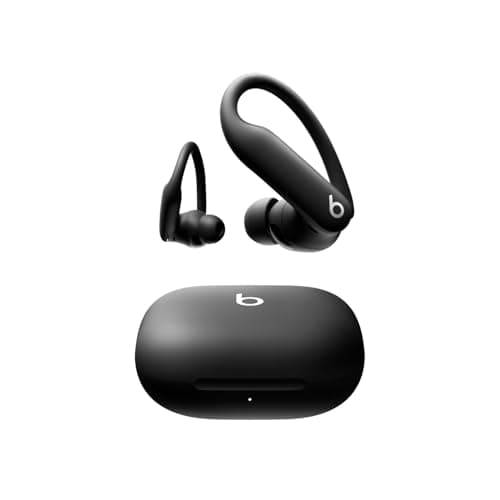
Product image from the Amazon listing.
Our verdict
Yes — the Beats Powerbeats Pro 2 is the athletic headphone to buy in 2026 if you take training seriously and want one pair that handles gym, run, cycle, class and commute at flagship level. Apple's H2 chip delivers real ANC, Spatial Audio and one-tap iPhone integration; the nickel-titanium ear hook is the most secure high-performance workout fit Apple has ever shipped; and the in-ear heart-rate sensor is a first-of-its-kind feature that makes them meaningfully better than the AirPods Pro 3 for anyone doing zone-based cardio, lifting, or CrossFit. At ~$249 they're premium, but for the specific person who's been juggling AirPods Pro for office and a cheaper set for the gym, one pair now does both.
The short version
The Powerbeats Pro 2 is the first true wireless earbud on the market to add optical heart-rate monitoring — a pair of green LEDs that pulse over 100 times per second inside each earbud, feeding real-time BPM straight into Nike Run Club, Peloton, Ladder and Open. The new nickel-titanium ear hook is 50% smaller than the original, the earbud housing is 20% lighter, and the fit is the most secure Apple has ever shipped — this is the pair that stays put on a sprint, a burpee, or a run in the rain (IPX4). Inside is Apple's flagship H2 chip: real ANC (~40% quieter than the original Powerbeats Pro), Personalized Spatial Audio, Adaptive Transparency, one-tap iPhone pairing and Find My. Battery: 10 hours per bud with ANC off / 8 hours with ANC on, 45 hours total with the wirelessly-charging case. If you own an Apple Watch, the heart-rate data streams from your ear instead of your wrist during workouts where wrist optical sensors historically struggle (heavy grip, cold, sweat). For running, lifting, cycling and cardio work specifically, this is now the pair to buy.
Pros & cons
Pros
- First TWS earbuds with in-ear optical heart-rate monitoring — feeds Nike Run Club, Peloton, Ladder, Open in real time
- Nickel-titanium ear hook is 50% smaller than gen-1 — the most secure workout fit Apple has ever shipped
- Apple H2 chip: real ANC, Personalized Spatial Audio, Adaptive Transparency, one-tap pairing
- 10 hours per bud (ANC off) / 45 hours total with case — outlasts every workout week
- IPX4 sweat and water resistant — safe for treadmill sprints and rainy outdoor runs
- Works with both iPhone (H2 magic) and Android (standard Bluetooth 5.3)
Cons
- Premium price (~$249) vs sub-$100 workout buds
- Ear hook design is bulkier in a pocket than AirPods Pro
- Heart-rate integration is best on iPhone — Android apps are catching up but not universal
Why people love it
Apple H2 chip runs the show
Same silicon Apple uses in AirPods Pro 2 handles ANC processing, Spatial Audio and one-tap pairing. The H2 is why the noise cancellation is a real generational leap over the original Powerbeats Pro — it uses adaptive on-device audio processing rather than passive isolation.
On-ear optical heart-rate sensor
Green LEDs on each earbud pulse over 100 times per second, reading blood-flow variation through the ear canal skin to calculate BPM. Data streams to Nike Run Club, Peloton, Ladder and Open in real time — no chest strap, no wrist reading during a heavy-grip lift.
Nickel-titanium ear hook
The hook is 50% smaller and lighter than the gen-1 Powerbeats Pro, but the nickel-titanium alloy holds its shape memory the way spring steel does — clip it over your ear once and it grips without pressure, then flexes back when you take it off.
Who it's for
- Runners who own an Apple Watch and want ear-based HR during runs
- Lifters and CrossFit athletes where wrist HR fails under heavy grip
- Anyone who liked the original Powerbeats Pro but wanted real ANC
- iPhone owners doing cardio classes on Peloton, Ladder, Nike Run Club or Open
Why the Powerbeats Pro 2 heart-rate sensor changes what workout earbuds can be
Optical heart-rate sensing works by shining green LEDs at skin and measuring how the reflected light changes as blood pulses through capillaries. The technology has been in fitness watches for a decade and in fitness bands like the Whoop and Fitbit Charge for years. What's new about the Powerbeats Pro 2 is putting the sensor in the ear canal instead of the wrist — and it turns out the ear is a substantially better location for accuracy. The wrist has to fight against grip movement (which displaces the sensor), sweat (which pools between the sensor and skin), cold (which restricts capillary blood flow), and tattoo interference. The ear canal is warm, well-vascularized, stationary during workouts, and unaffected by hand movement. Apple's testing showed the ear-based sensor is chest-strap-adjacent in accuracy across running, lifting, cycling and interval training — and independent reviews from Engadget, Tom's Guide and Wareable have replicated those findings.
The practical implication is bigger than 'more accurate BPM.' Athletes and fitness enthusiasts who've been getting mediocre wrist HR data during heavy-grip lifts (deadlifts, pull-ups, CrossFit), cold outdoor runs, or interval training with fast BPM changes finally have a genuinely accurate reading during those workouts. Nike Run Club, Peloton, Ladder and Open all integrate directly with Beats Health, so the data streams to your workout app in real time. For anyone doing zone-based cardio training, the accuracy difference is meaningful — you can trust the reading to actually be your heart rate rather than an averaged approximation. This is the specific feature that makes Powerbeats Pro 2 the correct pick over both the AirPods Pro 3 and any other workout earbud on the market: no other TWS earbud has this yet, and Apple's H2 chip integration makes the experience seamless with Apple Fitness+, Apple Watch and Health.app.
How Apple's H2 chip changes everything vs the original Powerbeats Pro (2019)
The original Powerbeats Pro launched in 2019 with Apple's H1 chip — the same silicon in the first AirPods Pro. It was excellent for its era: secure workout fit, one-tap pairing, ~9 hour battery, decent sound. What it didn't have: active noise cancellation, transparency mode, spatial audio, or the AI-driven adaptive audio processing that makes the current AirPods lineup feel like a generation ahead. The Powerbeats Pro 2 upgrades to the H2 chip (same as AirPods Pro 2 and 3), which is what unlocks all of those features simultaneously. ANC that adaptively cancels different frequencies based on your environment. Transparency mode that lets in ambient sound with less latency than any prior Beats earbud. Personalized Spatial Audio that uses your phone's TrueDepth camera to build an HRTF profile for your specific ear shape.
The result is that gen 2 doesn't feel like an incremental upgrade — it feels like Beats caught up to AirPods Pro on features while keeping the workout-specific advantages (ear hook, IPX4, heart-rate sensor). For anyone who owned the original Powerbeats Pro and loved the fit but felt it was starting to feel dated against modern earbuds, gen 2 is the upgrade that makes them feel current again. And for anyone who's been jumping between AirPods Pro for commute/office use and cheaper workout earbuds for gym, gen 2 removes the need for two pairs — one pair now handles both use cases at flagship quality. That's a bigger practical win than it sounds like.
Powerbeats Pro 2 for CrossFit, running, cycling and lifting — how each specific workout benefits
Running: the ear hook + IPX4 + accurate HR sensor combination is now the best-in-class workout earbud for outdoor and treadmill running. Zone-based training becomes reliable, the fit doesn't shift on tempo runs or sprints, and ANC is genuinely useful for treadmill-noise blocking. Battery lasts through several hours of running with ANC on. Pair with Nike Run Club, Strava, or Apple Fitness+ and the HR data streams live. CrossFit: the smaller nickel-titanium hook is the specific gen-2 upgrade that matters — the gen-1 hooks caught on floors during burpees and inversions. Gen 2's compact profile allows burpees, box jumps and handstand work without displacement, and the ANC drops the box's music/coaching volume enough that you can actually hear yourself think during workouts. Cycling: the ear hook keeps them planted through shocks and vibration, IPX4 handles rain and heavy sweat, and Transparency mode lets in the traffic and coach cues you need while still delivering music. Heart-rate accuracy during long steady-state rides is a genuine improvement over most Garmin Fenix wrist readings.
Lifting: this is the workout where the heart-rate improvement is most pronounced. Wrist HR sensors historically failed during heavy grip work (deadlifts, pull-ups, rowing) because gripping tenses forearm muscles and reduces wrist blood flow to the sensor. The ear canal is unaffected — you get accurate real-time HR during every set, which matters for BJJ, wrestling, powerlifting programming and any conditioning work that mixes strength and cardio. Pair with the Optimum Nutrition Whey Protein or Nutricost Creatine for the fuel side, and the Powerbeats Pro 2 handles the tracking side. Not perfect for every use case: for pure swimming they're not rated (IPX4 is splash-proof, not submersion-proof), and for very-loud gym floors ANC is a real help but doesn't fully block bumper-plate crashes. For anything not underwater and above the noise floor of a bar-and-plate slam, they deliver.
See Powerbeats Pro 2 on Amazon
Check the latest price, photos and buyer reviews on Amazon.
Check Price on Amazon →Sold and shipped by AmazonFrequently asked questions
How accurate is the in-ear heart-rate monitor vs a chest strap or Apple Watch?
Apple's testing (and third-party reviews from Engadget, Tom's Guide, Wareable and Sound Guys) put the Powerbeats Pro 2's HR accuracy at chest-strap-adjacent — within a few BPM of a Polar H10 across cardio, tempo runs and interval work, and noticeably more accurate than a wrist reading during heavy-grip lifts or when a wrist sensor is fighting sweat and cold. The ear canal is a great HR-sensing location because it's warm, well-vascularized and doesn't get displaced by grip or wrist movement. For pure running the Apple Watch is close; for lifting and grip-heavy work the Powerbeats Pro 2 wins clearly. Not FDA-cleared for medical use — it's a fitness metric.
Do the Powerbeats Pro 2 work with Android, or only iPhone?
They work with Android over standard Bluetooth 5.3 — audio, ANC, controls and battery life are all identical to iPhone. What Android loses: one-tap H2 pairing (you pair like a normal Bluetooth device), Find My integration, Personalized Spatial Audio, and native Apple Fitness+/Apple Watch heart-rate handoff. The heart-rate sensor itself works on Android through third-party apps that support Beats Health — Nike Run Club, Peloton and a growing list of others. If you're all-in on Apple, iPhone gets the fuller experience. If you're on Android and specifically want the workout fit and ANC, they still deliver — the H2 processing runs the same way, you just don't get the ecosystem bonuses.
Powerbeats Pro 2 vs AirPods Pro 3 vs the original Powerbeats Pro — which should I buy?
Powerbeats Pro 2 is now the specific workout pick in the Apple lineup — ear hooks that survive burpees and sprints, IPX4 sweat resistance, heart-rate monitoring, and real ANC. AirPods Pro 3 is the everyday commute-and-office pick — smaller, lighter, USB-C, slightly better ANC, no heart-rate sensor and less secure for high-motion workouts. The original Powerbeats Pro (gen 1) is still available cheaper but is missing ANC, the H2 chip, and the heart-rate sensor entirely — only get gen 1 if you find it at a steep discount and don't care about the new features. For anyone doing serious cardio, running, lifting or classes: gen 2 is worth the upgrade. For office and commute use where earbuds sit still, AirPods 4 or AirPods Pro 3 makes more sense.
How long does the battery actually last with ANC on?
Apple's official rating is 10 hours per bud with ANC off and 8 hours with ANC on, plus another ~35 hours from the wireless-charging case for 45 hours total. Real-world reports from Sound Guys and Engadget's endurance tests hit those numbers within 20-30 minutes: ~7:45 with ANC on at moderate volume, ~9:30 with ANC off, and the case delivers 4-5 full recharges before it needs its own top-up. USB-C wired charging on the case, Qi wireless charging optional, and 5 minutes in the case gives you about 90 minutes of playback in a pinch.
Are they secure enough for running and CrossFit? Can they fall out?
This is the specific problem the ear hook solves and it's why the Powerbeats Pro line exists. The gen-2 hook is nickel-titanium, 50% smaller than gen-1, and reviewers across Engadget, Wareable, and Tom's Guide have run, jumped, done inversions and shaken their heads violently in reviews without displacement. The gen-1 Powerbeats Pro already had a strong reputation for staying put; gen 2 is more secure and less bulky. For CrossFit specifically, the closer-to-ear profile means burpees, box jumps and inversions no longer risk catching the hook on the floor or a wall. The IPX4 sweat rating handles the perspiration side, so a heavy sweat session won't damage them. For actual swimming, they're not rated — take them off before a pool workout.
How does the ANC compare to AirPods Pro and Sony WF-1000XM5?
The H2 chip and adaptive audio processing put Powerbeats Pro 2 ANC in the flagship tier — noticeably better than any previous Beats earbud and roughly on par with AirPods Pro 2 for commute, gym HVAC noise and office ambient sound. Where they still trail slightly: the Sony WF-1000XM5's ANC is a hair better on plane-cabin drone (the specific low-frequency hum) because of Sony's dedicated processor. In practical terms: for gym, running, commute, cafe and office noise, the Powerbeats Pro 2 delivers ANC that matches the market's best. For long-haul flights specifically, the Sennheiser Momentum 4 or WF-1000XM5 have a small edge. Note that ear hook workout earbuds always sacrifice a small amount of ANC vs completely-in-ear buds because they sit slightly forward of the canal — but the H2 chip's adaptive processing largely closes that gap.
Are the Powerbeats Pro 2 the best Beats athletic headphones — and how do the workout headphones compare across the Beats lineup?
Yes — inside Beats' current lineup, the Powerbeats Pro 2 are the specific pair designed as high-performance workout headphones, and they're the only Beats earbud with the secure nickel-titanium ear hook, IPX4 sweat/water resistance, AND the in-ear optical heart-rate sensor. Beats Studio Buds and Beats Solo 4 are commute-and-casual picks: comfortable, decent ANC on the Studio Buds, but neither is designed for burpees, sprints or heavy sweat. Beats Pill is a portable speaker, not earbuds. If you specifically want Beats athletic headphones — the pair Apple built for running, lifting, CrossFit and outdoor cardio — the Powerbeats Pro 2 is the answer and it's not close. For lower-intensity daily wear where the hook feels like overkill, the Studio Buds are the second-best Beats pick.
As an Amazon Associate, TopCrate earns from qualifying purchases at no extra cost to you. Heart-rate monitoring is a fitness metric, not FDA-cleared for medical use. Product image, price, availability and ratings are shown on Amazon and are subject to change.