TRENDING ON AMAZON
Nutricost Creatine Monohydrate Micronized Powder (500g) Review: Is It Worth It?
The 500g bag of micronized creatine monohydrate that costs a third of premium brands and delivers the same clinically-supported 5g daily dose — 100 servings, no filler, no flavor.
Quick answer: Yes — Nutricost Creatine Monohydrate is the best-value creatine on Amazon and the correct choice for anyone starting creatine or looking to save money on the most-researched supplement in sports nutrition. 500g of micronized, 3rd-party-tested creatine for under $30 delivers exactly the same active ingredient as brands charging twice as much. Take 5g daily, every day, and pair with consistent training for 8-12 weeks — that's the whole formula. Skip the loading phase, skip the fancy variants (HCL, buffered, etc.), and just take monohydrate. It works, it's cheap, and the research base is overwhelming.
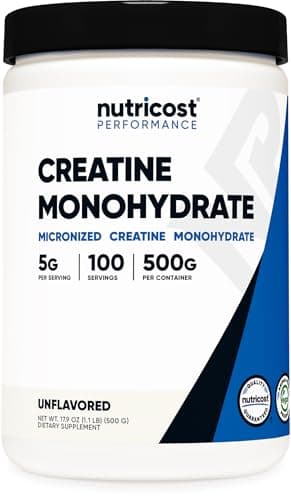
Product image from the Amazon listing.
Our verdict
Yes — Nutricost Creatine Monohydrate is the best-value creatine on Amazon and the correct choice for anyone starting creatine or looking to save money on the most-researched supplement in sports nutrition. 500g of micronized, 3rd-party-tested creatine for under $30 delivers exactly the same active ingredient as brands charging twice as much. Take 5g daily, every day, and pair with consistent training for 8-12 weeks — that's the whole formula. Skip the loading phase, skip the fancy variants (HCL, buffered, etc.), and just take monohydrate. It works, it's cheap, and the research base is overwhelming.
The short version
Creatine monohydrate is the single most-studied sports supplement in the world — the evidence base for its effect on muscle strength, size and workout capacity is genuinely enormous, and the effective dose is a simple 5g per day. There's no meaningful chemical difference between creatine from a $30 tub and creatine from a $60 tub, so you're paying for the powder, not the marketing. Nutricost delivers 500g of pharmaceutical-grade micronized creatine monohydrate — 100 five-gram servings — for under $30, with 3rd-party quality testing and no added ingredients. Unflavored, dissolves easily in water or your protein shake, and lasts about 3 months at a daily dose. It's the correct answer for beginners and experienced lifters alike who want to skip the marketing tax.
Pros & cons
Pros
- Micronized 100% creatine monohydrate — the researched-effective form
- 100 five-gram servings per bag — roughly 3 months of daily use
- 3rd-party tested for purity
- No added fillers, sweeteners or flavors
- Dissolves well in water, juice or protein shakes
- Costs a fraction of premium creatine brands
- Made in a GMP-certified US facility
Cons
- Unflavored — some people prefer flavored creatine
- No fancy blends or 'creatine HCL' — just monohydrate (which is a feature)
- Bag rather than tub — no built-in scoop with all shipments
Why people love it
5 grams daily
One scoop (approximately 5g) mixed into water, juice, protein shake or pre-workout, once per day. Timing doesn't matter — take it whenever you'll actually remember.
Consistency over loading
Skip loading phases. Take 5g daily for 3-4 weeks and your muscle creatine stores saturate at the same level as loading, without stomach discomfort.
Every day, workout or not
Take it on rest days too — creatine builds up over weeks, and skipping days undoes the gains. It's a daily habit, not a pre-workout boost.
Who it's for
- Anyone training for muscle strength or size
- Beginners who've heard creatine works and want the cheapest quality option
- Experienced lifters who buy creatine bulk
- Athletes in strength or power sports (weightlifting, sprinting, football)
Why creatine monohydrate is worth taking (and why marketing has confused the picture)
Creatine monohydrate is the most-researched sports supplement in the world by a significant margin. Over 500 published peer-reviewed studies have examined its effects on strength, muscle size, workout capacity, and — increasingly — cognitive function and healthy aging. The consensus is clear: 5g of creatine monohydrate daily produces measurable improvements in maximum strength (5-15%), workout volume (5-10% more reps at a given weight), and lean muscle mass (2-4 lb over 4-12 weeks) for most people. The effect isn't massive per session, but it compounds — someone taking creatine consistently for a year will train harder and build more muscle than an identical training partner not taking it. The mechanism is well-understood: creatine helps regenerate ATP (your muscles' immediate energy currency) between heavy sets, letting you push out the extra reps that drive adaptation.
The confusion in the supplement industry comes from brands trying to differentiate a commodity ingredient. Creatine monohydrate is chemically identical whether you buy Nutricost, Optimum Nutrition, Thorne or any other reputable brand — so brands market 'HCL,' 'buffered,' 'nitrate,' 'ethyl ester' and 'micronized' versions as if they were meaningfully different products. Micronization is real (it's just monohydrate ground smaller for better solubility, which Nutricost includes), but the other variants have no head-to-head evidence of superior outcomes. Save your money — Nutricost's basic micronized monohydrate at $30 for 3 months is the correct answer. The premium tax on fancier forms is 80-90% marketing.
Nutricost vs Optimum Nutrition vs Thorne vs Creatine HCL: which creatine should you buy?
Four legitimate options at different prices and philosophies. Nutricost Creatine Monohydrate: $30, 500g bag, micronized, 3rd-party tested, no added ingredients. The best-value option and the correct starting point for most people. Optimum Nutrition Micronized Creatine: $35-40, same product basically, slightly more expensive because Optimum Nutrition is a bigger brand with more marketing spend. Thorne Creatine: $45, NSF-for-Sport certified for competitive athletes subject to drug testing, USA-made, premium build. Worth the extra money only if you specifically need NSF certification. Creatine HCL (Kaged, Con-Cret, etc.): $40-50, marketed for smaller effective dose and less bloat, but no clinical evidence of superior results vs monohydrate.
For someone deciding today: if you're a general fitness person or lifter who just wants to take creatine and get the benefits, Nutricost is the correct pick — same active ingredient, third-party tested, and you save $15-20 vs comparable brands. If you're a competitive athlete subject to WADA/NSF drug testing, spend the extra for Thorne. If you experience GI upset from creatine (rare, but real), try creatine HCL — it's more expensive but easier on some people's stomachs. There's no legitimate reason to buy a $60 'proprietary blend' creatine that's just monohydrate with added flavor and marketing.
How to actually get the benefits of creatine (beyond just buying it)
Consistency beats optimization. The number one reason people don't see benefits from creatine is that they take it inconsistently — starting and stopping, forgetting for days at a time, or not training enough for creatine to have anything to enhance. Creatine works by saturating your muscle creatine stores over 3-4 weeks and staying there as long as you take it daily. Miss a few days and the stores start to drop. Take it every single day, workout or not, morning or night, alone or with a shake — the daily habit matters more than any other variable.
Second: creatine enhances training, it doesn't replace it. If you're taking creatine and lifting 3x per week with progressive overload (adding weight or reps over time), you'll see clear results in strength and size over 8-12 weeks. If you're taking creatine and doing occasional cardio or the same weights for months, the creatine is doing almost nothing for you. Third: hydrate. Creatine pulls water into muscle cells (which is part of how it works), so aim for a bit extra water throughout the day, especially in the first few weeks of loading. Fourth: pair with protein. Creatine's benefits on muscle growth are amplified when you're eating adequate protein (0.7-1g per pound of bodyweight daily). Fifth: pair with sleep. All muscle recovery happens overnight, and creatine can't compensate for chronic sleep deprivation. Nail these fundamentals, take 5g of Nutricost creatine daily, and you'll see real, measurable progress in the mirror and on the barbell within 8-12 weeks.
See Nutricost Creatine on Amazon
Check the latest price, photos and buyer reviews on Amazon.
Check Price on Amazon →Sold and shipped by AmazonFrequently asked questions
Is Nutricost creatine actually as good as premium brands like Thorne or Optimum Nutrition?
Yes — chemically, creatine monohydrate is creatine monohydrate. There's no meaningful difference in effectiveness between a $30 bag from Nutricost and a $60 bottle from a 'premium' brand as long as both are micronized 100% creatine monohydrate with 3rd-party purity testing. Nutricost meets both criteria and their bags have been independently tested by services like Labdoor and confirmed to match label claims. What you're paying for at premium brands is packaging, marketing budget and (sometimes) added ingredients you don't need. If you want a certified NSF-for-Sport or Informed Sport tested version specifically because you're a competitive athlete subject to drug testing, then Thorne's third-party certification is worth paying more for. For everyone else, Nutricost is the correct choice.
Do I need to do a loading phase, or just start with 5g daily?
Skip loading. Loading phases (20g/day split into 4 doses for 5-7 days) saturate muscle creatine stores in about a week, but 5g/day gets you to the same saturation level in 3-4 weeks with fewer side effects (loading often causes stomach discomfort and unnecessary water weight). Unless you have a specific competition in 10 days and want peak creatine stores immediately, start with 5g/day from day one. The research shows equivalent long-term results either way, and the daily-5g approach is easier to sustain.
When's the best time to take creatine — before workout, after, or morning?
Doesn't matter. Take it whenever you'll actually remember to take it — that's the most important variable. Some studies suggest very slight benefits from post-workout timing over pre-workout, but the effect is small enough that consistency beats optimal timing every time. If you take a morning protein shake, mix it in there. If you take a pre-workout, add it. If you're most likely to remember at dinner, take it with dinner. Take it every day, workout or not.
Are there side effects? Will it make me hold water weight?
Yes, mild water retention inside muscle cells — usually 1-3 lbs of scale weight in the first few weeks. This is inside the muscle (which is actually what makes creatine work — it hydrates muscle cells and increases their volume), not bloat. It's not fat, it doesn't make you look puffy in the face, and it's part of the mechanism. If you're a physique athlete cutting for a stage, creatine adds weight to the scale that isn't fat, but for everyone else it's beneficial. Otherwise, creatine has an extremely clean side effect profile — the largest and longest-running studies show no kidney or liver issues in healthy adults.
Creatine monohydrate vs creatine HCL vs 'buffered' creatine: which should I take?
Monohydrate — that's what has 30+ years of research behind it. Creatine HCL, buffered creatine (Kre-Alkalyn), creatine ethyl ester and other 'advanced' forms are marketing variants that let brands charge more for what is essentially the same molecule delivered slightly differently. None have outperformed monohydrate in head-to-head studies. The only case for HCL over monohydrate is if you personally experience GI discomfort from monohydrate at 5g (rare) — HCL requires a smaller effective dose so it can sit easier for those people. For everyone else, save your money on monohydrate.
How long does the 500g bag actually last, and how do I store it?
About 3 months at 5g per day (100 servings per bag). Store it in a cool, dry place — the pantry is fine, no need to refrigerate. Keep the bag sealed after each scoop; creatine can absorb humidity from the air and clump if left open in a humid kitchen. If it does clump, it still works — just break up the clumps in your shaker cup. A quality-of-life upgrade for the bag format: transfer the powder to a plastic tub with a scoop when you first open it, and dedicate the scoop to creatine so you don't have to hunt for one every morning.
Is creatine safe to take long-term, and do I need to cycle off it?
Yes and no. Creatine is one of the most-studied supplements ever, with clinical trials extending 5+ years of continuous daily use showing no health issues in healthy adults with normal kidney function. You don't need to 'cycle off' — this is a bodybuilding-forum myth. If you stop taking it, your muscle creatine stores gradually drop back to baseline over 4-6 weeks, and any performance gains from creatine fade with them, so continuous daily use is the correct pattern. The exceptions: if you have pre-existing kidney disease, are pregnant, or are under 18, talk to a doctor first.
As an Amazon Associate, TopCrate earns from qualifying purchases at no extra cost to you. Creatine is a dietary supplement, not a medical treatment. Consult a physician before starting any supplement if you have kidney or liver conditions, are pregnant or nursing, or are under 18. Product image, price, availability and ratings are shown on Amazon and are subject to change.