TRENDING ON AMAZON
Liquid I.V. Sugar Free Hydration Multiplier Electrolyte Packets Review: Is It Worth It?
The zero-sugar version of the Liquid I.V. everyone drinks — same sodium-and-potassium hydration hit, sweetened with allulose instead of 11g of cane sugar per stick.
Quick answer: Yes — Liquid I.V. Sugar Free is worth buying if you want the well-known Liquid I.V. electrolyte formula without the 11g of sugar per stick. The allulose sweetener is legitimately natural (not artificial), the electrolyte content is identical to original, the flavors taste like light fruit juice rather than candy, and it fits keto, diabetic and low-sugar diets that original Liquid I.V. doesn't. Use it for the specific cases where electrolyte mixes actually help — heavy sweating, long flights, hangover recovery, illness — not as a daily water-flavor product. For everyone who tried original Liquid I.V. and thought 'this is fine, but too sweet,' this is the specific version to buy going forward.
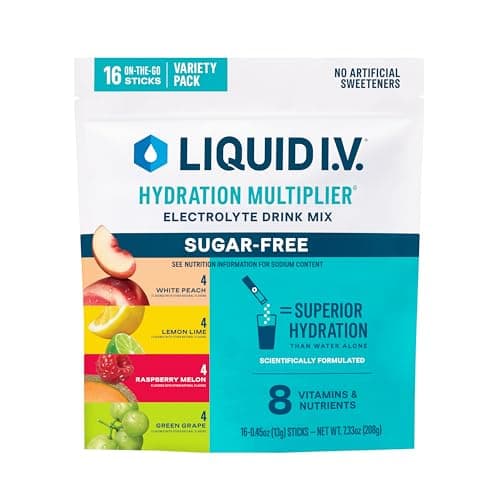
Product image from the Amazon listing.
Our verdict
Yes — Liquid I.V. Sugar Free is worth buying if you want the well-known Liquid I.V. electrolyte formula without the 11g of sugar per stick. The allulose sweetener is legitimately natural (not artificial), the electrolyte content is identical to original, the flavors taste like light fruit juice rather than candy, and it fits keto, diabetic and low-sugar diets that original Liquid I.V. doesn't. Use it for the specific cases where electrolyte mixes actually help — heavy sweating, long flights, hangover recovery, illness — not as a daily water-flavor product. For everyone who tried original Liquid I.V. and thought 'this is fine, but too sweet,' this is the specific version to buy going forward.
The short version
The main knock on classic Liquid I.V. was always the sugar — 11 grams per stick, which is a lot for anyone trying to hydrate without also drinking a mini-soda. The Sugar Free version fixes that: zero grams of sugar and zero added artificial sweeteners, using allulose (a natural low-calorie sugar found in figs and raisins) instead. You still get the CTT (Cellular Transport Technology) sodium-and-potassium formula the brand is built on, still get the standard-Liquid-I.V. hydration boost, and still get variety flavor packs — just without the sugar hit. It's the specific pick for keto, low-carb, diabetic-conscious, or anyone who wants electrolytes without the sweetness.
Pros & cons
Pros
- Zero grams of sugar per stick (vs 11g in original)
- Sweetened with allulose — natural, low-glycemic
- No artificial sweeteners (no sucralose or aspartame)
- Standard Liquid I.V. sodium + potassium electrolyte formula
- Variety flavor packs available (White Peach, Lemon Lime, Raspberry Melon, Green Grape)
- Keto- and diabetic-friendly
- Non-GMO, vegan, gluten-free
Cons
- Costs slightly more per stick than original
- Allulose can cause mild GI issues in a small % of people
- Sweetness level is different from original — some people prefer one or the other
- Still more expensive per serving than DIY electrolyte mixes
Why people love it
Pour one stick into 16 oz of water
Each single-serve stick dissolves into 16 fl oz of cold water — bottled, filtered or tap. Stir or shake for 10-15 seconds until fully dissolved.
CTT electrolyte transport
The proprietary Cellular Transport Technology uses a specific sodium-to-glucose ratio (now allulose-based) to trigger the sodium-glucose co-transport mechanism in the small intestine — the same physiological principle behind oral rehydration therapy.
Drink within an hour
Best when consumed within 60 minutes of mixing for peak flavor and electrolyte absorption. Room temperature or cold — heat degrades the electrolyte balance.
Who it's for
- Anyone hydrating without wanting sugar
- Keto, low-carb or diabetic diets
- Post-workout or post-run recovery
- Hangover recovery or long-flight rehydration
Is Liquid I.V. Sugar Free actually worth it, or is regular Liquid I.V. fine?
Original Liquid I.V. built the brand and remains a legitimately effective rehydration product — the CTT sodium-glucose formulation works, the flavors are palatable, and it delivers what it promises. The single knock against it was always the sugar content: 11g per stick, roughly the same as 2.5 teaspoons of sugar or a third of a can of Coke. For anyone using it once after a hard workout, that's not a problem. For anyone using it daily as a water-flavor product or hydration habit, that's 77g of sugar a week from a hydration mix alone — which defeats the purpose for most people who care about their sugar intake. The Sugar Free version addresses that specific issue with allulose, keeping the electrolyte formula intact while dropping the sugar to zero.
The value question depends on your usage pattern. Occasional use after workouts or during illness? Original Liquid I.V. is fine, and the slightly higher sweetness can be pleasant in that context. Daily use as a hydration habit? Sugar Free is clearly the correct choice — you get the same electrolyte benefit without the daily sugar load. Keto, low-carb, or diabetic diet? Sugar Free is essentially the only Liquid I.V. option that fits your diet. Concerned about artificial sweeteners? Both are worth considering — original uses cane sugar (real sugar, no artificial sweeteners), Sugar Free uses allulose (a natural rare sugar, no artificial sweeteners either). Most people who try Sugar Free after using original prefer it and never switch back.
When electrolyte mixes actually help — and when they're marketing dressed up as science
Electrolyte mixes have exploded in popularity because they hit two real needs (hydration during heavy sweating, rehydration during illness) and one marketed need (daily 'better hydration' that most people don't actually require). Understanding the difference is important, because using an electrolyte mix daily when you don't need one just adds sodium and cost to your day. Real use cases where Liquid I.V. Sugar Free (or any electrolyte mix) genuinely helps: heavy sweating during a workout longer than 60 minutes, exercise in hot/humid conditions, being sick with vomiting or diarrhea, long flights (cabin humidity is 10-20%, dramatically below normal), long car rides in the desert, hangover recovery, and being outside in extreme heat for hours.
Situations where you don't need electrolyte mixes: a normal desk-work day drinking water, a short indoor workout, mild heat, or 'I just want my water to taste better.' Plain water works fine for those, and the sodium in even sugar-free electrolyte mixes (200mg per stick, ~1/4 of a full sodium daily target) can add up if you're using them habitually. The correct pattern for most people is: keep sticks in your bag for the actual use cases (post-workout, illness, travel, extreme heat), drink plain water the rest of the time. For the calm-and-recovery evening ritual, a warm Dr. Teal's Epsom Salt soak is the electrolyte-adjacent complement that actually earns its place — magnesium sulfate through the skin plus lavender aromatherapy, no daily-sugar-or-sodium load involved.
How to use Liquid I.V. Sugar Free for hangovers, flights, workouts and sick days — the specific protocols
For hangovers: drink one stick in 16 oz water before bed after drinking, and another the next morning if still feeling rough. The sodium and potassium replace what alcohol-induced diuresis depleted, and the extra volume helps flush metabolites. This is Liquid I.V.'s most legitimate 'party recovery' use case, and the sugar-free version means you're not adding hangover-worsening sugar to already-inflamed metabolism. For long flights: drink one stick per 4-hour flight segment. Cabin humidity is ~15% (Sahara Desert territory), and you dehydrate on flights whether you feel thirsty or not. Combined with skipping the free wine, one Liquid I.V. Sugar Free per flight segment dramatically reduces jet-lag-symptom severity. Pair with a proper Manta Sleep Mask for the sleep half of long-haul recovery.
For heavy workouts: one stick after any workout longer than 60 minutes, or during if the workout is 2+ hours. During shorter workouts, plain water is enough — heart rate isn't high enough for long enough to drain electrolytes significantly. For sick days with vomiting or diarrhea: one stick every 2-3 hours during the acute phase, alternating with plain water. This mimics oral rehydration therapy and is genuinely medically useful — the CTT sodium-glucose co-transport is the same principle behind pediatric rehydration products like Pedialyte. For extreme heat exposure (yard work in summer, hot yoga, sports outdoors): one stick before, one during, one after. For daily desk-work hydration: don't need it — plain water works fine and 200mg of sodium daily from a hydration mix is unnecessary. Follow these specific protocols and one box of sticks lasts weeks, not days, and each one delivers real value rather than being an expensive water-flavor product.
See Liquid I.V. Sugar Free on Amazon
Check the latest price, photos and buyer reviews on Amazon.
Check Price on Amazon →Sold and shipped by AmazonFrequently asked questions
Is Liquid I.V. Sugar Free actually as effective as the original?
Effectively yes — the electrolyte content (sodium, potassium, chloride) is the same as original Liquid I.V., and the sodium-glucose co-transport principle the brand's CTT is based on still works with allulose as the sugar substrate. Some purists argue the actual glucose in original Liquid I.V. is a slightly more direct transport trigger than allulose, but for practical hydration purposes the difference is negligible — you'll rehydrate at effectively the same rate. What you lose with the sugar-free version is the sugar-derived quick-energy hit some athletes want mid-workout; what you gain is not consuming 11g of sugar just to drink water.
Liquid I.V. Sugar Free vs LMNT vs Nuun: which hydration mix should I buy?
Three well-known electrolyte mixes with different formulations. Liquid I.V. Sugar Free: ~200mg sodium, ~150mg potassium, allulose-sweetened, 16 oz per stick, mainstream flavors, ~$1.20 per serving. LMNT: 1000mg sodium (much higher), 200mg potassium, stevia-sweetened, 16 oz per stick, unflavored or salted flavors, ~$1.50 per serving — the pick for keto athletes and heavy sweaters who genuinely need high sodium. Nuun Sport: ~300mg sodium, 150mg potassium, stevia + monk fruit-sweetened, dissolves via tablet not powder, ~$0.60 per serving — the budget pick. For general hydration and 'drink more water' contexts, Liquid I.V. Sugar Free is the mainstream default. For endurance athletes and heavy sweaters, LMNT delivers the higher sodium doses that actually match sweat losses. For daily light hydration without spending much, Nuun tablets are the value pick.
Is allulose safe, and does it cause GI issues like other sugar alcohols?
Allulose is a rare sugar that occurs naturally in figs, raisins, wheat and molasses, and it's FDA-approved as a safe food additive. Unlike traditional sugar alcohols (erythritol, xylitol, sorbitol), allulose is absorbed in the small intestine and excreted in urine rather than fermented in the colon — which means it causes significantly less GI distress (gas, bloating, laxative effect) than most alternatives. A small percentage of people are still sensitive to allulose at higher doses, but at the ~5-6g per Liquid I.V. Sugar Free stick, most users have zero GI issues. If you're sensitive to sugar alcohols or FODMAPs, start with half a stick to test tolerance.
How does the sugar-free version taste compared to original Liquid I.V.?
Less sweet, cleaner finish, less of an artificial-fruit-punch quality. Original Liquid I.V.'s sweetness comes from 11g of cane sugar, which produces a candy-adjacent flavor most people either love or find cloying by the second stick. The sugar-free version's allulose sweetness is milder and closer to the natural sweetness of light fruit juice, so the flavors themselves (White Peach, Lemon Lime, Green Grape, Raspberry Melon) come through more distinctly. If you found original Liquid I.V. too sweet, you'll likely prefer Sugar Free. If you specifically liked the sweetness of the original, you may find Sugar Free tastes 'thin' — try one variety pack before committing to a big box.
When should I drink Liquid I.V., and how often?
Best use cases: after a hard workout, on hot days when you're sweating heavily, after alcohol (before bed or the morning after for hangover recovery), during illness with vomiting or diarrhea, on long flights (cabin humidity is very low), or when traveling in hot climates. For daily hydration in normal conditions, you don't need electrolyte mixes — plain water is fine and cheaper. Limit to 1-2 sticks per day maximum for daily use — the sodium content (~200mg per stick) is meaningful and can add up quickly if you're using it as a water-flavor product rather than a rehydration tool. For calm-and-recovery evenings, pair with proper magnesium: a daily 200-400mg dose of Nature Made Magnesium Glycinate handles the calm-and-sleep side of the hydration/recovery equation that electrolyte packets don't address.
Is Liquid I.V. Sugar Free keto-friendly and diabetic-friendly?
Yes to both, with caveats. Keto: allulose is metabolized differently than sugar and doesn't raise insulin or knock most people out of ketosis, and each stick has 0g net carbs and 0g sugar. It's one of the most keto-friendly electrolyte mixes on the market. Diabetic: allulose has minimal effect on blood glucose and insulin in most studies, and Liquid I.V. Sugar Free is generally considered diabetic-friendly. As always, if you have diabetes and are tightly managing blood sugar, test your response with a continuous glucose monitor after a stick to confirm it doesn't spike you individually. The FDA allows allulose to be excluded from 'Total Sugars' on nutrition labels because of how it's metabolized.
As an Amazon Associate, TopCrate earns from qualifying purchases at no extra cost to you. Liquid I.V. Sugar Free is a dietary supplement and is not intended to diagnose, treat, cure or prevent any disease. Consult a doctor before use if you're on a sodium-restricted diet, have kidney issues, or are pregnant. Product image, price, availability and ratings are shown on Amazon and are subject to change.