TRENDING ON AMAZON
Nature Made Magnesium Glycinate 200mg Review: Is It Worth It?
Highly absorbable magnesium glycinate that quietly fixes the muscle tension, restless legs and crappy sleep most people don't realize a magnesium deficiency causes.
Quick answer: Nature Made Magnesium Glycinate is the cheapest, most evidence-backed sleep upgrade most people can make — fixing a deficiency they probably have. USP-verified, gentle on the gut, and the right form for calm and sleep. A daily habit worth keeping.
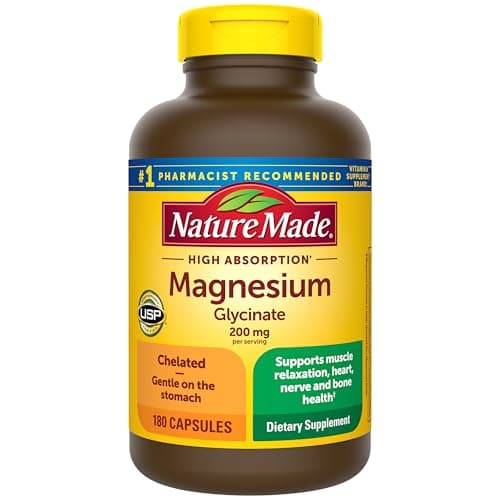
Product image from the Amazon listing.
Our verdict
Nature Made Magnesium Glycinate is the cheapest, most evidence-backed sleep upgrade most people can make — fixing a deficiency they probably have. USP-verified, gentle on the gut, and the right form for calm and sleep. A daily habit worth keeping.
The short version
Most American adults don't get enough magnesium, and the symptoms are exactly the ones people throw at sleep, stress and recovery products: light, restless sleep, muscle tension, leg cramps at night, a wired-but-tired feeling. Magnesium glycinate is the form your gut absorbs best and the form least likely to cause the loose stools that mark up cheaper magnesium oxide pills. Nature Made's version is USP-verified (a real independent purity test), affordable, and the easiest sleep-and-recovery upgrade you can make this week. Most people notice deeper sleep and looser shoulders within two weeks.
Pros & cons
Pros
- Highly absorbable glycinate form — gentle on the gut
- USP-verified for purity and potency
- Linked to deeper sleep, calmer nervous system, less muscle tension
- Affordable — pennies a day
- No stimulants, no melatonin, no morning grogginess
- Pairs well with the rest of a sleep routine
Cons
- Needs consistent daily use to feel effects
- Not a fast-acting sleeping pill
- Check with your doctor if you take medications affected by magnesium
Why people love it
Take 1-2 capsules a day
With food, ideally with the evening meal so it builds your evening calm and overnight recovery.
Give it 2-3 weeks
Magnesium works by topping up a deficiency, not as an acute sedative. Most people notice the deeper sleep and looser muscles after a couple of weeks.
Stay consistent
It's a daily nutrient, not a 'when I can't sleep' pill. The benefit comes from steady levels.
Who it's for
- Light, restless sleepers
- Anyone with nighttime leg cramps or muscle tension
- Active people supporting recovery
- Anyone wired-but-tired at bedtime
Why magnesium is the supplement most people are actually missing
The supplement aisle is full of stuff most healthy adults don't need — but magnesium is the rare one where the public health data is genuinely concerning. The CDC's NHANES surveys consistently find that roughly half of Americans don't hit the recommended daily intake of magnesium, and even more don't hit it consistently. The food sources (leafy greens, nuts, seeds, whole grains, fish) are the foods most people eat too little of, and modern soil depletion and food processing have lowered the magnesium content of many staples.
The symptoms of mild magnesium insufficiency are exactly the ones people blame on stress and aging: shallow sleep, muscle cramps and twitches (especially in the legs at night), tension headaches, anxiety, constipation, and that wired-but-tired evening feeling. Of course not every case of bad sleep is magnesium — but for many adults, fixing this single nutrient does more to improve sleep and calm than a stack of sleep aids. It's also one of the few supplements with strong scientific consensus behind its benefits. For the acute tension-headache flare-up itself — the throb that shows up on a bad-sleep, low-magnesium week and won't wait two weeks for a supplement to work — a freezable cold-therapy wrap like the TheraICE headache hat is the drug-free companion piece: 360° cold constricts the scalp vessels driving the pain while magnesium quietly rebuilds the underlying deficiency.
Why glycinate is the form to buy for sleep and calm
Magnesium comes in a lot of forms because the body absorbs each one differently, and the form matters more than most people realize. Magnesium oxide is the cheapest and what fills many drugstore bottles, but the body absorbs only a small fraction of it — most of it passes through, which is why oxide is the active ingredient in milk-of-magnesia laxatives. Citrate absorbs better but is still mildly laxative at higher doses. Threonate is marketed for brain effects and is expensive; chloride is good in topical sprays.
Glycinate is the form that's bound to the amino acid glycine, and it has three properties that make it the right pick for sleep and calm. It absorbs very well (you actually get the magnesium you paid for), it's gentle on the gut (almost no laxative effect even at higher doses), and the glycine itself has mild calming and sleep-supporting properties. That's why nearly every sleep-focused magnesium product on the market — including Nature Made's — chose this form.
How to actually use magnesium for better sleep
Magnesium is a nutrient, not a sleeping pill, so the protocol is different. Don't expect to take it at 11pm and feel sleepy in twenty minutes. The right framing is filling up a tank: take 200-400mg of glycinate daily, with food (it's better absorbed and gentler on the stomach), most often with dinner so the calm-and-recover effects land in the evening. Give the regimen two to three weeks before judging it — that's roughly how long it takes to top up tissue stores in someone running low. If you also want the topical, warm-water side of magnesium in your routine, a twice-weekly Dr. Teal's Epsom Salt soak layers on top for free — the transdermal-magnesium claim is thinner than marketing suggests, but the warm-bath aromatherapy ritual itself does real work on stress and sleep onset.
Stack the basics alongside it: a cool, dark bedroom, no screens for thirty minutes before bed, and consistent sleep and wake times. Magnesium pairs well with everything in a sensible sleep routine and conflicts with almost nothing — it works alongside L-theanine, glycine, and a low dose of melatonin if you use one. For racing-mind sleepers who need help switching off at bedtime, a drug-free wind-down tool like the Dodow breathing light pairs beautifully — magnesium removes the physiological barriers, Dodow slows your breathing so the brain follows. The signal you're looking for, after a couple of weeks, isn't 'I fell asleep instantly' — it's 'I'm waking up less,' 'my legs aren't cramping at night,' and 'my shoulders aren't tight by 5pm.' Those are the magnesium wins.
See Nature Made Magnesium Glycinate on Amazon
Check the latest price, photos and buyer reviews on Amazon.
Check Price on Amazon →Sold and shipped by AmazonFrequently asked questions
What's the difference between magnesium glycinate, citrate and oxide?
Oxide is the cheapest form and the worst absorbed — it tends to cause loose stools (which is why it's the active ingredient in magnesium-based laxatives). Citrate is well-absorbed but still mildly laxative for some people. Glycinate is bound to the amino acid glycine, is the gentlest on the gut, and is the form most associated with sleep and calm benefits. For a sleep-and-calm goal, glycinate is the right pick.
How much magnesium should I take?
The RDA is 310-420mg per day depending on age and sex. Nature Made glycinate is typically 200mg per serving, so most people land in a 200-400mg/day supplement range. Don't exceed 350mg from supplements alone without checking with a doctor.
Will it help me sleep?
If you're deficient in magnesium — which most Americans are — then yes, often noticeably so. Magnesium regulates GABA (the calming neurotransmitter) and helps muscles relax. It's not an off-switch like melatonin; it works by removing a barrier to sleep, not forcing it.
Is USP verification a big deal?
Yes. The supplement industry is poorly regulated, and a lot of products contain less of the active ingredient than the label claims (or contaminants you don't want). USP verification means an independent lab tested the bottle for what's claimed, in the amount claimed, free of meaningful contaminants. Buy USP-verified or NSF-verified supplements when you can.
When is the best time to take magnesium?
Most people take it with their evening meal — both because it's a dinnertime convenience and because the relaxing effects are most useful in the evening. It's safe with most foods; avoid taking it within two hours of certain antibiotics or osteoporosis medications, which it can interfere with.
Is magnesium safe to take every day?
For most healthy adults at the doses on standard bottles, yes — magnesium is an essential mineral your body needs daily. People with kidney issues, those on certain heart or blood pressure medications, and pregnant or nursing women should check with a doctor first.
As an Amazon Associate, TopCrate earns from qualifying purchases at no extra cost to you. This is a dietary supplement and is not intended to diagnose, treat, cure or prevent any disease. Product image, price, availability and ratings are shown on Amazon and are subject to change.
More reviews you might like
WHITE NOISE
Homedics SoundSleep Review: Best Portable White Noise Machine?
AIR QUALITY
Levoit Humidifier Review: Is the Bestselling Cool-Mist Bedroom Pick Worth It?

COOLING
Elegear Cooling Blanket Review: Does Arc-Chill Really Work for Hot Sleepers?
COOLING