HANDS-ON REVIEW
Dodow Sleep Aid Device Review: Is It Worth It?
A bedside light metronome that guides your breathing so you drift off faster — no pills, no screens.
Quick answer: Dodow won't knock you out like a pill, and that's the point. It's a calm, drug-free way to slow down at bedtime and stop your brain from spinning — and for the racing-mind crowd, that's often exactly what's been missing.
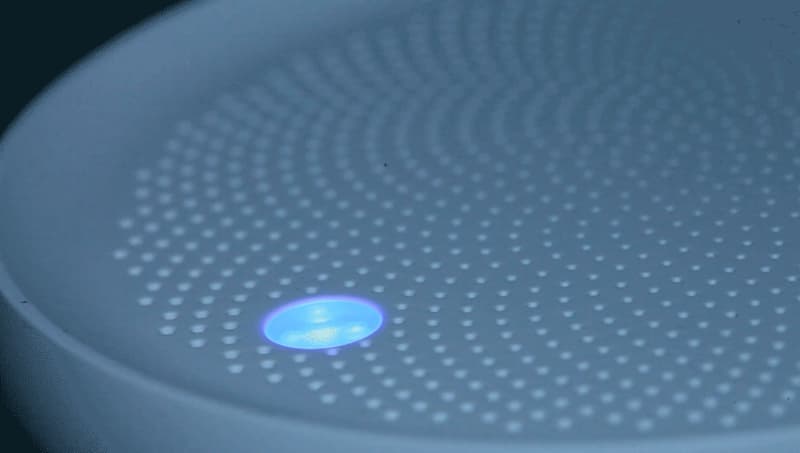
Dodow projects a soft light you breathe in time with. Photo: Dodow
Our verdict
Dodow won't knock you out like a pill, and that's the point. It's a calm, drug-free way to slow down at bedtime and stop your brain from spinning — and for the racing-mind crowd, that's often exactly what's been missing.
The short version
If your problem isn't being tired but being unable to switch your brain off, Dodow is built for exactly that. It projects a soft, slowly pulsing blue light onto your ceiling; you breathe in and out in time with it, which gradually slows your breathing and quiets the mental chatter that keeps you awake. No medication, no app, no screen.
Pros & cons
Pros
- 100% drug-free — nothing to take or wear
- Quiets a racing mind with simple breathing guidance
- No screen and no app to fiddle with
- Gentle automatic shut-off once you're settled
- Battery powered — keep it on the nightstand
- Used by over a million people
Cons
- Works best with consistent nightly use
- Projects a soft light on the ceiling some may notice
- It's a wind-down tool, not a cure for insomnia
How it works
Tap to start
A light touch begins a soft blue light that pulses gently on your ceiling.
Breathe with it
Inhale as the light grows, exhale as it shrinks — it slows your breathing without you thinking about it.
Drift off
After the cycle the light fades and shuts off on its own, leaving you relaxed and ready for sleep.
Who it's for
- People whose minds race the moment their head hits the pillow
- Anyone who'd rather not rely on sleeping pills
- Light sleepers looking for a calmer wind-down
- Those who feel anxious or wired at bedtime
Does Dodow actually work for a racing mind at bedtime?
Dodow isn't doing anything mystical — it's a structured way to do what relaxation coaches have recommended for years: slow your breathing on purpose. It projects a soft blue light that grows and shrinks on the ceiling, and you simply inhale as it expands and exhale as it contracts. The light's rhythm gradually slows from around eleven breaths a minute toward six, and your breathing follows it down. Slower, longer exhales nudge your nervous system out of fight-or-flight and toward the calm, parasympathetic state that precedes sleep.
The honest framing is that Dodow targets a specific problem: not being unable to feel tired, but being unable to switch your brain off. Giving your attention a single, gentle thing to track crowds out the mental chatter and looping thoughts that keep racing-mind types awake. It won't sedate you the way a pill does, and it isn't a treatment for clinical insomnia. But for people whose nightly battle is a spinning mind rather than genuine fatigue, the guided breathing is a legitimately useful wind-down tool — and it works better the more consistently you use it.
Dodow vs. sleep apps and white-noise machines
The most common alternatives to Dodow are breathing or meditation apps and white-noise machines, and each has a real downside Dodow is built to avoid. Apps put the work on your phone — the single most stimulating, notification-riddled object in the bedroom — so you're inviting a sleep disruptor to bed in the name of sleep. White-noise machines mask sound but do nothing to slow a racing mind; they help if noise is your problem, not if your thoughts are.
Dodow's pitch is doing one thing without a screen. There's no app, no account, no blue-lit phone glaring at you — just a battery-powered puck on the nightstand you tap to start, with a light that fades and shuts off on its own once the cycle ends. The trade-off is that it's deliberately narrow: it guides breathing and nothing else, with no soundscapes or sleep tracking. If your issue is genuinely a too-active mind at bedtime, that focus is a feature; if you wanted ambient sound or data, a different tool fits better.
The 6-breaths-a-minute science: why the pace Dodow slows to is the specific one that works
The reason Dodow ends its cycle at roughly six breaths a minute isn't arbitrary — it's the cadence a stack of research on 'resonant breathing' converges on. At around six breaths per minute (roughly a five-second inhale and a five-second exhale, sometimes called 'coherent breathing' or the '5-5' pattern), heart-rate variability rises, blood pressure and sympathetic nervous-system arousal drop, and the vagus nerve is stimulated most strongly. That's the same physiological brake CBT-i therapists teach patients to trigger deliberately — Dodow just hands you the timer.
What Dodow adds over doing it unaided is patience. Most people trying to slow their breathing on purpose speed back up within a minute; the expanding-and-shrinking light gives your attention something external to lock onto, so the pace is enforced without effort. Starting around 11 breaths a minute and drifting down over eight or twenty minutes lets your body ease into the slower rhythm instead of forcing it, which is why the wind-down feels natural rather than like exercise. It's the same principle behind box breathing and 4-7-8 techniques, delivered without an app or a coach.
How to use Dodow for the best results
Start by getting comfortable and lying on your back if you can, so you can see the light on the ceiling without craning your neck. Tap once for the shorter eight-minute cycle or twice for twenty minutes — beginners often do better with the longer setting while they're still learning to relax into it. Then commit to the simple instruction: breathe in as the light grows, out as it shrinks, and especially let the exhale stretch long. Breathing through the nose and into the belly deepens the effect.
Two things matter most for results. First, don't chase sleep — your only job is to follow the light, and sleep tends to arrive as a side effect of letting the pressure go. If you're still awake when it shuts off, that's fine; you're calmer than you were. Second, use it consistently. Like any wind-down routine, it works best when your brain starts associating the ritual with sleep, so give it a couple of weeks of nightly use before judging it. A darker room and putting your phone away first will both amplify the effect. Pairing it with a physical wind-down like a weighted blanket (the YnM Weighted Blanket is the classic pick) compounds the parasympathetic pull — one calms the mind, one calms the body. For the walk to the bathroom in the middle of the night, a GuideLight outlet cover night light means you never flip a room switch and undo the wind-down you just did.
Frequently asked questions
How does Dodow help me sleep?
You synchronize your breathing with a soft pulsing light, which gradually slows your breathing rate and helps quiet the racing thoughts that keep you awake.
Is it drug-free?
Completely. There's nothing to swallow, inhale or wear — it works purely on guided breathing.
Does it need batteries?
Yes — it runs on two standard AAA batteries so it lives on your nightstand with no cords or charging cable. A fresh set typically lasts a couple of months of nightly use, and the puck is unobtrusive enough to leave in place all day.
Will it really work for me?
Many people find it helps them fall asleep faster, especially racing-mind types — but like any wind-down routine, it works best used consistently for two to three weeks so your brain starts pairing the ritual with sleep. Dodow's own published stats claim about 100 million nights of use and roughly 2.5x faster sleep onset in surveyed users; the honest read is that it's a wind-down aid that most (not all) racing-mind types find genuinely useful when they stick with it.
Will the light from Dodow keep me or my partner awake?
The projection is intentionally soft and dim — bright enough to follow with your eyes but far from a glaring nightlight — and it fades out and shuts off automatically once the cycle ends, so it's not on all night. Most partners aren't bothered, but if yours is sensitive to light, aiming it toward your side of the ceiling or using it on the shorter cycle helps.
Can children use Dodow?
The guided-breathing approach is gentle and drug-free, which makes it appealing for kids who struggle to settle down, and many parents use it for exactly that. Because it relies on consciously following a light, it works best for children old enough to understand and cooperate with the breathing rhythm. As with any sleep aid for a child, check with your pediatrician if you have concerns.
What if my problem is snoring more than falling asleep — is Dodow still the right tool?
No. Dodow specifically targets the racing-mind, can't-switch-off problem — it slows your breathing to help you fall asleep, but it doesn't affect the airway vibration that causes snoring. If your partner's complaint is snoring rather than tossing-and-turning, the right tool is a bedtime throat spray like SnoreStop for a low-friction try, a proper mandibular device like SnoreRX for chronic every-night snoring, or a contoured neck pillow like VelaSleep to open the airway at the neck. Dodow and an anti-snoring approach are complementary, not overlapping — one gets you to sleep, the other keeps sleep quiet.
When you buy through links on this page, TopCrate may earn an affiliate commission at no extra cost to you. Dodow is a relaxation aid, not a medical treatment for sleep disorders. Prices accurate as of publish time.
More reviews you might like
WHITE NOISE
Homedics SoundSleep Review: Best Portable White Noise Machine?
AIR QUALITY
Levoit Humidifier Review: Is the Bestselling Cool-Mist Bedroom Pick Worth It?

COOLING
Elegear Cooling Blanket Review: Does Arc-Chill Really Work for Hot Sleepers?

COOLING