TRENDING ON AMAZON
Apple AirPods 4 with Active Noise Cancellation Review: Is It Worth It?
The open-fit AirPods with Active Noise Cancellation — Apple's Sept 2024 release finally brings ANC to the classic non-Pro form factor, no silicone tips needed.
Quick answer: Yes — the AirPods 4 with Active Noise Cancellation are worth it for iPhone users who dislike in-ear silicone tips but want the ANC experience. They're not the strongest ANC earbuds you can buy (the Pro 2 wins there, Sony WF-1000XM5 wins overall), but they're the only ones that combine meaningful noise cancellation with the classic open-fit AirPods comfort. For Android users or maximum-audio-quality shoppers, look elsewhere. For the specific and large audience of iPhone users who found AirPods Pro uncomfortable but wanted ANC, this is the pair that finally fits.
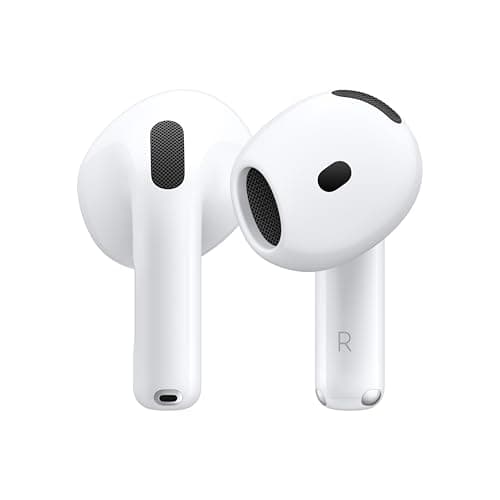
Product image from the Amazon listing.
Our verdict
Yes — the AirPods 4 with Active Noise Cancellation are worth it for iPhone users who dislike in-ear silicone tips but want the ANC experience. They're not the strongest ANC earbuds you can buy (the Pro 2 wins there, Sony WF-1000XM5 wins overall), but they're the only ones that combine meaningful noise cancellation with the classic open-fit AirPods comfort. For Android users or maximum-audio-quality shoppers, look elsewhere. For the specific and large audience of iPhone users who found AirPods Pro uncomfortable but wanted ANC, this is the pair that finally fits.
The short version
The AirPods 4 with Active Noise Cancellation are the pair that shouldn't work but does. Apple engineers figured out how to deliver meaningful ANC (reducing airplane and subway noise by roughly 10-15 dB) through the open-fit AirPods design — no silicone in-ear tips required. If you've always found the [AirPods Pro](/reviews/airpods-pro) uncomfortable in-ear but wanted noise cancellation, the AirPods 4 ANC are exactly what you've been waiting for. The H2 chip delivers Apple's Adaptive Audio, Personalized Spatial Audio, and seamless multi-device pairing across iPhone, iPad, Mac and Apple TV. Priced at $179 (vs $249 for AirPods Pro), they're the sweet spot for iPhone users who don't want in-ear tips.
Pros & cons
Pros
- First-ever ANC in the classic open-fit AirPods design
- No silicone tips — no ear fatigue after long sessions
- H2 chip delivers Adaptive Audio, Spatial Audio, and Siri interactions
- Seamless iCloud pairing across all Apple devices
- Wireless charging case included
- Smaller charging case than AirPods Pro
Cons
- ANC is meaningful but weaker than AirPods Pro (open-fit limitation)
- Only 4 hours of battery with ANC on (5 hours in AirPods Pro)
- No swappable ear tips — one size fits most (but not all)
Why people love it
Open case near iPhone
Standard AirPods pairing — the case opens near an iPhone or iPad and it auto-connects via iCloud to all your Apple devices.
Head-gesture Siri
Nod to accept a call or shake your head to decline — the H2 chip enables head-tracking gestures with Siri interactions.
ANC or Transparency modes
Press and hold the stem to toggle between Active Noise Cancellation, Transparency (lets ambient sound through), and Adaptive Audio (adjusts based on your environment).
Who it's for
- iPhone users who dislike in-ear silicone tips
- AirPods Pro owners looking for a lighter daily-use pair
- Frequent travelers who found original AirPods lacking ANC
- Anyone tracking Apple ecosystem seamless-audio experience
Why open-fit ANC matters (and why Apple was the only one who could make it work)
For a decade of noise-cancelling earbuds, the accepted wisdom was that you need an in-ear silicone seal to make ANC work — the seal creates a small closed acoustic chamber where the ANC microphones and drivers can effectively cancel incoming noise. Every major brand followed this pattern: Sony WF-1000XM series, Bose QuietComfort Earbuds, Samsung Galaxy Buds Pro, Sennheiser Momentum True Wireless. Apple's AirPods Pro also uses this design. The trade-off has always been that in-ear tips cause fatigue for long-wear users, and roughly 20-30% of people find them uncomfortable no matter the tip size.
The AirPods 4 with Active Noise Cancellation is the first product to seriously attempt ANC in an open-fit design. Apple used the same H2 chip as the AirPods Pro 2 (giving it the same digital signal processing horsepower for real-time noise cancellation math), plus a redesigned acoustic architecture that keeps the ANC microphones and drivers physically close to the ear canal even without a seal. The result is genuinely functional ANC — not as strong as sealed in-ear designs, but strong enough to noticeably quiet flights, subways, cafés and open offices. For the millions of people who bought AirPods but found the Pro uncomfortable, this fills a real gap.
AirPods 4 vs AirPods Pro 2 vs Sony WF-1000XM5: how they actually compare for daily use
The three flagship wireless earbuds most people cross-shop in 2026 each excel at different priorities. AirPods 4 with ANC ($179) is the comfort-first pick — open-fit, no in-ear tips, seamless Apple ecosystem integration, and the most-comfortable-to-wear-all-day of the three by a significant margin. ANC is present but meaningful-not-maximum. AirPods Pro 2 ($249) is the Apple ecosystem maximum-features pick — in-ear seal delivers strongest ANC, best audio quality (deeper bass, cleaner mids), FDA-approved Hearing Aid mode, and multiple tip sizes. Best for iPhone users who want the most-capable AirPods.
Sony WF-1000XM5 ($299) is the sound-quality king — noticeably better audio across all frequencies than either AirPods, longest battery (8+ hours with ANC), and best-in-class ANC that essentially matches sealed over-ear headphones. Best if you're on Android, prioritize audio quality over ecosystem, or want the most-capable earbuds regardless of price. Which to buy: iPhone user who dislikes in-ear tips → AirPods 4 ANC. iPhone user who wants maximum features → AirPods Pro 2. Android or audio-first user → Sony WF-1000XM5. For the specific niche of 'iPhone user, hates in-ear tips, wants ANC' — which is a much bigger group than Apple's product portfolio previously acknowledged — the AirPods 4 ANC is the right buy.
How to use AirPods 4 ANC to actually save on airline and travel purchases
A pair of AirPods 4 with ANC can genuinely replace $250-500 travel accessories for many people. For flights: instead of buying over-ear travel headphones (Bose QuietComfort 45 at $329, Sony WH-1000XM5 at $399), the AirPods 4 ANC deliver ~70% of the noise-cancelling effect in a fraction of the size — pocketable, no headphone case needed. For commutes: the open-fit design means you can wear them all day without ear fatigue (in-ear ANC earbuds cause noticeable pressure after 2-3 hours), so one pair covers morning subway, workday desk audio, and evening errands. For calls: the H2 chip delivers voice quality noticeably better than most earbuds, so business calls sound professional even from a noisy environment.
Setup for maximum travel utility: enable Adaptive Audio (not just ANC) so the earbuds automatically balance noise cancellation and transparency based on environment — quiets a plane engine while still letting you hear the pilot announcements. Pair with an iPhone-based Wallet Passes for boarding, use AirPods for hands-free Siri to check flight status, and use the H2 chip's Personalized Spatial Audio for a genuinely immersive movie experience on a laptop or iPad during flights. Add a slim charging option like the Anker Nano 30W to your travel kit and — for the outlet-free legs (a long flight, a hotel room with one plug behind the bed, a train seat with no port) — a slim Anker portable power bank as the other half of the kit, and you have full-day audio plus charging in about 8 ounces of gear. For anyone who used to travel with over-ear headphones, this is the setup that eliminates the extra bag.
See AirPods 4 (ANC) on Amazon
Check the latest price, photos and buyer reviews on Amazon.
Check Price on Amazon →Sold and shipped by AmazonFrequently asked questions
Are the AirPods 4 with ANC actually worth the extra $50 over the standard AirPods 4?
Depends on how often you'd use noise cancellation. Standard AirPods 4 ($129) have the same H2 chip, Spatial Audio, and design — they just lack Active Noise Cancellation and the wireless charging case. If you use AirPods primarily for calls, indoor music at your desk, or short commutes, the standard version is a great value at $50 less. If you fly regularly, commute on trains/subways, work in noisy environments (open-plan offices, cafés), or want to block out household noise, the ANC version is the smart choice — the noise reduction is meaningful even without silicone in-ear tips. Also included in the ANC version: wireless charging case (Qi + MagSafe), which the base version lacks.
AirPods 4 vs AirPods Pro 2: which should I buy?
AirPods 4 ANC ($179) if you dislike silicone in-ear tips or find AirPods Pro uncomfortable after long wear. Open-fit design, meaningful (not maximum) ANC, more comfortable for many users. AirPods Pro 2 ($249) if you want maximum noise cancellation (stronger seal = stronger ANC), better audio quality (in-ear seal delivers deeper bass), swappable tip sizes (4 sizes for a perfect fit), and Hearing Aid mode (Apple added FDA-approved hearing aid functionality to Pro 2). For most Apple-ecosystem buyers, the choice is comfort preference. If you find AirPods Pro fine to wear all day, they're the better technical earbuds. If you prefer the open feel of classic AirPods, the 4 ANC is the model that finally gives you ANC without changing form factor.
How does open-fit ANC work if there's no seal in the ear canal?
Apple uses a combination of adaptive digital noise cancellation and physical placement to achieve meaningful ANC without a canal seal. Microphones detect incoming ambient sound and generate anti-noise waves that partially cancel it before it reaches the eardrum — the same underlying principle as in-ear ANC but tuned for the open-fit acoustic scenario. Because there's no physical seal, ANC on the AirPods 4 is inherently less effective than on the AirPods Pro — you get roughly 10-15 dB of noise reduction compared to 25-30 dB on the Pro. This is enough to make plane engines significantly quieter, muffle subway roar, and reduce open-office chatter to background level. It's not enough for total silence (that requires the AirPods Pro's canal seal or over-ear headphones like Sony XM5 or Sonos Ace).
How long does the AirPods 4 battery actually last with ANC on?
About 4 hours of listening with ANC enabled, per Apple's spec and confirmed by third-party reviews (Rtings, Tom's Guide, SoundGuys). With the charging case, you get 20 additional hours of listening — the case charges the earbuds fully in about 60 minutes. For most workday use (2 x 30-minute commutes plus a couple hours of listening at a desk), you'll charge maybe every 2-3 days. For all-day-headphone users (podcasts + music + calls), you'll charge nightly. This is on par with AirPods Pro 2 (which gets ~4.5-5 hours with ANC) and typical for the small-battery earbuds category. If battery life is critical, look at Bose QuietComfort Earbuds II (6+ hours with ANC) or Sony WF-1000XM5 (8 hours with ANC).
Do AirPods 4 fit better or worse than the original AirPods?
Slightly redesigned for better fit — Apple used 50+ million ear scans to tune the shape, and the AirPods 4 sit more securely for more people than the AirPods 3. That said, they still use one universal size (no swappable tips), so if your ear shape doesn't cooperate with classic AirPods, they still won't fit well. Roughly 15-20% of people find that classic-style AirPods don't stay in during exercise or hard head movement — for those users, the AirPods Pro (with swappable tip sizes) or a fit-focused alternative like Powerbeats Pro is the better choice. If your original AirPods stayed in fine, the AirPods 4 will too — likely better.
Are AirPods 4 worth it for Android users?
Honestly, no. AirPods are engineered around the Apple ecosystem — automatic device switching across iPhone/iPad/Mac, seamless Find My, Personalized Spatial Audio, iCloud Handoff. On Android, you lose all of that, and you get a pair of earbuds that pairs like generic Bluetooth headphones — no fast-pair, no ecosystem features, no Siri integration (which isn't useful on Android anyway). For Android users looking for premium wireless earbuds, better options: Google Pixel Buds Pro 2 (best Google ecosystem integration), Samsung Galaxy Buds 3 Pro (if you have a Samsung phone), or Sony WF-1000XM5 (best sound quality on any platform). AirPods 4 are one of the few Apple products where the ecosystem lock-in truly matters.
Is AirPods 4 ANC worth it in real-world use?
For iPhone users who dislike silicone in-ear tips and spend real time in noisy environments (flights, subways, open-plan offices, cafés), yes. The open-fit AirPods 4 ANC don't match the AirPods Pro 2's ~25-30 dB reduction, but they deliver a genuine ~10-15 dB that noticeably quiets plane engines, subway roar and background chatter — enough to make podcasts intelligible without cranking volume. The comfort payoff is real: no in-ear pressure fatigue, so you can wear them for a full workday. For quiet home listening, calls or short errands, the standard AirPods 4 at $50 less is the better value; if noisy environments are a regular part of your week and in-ear tips aren't an option, the ANC version is the pair worth the upgrade.
What size are the AirPods 4, and are they smaller than AirPods Pro?
The AirPods 4 buds themselves are the classic open-fit shape — slightly redesigned versus the AirPods 3 using 50+ million ear scans, so they sit a touch more securely for more people. The charging case is meaningfully smaller than the AirPods Pro case: about 46 x 50 x 21 mm and around 32 grams for the ANC case (a tiny bit larger than the standard AirPods 4 case because it houses the extra components). Each bud is roughly 4.3 grams. In your hand or a pocket, the case is noticeably slimmer and lighter than the Pro's — one of the small reasons AirPods 4 fans call it the more everyday-carry-friendly design.
Do I really need $19 wired backup earbuds if I already own AirPods 4?
For anyone with an all-USB-C Apple lineup, yes — a $19 wired backup is one of the smartest small purchases in the audio category. See our Apple EarPods USB-C review: they plug into any USB-C iPhone, iPad or Mac, deliver lossless zero-latency audio, and reviewers consistently rate the microphone clearer than the AirPods Pro on calls. Keep them in the laptop bag as the emergency pair when AirPods die mid-flight, the Zoom-call headset with no Bluetooth flakiness, and the gaming/video-editing option where the wired connection kills every millisecond of Bluetooth latency.
As an Amazon Associate, TopCrate earns from qualifying purchases at no extra cost to you. Product image, price, availability and ratings are shown on Amazon and are subject to change.