TRENDING ON AMAZON
Sennheiser Momentum 4 Wireless Over-Ear Headphones Review: Is It Worth It?
Sennheiser's audiophile-tuned wireless flagship — 60 hours of battery with ANC on, sound quality that beats Bose QC and Sony XM5 for pure listening, and now at a discount since the Momentum 5 arrived.
Quick answer: Yes — the Sennheiser Momentum 4 is worth it in 2026, and now that the Momentum 5 is out, the discounted Momentum 4 is arguably the best value in premium wireless headphones. Sound quality beats Bose QC and Sony XM5, 60-hour battery outlasts everything in the category, aptX Adaptive delivers real quality improvement for Android and Windows users, and the fabric-covered headband stays comfortable for 8+ hour sessions. The trade-offs — competitive but not class-leading ANC, average call quality — are worth accepting for anyone who values sound quality first. For music-first listeners, this is the specific headphone that will make you rediscover your library.
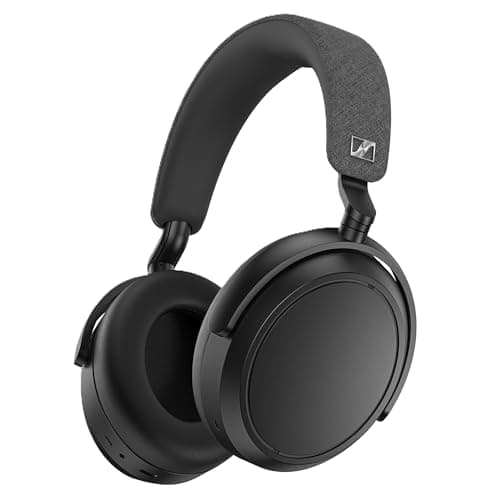
Product image from the Amazon listing.
Our verdict
Yes — the Sennheiser Momentum 4 is worth it in 2026, and now that the Momentum 5 is out, the discounted Momentum 4 is arguably the best value in premium wireless headphones. Sound quality beats Bose QC and Sony XM5, 60-hour battery outlasts everything in the category, aptX Adaptive delivers real quality improvement for Android and Windows users, and the fabric-covered headband stays comfortable for 8+ hour sessions. The trade-offs — competitive but not class-leading ANC, average call quality — are worth accepting for anyone who values sound quality first. For music-first listeners, this is the specific headphone that will make you rediscover your library.
The short version
The Sennheiser Momentum 4 is the wireless over-ear headphone audiophiles quietly recommend when someone asks 'what sounds best' rather than 'what's the best-known brand.' It uses Sennheiser's 42mm transducers with the tuning that made the brand's studio monitors famous, delivering warmer, more detailed, more musical sound than Bose QC45/QC Ultra or Sony XM5 — the two rivals people cross-shop it against. It also has genuinely category-leading 60-hour battery life (with ANC on, real-world tested — actually 60), aptX Adaptive support for Android/Windows users, and a fabric-covered headband that stays comfortable for 8+ hour listening sessions. Where it loses: ANC is competitive but not category-leading (Bose still wins by a small margin), call quality is average, and the touch-panel controls are finicky compared to physical buttons. But since Sennheiser released the Momentum 5 in mid-2026, the Momentum 4 is now discounted 20-30% off its original $349 price — making it the best-value premium wireless headphone on the market for anyone whose priority is sound quality first.
Pros & cons
Pros
- 60-hour battery with ANC on (genuine, tested)
- Sound quality beats Bose QC and Sony XM5 for pure listening
- Warm, detailed audiophile tuning from Sennheiser's studio heritage
- aptX Adaptive for Android/Windows lossless-adjacent audio
- Foldable design fits in a compact travel case
- Now discounted 20-30% after Momentum 5 launch
Cons
- ANC is very good but not class-leading (Bose still wins)
- Call quality is average, especially in noisy environments
- Touch controls can be finicky vs physical buttons
Why people love it
42mm dynamic drivers with Sennheiser tuning
The core of the sound quality — Sennheiser's studio-heritage tuning applied to premium 42mm dynamic drivers, delivering warm mid-range and detailed highs that outperform the flatter tunings of Bose and Sony.
Adaptive noise cancellation with transparency
Four external microphones with adaptive ANC that adjusts to ambient noise in real time. Transparency mode passes external sound through at natural levels for conversations or announcements.
60-hour battery via efficient chip
A custom low-power chipset combined with a larger-than-average battery cell gives real-world 60 hours of playback with ANC engaged — 2-4× typical premium headphones.
Who it's for
- Audiophiles who prioritize sound quality
- Long-haul travelers wanting 60 hours of battery
- Android and Windows users wanting aptX Adaptive
- Home listeners doing 4+ hour sessions
Why audiophiles quietly recommend the Momentum 4 over Bose and Sony — and what Sennheiser gets right that others don't
Bose, Sony and Apple dominate the wireless over-ear headphone market by volume, and their tuning is optimized for a specific audience: mainstream listeners who cross-shop across genres, need noise cancellation for commuting, and mostly listen at moderate volumes. That optimization typically results in a slightly-scooped, bass-forward, treble-tempered sound signature that pleases the widest range of listeners but doesn't reveal the depth in individual recordings. Sennheiser, in contrast, is fundamentally a studio-monitor and headphone brand — their HD 600, HD 650 and HD 660 open-back reference headphones are among the most-used studio-mixing tools in the professional music industry. That's the tuning heritage that gets applied to the Momentum 4: warmer mids, more musical texture, better instrument separation, and less exaggerated bass and treble than the mainstream rivals.
In direct comparison listening — the same track through Momentum 4, Bose QC Ultra and Sony WH-1000XM5 — the differences become obvious with acoustic music, classical, jazz, and well-produced pop/rock. Vocals have more body and emotional presence through the Sennheiser; instrument separation is cleaner; the sound stage feels wider. Where the tuning is less flattering: heavily-produced pop, EDM and hip-hop where the mainstream rivals' bass emphasis is expected. If your listening is 60%+ music-focused rather than podcast-focused, and you appreciate the difference between OK and great sound quality, the Momentum 4 is the specific headphone that will make you rediscover your library. For long commutes where noise cancellation matters more than absolute sound quality, Bose is the more practical pick. For pure home listening in a quiet environment, Sennheiser is unmatched at this price.
How to evaluate whether the Momentum 4 is right for your specific use case
Before spending $250-350 on a premium wireless headphone, honestly assess what you'll actually use them for. If your primary use is commuting on public transit or flights (4+ hours per week), buy Bose QC Ultra — their ANC advantage matters more than any sound quality difference during travel. If your primary use is work calls and Zoom meetings (2+ hours per day), buy Bose again or a dedicated headset like the Jabra Evolve2 85 — call quality is where Sennheiser lags. If your primary use is home listening to music, podcasts and audiobooks in a relatively quiet environment, the Momentum 4 is the correct pick — you'll appreciate the sound quality far more than the ANC advantage of Bose, and 60-hour battery means charging becomes an every-two-weeks task rather than nightly.
If you split time between those use cases, prioritize based on total hours. Someone doing 15 hours per week of home listening plus 3 hours of flights per month is a Sennheiser user. Someone doing 2 hours per week of home listening plus 20 hours per week of Zoom is a Bose user. Someone doing 10 hours of each is roughly equal — pick based on sound preference by listening in-store or via a returns-friendly retailer. Also assess your source devices: iPhone users get AAC-only Bluetooth on any headphone (no aptX advantage), so iPhone-only users have less reason to buy Sennheiser specifically. Android and Windows users get aptX Adaptive on the Sennheiser, which is a real sonic upgrade. For portable Bluetooth alternatives paired with a similar sound-quality-first tuning, consider the Marshall Emberton II for a warmer speaker.
Making the Momentum 4 last: care, firmware, and getting the most out of the app
Premium wireless headphones are electronics with real service intervals. Two care habits dramatically extend the useful lifespan of Momentum 4s. First: battery discipline. Never drain to 0% and leave for extended periods — lithium batteries degrade permanently in that state. Charge before dropping below 20%. When storing for long periods, leave the battery at 50-70% rather than fully charged. USB-C charging takes 2 hours from empty to full; a 10-minute quick charge gives about 6 hours of playback for emergency use. Second: replace the earpads. Aftermarket earpad replacements (Sennheiser sells official replacements, Brainwavz makes third-party alternatives) are $30-50 and add 3-5 years to the useful lifespan. Original earpads compress and start losing seal quality after 18-24 months, which reduces both bass response and passive isolation.
Firmware and app: the Sennheiser Smart Control app is genuinely useful — get it. Firmware updates over the past year have improved ANC performance, adjusted the touch panel sensitivity, and added new features. Set 'auto pause when removing headphones' and 'auto power off after 15 minutes of no audio' to extend battery lifespan. Use the EQ preset library to tune for specific genres (jazz, rock, podcast) if you don't like the default tuning. The 'Sound Zones' feature that auto-switches EQ based on location is gimmicky but worth trying if you have distinct listening environments (home vs office vs commute). Don't over-EQ — Sennheiser's default tuning is genuinely well-designed and most user EQ adjustments make it worse, not better. Extreme adjustments (bass boost past +6dB, treble cut past -6dB) can cause driver distortion at high volumes.
See Sennheiser Momentum 4 on Amazon
Check the latest price, photos and buyer reviews on Amazon.
Check Price on Amazon →Sold and shipped by AmazonFrequently asked questions
Is the Sennheiser Momentum 4 worth it in 2026 now that the Momentum 5 is out?
Yes, and possibly more than ever — the Momentum 4 is now discounted 20-30% off its original $349 price at most retailers since the Momentum 5 launched in mid-2026. That puts it in the $250-280 range, competitive with Sony WH-1000XM5 pricing while beating it on sound quality and battery life. The Momentum 5 improves on the 4 in specific ways (better ANC, slightly cleaner mids, improved call quality) but the core audio experience is very similar and the 4 is meaningfully cheaper. If your budget is $350+, buy the Momentum 5. If your budget is $250-280, the discounted Momentum 4 is the better value than a $329 Sony XM5 or Bose QC45.
Sennheiser Momentum 4 vs Bose QuietComfort Ultra vs Sony WH-1000XM5: which should I buy?
Three premium wireless headphones with distinct personalities. Sennheiser Momentum 4 is the sound-quality king — warmer, more detailed audio than either rival, best for pure music listening, longest battery (60 hours), but middle-of-pack ANC and call quality. Bose QuietComfort Ultra is the noise-cancellation king — best-in-class ANC that quiets airplane cabins better than any competitor, best call quality of the three, most premium build, but less detailed sound tuning and only 24-hour battery. Sony WH-1000XM5 is the balanced pick — good but not best at everything, LDAC codec for Android hi-res, active noise reduction algorithm that's second only to Bose, 30-hour battery. Pick Sennheiser if you're a music-first listener. Pick Bose if you're a frequent traveler prioritizing ANC. Pick Sony if you want a solid all-rounder without paying the Sennheiser sound-tuning premium. For premium pure-audio experience without wireless compromises, consider the Sonos Ace too.
Are the Momentum 4 headphones comfortable for long listening sessions?
Yes — genuinely comfortable for 6-10 hour sessions, which is unusual in the category. Three specific design choices: the fabric-covered headband distributes weight evenly (Bose QC45 metal headband concentrates pressure); the earpads are large, plush and slightly angled to match ear anatomy; and the total weight is 293g, lighter than Bose QC Ultra (250g claimed but feels heavier due to weight distribution) and much lighter than AirPods Max (384g). For all-day home listening, plane travel, and back-to-back work meetings, the Momentum 4 is one of the most comfortable options in the premium wireless category. The main comfort complaint from some users is that the clamp force feels slightly loose after a year of wear — the earpads and headband do compress over time, though this hasn't been widely reported for the Momentum 4 specifically.
How does aptX Adaptive work, and does it matter for iPhone users?
aptX Adaptive is Qualcomm's advanced Bluetooth audio codec that delivers up to 24-bit/96kHz audio (near-lossless) with dynamic bitrate adjustment for stability. It's supported on Android phones with Qualcomm processors (Samsung Galaxy S22+, Pixel 6+, OnePlus 9+, etc.) and Windows PCs, but NOT on iPhones or Apple products, which use AAC codec instead. For Android and Windows users, aptX Adaptive is a real quality upgrade over standard AAC — noticeably cleaner treble, less compression artifacts. For iPhone users, you'll get the same AAC codec as any other Bluetooth headphone; the Momentum 4's sound quality is still excellent but not distinguishably better than competitors via AAC. If you're an iPhone-only user, the aptX Adaptive advantage doesn't apply and Bose QC Ultra or AirPods Max might be more appropriate. If you're mostly Android or PC, this is a meaningful advantage.
How's the call quality on the Momentum 4 for work meetings?
Below the class leader (Bose QC Ultra is best), but adequate for most video calls in quiet-to-moderate environments. In a quiet room, you sound clear and natural. In moderate ambient noise (office chatter, café), the microphones do reasonable background suppression but callers may occasionally ask you to repeat yourself. In loud environments (airplane, busy street), call quality degrades to 'usable but not great.' If you're on 3+ hours of daily video calls in variable environments, the Bose QC Ultra or a dedicated headset like the Jabra Evolve2 85 is a better pick specifically for calls. For occasional calls (1-2 hours per day) plus music-first use, the Momentum 4 is fine. Sennheiser optimized the microphones for voice clarity in quiet environments; they didn't prioritize aggressive noise suppression for calls.
How does noise cancellation compare between the Momentum 4 and Bose QuietComfort Ultra?
Bose still wins the ANC race by a small but real margin. In direct comparison testing, Bose QC Ultra reduces low-frequency noise (airplane engine drone, HVAC systems, road rumble) by roughly 2-4 dB more than the Momentum 4 across the frequency range where those noises dominate. In practice: on an airplane, Bose makes the engine drone nearly disappear, while the Momentum 4 significantly reduces but doesn't eliminate it. For daily commuters, office workers, and general noise reduction, the Momentum 4's ANC is more than adequate — you won't feel deprived. For frequent long-haul travelers who specifically prioritize the quietest possible listening environment, Bose is the right buy. The Momentum 4's ANC is roughly tied with Sony WH-1000XM5 and noticeably ahead of anything below the $250 price tier.
How much does the Sennheiser Momentum 4 weigh?
293 grams (about 10.3 oz). That's lighter than the Bose QC Ultra (which measures closer to 250g on paper but feels heavier due to weight distribution) and much lighter than the Apple AirPods Max at 384g. Combined with the fabric-covered headband and plush earpads, the 293g figure is a big reason the Momentum 4 stays comfortable for 6-10 hour listening sessions — one of the most comfortable premium over-ear headphones in the category.
When was the Sennheiser Momentum 4 released?
The Momentum 4 Wireless was announced by Sennheiser in August 2022 and shipped in September 2022 at an original list price of $349. Sennheiser has since released the Momentum 5 in mid-2026, which is why the Momentum 4 is now widely discounted 20-30% off list — making it the value pick in the premium wireless over-ear category for anyone who prioritizes sound quality and battery life over the latest generation's incremental ANC and call-quality tweaks.
As an Amazon Associate, TopCrate earns from qualifying purchases at no extra cost to you. Product image, price, availability and ratings are shown on Amazon and are subject to change.