CAR CARE 101
Why Is My Check Engine Light On? Causes, Codes, and Costs
That little amber engine is a message from your car's computer, not a countdown to disaster — here's what it means, how to read the code yourself, and when it's actually urgent.
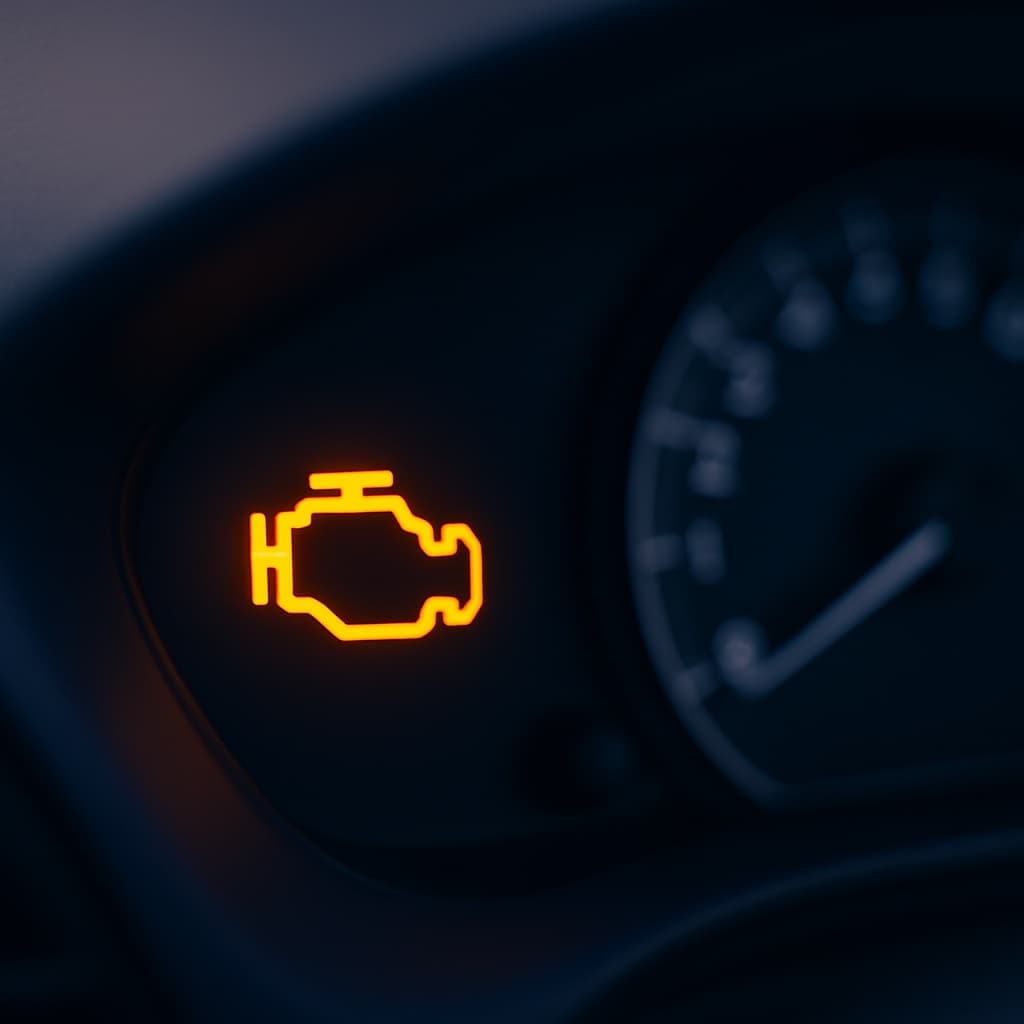
Few things sour a drive faster than the check engine light blinking to life — mostly because it tells you something is wrong without telling you what. It could be a gas cap you didn't twist far enough, or it could be a part with a comma in its price. The not-knowing is the worst part.
The good news: the not-knowing is optional. This guide covers what the light actually is, the one distinction that decides whether you keep driving or pull over, the most common causes ranked by how often they really happen, how to pull the exact code yourself in about two minutes, and honest cost ranges for each fix.
What the Check Engine Light Actually Is
The check engine light is your car's onboard computer raising its hand. Dozens of sensors constantly monitor the engine and emissions systems, and when a reading drifts outside its acceptable range, the computer logs a diagnostic trouble code and switches on the light. The light itself carries almost no information — the code behind it carries nearly all of it.
One quick disambiguation, because dashboards are crowded: the check engine light is the amber engine-shaped outline. A horseshoe shape with an exclamation point is low tire pressure — a different system entirely, and our guide on how to check tire pressure handles that one. Oil-can and thermometer symbols are their own, more urgent, conversations, which we'll get to at the end.
Solid vs. Flashing: The First Thing to Check
Before anything else, look at how the light is behaving. A solid, steady light means the computer logged a fault that needs attention soon — not this second. The car is generally safe to drive to work, home, or a shop while you figure it out. Don't ignore it for weeks, but don't panic-brake to the shoulder either.
A flashing check engine light is different. Flashing means an active engine misfire — one or more cylinders isn't burning its fuel, and that raw fuel is being dumped into the exhaust, where it can overheat and destroy the catalytic converter, one of the most expensive parts on the car. This isn't a pull-over-immediately emergency in most cases, but it is a reduce-your-speed, ease-off-the-load, get-it-checked-right-away situation. The longer you drive on a flashing light, the better the odds a few-hundred-dollar ignition fix becomes a four-figure exhaust repair.
The Most Common Check Engine Light Causes, Ranked
Industry repair data — CarMD analyzes tens of millions of vehicle records for its annual index — shows the same culprits year after year. The loose or faulty gas cap is the classic first suspect: a bad seal lets fuel vapor escape, the emissions system notices, and the light comes on. It's also the cheapest possible outcome, which is why it's worth checking before anything else. Next comes the oxygen sensor, which measures unburned oxygen in the exhaust; sensors wear out with age and mileage, and a lazy one hurts fuel economy while it trips the light.
The catalytic converter actually tops recent repair-frequency lists — though it usually fails because an ignored upstream problem, like a bad oxygen sensor or misfire, cooked it. Spark plugs and ignition coils round out the usual suspects: worn plugs and failing coils cause rough idle, sluggish acceleration, and the misfires behind most flashing lights. And the mass airflow sensor, which meters the air entering the engine, causes stalling and hesitation when it gets dirty or dies. Five suspects cover the large majority of check engine lights you'll ever see.
Read the Code Yourself With an OBD2 Scanner
Here's the part most drivers don't know: you don't need a mechanic to find out why the light is on. Every car sold in the US since 1996 has a standardized OBD2 port, almost always under the dash on the driver's side, and an OBD2 scanner plugs into it and reads the exact code the computer logged. Basic handheld scanners cost about as much as a pizza; a Bluetooth reader like FIXD goes a step further and translates the code into plain English on your phone — what it means, how serious it is — instead of handing you a cryptic P0420 and wishing you luck.
Two minutes with a scanner turns 'something is wrong' into 'the code points at the evap system, and I just filled the tank — let me reseat the gas cap.' It also changes the conversation at the shop: walking in knowing the code makes you a harder person to upsell.
What Codes Do and Don't Tell You (and Clearing Them Honestly)
A code points at a system, not always the exact part. The famous P0420 says the catalytic converter isn't performing efficiently — but the root cause might be a failing oxygen sensor feeding it bad data, which is a much cheaper fix. Treat the code as the start of the diagnosis, not the verdict, and be suspicious of anyone who replaces the most expensive part a code could implicate without checking the cheaper causes first.
Most scanners can also clear codes, and honesty requires saying this plainly: clearing a code without fixing the cause just turns the light off until the computer notices the same fault again, usually within days. It also resets your car's emissions readiness monitors, which need a few days of normal driving to complete — so clearing codes right before a state inspection is a great way to fail it. Clear codes to confirm a fix took, not to make the light go away.
DIY or Mechanic? Honest Cost Ranges by Cause
Some of this is genuinely DIY territory. A gas cap is free to reseat and roughly $25 to replace. A dirty mass airflow sensor can often be revived with a $10 can of MAF cleaner; a new one typically runs a few hundred dollars installed. Spark plugs are an approachable driveway job on many engines, and plugs-and-coils repairs generally land between $50 and $600 at a shop depending on how many coils are involved. Oxygen sensors usually run a couple hundred to $500 installed — the part is cheap-ish, the access sometimes isn't.
The catalytic converter is the one you're hoping it isn't: recent industry averages put replacement around $1,500, and it can push past $2,000 on some vehicles. Which is the whole argument for taking a solid light seriously and a flashing light very seriously. Finally, know when to stop driving entirely: a flashing check engine light plus shaking, any overheating warning, or an oil pressure light alongside the check engine light means pull over safely and shut it down. Those are the rare cases where continuing to drive can turn a repair into an engine replacement.
Read our FIXD review
We tested the Bluetooth scanner that translates check engine codes into plain English on your phone — here's how it held up.
Read our FIXD reviewFrequently asked questions
Can I drive with the check engine light on?
If it's solid and the car runs normally, yes — drive normally and get the code read soon. If it's flashing, reduce speed and load and get it checked immediately; a flashing light means an active misfire that can destroy the catalytic converter. If it's accompanied by overheating or an oil pressure warning, pull over and shut the engine off.
What does a flashing check engine light mean?
An active engine misfire — unburned fuel is entering the exhaust, where it can overheat and ruin the catalytic converter. Ease off the accelerator, avoid highway speeds and towing, and have it diagnosed right away.
Can a loose gas cap really turn on the check engine light?
Yes — it's one of the most common causes. A loose or worn cap lets fuel vapor escape and trips an evap system code. Tighten it until it clicks; the light typically turns itself off after a few drives if that was the problem.
Why is my check engine light on but the car runs fine?
Many triggers — a loose gas cap, an aging oxygen sensor, an evap leak — don't change how the car feels. The light can precede symptoms by weeks, which is exactly why reading the code beats waiting for something to obviously break.
Will the check engine light turn off by itself?
If the fault stops recurring — say, you tightened the gas cap — the computer usually turns the light off on its own after several trips. If the fault is still present, it stays on, and clearing it with a scanner only buys a few days of false calm.
How much does it cost to fix whatever's causing it?
Anywhere from free to four figures: reseating a gas cap costs nothing, a new cap about $25, plugs and coils roughly $50 to $600, an oxygen sensor a couple hundred to $500, and a catalytic converter around $1,500 on average. Reading the code first tells you which end of that range you're on.
TopCrate is reader-supported. When you buy through links on our site we may earn an affiliate commission, at no extra cost to you. Content is for general information and isn't a substitute for professional advice.