BUYER'S GUIDE
Is FIXD Legit? An Honest Look at the $20 OBD2 Sensor, Its Subscription and the Guarantee (2026)
FIXD is a real OBD2 sensor from a real Atlanta-area company, sold with a 30-day money-back guarantee and a working checkout. The hardware is standards-compliant and the app does what it says. The auto-renewing Premium subscription is where nearly every complaint lives. Here's what to check before you buy.
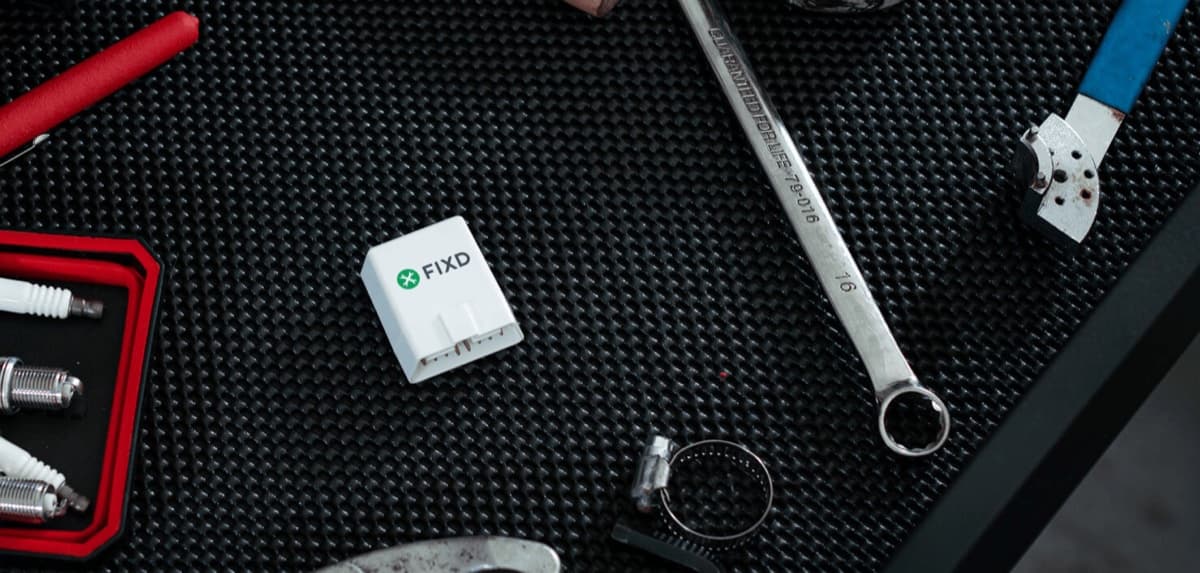
FIXD is legit in the sense that matters most: it's a real matchbox-sized OBD2 sensor made by FIXD Automotive Inc., a Marietta, Georgia company founded in 2014, sold through the brand's own store with a 30-day money-back guarantee, tracked shipping and a working returns process. The sensor is standards-compliant hardware that reads the same SAE J1979 diagnostic codes every professional shop scanner reads, and the app translates those codes into plain English on your phone. It is not a scam.
So the honest "is FIXD legit" question isn't whether the hardware works — it does — but what to actually watch for at the checkout, what the guarantee covers and doesn't, whether the auto-renewing $99.99-a-year Premium subscription is a fair deal, and where the real complaint themes are. The core code reading is a 90% product on the free tier alone; the Premium billing is where nearly every one-star review lives; and if you decline the trial at signup and put the sensor to work, the outcome is genuinely as advertised.
One name-related note before we get into it: "FIXD" is often confused online with "Fixed," the parking-ticket app that appeared on Shark Tank in season 7. Those are two different companies. FIXD Automotive Inc. — the OBD2 sensor brand this guide is about — has not been on Shark Tank; the confusion comes from the similar name and the same broad "we fix your car problems" pitch. Our full FIXD review covers the product itself, and our FIXD vs BlueDriver comparison covers the main alternative.
Who actually sells FIXD
FIXD is sold by FIXD Automotive Inc., a Marietta, Georgia company founded in 2014 that ships the sensor from its own store at fixdapp.com and through vetted affiliate channels including the DFO / TechMonkey Post performance network that the TopCrate affiliate link routes through. It isn't a drop-shipped pop-up brand with one product and no history: FIXD has been in the OBD2 category for over a decade, has millions of app downloads, and its returns and support processes are well-documented on the brand's own site.
The store is built like most direct-to-consumer sale funnels. Expect a video-heavy landing page, an urgency banner or two, a sticker price around $19.99 that reflects the current promotional discount off the ~$59.99 MSRP, and a Premium subscription upsell during the checkout flow that starts a 14-day free trial and then auto-renews at $99.99/yr unless you decline. None of that makes FIXD fake — it's how nearly every direct-to-consumer tech brand sells — but it means the checkout deserves a careful read rather than an autopilot click. Confirm the sensor quantity, confirm the total, and be deliberate about whether you accept or decline the Premium trial.
A disclosure from us: TopCrate is a paid affiliate for FIXD and earns a commission when readers buy through our links. It doesn't change the verdict on this page, and it doesn't push FIXD up in a comparison — our FIXD vs BlueDriver explainer keeps BlueDriver in the running for the specific case where an enthusiast-grade scanner is the better fit. We'd rather you buy the right tool for your car than the most expensive one.
Is FIXD a scam? What "legit" means here
A scam takes your money and gives you either nothing or something wildly different from what was promised, with no way to get the money back. That isn't FIXD. You receive a real Bluetooth OBD2 sensor that does exactly what the app describes: it reads the same standardized OBD2 trouble codes every professional shop scanner reads, translates them into English, and shows a stoplight-color severity rating so you know whether to schedule a fix or keep driving. If you don't like the sensor, there's a 30-day money-back window from the delivery date. That's the shape of a real product with a real refund path.
Where FIXD earns skepticism is one specific place: the language and default of the Premium subscription. Marketing copy leans on the sensor price ($19.99) far more than on the subscription price ($99.99/yr), and the 14-day trial is offered as an opt-in during checkout that quietly auto-renews if you don't cancel before it ends. The auto-renewal is where most negative reviews land, and the FIXD Automotive listing on the Better Business Bureau site has a familiar concentration of complaints about renewals users say they didn't remember agreeing to. Decline the trial at signup if you're not sure and add Premium back later once you know if you want it.
Our full FIXD review scores the product 9.6 out of 10 on the merit of what it actually is: a well-executed plain-English OBD2 translator for drivers who aren't mechanics. The hardware is honest, the app is legitimately useful, and the free tier is a 90% product on its own. The billing practices around Premium are the piece of the offer that requires the buyer to pay attention, not a reason to skip the hardware entirely.
What the 30-day guarantee actually covers
FIXD's stated policy is a 30-day money-back guarantee measured from the date the sensor is delivered. Return the undamaged sensor within 30 days by initiating a return through FIXD's returns process, and the sensor purchase amount is refunded. Shipping, handling and any taxes paid are non-refundable per the same policy — the refund is the sensor price, not the full invoice total — and the sensor has to be undamaged and returned in its packaging to qualify. That's the shape of the coverage, and it's roughly the industry-standard direct-to-consumer window.
Two details in the fine print matter in practice. First, the 30-day clock starts on the delivery date rather than the order date, and it doesn't reset if you delay opening the box — mark it in your calendar the day the sensor arrives. Second, the returns flow is initiated through FIXD's returns page rather than a self-service portal, so factor a couple of business days into the timeline. Neither of those is unusual — it's what the policy actually says.
The Premium subscription is a separate thing entirely and does not fall under the 30-day sensor guarantee. Subscription renewal charges are non-refundable per FIXD's stated policy, and the 14-day trial clock starts at order time (not delivery), so if the sensor takes a week to arrive you have a shorter window than the trial length implies. Every serious complaint about FIXD's billing lives in that gap between the sensor guarantee and the subscription policy — treat them as two different products with two different return rules.
The Premium subscription, decoded honestly
FIXD Premium is $99.99 a year (some funnels show a $69.99/yr or $8.99/mo option) after a 14-day free trial that starts at order time. What Premium buys: mechanic hotlines (a live human on the phone), region-specific repair-cost estimates drawn from real invoice data, issue forecasting on your vehicles, and an emissions pre-check. What it doesn't buy: any of the core code-reading or translation, all of which stays free on the sensor forever.
The right way to think about Premium isn't yes-or-no at checkout; it's whether the specific extras earn the fee for your specific car. Households with an aging high-mileage vehicle that lights up every couple of months get the fee back in a single negotiated repair — the mechanic hotline is genuinely useful when a shop's quote surprises you, and the cost estimates give you a floor to negotiate against. Households whose cars are mostly quiet run the free tier forever and never pay a diagnostic fee again, and that's also a legitimate use of the sensor.
The honest recommendation: decline the Premium trial at signup. Use the free tier for a couple of months to see whether your car actually lights up often enough for the mechanic hotline to matter, and then add Premium back if the answer is yes. FIXD makes it easy to add later and hard to notice the auto-renewal at the end of a trial you took at checkout, and every negative review theme lives in that asymmetry.
Is FIXD compatible with my car?
FIXD works on any gas vehicle sold in the US since 1996 — that's when the OBD2 port became mandatory on gas cars — including hybrids that expose their internal-combustion side through the standard port. Diesel vehicles from 2008 forward are supported (some sources cite 2006 forward on specific models). The sensor pairs to iPhones running iOS 10.3 or newer and Android phones running Android 4.4 or newer, and the app needs three bars of cellular service or a WiFi connection to load its plain-English translations of new codes.
Where compatibility gets thinner: fully electric vehicles expose limited data through the standard OBD2 port, so a Tesla or a Chevy Bolt won't tell you much about its high-voltage battery through FIXD (or through any consumer OBD2 tool). Hybrids report the internal-combustion side through OBD2 as expected, but hybrid-specific diagnostics live in manufacturer-specific modules that FIXD doesn't read. And on any car, ABS, airbag/SRS, transmission and TPMS codes live in separate modules that a $20 OBD2 sensor cannot access — a limitation FIXD shares with every OBD2 dongle in this price range. Our FIXD vs BlueDriver explainer covers when BlueDriver's enhanced-code coverage is the better fit.
The pragmatic check before you buy: FIXD publishes a compatibility page at fixdapp.com that takes a VIN or a year/make/model. If your vehicle is a US-sold gas or hybrid car from 1996 forward, the answer is almost certainly yes; if it's a diesel earlier than 2008 or a full EV, check the compatibility page or a different tool.
What the ads overpromise
FIXD's marketing sits between the two poles of "this is a real product that works" and "this is a complete solution to car ownership." It helps to separate the claims into two piles.
Claims that hold up: the sensor reads and clears the check-engine light on any 1996+ gas car (or 2008+ diesel), the plain-English translation is the real value, the severity rating is a genuine decision tool, the maintenance-reminders tab pulls from actual mileage rather than time, and the multi-vehicle account is a real feature for households with several drivers. The free tier does what it says, forever. Independent hands-on writeups at Tom's Guide and elsewhere reach the same read on the hardware.
Claims that don't: implicit promises that FIXD replaces every shop visit (it diagnoses — you still choose the repair), and the checkout's framing that Premium is a natural next step for every buyer (it isn't; it earns its fee for a specific subset of car-owner situations and is worth declining at signup for everyone else). And a fair criticism: the marketing tone occasionally implies FIXD reads more than the standard OBD2 layer, which it doesn't — for enhanced ABS, airbag or transmission codes, a scanner like BlueDriver is the right tool.
Where the real complaint themes are
A careful read of FIXD's public complaint records — the Better Business Bureau's FIXD Automotive Inc. listing and the Trustpilot and ConsumerAffairs pages for the brand — points at one theme with a couple of variations. The most common complaint isn't about the sensor; it's about the auto-renewing Premium subscription. Buyers accept the 14-day trial during checkout, forget about it, and are charged $99.99 at the end of the trial; FIXD's stated policy is that renewal charges are non-refundable. That's the single flashpoint.
Two related patterns show up in the same records. Some buyers report that the card they used for the initial sensor purchase was later charged for a Premium subscription they say they never enrolled in — this is worth taking seriously as a signal that the trial opt-in during checkout is not landing clearly enough for every buyer to notice. And some buyers report difficulty canceling or slow refund timelines, though the picture on that is mixed and depends on which support channel a user reaches out through.
The practical implication for buyers: at the checkout, look specifically for whether the Premium trial is being added, and decide before clicking pay. If you find you've been charged for a Premium subscription you didn't intend to keep, the escalation path is FIXD's support first, your card issuer's dispute process second, and the BBB complaint form third — the BBB's FIXD Automotive Inc. listing tracks how the company resolves cases and is a useful signal in its own right.
How to buy FIXD safely
Buy from FIXD's own store. The TopCrate affiliate link routes you there directly, the 30-day money-back guarantee applies, and there's no counterfeit-drive risk. Unfamiliar third-party sellers on marketplaces occasionally list FIXD-branded sensors that are re-flashed or older refurbished units, and the guarantee doesn't cover purchases made outside FIXD's own funnel.
Read the checkout slowly. Confirm the sensor quantity and total, and be explicit about the Premium trial — accept it only if you already know you want it, otherwise decline it at signup and add Premium back later if the free tier's limits actually bite. Uncheck any accessory add-on you didn't select on purpose, and screenshot the confirmation.
Keep the sensor's packaging and your paperwork until you're sure you're keeping it, and note the 30-day return deadline on the delivery date. If you accepted the Premium trial, put a calendar reminder for day 13 so the auto-renewal doesn't sneak up on you.
Compare before you commit if you drive an older car, a European car or a car that throws ABS or airbag codes rather than engine codes. Our FIXD vs BlueDriver walks the enhanced-code coverage BlueDriver has that FIXD doesn't, and helps you decide which is the right tool for your specific vehicle.
Our verdict
FIXD is legit: a real OBD2 sensor from a real Marietta, Georgia company, sold through a working checkout with a stated 30-day money-back guarantee, that does exactly what the app describes on any US-sold gas car from 1996 forward. The plain-English translation of trouble codes is a genuine solution to the information asymmetry that turns every check-engine light into a $150 diagnostic fee, and the free tier's code reading, severity ratings and clearing are enough tool for most drivers.
The one thing to be deliberate about is the Premium subscription. It's $99.99 a year after a 14-day trial that starts at order time and auto-renews unless you cancel, and every serious FIXD complaint theme is about that renewal rather than the sensor. Decline the trial at signup, use the free tier for a couple of months, and add Premium back only if the mechanic hotline or cost estimates actually earn their fee for your specific car. Handled that way, FIXD is one of the highest-leverage things you can keep in the glovebox for the sensor price. Our full FIXD review covers the workflow in more depth.
Read our full FIXD review
Our verdict on the $19.99 OBD2 sensor from FIXD Automotive Inc. — what it does well, how the Premium subscription is priced, and whether the sensor belongs in your glovebox on a modern gas car.
Read our full FIXD review →Frequently asked questions
Is FIXD a scam?
No. FIXD is a real Bluetooth OBD2 sensor sold by FIXD Automotive Inc., a Marietta, Georgia company founded in 2014, through its own checkout with a 30-day money-back guarantee, tracked shipping and a working returns process. The hardware is standards-compliant and does what the app describes. The one legitimate complaint theme is about the auto-renewing Premium subscription rather than the sensor itself — decline the trial at signup and the sensor works as advertised.
Who makes FIXD, and did it appear on Shark Tank?
FIXD is made by FIXD Automotive Inc., a Marietta, Georgia company founded in 2014, and has not appeared on Shark Tank. The confusion is with a different company called "Fixed" — a parking-ticket app pitched on Shark Tank in season 7 — that shares the similar name and the same broad "we fix your car problems" tone. FIXD's OBD2 sensor is a separate product from a separate, still-operating company.
How does FIXD's 30-day guarantee actually work?
FIXD's stated policy is a 30-day money-back guarantee measured from the delivery date. Return the undamaged sensor in its packaging within 30 days through FIXD's returns process, and the sensor's purchase amount is refunded (shipping, handling and taxes are non-refundable per the same policy). The 30-day clock starts when the sensor arrives, not when you order it, and it doesn't reset if you delay opening the box — put the deadline on your calendar the day of delivery.
Is FIXD Premium worth it?
For a specific subset of buyers, yes. Premium is $99.99/yr after a 14-day free trial, and it earns its fee for households with aging high-mileage vehicles that light up regularly — one negotiated repair with the mechanic hotline pays for a year of Premium. For households whose cars are mostly quiet, the free tier's code reading, plain-English translation and severity rating is a 90% product on its own and Premium is skippable. The honest advice is to decline the trial at signup and add Premium back later if the free tier's limits actually bite.
Will FIXD work on my car?
If it's a US-sold gas or hybrid vehicle from 1996 forward, yes — that's when the OBD2 port became mandatory. Diesels from 2008 forward are supported. Full-EV subsystems expose limited data through the standard port, so a Tesla or Bolt won't tell you much about its high-voltage battery through FIXD. ABS, airbag/SRS, transmission and TPMS codes live in separate modules that FIXD does not read — our FIXD vs BlueDriver covers when a scanner with enhanced-code reading is the better tool.
What are the biggest FIXD complaints?
By a wide margin, the auto-renewing Premium subscription. Buyers accept the 14-day trial at checkout, forget the deadline, and are charged $99.99 at the end of the trial; FIXD's stated policy is that renewal charges are non-refundable. A second theme is buyers reporting Premium charges on the same card they used for the sensor purchase that they say they don't remember opting into. The sensor itself is generally praised in the same complaint records — the billing pattern around Premium is the flashpoint.
Is FIXD sold on Amazon?
FIXD-branded listings occasionally appear on Amazon and other marketplaces from third-party resellers rather than a FIXD-operated storefront. Two catches: those listings are not covered by FIXD's own 30-day money-back guarantee, and marketplace listings for viral OBD2 dongles are a known counterfeit-risk category — a cheap re-flashed sensor can look identical on the outside but fail to update the app. If you want the guarantee and the correct product, buy direct from FIXD's own store.
TopCrate is reader-supported. When you buy through links on our site we may earn an affiliate commission, at no extra cost to you. Content is for general information and isn't a substitute for professional advice.