COMPARISON
FIXD vs BlueDriver: Which OBD2 Scanner Is Better for Your Car? (2026)
Both plug into the same OBD2 port and translate your check-engine light on your phone. One is a $20 sensor with a plain-English app and an optional subscription; the other is a ~$100 one-time-pay scanner that reads deeper manufacturer-specific codes. Here's how they compare on price, features, guarantees and who each one actually wins.
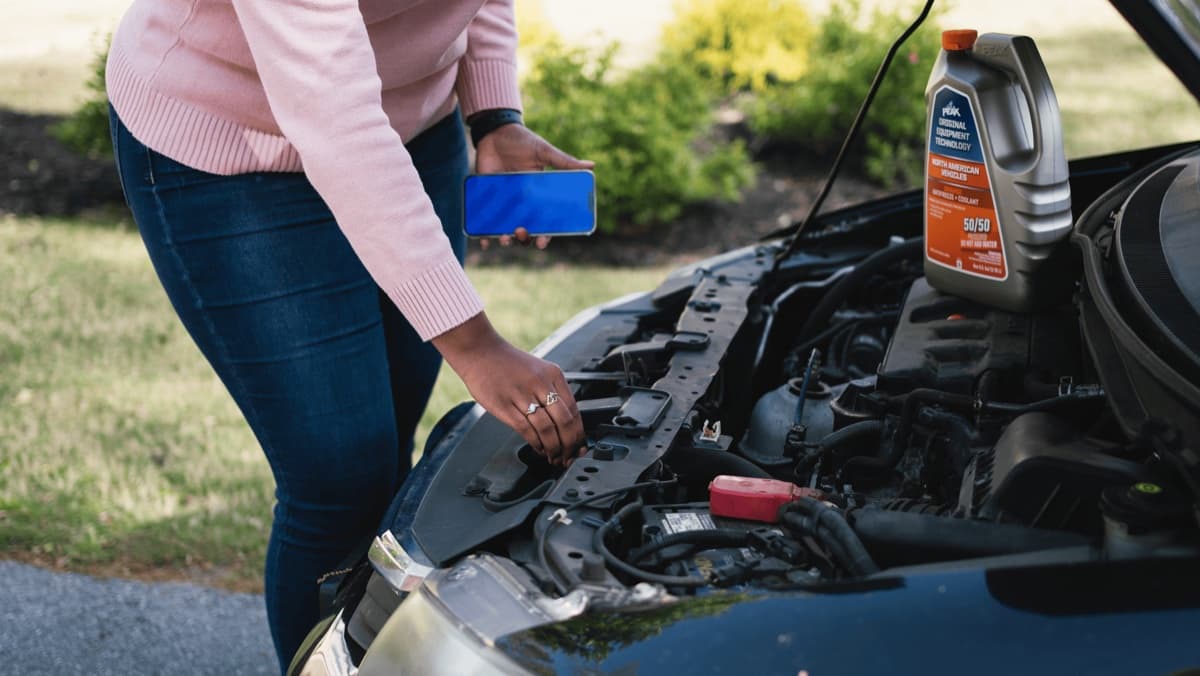
FIXD and BlueDriver are the two OBD2 scanners most drivers actually get pointed at when they search for a phone-based way to read the check-engine light without paying a shop $150 to plug in a scanner of its own. They plug into the same port, they pair with the same iPhones and Android phones, and once the app is open, they do the same thing at their core: they read the trouble codes the car has been storing all along and translate them into English. The difference is where the two designs stop.
FIXD is a $19.99 promotional-price sensor (about $59.99 at MSRP) from FIXD Automotive in Marietta, Georgia, sold with an optional Premium subscription that runs $99.99 a year after a 14-day trial. The sensor is deliberately simple hardware pointed at drivers who want the check-engine light explained without becoming a hobbyist mechanic. BlueDriver is a ~$99.95 one-time-pay Bluetooth scanner from Lemur Vehicle Monitors — no subscription, ever — that reads deeper manufacturer-specific codes (ABS, airbag/SRS, transmission, TPMS) on thirteen supported vehicle brands, which no basic $20 OBD2 dongle can do.
So the answer to "FIXD vs BlueDriver" isn't the same for everyone. If you drive a modern gas car and mostly want the light explained the next time it comes on, FIXD is the right tool at a fraction of the price. If you already turn wrenches yourself, own an older or European car, or want the ability to read ABS and airbag codes without paying a subscription, BlueDriver is the honest recommendation. Below: how each scanner actually works, what each one reads, how the pricing shakes out over three years, the guarantee differences, and which one to buy for your situation. TopCrate is a paid affiliate for FIXD and earns nothing from BlueDriver; the read below is our best honest one, not a nudge.
FIXD vs BlueDriver at a glance
What each one is: FIXD is a small, matchbox-sized Bluetooth OBD2 sensor from FIXD Automotive, paired with a phone app that reads generic OBD2 trouble codes and explains them in plain English. Its business model is a cheap sensor plus an optional Premium subscription. BlueDriver is a slightly larger Bluetooth OBD2 sensor from Lemur Vehicle Monitors (a Vancouver-based company) paired with a more capable phone app that reads generic codes plus enhanced manufacturer-specific codes on many makes, at a one-time price with no subscription.
Price: FIXD costs about $19.99 on the affiliate landing page (about $59.99 at MSRP), and Premium is $99.99/yr after a 14-day trial. BlueDriver Pro is about $99.95 in one payment, with the Next-Gen model around $120; nothing is subscription-gated after purchase. Total cost of ownership over three years: FIXD without Premium ≈ $20, FIXD with Premium ≈ $320; BlueDriver ≈ $100 either way.
Code coverage: both read the standard OBD2 codes (engine and emissions) every 1996+ gas vehicle exposes. Beyond that, BlueDriver reads enhanced ABS, airbag/SRS, transmission and TPMS codes on 13 supported brands including GM, Ford, Toyota, Honda and BMW; FIXD stays at the generic OBD2 layer and does not read those enhanced modules. Both support freeze frame and live data streaming; BlueDriver's live-data coverage is deeper.
App workflow: FIXD's app is written for drivers who aren't mechanics — a clean severity rating, plain-English translation and a maintenance-reminders tab. It also supports up to five vehicles on one account, which is useful for households. BlueDriver's app is more capable and less hand-holding — vehicle-specific Repair Reports, smog/emissions readiness, deeper live data — and pairs to one vehicle at a time.
Guarantee: FIXD ships with a 30-day money-back guarantee from the delivery date (shipping and tax non-refundable). BlueDriver Pro comes with a manufacturer warranty; the newer BlueDriver MAX line offers a 180-day money-back guarantee plus a 1-year defect replacement, more generous than FIXD's window.
What FIXD actually is (and what it isn't)
FIXD is a matchbox-sized OBD2 sensor with a mobile-first identity: it exists to make the check-engine light legible on the driver's phone without any of the vocabulary or friction. Plug it into the OBD2 port every car sold in the US since 1996 has (under the dash, driver's side), let the phone app pair to it over Bluetooth, and codes appear translated in plain English with a color-coded severity rating — green to keep driving, yellow to schedule, red to stop now. Multi-vehicle support means one FIXD account can hold up to five cars on the app, one small sensor per port, which is the household-fleet case FIXD is engineered for.
That whole design lives on top of the standard OBD2 layer. FIXD reads the same generic engine and emissions codes as every other OBD2 scanner in this price range; it does not read enhanced ABS, airbag/SRS, transmission or TPMS codes that the manufacturer stores in separate modules and only exposes to brand-specific protocols. If your check-engine light is on for a generic engine or emissions reason — a bad O2 sensor, an evap leak, a lazy catalyst — FIXD handles it. If the ABS or airbag light is on and you need the code out of one of those modules, FIXD can't read it. Our full FIXD review covers what it does and doesn't cover in more depth, and our is FIXD legit guide answers the money and refund questions.
The subscription is the other design decision worth understanding before you buy. FIXD Premium — $99.99/yr, occasionally discounted to $69.99 on some funnels — adds mechanic hotlines, region-specific repair-cost estimates, issue forecasting and emissions pre-check. The core code reading, plain-English translation, severity rating and code clearing work on the free tier forever. The 14-day trial starts at order time and auto-renews at $99.99 unless you cancel, and that auto-renewal is where nearly every one-star FIXD review lives. The honest guidance is to decline the trial at signup and add Premium back only if you actually want the hotline once you've used the free tier.
What BlueDriver actually is
BlueDriver is a Bluetooth OBD2 scanner made by Lemur Vehicle Monitors and sold as a direct one-time purchase with no subscription attached, ever. The Pro model runs around $99.95 and the Next-Gen model around $120; both plug into the same OBD2 port FIXD uses and pair to the same phone platforms. Lemur has sold well over a million units and BlueDriver has become the mainstream enthusiast's answer to "which OBD2 scanner should I buy" on car forums and repair YouTube channels for close to a decade.
The design leans deeper. Where FIXD holds the driver's hand on a generic engine code, BlueDriver reads enhanced manufacturer-specific codes on 13 supported vehicle brands — General Motors and its family (Chevrolet, GMC, Cadillac, Buick), Ford and its family (Lincoln, Mercury), Toyota (including Lexus and Scion), Honda (including Acura), and BMW — pulling ABS, airbag/SRS, transmission and TPMS codes that a $20 dongle cannot access. Exact coverage varies by year and model, and BlueDriver's own compatibility page is the source of truth on the exact vehicle you own.
The app is a more serious tool. It reads generic and enhanced codes, streams live data with the fuller Mode 6 coverage a home mechanic actually wants, shows freeze-frame data captured at the moment a code was set, runs smog/emissions readiness checks and generates vehicle-specific Repair Reports that surface the actual repairs other BlueDriver owners with the same code and vehicle have completed. It also includes a battery reset and a limited set of bidirectional tests on supported vehicles. The trade-off, honestly, is that the app expects a driver who's comfortable reading data — it's not the plain-English guardrail FIXD's app is.
Which codes does each one read?
This is the single biggest technical difference between the two scanners, and it's the reason experienced mechanics recommend BlueDriver for their own use. Every OBD2 scanner sold in the US can read generic OBD2 codes — the standardized P0xxx engine and emissions codes every car since 1996 stores in the same way. Both FIXD and BlueDriver read those, both can clear them, and both do it well.
Beyond the generic layer, vehicles store manufacturer-specific codes for the anti-lock brakes (ABS), the airbag/supplemental restraint system (SRS), the transmission and the tire-pressure monitoring system (TPMS) in separate modules that speak manufacturer-specific protocols. FIXD does not read these. BlueDriver reads them on its 13 supported brands, which covers the majority of the US car parc. If the light on your dash is not the amber engine outline but the ABS or airbag warning, FIXD can't tell you why; BlueDriver can, provided your vehicle is on its supported list.
The practical implication is straightforward: on a modern gas car with the check-engine light on, both scanners do the job and FIXD does it more accessibly. On an older car, a car with the ABS or SRS warning lit, or a car whose transmission is behaving strangely and no engine light is on, BlueDriver is the correct tool because FIXD physically cannot read the modules those problems live in. Independent comparison writeups at OBDPlanet, OBDAdvisor and OBDForCar all reach the same conclusion on enhanced-code coverage.
Price, subscription and the three-year math
Sticker prices deceive here, because FIXD's sensor is inexpensive on the affiliate landing page and BlueDriver's is not. Real comparison requires factoring in the subscription decision, so it helps to walk the three-year math for a household using each scanner honestly.
FIXD without Premium over three years: about $19.99 for the sensor at the promo price (about $59.99 at MSRP), no ongoing cost, total under $60 at worst. The free tier keeps working forever — code reading, translation, severity, clearing — so a household that declines the trial at signup and never re-adds Premium still gets the whole hardware value for the sensor price.
FIXD with Premium over three years: about $19.99 for the sensor plus roughly $300 in Premium fees ($99.99 x 3), for a total near $320. Premium buys mechanic hotlines, cost estimates and issue forecasting, and it earns its fee for the specific case of a household with an aging high-mileage vehicle that lights up regularly — one negotiated repair pays for a year of Premium — but it doesn't earn its fee for a driver whose car is quiet most of the time.
BlueDriver over three years: about $99.95 for the Pro model or roughly $120 for the Next-Gen, and that's the whole cost. Every feature is included, no monthly or annual add-on, and the hardware pairs to five phones over its lifetime with no cap on how often you swap. The break-even against FIXD Premium happens in the first year — a $99.99 Premium annual fee alone is what BlueDriver costs in one payment forever.
The app: hand-holding vs. capability
FIXD's app is engineered for drivers who aren't hobbyists, and that's a real feature rather than a limitation to defend. The landing screen shows the vehicle, the most recent code (if any), the severity rating in a stoplight color, and a clear next-step sentence — schedule this fix, drive on and re-scan, stop now. Maintenance reminders live in another tab and pull from actual mileage rather than time. Everything on the screen is written for a driver making a decision, not a mechanic diagnosing a fault.
BlueDriver's app is capable enough that it takes a minute of orientation. The main dashboard exposes generic codes and enhanced codes as separate sections, live data streams are laid out on graphs the way a scan-tool would show them, and the Repair Reports feature surfaces the actual repairs completed by other BlueDriver owners with the same year/make/model and the same trouble code. That's a genuinely useful feature — you get real-world repair frequency rather than an estimate — but the surface area of the app is meaningfully larger than FIXD's.
For a driver, either app is fine. For a mechanic, a used-car shopper who wants to run smog readiness before a purchase, or a household with an older car that occasionally throws ABS or airbag codes, BlueDriver's extra surface area is the whole point of buying it. Our full FIXD review walks the FIXD app in more depth, and independent hands-on writeups at Tom's Guide and Equipment World cover the BlueDriver app similarly.
Guarantees and where to buy
FIXD ships with a 30-day money-back guarantee from the date the sensor is delivered — return the undamaged sensor within 30 days for a refund of the sensor price minus shipping and taxes, initiated through FIXD's returns process. Premium is a separate matter: subscription renewal charges are non-refundable per FIXD's own policy, which is why declining the trial at signup is the right move if you're not sure. The 14-day trial clock starts at order time, not at delivery, so if your sensor takes a week to arrive you have a shorter window than the trial length implies.
BlueDriver Pro is sold with a manufacturer warranty against defects and whatever return window the retailer you bought from offers — 30 days on Amazon-fulfilled purchases sold by Amazon, for example. The newer BlueDriver MAX line ships with a 180-day money-back guarantee plus a 1-year defect replacement direct from the manufacturer, which is more generous than either FIXD's or Amazon's window. If refund flexibility is part of your buying decision and you're comparing the MAX model against FIXD, the guarantee gap is real.
Buying either scanner safely is straightforward: FIXD directly from FIXD's own store (that's what the TopCrate affiliate link routes to) to keep the 30-day guarantee and avoid the counterfeit-drive risk that shows up on unfamiliar third-party listings; BlueDriver from BlueDriver's own site, Amazon-fulfilled by Amazon, or a major retailer to keep the warranty intact. Deeply-discounted marketplace listings for either scanner from unfamiliar sellers are worth avoiding — the counterfeit risk in the OBD2 dongle category is real.
Which one should you buy?
Choose FIXD if your car is a 1996+ gas vehicle, the check-engine light is what you want understood, and you'd rather have the app hold your hand than learn a scan-tool interface. It's also the correct pick for a household with several drivers and cars — the five-vehicle limit on one account is the multi-driver feature no other scanner in this price range matches. If you're buying it as a gift for a family member who bounces off technical tools, the FIXD app is engineered for that hand-off. Decline the Premium trial at signup and re-add it later if the mechanic hotline earns its fee on a specific repair; the free tier's code reading and translation is the 90% product on its own.
Choose BlueDriver if you already turn wrenches, if you own an older or European car, or if you want to read ABS, airbag or transmission codes without buying a shop-grade scanner. It's also the honest answer if you specifically don't want a subscription hanging over you — nothing is gated behind Premium because there is no Premium. The break-even against a single year of FIXD Premium is immediate: pay once, own it. For used-car shoppers who want to run smog readiness before signing paperwork, BlueDriver is the tool the experienced mechanics on YouTube reach for.
Choose neither if the light on your dash is the horseshoe-with-an-exclamation-point (low tire pressure — not an OBD2 problem, our why is my check engine light on guide covers what each dash light means), or if your car predates 1996 (no OBD2 port; you need a shop's older-generation scanner). And if you're a professional mechanic, both of these are pointed at the amateur end of the market — a Snap-on or Autel scanner is the professional tool, at ten to a hundred times the price.
Our verdict
For the driver who wants the check-engine light explained without becoming a hobbyist, on a modern gas car, at the lowest possible sticker price, FIXD is our pick. The plain-English translation, the severity rating, the five-vehicle household account and the free tier's staying-power make it the right tool for the biggest slice of drivers, and the failure mode — the auto-renewing Premium — is easy to avoid at signup. TopCrate earns a commission on FIXD purchases, and that's a fact worth naming out loud, but the recommendation would be the same for a driver in that situation whether or not the affiliate paid.
For the enthusiast, the driver whose car needs enhanced-code reading, or the buyer who won't tolerate any subscription at all, BlueDriver is the honest pick. The ~$99.95 sticker looks steep next to FIXD's promo, but the three-year math is close enough that BlueDriver is the cheaper scanner as soon as anyone considers FIXD Premium seriously, and it reads codes FIXD physically cannot read. The trade-off is a slightly fussier app and no plain-English hand-holding, both of which are fine for the buyer BlueDriver is engineered for.
Choose both, weirdly, and it works: FIXD in one household car and BlueDriver in the older or European one, or FIXD as the shared household hand-off tool and BlueDriver in the mechanic's toolbox for the deeper reads. Either way, both tools solve the actual asymmetry — that your car has been storing the code the whole time and only the shop had the reader — and either one pays for itself the first time you skip a diagnostic fee. Our full FIXD review covers the sensor and app workflow in more depth.
Read our full FIXD review
Our verdict on the $19.99 OBD2 sensor that translates the check-engine light in plain English — what it does well, what the Premium subscription actually buys, and whether it belongs in your glovebox on a modern gas car.
Read our full FIXD review →Frequently asked questions
Which is better, FIXD or BlueDriver?
It depends on who you are. FIXD is better for drivers who want the check-engine light explained without learning a scan tool — the app is engineered for non-mechanics, five vehicles ride on one account, and the sensor is about $19.99 on the affiliate landing page. BlueDriver is better for hobbyists and anyone who wants to read enhanced ABS, airbag/SRS, transmission or TPMS codes on their supported brands — the sensor is ~$99.95 in one payment, no subscription, ever. Our full FIXD review covers who FIXD is right for.
Does BlueDriver need a subscription?
No — that's the design decision that most distinguishes it from FIXD. BlueDriver Pro and Next-Gen are one-time purchases; every feature the app can do is included the day you buy the sensor. FIXD's core code reading is also free forever after buying the sensor, but FIXD's Premium tier ($99.99/yr after a 14-day trial) gates mechanic hotlines, cost estimates and issue forecasting. If you specifically don't want a subscription hanging over you, BlueDriver is the buyer's answer.
What can BlueDriver read that FIXD can't?
Enhanced, manufacturer-specific codes from the ABS, airbag/SRS, transmission and TPMS modules on 13 supported vehicle brands: General Motors and its family (Chevy, GMC, Cadillac, Buick), Ford and its family (Lincoln, Mercury), Toyota (including Lexus and Scion), Honda (including Acura), and BMW. FIXD stays at the generic OBD2 layer — engine and emissions codes only. If the dash light is ABS, airbag or a transmission-specific warning rather than the amber check-engine outline, FIXD cannot read the module that stores the code and BlueDriver often can, subject to your exact year and make.
How does FIXD Premium compare to BlueDriver's price over three years?
FIXD without Premium runs about $19.99 total for three years (the sensor is a one-time cost and the free tier keeps working). FIXD with Premium runs closer to $320 over three years ($19.99 sensor plus ~$300 in Premium fees). BlueDriver Pro runs about $99.95 for three years — it's a one-time purchase with nothing subscription-gated after. If you're comparing FIXD Premium against BlueDriver, BlueDriver is cheaper by a wide margin and reads codes FIXD can't; if you're comparing free-tier FIXD against BlueDriver, FIXD is cheaper by a wide margin and easier to use on a modern gas car.
Is BlueDriver better for older cars?
Often yes, provided the car has an OBD2 port (mandatory on US-sold gas cars from 1996 forward). Older cars are more likely to throw enhanced codes in the transmission, ABS or airbag modules, and BlueDriver can read those on its supported brands; FIXD cannot. Older cars are also more likely to have hard-earned issues that benefit from BlueDriver's Repair Reports — real repair frequencies from other owners on the same trouble code and vehicle year/make/model.
Do FIXD and BlueDriver work on hybrids and EVs?
Both read the standard OBD2 engine and emissions codes exposed through the OBD2 port on hybrids, which covers the check-engine light case. Full-EV and high-voltage battery diagnostics are handled by manufacturer-specific tools on both platforms — neither FIXD nor BlueDriver's consumer product is a substitute for the dealer scan tool on high-voltage-side issues. For a hybrid whose internal-combustion engine has thrown a code, either scanner does the job and the same trade-offs above apply.
Where should I buy FIXD or BlueDriver?
Buy FIXD from FIXD's own store — the TopCrate affiliate link routes there, the 30-day money-back guarantee applies, and there's no counterfeit-drive risk. Buy BlueDriver from BlueDriver's own site, Amazon-fulfilled by Amazon, or a major retailer like Best Buy to keep the manufacturer warranty intact and avoid re-flashed counterfeit sensors on unfamiliar marketplace listings. See our is FIXD legit guide for the FIXD checkout walkthrough.
TopCrate is reader-supported. When you buy through links on our site we may earn an affiliate commission, at no extra cost to you. Content is for general information and isn't a substitute for professional advice.