HANDS-ON REVIEW
Sky Scope Monocular Telescope (10x42 Smartphone Bundle) Review: Is It Worth It?
A pocket monocular that oversells 'telescope power' but earns its keep as a cheap daytime spotter.
No longer available · Updated September 2026
Sky Scope's official store has gone offline, so there's no longer a reliable place to buy it. We've kept this review up for anyone researching the Sky Scope, but you can't buy it through us any more.
Our pick instead: the Horizon Scope. It's the same style of pocket monocular: a 50mm lens, 10x magnification and a smartphone adapter, with a 30-day return policy.
Get the Horizon Scope →Quick answer: For a casual daytime spotter, yes — the Sky Scope 10x42 monocular is worth $54.99 as long as you buy it for what it is (a pocket 10x with a phone clip and tripod, good for birds, hikes, concerts and glassing the moon), not what the ads claim. It is not a telescope, it is not 'military-grade,' and the budget glass shows its price in low light and at the edges. If optics actually matter, a Gosky Titan 12x50 (~$35–45) or a Vortex Solo 10x36 (~$60–70, lifetime warranty) will outclass it for similar money. To capture what you spot, pair with a cheap [action camera](/reviews/snapshot-action-camera).
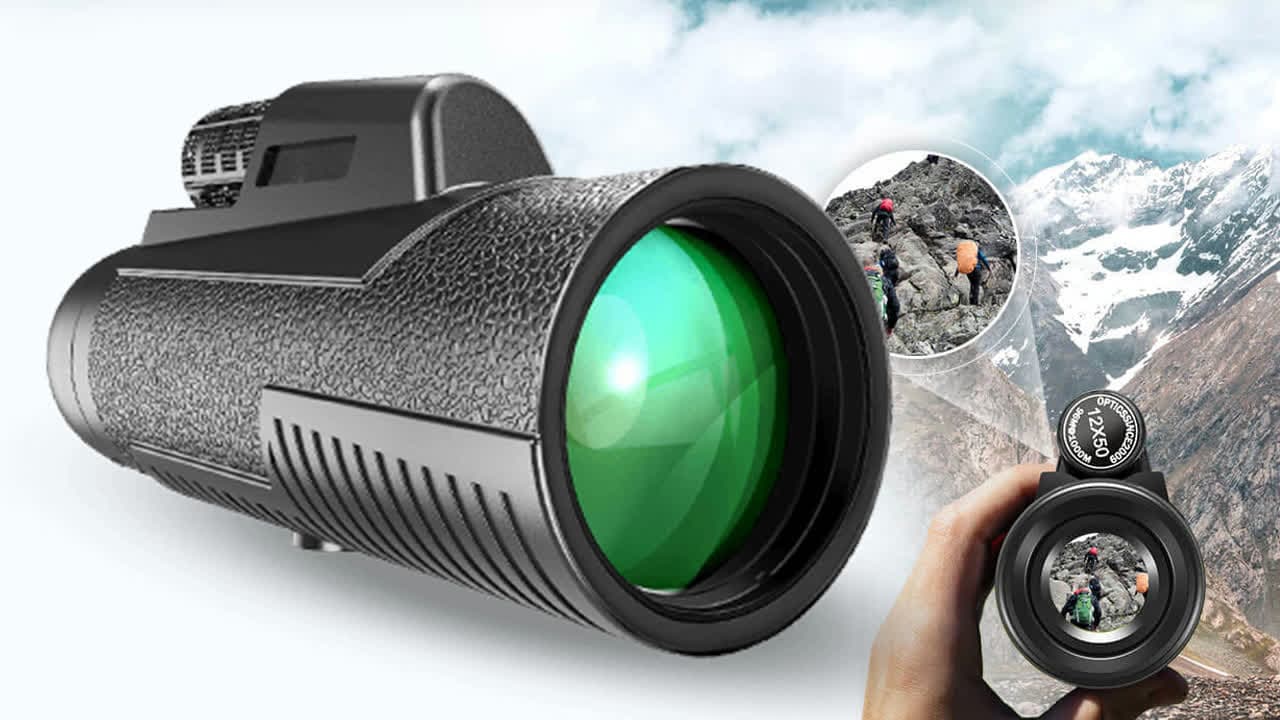
The Sky Scope monocular. Product photo: Sky Scope (archived store page).
Our verdict
For a casual daytime spotter, yes — the Sky Scope 10x42 monocular is worth $54.99 as long as you buy it for what it is (a pocket 10x with a phone clip and tripod, good for birds, hikes, concerts and glassing the moon), not what the ads claim. It is not a telescope, it is not 'military-grade,' and the budget glass shows its price in low light and at the edges. If optics actually matter, a Gosky Titan 12x50 (~$35–45) or a Vortex Solo 10x36 (~$60–70, lifetime warranty) will outclass it for similar money. To capture what you spot, pair with a cheap [action camera](/reviews/snapshot-action-camera).
The short version
Sky Scope is the compact monocular you've seen all over social feeds, promising 'telescope' reach and 'military-grade' clarity from something that fits in a pocket. Strip away the hype and it's a competent 10x42 monocular: enough magnification to pull in a hawk, a stadium or a mountainside in daylight, bundled with a phone clip and a little tripod so you can film through it. What it is not is a telescope — optically it's roughly a single-barrel 10x binocular, so planets and deep-sky objects are off the table, and the cheap glass fringes and dims toward the edges. As a grab-and-go daytime spotter for the price of a nice dinner, it's fine; just ignore the marketing.
Pros & cons
Pros
- Genuinely pocketable — slips into a jacket or glovebox
- 10x magnification pulls in birds, wildlife and stadium action from a distance in daylight
- Bundle includes a phone clip and mini tripod so you can photograph what you see
- One-hand focus wheel is quick to learn
- Rubber-armored and water-resistant against knocks and drizzle
- Far cheaper than a spotting scope or a good pair of binoculars
Cons
- Nowhere near the advertised 'telescope' or 'military-grade' power — it's essentially a 10x binocular in one tube, useless for planets or deep-sky stargazing
- 10x handheld is shaky and the image dims and softens at the edges; the tiny tripod and phone clip are fiddly to align
- Budget glass with no ED elements means color fringing and glare in bright or low light
How it works
Focus by hand
Raise it to your eye, spin the focus wheel until your subject snaps sharp, and adjust the eyecup if you wear glasses.
Steady the shot
At 10x, every tremor is magnified — brace against a rail or fence, or thread it onto the bundled mini tripod for a still image.
Clip your phone
Line your phone's camera up over the eyepiece with the clamp to snap or film the view — expect some fiddling and vignetting.
Who it's for
- Casual bird watchers and hikers who want more reach than the naked eye
- Concerts, games and sightseeing where packing binoculars is overkill
- Curious beginners who want to glass the moon and landscapes
- Gift buyers on a tight budget
How powerful is the Sky Scope monocular, really?
The headline is 10x42: ten-times magnification through a 42mm objective lens. That's a real and useful amount of reach — the same ballpark as a decent pair of 10x binoculars — enough to identify a bird across a field or read a number across a stadium in daylight. Independent teardowns of these viral monoculars, though, have repeatedly found the actual objective is smaller than the number printed on it, which means less light and a dimmer image than the spec implies.
The words to distrust are 'telescope' and 'military-grade.' Optically this is a single-barrel binocular, not a telescope: it has no useful power for planets, and deep-sky objects are simply out of reach. Point it at the moon and you'll see craters — genuinely cool — but a $54 monocular is not turning your backyard into an observatory, whatever the ad promises. For capturing what you spot rather than just viewing it, a cheap action camera is the natural companion.
Sky Scope vs a real spotting scope or Vortex monocular
Two things separate cheap monoculars from good ones: glass and steadiness. Quality optics use ED glass and better coatings to cut the color fringing, glare and edge-softness you'll notice on the Sky Scope, especially in bright or dim light. And at 10x, every hand tremor is magnified tenfold — which is why the bundled mini tripod matters more than it looks, and why bracing against a fence or car roof transforms the view.
For similar money, a Gosky Titan or a Vortex Solo delivers cleaner glass, a more reliable phone adapter and — in Vortex's case — a no-questions lifetime warranty. A true spotting scope for wildlife or astronomy is a different category entirely, at a different price. The Sky Scope's edge is size and cost, not optical quality.
Is the Sky Scope worth $54.99?
As a bundle, $54.99 gets you the monocular, a phone clip and a tripod — reasonable if you value the grab-and-go kit. But the same money (or less) on a major retailer buys a better-regarded monocular: the Gosky Titan 12x50 typically runs about $35–$45, and the Vortex Solo 10x36 sits near $60–$70 with a lifetime warranty. Buying from a known brand also spares you the return-shipping headaches these funnel products are notorious for.
Buy the Sky Scope if you want one cheap, pocketable spotter for casual daytime use and the phone-clip novelty. Skip it — and spend a few dollars more elsewhere — if image quality, low-light performance or long-term durability actually matter to you.
Sky Scope is no longer available through us. Our pick instead: the Horizon Scope
It's the same style of pocket monocular: a 50mm lens, 10x magnification and a smartphone adapter, with a 30-day return policy. From $49.99.
Get the Horizon Scope →Frequently asked questions
Is the Sky Scope a real telescope?
No. It's a 10x monocular — effectively one barrel of a pair of binoculars. It's great for the moon, landscapes, birds and sports, but it won't show planet detail or deep-sky objects despite the 'telescope' branding.
How far can you actually see with it?
The 10x magnification brings distant subjects roughly ten times closer, which is plenty for wildlife and stadiums in daylight. Brightness and sharpness fall off in low light and toward the edges of the view.
Does the phone clip really work?
Yes, but it's fiddly. Aligning your phone's camera over the small eyepiece takes patience, and shots often show a dark vignette. Use the tripod and be prepared to nudge things into place.
Is it waterproof?
It's water-resistant and rubber-armored — fine for rain and rough handling on a hike — but don't submerge it. Treat it as splash- and shower-proof, not dunk-proof.
Should I buy this instead of cheap binoculars?
A monocular is smaller, lighter and one-eyed, which is easier to pocket but harder to hold steady for long sessions. Binoculars are more comfortable and steadier to view through. Choose based on packability versus comfort.
Is Sky Scope a scam?
Not exactly — you do receive a working monocular. But the 'military-grade' and 'telescope' marketing wildly oversells it, and buying a comparable monocular from a known brand on a major retailer gets you better glass and far easier returns.
When you buy through links on this page, TopCrate may earn an affiliate commission at no extra cost to you. Sky Scope is an entry-level monocular; its magnification and 'telescope-grade' claims are marketing, and image quality reflects budget glass. Prices accurate as of publish time.