OPTICS
Monocular vs Binoculars: Which One Do You Actually Need?
Two eyepieces or one? The answer isn't 'binoculars are always better' — it's about weight, use case, and how long you'll be looking through it. Here's the honest comparison, plus what all those numbers on the barrel actually mean.
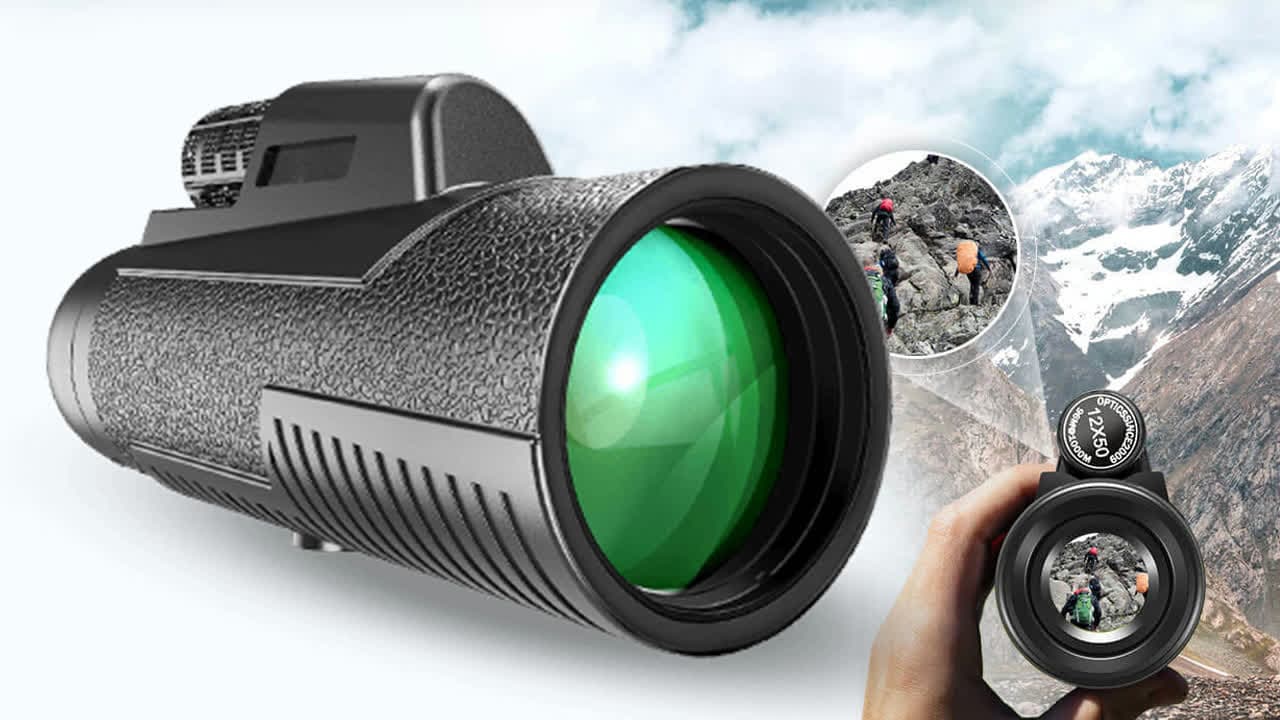
There's a specific moment in the buying process where the monocular-vs-binoculars question shows up: you're browsing outdoor gear or optics because a hike, a stadium seat, a concert, a birding trip, or a curiosity about the moon has made you realize the naked eye isn't cutting it. Amazon or the sporting-goods aisle throws two options at you: a compact single-tube monocular that fits in a jacket pocket, or a two-tube pair of binoculars that hangs around your neck. Prices overlap. Magnification numbers overlap. The reviews on both are polarized. And the answer of which one is actually right for you has almost nothing to do with which is 'better' in the abstract — it has everything to do with what you're going to do with it, and for how long at a stretch.
This guide is the honest short version: what the numbers mean, where each format wins, where each format loses, and one specific type of buyer who almost always ends up regretting the choice they made — because the marketing on cheap 'telescope-power' monoculars in particular has trained a whole generation of shoppers to expect something optically impossible from something that fits in a pocket. Get the fundamentals right and both formats can be great; miss them and you'll return the thing and rebuy something else in a month.
The one-line optical difference (and why it actually matters)
A monocular is one telescope tube; you hold it up to one eye. Binoculars are two matched telescope tubes hinged together and aligned so both eyes see the same magnified image, and your brain merges them into a single view with depth perception. That's the whole optical story, and it drives every difference below: monoculars are lighter and smaller (one tube of glass, not two), cheaper for equivalent glass quality (one set of prisms and lenses, not two matched sets), and one-handed. Binoculars give you both eyes on the target (less eye strain over long viewing sessions), true stereoscopic depth perception, and a wider comfortable field of view — but they cost more for the same optical quality and you need two hands or a strap around your neck.
The most common wrong assumption new buyers make is that binoculars are 'twice as good' because they have twice as many tubes. They aren't; each tube in a pair of binoculars is roughly one monocular of comparable spec. What binoculars give you is BOTH eyes on the image, and that's the thing that determines comfort over long viewing sessions and whether you get depth perception — not raw sharpness or reach. Understand that trade and the rest of the decision gets simple.
Decoding the numbers — what '10x42' actually means
Every monocular and every pair of binoculars is labeled with two numbers, usually written like '10x42' or '8x25'. The first is magnification — how many times closer the subject appears than to the naked eye. The second is the diameter of the front (objective) lens in millimeters — how much light it gathers. Both matter, and they trade against each other in ways you should understand before spending money.
Higher magnification is not automatically better. Above 10x, every tremor in your hands gets multiplied along with the image, so 12x and 15x handheld optics show visibly shaky views that many people find unusable without a tripod. 8x is the classic all-purpose birding and general-use magnification — high enough to see details across a field, low enough to hold steady. 10x is the classic ceiling for handheld use and is where wildlife-at-distance, stadium and long-hike optics tend to land. A bigger objective lens (42mm or 50mm) gathers more light, so the image stays bright at dawn, dusk and in dense forest — but it also makes the whole unit bigger and heavier. A small objective (25mm or 30mm) is pocketable and lightweight, but the image dims noticeably in low light. The sweet spot for general-purpose handheld use is 8x42 or 10x42; the sweet spot for truly compact / packable is 8x25 or 10x25 with the honest trade-off that low-light performance drops.
When the monocular is the right answer
A monocular wins hands-down when weight, packability, one-hand use, or price is the deciding factor. Slipping into a jacket pocket for a stadium seat or a concert; sitting in a glovebox for the occasional 'what's that on the horizon' hike; a kid's first optics for the moon and backyard birds where a full pair of binoculars would be too heavy for their hands; a spare in a backpack for the once-a-year trip where you don't want to commit the neck strap and full weight of good binos. In all of those, a decent 10x monocular in the $40-80 range delivers 80% of the utility of a decent pair of binoculars at 20% of the size and price.
The Sky Scope Monocular is a fair example of what this segment does well and where the marketing overreaches. Optically it's a competent 10x42 monocular — enough magnification to pull in a hawk, a stadium or a mountainside in daylight, bundled with a phone clip and a mini tripod so you can photograph what you see. It genuinely fits in a pocket and is one-handed. What it is NOT is a 'telescope' with 'military-grade' reach, as the ads breathlessly claim — that's marketing on a single-barrel 10x binocular in a compact tube. For casual daytime spotting at hikes, games and sightseeing, that's exactly what you want at that price. For serious astronomy, birding at distance in low light, or long viewing sessions where eye strain becomes the issue, it's not enough optics.
When binoculars are the right answer
Binoculars win the moment you're going to be looking through them for more than a couple of minutes at a stretch. Both eyes open means the brain gets to work the way it was designed to — depth perception, wide peripheral awareness, and dramatically less eye strain over a two-hour birding session or an afternoon at a game. If you're doing anything sustained (dedicated birdwatching, hunting, marine, hiking where the optics come out every mile, sports), binoculars are the right tool.
They're also the right tool for low-light and for really long distance. A pair of 8x42 or 10x50 binoculars gathers meaningfully more light through two 42mm/50mm objectives than any pocket monocular, so dawn birding and dusk wildlife stay usable. And because you're not fighting the one-eye-through-a-narrow-tube experience, you can settle in on a subject for the minutes it takes to identify a species, watch behavior, or track a moving target. Budget for binoculars accordingly: a decent starter pair of 8x42 roof-prism binoculars starts around $100-150 (Nikon Aculon or Celestron Nature DX); enthusiast birding glass climbs to $300-800 (Nikon Monarch, Vortex Diamondback/Viper); premium is $1,000-2,500 (Swarovski, Leica, Zeiss). Don't overspend for occasional use, but don't buy the $30 kids' toy binoculars either — the glass is genuinely bad and you'll blame binoculars in general for a problem specific to $30 gear.
One buyer who almost always ends up regretting it
The buyer to warn: the aspiring stargazer who buys a compact monocular because the marketing implies 'telescope power.' A 10x42 monocular is roughly a single-barrel 10x binocular — useful for the moon at low detail, occasionally for Jupiter's largest moons in dark skies as pinpricks, and functionally useless for anything else in astronomy. Planets don't show detail at 10x. Nebulae need light-gathering (large-aperture) telescopes. Deep-sky objects are out of the question. If serious astronomy is the goal, a genuine entry-level telescope (a 4- to 6-inch Dobsonian reflector for $200-400) will show you thousands of times more than any handheld optic. If casual moon-watching plus daytime spotting is the goal, a monocular is fine. Do NOT buy a monocular for astronomy on the strength of an ad that shows the surface of Mars.
The mirror-image warning goes to the person who buys a compact 8x25 monocular expecting all-day birding. It's pocketable, but the small objective lens means dim images in early morning or in shady forest — exactly when the birds are most active. If birding is the primary use and you'll be doing it for hours at a time, spend the extra $70-100 for a full pair of 8x42 binoculars; you'll use them ten times longer and enjoy the experience more.
Quick decision matrix — which one to buy today
For a stadium, concert, sightseeing trip, hike, kid's first optics, or a 'nice to have' pocket item: 10x42 monocular, budget $40-80. Add a phone clip if you want to photograph through it; add a small tripod if you can. For sustained birding, hunting, marine, sports watching, or any time you'll be looking through it for hours over the course of a season: 8x42 binoculars, budget $120-300 for a decent starter. For serious astronomy: not a monocular OR binoculars — a small telescope. For the moon and general daytime use at a beginner budget: 10x42 monocular is a fine dual-purpose choice.
One more practical note: whatever you buy, get one with rubber armor (survives drops) and at least basic water resistance (survives drizzle, morning dew, an accidental splash). Both are cheap to include and both prevent the most common failure modes of budget optics. If a listing doesn't mention either, assume they're not there and pick something else.
Read our Sky Scope Monocular review
A pocketable 10x42 monocular that oversells 'telescope' reach in the ads but earns its keep as a cheap daytime spotter — with a phone clip and mini tripod bundled so you can film the hawk or the mountainside you spot.
Read our Sky Scope Monocular reviewFrequently asked questions
Is a monocular as good as binoculars?
Optically each tube of a good pair of binoculars is roughly one monocular of comparable spec, so a monocular and one barrel of a binocular deliver very similar image quality at the same price point. What binoculars give you is BOTH eyes on the image, and that's the thing that matters for long viewing sessions — less eye strain, true stereoscopic depth perception, and wider comfortable field of view. For a stadium seat, a hike, a glovebox spare, or a pocket 'what's that on the horizon' tool, a monocular is genuinely a better choice because it's lighter, cheaper and one-handed. For dedicated birding, hunting or marine use where you'll be looking through it for hours, binoculars are worth the extra weight and money.
What does '10x42' mean on a monocular or binoculars?
The first number is magnification: subjects appear ten times closer than to the naked eye. The second number is the diameter of the front (objective) lens in millimeters — how much light the optic gathers. A bigger objective (42mm, 50mm) gathers more light so the image stays bright at dawn, dusk and in dense forest, but adds weight and bulk. A smaller objective (25mm, 30mm) is pocketable but dims noticeably in low light. 8x42 and 10x42 are the sweet spots for general-purpose handheld use; 8x25 and 10x25 are the sweet spots for pocketable / travel use with the honest trade-off that low-light performance drops.
Can I use a monocular for stargazing or astronomy?
Very limited use. A 10x monocular will show the moon at basic detail and occasionally Jupiter's largest moons as pinpricks in dark skies, and that's about it. Planets don't show detail at 10x; nebulae need light-gathering aperture; deep-sky objects are out of the question. If serious astronomy is the goal, a genuine entry-level telescope (a 4-6 inch Dobsonian reflector for $200-400) will show you thousands of times more than any handheld monocular or binoculars. Do NOT buy a monocular based on marketing that shows Mars or nebulae — those images are impossible at 10x through a 42mm objective, and the disappointment when the actual view is a small gray moon is a lot of returns waiting to happen.
Is a 10x monocular too shaky to use handheld?
10x is the practical ceiling for handheld comfort. Every tremor in your hands is multiplied ten times along with the image, so a 10x view has visible shake even from a person with steady hands, and gets much worse if you're tired, cold, or reaching. It's usable — casual birders, hikers, and sports watchers use 10x all the time — but you'll get a noticeably cleaner view if you brace against a fence, rail or tree, or thread it onto a small tripod. Above 10x (12x, 15x, 20x monoculars) is unusable handheld for most people and effectively requires a tripod. If you want steady 10x without gear, an 8x monocular or 8x42 binocular is easier on the hands.
What is the best monocular for beginners on a budget?
A 10x42 monocular in the $40-80 range with rubber armor, basic water resistance, and ideally a phone clip and mini tripod bundled. The Sky Scope Monocular is a fair example of the category — a competent 10x42 with the phone clip and tripod included; ignore the 'military-grade' and 'telescope power' marketing, which oversells what any pocket monocular can do, and use it for what it's actually good at: daytime spotting at games, hikes, sightseeing and the occasional wildlife glimpse. If you'll be using optics for sustained birding or in low light, spend the extra $70-100 on a starter 8x42 pair of binoculars (Nikon Aculon, Celestron Nature DX) instead — the two eyes and bigger objectives make a bigger practical difference than higher magnification.
Do I need image stabilization or a tripod for a monocular?
For casual daytime use at 8x-10x, no — you can hold it steady enough by bracing against your face and standing still, and any brief shake is tolerable. For photography through the monocular with a phone clip, effectively yes — even minor shake ruins zoom shots, so a small tripod (either bundled, as with the Sky Scope, or a $15 Manfrotto Pixi / Joby GorillaPod) is worth having. Image-stabilized handheld monoculars exist but are expensive and specialty ($400+, typically for marine use); they're overkill for anything the audience for this article is buying. A cheap tripod solves 90% of the same problem for $15.
How much should I spend on binoculars if I want to start birding?
$120-300 gets you a decent starter pair of 8x42 roof-prism binoculars — Nikon Aculon, Celestron Nature DX 8x42, Vortex Crossfire HD. That's the range where the glass is genuinely good enough that you'll enjoy using them, and you'll grow into them rather than out of them. Below $80, the glass is generally bad enough that you'll blame binoculars in general for problems specific to cheap gear and probably give up birding — this is the number-one reason new birders quit. Above $300 gets you into enthusiast glass (Nikon Monarch, Vortex Viper, Diamondback) with meaningful improvements in low-light and edge sharpness. Above $1,000 is premium territory (Swarovski, Leica, Zeiss) — don't start here unless you already know you're serious.
TopCrate is reader-supported. When you buy through links on our site we may earn an affiliate commission, at no extra cost to you. Content is for general information and isn't a substitute for professional advice.