TRENDING ON AMAZON
Anker Soundcore 2 Portable Bluetooth Speaker Review: Is It Worth It?
The under-$40 Bluetooth speaker that keeps selling because the basics are right — 12W stereo, 24-hour battery, IPX7 waterproof and a build that survives a beach bag.
Quick answer: Yes — the Anker Soundcore 2 remains the best under-$40 portable Bluetooth speaker in 2026, and its 8-year run as an Amazon best-seller is genuinely earned. Clean 12W stereo, 24-hour battery, IPX7 waterproofing and a rugged 14oz build cover the shower, poolside, dorm and picnic-blanket use cases better than anything at its price — buy it as a first Bluetooth speaker, a gift, or the second unit you keep in a beach bag without worrying about. The one honest asterisk is the aging Micro-USB charging port; if that's a deal-breaker, spend $10 more on the Soundcore 3 for USB-C. Otherwise, this is the default budget portable Bluetooth speaker to buy.
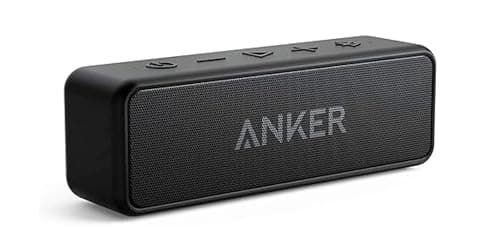
Product image from the Amazon listing.
Our verdict
Yes — the Anker Soundcore 2 remains the best under-$40 portable Bluetooth speaker in 2026, and its 8-year run as an Amazon best-seller is genuinely earned. Clean 12W stereo, 24-hour battery, IPX7 waterproofing and a rugged 14oz build cover the shower, poolside, dorm and picnic-blanket use cases better than anything at its price — buy it as a first Bluetooth speaker, a gift, or the second unit you keep in a beach bag without worrying about. The one honest asterisk is the aging Micro-USB charging port; if that's a deal-breaker, spend $10 more on the Soundcore 3 for USB-C. Otherwise, this is the default budget portable Bluetooth speaker to buy.
The short version
The Soundcore 2 has been on Amazon's best-seller list for portable speakers longer than most speakers have been on sale — for a reason. At under $40 it delivers what a portable speaker actually needs: dual 6W drivers pushing 12W of surprisingly clean stereo sound with real bass for its size, 24-hour battery life that outlasts any weekend trip, IPX7 waterproofing you can dunk in a swimming pool, and a rugged 14oz build that survives being tossed into a backpack. It's not audiophile gear — no upfiring drivers, no Wi-Fi, no multi-room — but for the picnic-blanket, shower, or dorm-room use case where a Bose or Sonos would be overkill, the Soundcore 2 is the answer.
Pros & cons
Pros
- 12W stereo output — clean, balanced sound above its price
- 24-hour battery — outlasts any single-day use
- IPX7 waterproof — survives full submersion
- Under $40 for years of reliable use
- 14oz rugged build handles bags, drops, weather
- Simple Bluetooth pairing, no app needed
Cons
- Micro-USB charging, not USB-C
- No app or EQ customization
- Volume caps below what a large outdoor space needs
Why people love it
Press power, pair once
Hold the power button, connect via Bluetooth on your phone — done. No app, no account, no setup.
12W stereo drives real bass
Two 6W drivers with a passive bass radiator deliver clear stereo with more low-end than a single-driver speaker at this price.
24 hours of playback
A single charge covers a full weekend of casual listening; USB (micro-USB) refills in about 4 hours.
Who it's for
- First-time Bluetooth speaker buyers
- College dorms and shared apartments
- Poolside, shower and beach listeners
- Anyone tired of tinny phone-speaker sound
Why the Soundcore 2 has stayed on Amazon's best-seller list for 8+ years
Most consumer electronics have a 2-3 year peak sales window before newer models push them off the shelves. The Anker Soundcore 2 has been consistently top-3 in the Amazon portable speaker category since 2018 — an eternity in tech. The reason isn't that the specs are cutting-edge; they aren't. It's that the specs match a specific price point extremely well. For under $40, buyers expect Bluetooth to work reliably, a battery that lasts a weekend, some water resistance, and audio that isn't embarrassing. The Soundcore 2 delivers all four with more margin than any competitor at the same price — and Anker's supply chain economics (the same GaN-charger and USB-cable factories that keep Anker gear cheap) let them maintain that price without compromising build.
The result is a product that stays 'good enough for 90% of use cases' as the market moves. Cheaper speakers ($15-25) have visibly worse sound and much shorter battery life. Nicer speakers ($60-150) have better audio but require a specific use case (better parties, better music) to justify. The Soundcore 2 threads the needle for the casual listener who wants a portable speaker in the kitchen, the shower, or the beach without doing research or spending more than the cost of a couple of streaming subscriptions. It's the AirPods of portable speakers — the default choice for the person who just wants sound.
Soundcore 2 vs Soundcore 3 vs Soundcore Motion+: how to choose within the Anker family
Anker's own Soundcore lineup is layered by price, and understanding what each tier adds beyond the Soundcore 2 helps you decide whether to stay or step up. Soundcore 2 (~$35): the entry model — 12W stereo, IPX7, 24-hour battery, Bluetooth 5.0, Micro-USB. The one to buy if you want the reliable baseline. Soundcore 3 (~$45): USB-C charging (the biggest quality-of-life upgrade), BassUp tech that pushes low-end deeper via DSP, slightly more punchy audio profile, still IPX7 and 24-hour battery. Worth the extra $10 if USB-C matters to you.
Soundcore Motion+ (~$120): dramatic step up — 30W of power, dedicated tweeters for high-frequency detail, Hi-Res audio certification, custom EQ via the Soundcore app, USB-C charging, IPX7. This is the speaker you upgrade to when you're using your portable as a primary listening device rather than a backup. Soundcore Motion Boom (~$130): the outdoor party pick — 60W of output, huge bass, IPX7, 24-hour battery even at higher volume, PartyCast to pair multiple units. For most users, the sensible progression is: Soundcore 2 to start, upgrade to Motion+ if you become a heavier user, and skip the intermediate Soundcore 3 unless USB-C is critical.
Building a low-cost audio setup around the Soundcore 2
A single Soundcore 2 covers a lot of use cases on its own, but pairing it with a few complementary pieces builds an actual audio ecosystem for under $200 total. In the bathroom or kitchen, the Soundcore 2 is enough by itself — great for shower playlists and cooking soundtracks. In a bedroom, add a wired 3.5mm connection to your desktop or a Chromecast Audio dongle if you want it to stream from Spotify Connect without needing your phone connected. For the office or a home gym, pair the Soundcore 2 with a set of good wired earbuds (or Beats Studio Buds for wireless) — one for solo listening, one for room-fill.
For outdoor use, the Soundcore 2 handles a picnic or a small gathering fine. For bigger crowds or larger spaces, the honest recommendation is to upgrade rather than double up: two Soundcore 2s in the same room don't create stereo (they play the same audio at slightly offset timing), so buying two units doesn't give you a proper stereo setup. If you want louder or wider outdoor audio, get one JBL Flip 6 or a Soundcore Motion Boom instead. For total flexibility across home, portable and outdoor listening, the Sonos Roam 2 at $180 is a legitimate step up — Wi-Fi at home, Bluetooth outside, and multi-room integration with any other Sonos speakers you might add later. And for the specific 'I want big sound in a place a rigid speaker won't sit' problem — travel, oddly shaped surfaces, hollow objects — the Anything Speaker surface-vibration puck uses whatever hard surface you set it on as the driver and pushes sound the Soundcore 2's little cabinet physically can't. But for the pure 'I need a speaker under $50 that works' problem, the Soundcore 2 is still the answer.
See Anker Soundcore 2 on Amazon
Check the latest price, photos and buyer reviews on Amazon.
Check Price on Amazon →Sold and shipped by AmazonFrequently asked questions
Anker Soundcore 2 portable Bluetooth speaker: is it still the best budget pick?
Yes — the Anker Soundcore 2 portable Bluetooth speaker has held its Amazon best-seller position in the under-$40 category for eight years running, and the reasons are the same today as when it launched: 12W of clean stereo output with real bass for its size, 24-hour battery life that actually lasts a full weekend of playback, IPX7 waterproofing that survives pool splashes and shower use, and a 14-ounce rugged build that shrugs off beach-bag abuse. The only meaningful competitor in the exact budget category is Anker's own Soundcore 3 at about $10 more, which adds USB-C charging (the Soundcore 2 is still Micro-USB) and slightly punchier bass via DSP tuning. If Micro-USB doesn't bother you, save the $10; if it does, take the Soundcore 3 upgrade. Neither is beaten by anything else under $40.
Is the Anker Soundcore 2 worth it in 2026?
Yes — for its price and use case, absolutely. It's been Amazon's best-selling portable Bluetooth speaker across multiple years because it hits the fundamentals: 12W of balanced stereo sound, 24-hour battery, IPX7 waterproofing, and a build that survives real-world abuse — all for under $40. It's not the newest hardware (still micro-USB charging, no USB-C), and higher-end portables like the Bose SoundLink Flex sound better if you have $150 to spend, but for the picnic, shower, or dorm-room use case, the Soundcore 2 is a very hard buy to regret. If you specifically want USB-C charging or the newest Soundcore-family features, the Soundcore 3 or Soundcore Motion series are the upgrades to consider.
How does the Soundcore 2 compare to the JBL Flip 6 or Bose SoundLink Flex?
Different tiers, honest trade-offs. The JBL Flip 6 (~$100) has more output volume, deeper bass, USB-C charging, and JBL PartyBoost multi-speaker pairing — but it's roughly 3x the price. The Bose SoundLink Flex (~$150) is the audio-quality winner in the portable class, with genuinely full sound and Bose's tuning refinement. The Anker Soundcore 2 sits at the entry level: cheaper, smaller output, older charging port, but the audio is 80% of the way there for 25% of the SoundLink Flex's price. If you listen at low-to-medium volume in small rooms, the Soundcore 2 is honestly close in daily-use satisfaction to the pricier options. If you host outdoor gatherings, need max volume, or care about audio nuance, upgrade to the Flip 6 or SoundLink Flex. For the Sonos Roam 2, you're getting Wi-Fi and multi-room integration on top — a different product entirely.
Is the Soundcore 2 really waterproof?
Yes — IPX7 means it can be submerged in up to 1 meter of water for up to 30 minutes without damage. That covers pool splashes, rain, dropping it in the shower, or brief accidental submersion. It won't survive being taken snorkeling (the water depth exceeds the rating), and IPX7 covers water only — sand and dust aren't rated, so beach use is fine but rinse off any sand afterward. The Micro-USB charging port has a rubber flap that must be firmly closed for the waterproof rating to hold; check it before any water exposure.
How does the battery hold up long-term?
The 24-hour spec is at moderate volume with Bluetooth on — real-world it's often 20-22 hours at typical use, which is still enormous. Battery degradation over years follows normal Li-ion patterns: expect to see roughly 80% original capacity after 500 charge cycles (about 2-3 years of casual use), and around 60-70% after 5+ years. Users report speakers still working reliably at the 5-7 year mark, which is much longer than most consumer electronics. The Micro-USB port is the most common failure point long-term — the charging cable can wear out or the port can loosen; buy a couple of extra micro-USB cables and don't force-plug when charging.
Can you pair two Soundcore 2 speakers for stereo?
The original Soundcore 2 supports Bluetooth 5.0 but does NOT support true stereo pairing between two units — you can play music from your phone to only one speaker at a time. If you want two speakers wirelessly paired for a wider stereo or louder party mode, upgrade to the Soundcore Motion+, JBL Flip 6 with PartyBoost, or the Sonos Roam 2 with Wi-Fi grouping. For most home users this doesn't matter; one Soundcore 2 fills a bedroom, bathroom, or small outdoor space fine on its own.
Why is the Anker Soundcore 2 still using Micro-USB in 2026?
Cost and inventory. Anker's newer Soundcore lineup (Motion, Boom, Flare) has moved to USB-C, but the Soundcore 2 is a legacy platform Anker keeps in production because it's still selling millions of units — and switching the charging port would require a new manufacturing run and higher unit cost. The Micro-USB port itself works fine; you just need to keep a micro-USB cable in your charging drawer alongside your USB-C stack. If Micro-USB is a deal-breaker for you (some people are done with the old standard), the Anker Soundcore 3 upgrades to USB-C for about $10 more.
As an Amazon Associate, TopCrate earns from qualifying purchases at no extra cost to you. Product image, price, availability and ratings are shown on Amazon and are subject to change.