BUYER'S GUIDE
Is The Orbi Boomerang Ball Legit? An Honest Buyer's Guide to the $49.99 Flying Toy (2026)
The Orbi Boomerang Ball is a real product sold by a real company, and the flight and light show are real. The 'boomerang' return takes practice, the battery is short, and the same orb sells for less under generic names. Here's what to check before you buy.
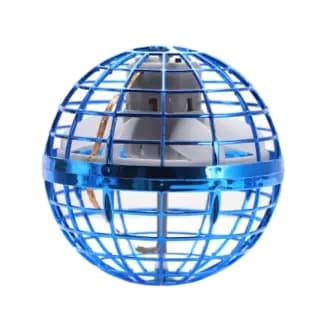
The Orbi Boomerang Ball is legit in the sense that matters most: it's a real physical toy sold by a real direct-to-consumer store at theorbi.com, it ships in branded packaging, the flight and the glowing RGB light show are real, and there is a stated satisfaction guarantee at checkout. It is not a scam. What The Orbi Boomerang Ball is, is a palm-sized motion-sensing flying orb sold at a direct-to-consumer premium over the near-identical generic versions of the same toy, advertised — as most viral toys are — with claims that overstate what a small hobby drone can actually do.
So the better question isn't "is it real?" but "is it what the ads say?" The honest answer is close, with two big asterisks. As a screen-free, glowing flying toy for a backyard, park or big open room, The Orbi Boomerang Ball delivers what the packaging promises — flick it off your palm, watch it hover and curve, film the glowing arcs at dusk. As a smart, self-piloting drone that homes back to your hand every time, it isn't and no ad-copy asterisk will change that. This guide covers who sells it, what the guarantee actually covers, what the price tiers look like, where the marketing overreaches, whether the Amazon and marketplace listings you'll find are the same product, and a short checklist for buying it safely.
One clarification before we get into it: "The Orbi" here is the Boomerang Ball flying toy, not the NETGEAR Orbi mesh WiFi router. They share a name, both dominate their respective Bing search results, and search engines regularly blend them together. If you searched for "the orbi" and landed on this page expecting mesh WiFi, you want the WiFi extender guide instead — this page is about the flying toy. Our full Orbi Boomerang Ball review covers the toy in detail.
Who actually sells The Orbi Boomerang Ball
The Orbi Boomerang Ball is sold by a direct-to-consumer store at theorbi.com through its own promotional funnel. The affiliate offer we work with routes through the DFO performance network, which vets its offers for basic legitimacy (working checkout, delivered product, functional customer service) before allowing publishers to promote them. Our full Orbi Boomerang Ball review covers the product in detail; this guide is about the buying process.
The store is built like most viral direct-to-consumer toy funnels. Expect a video-heavy landing page with looping demo clips, testimonial reels, urgency copy ("limited time" pricing, holiday discounts) and multi-ball bundle tiers designed to steer you toward two- or three-ball orders. None of that makes The Orbi Boomerang Ball fake — it's how nearly every viral direct-to-consumer toy sells — but it means the checkout deserves a careful read rather than an autopilot click. Confirm the tier, confirm the total, uncheck any add-on you didn't select on purpose, and screenshot the confirmation.
A disclosure from us: TopCrate is a paid affiliate for The Orbi and earns a commission when readers buy through our links. It doesn't change the verdict on this page, and it doesn't push the product up in a comparison — we say plainly below that a $20 generic version of the same toy is a fair pick if you're price-sensitive. We'd rather you buy the right thing than the most expensive thing.
Is The Orbi Boomerang Ball a scam? What "legit" means here
A scam takes your money and gives you either nothing, or something wildly different from what was promised, with no way to get the money back. That isn't the situation with The Orbi Boomerang Ball. You receive a physical caged flying orb that does what a small motion-sensing flying toy does — hover, curve, light up, land — and there is a stated refund path if you don't like it. Sales through the direct-to-consumer store are on a working credit-card system with tracked delivery, and the same toy appears under other brand names across the toy aisle.
Where The Orbi earns skepticism is the marketing language around it. The ads lean on words like "AI navigation," "smart boomerang return" and demo edits that cut together the one throw in ten that curves back into someone's outstretched hand. That framing does real work. The Orbi Boomerang Ball's flight is a genuinely fun motion-and-proximity-sensor toy — but it's not a homing drone. It doesn't know where your hand is. The "return" is you learning to launch it near a wall or your other hand so the sensors curve it back, and it takes real practice.
Our review scores the toy 7.9 out of 10 as what it actually is: a fun, screen-free, glowing flying toy that rewards practice. The motion sensors, the RGB lights and the caged shell are the real features. The advertising's warmer version of "smart AI boomerang" is where the mismatch lives, and where most one-star reviews come from — expectations set higher than a $50 hobby toy can deliver.
What the guarantee actually covers
The Orbi Boomerang Ball is sold with the store's own stated satisfaction guarantee at checkout. Because these terms can be adjusted on the merchant's side and vary by promotion, the checkout page and the confirmation email are the source of truth — read whichever page you actually pay on, and screenshot the terms shown there. That's true for every direct-to-consumer offer, not just The Orbi.
Three practical things matter regardless of the specific window quoted at checkout. Keep the packaging until you're sure you're keeping the product — most direct-to-consumer refund policies require returning items in their original packaging. Save the order confirmation email — proof of purchase is a condition of every refund flow we've seen in this category. And note the guarantee deadline in your calendar the day the order arrives: a guarantee you forget about is a guarantee you don't use.
Note that the specific guarantee is theorbi.com's policy for its own store. Third-party listings using The Orbi name on Amazon or eBay are marketplace listings from resellers, and any guarantee there is the platform's or the seller's, not theorbi.com's. That's the biggest single reason to buy direct if the refund path is part of why you're comfortable buying.
What the $49.99 price actually gets you
For $49.99 you get one Orbi Boomerang Ball plus its USB charging cable. The important spec details, in plain terms: a palm-sized flying orb weighing about 26 grams, an internal rotor that spins up to generate lift, motion-and-proximity sensors that read nearby surfaces and nudge the orb to hover and curve rather than drop, a shock-resistant plastic cage around the rotor to survive most crashes, and three RGB LEDs that make it visible at dusk and in dim rooms. Charging is USB, and roughly 25 minutes of charge delivers about 10 minutes of flight.
The store also sells multi-ball bundles at declining per-ball prices, so if you know you're buying for more than one kid or you want a spare charged and ready to swap while the first one recharges, the bundle math gets attractive fast. The alternative — waiting 25 minutes between 10-minute play sessions — is the single most-common complaint about the toy, and a second ball fixes it.
Compared to what you'd otherwise spend: this is where the honest read matters. Near-identical flying-orb toys sell for $15–25 on Amazon and in the toy aisle under names like Flying Orb Ball, Cosmic Globe, Nebula Orb and half a dozen others. Mechanically they're the same category of product, and mechanically most of them do the same thing. At The Orbi's $49.99 sticker you're paying a premium for the brand, the branded packaging, the promotional funnel and the one-click checkout, not for meaningfully different hardware.
Where the ads overpromise
Most of the frustration people express about direct-to-consumer toys in this tier comes from the marketing rather than the product itself. It helps to separate the claims into two piles.
Claims that hold up: the flight is real (the rotor and motion sensors work as advertised), the RGB light show is real and looks great at dusk, the cage genuinely protects the rotor from most bumps, the ~10 minutes of flight per ~25-minute charge is accurate, and the toy is genuinely screen-free active fun for kids, teens and adults in a yard or park. The Orbi is a proper motion-sensing flying toy at a direct-to-consumer price.
Claims that don't: "AI navigation" (the orb doesn't recognize you or know where your hand is — it reacts to nearby surfaces), "comes back like a boomerang every time" (the return trick is a skill you build over several sessions; first throws often just drop), and demo footage of long, precise return arcs (edited highlight reels don't represent the median throw). If you go in expecting a toy you get good at rather than a smart drone that flies itself, the mismatch disappears.
Are the Amazon listings the same product?
Third-party listings using The Orbi name appear on Amazon and eBay, but two things separate them from the direct-store product. First, they're marketplace listings from resellers rather than direct sales from theorbi.com, so the direct-store satisfaction guarantee doesn't apply — you're relying on the platform's or the seller's return policy instead, and neither is the same. Second, prices on Amazon can be higher (a reseller's margin over retail) or dramatically lower (a red flag for either an unbranded generic being resold under The Orbi name, or a counterfeit).
The more interesting Amazon question is a different one: the near-identical Flying Orb Ball / Cosmic Globe / Nebula Orb toys are legitimately their own products from other sellers, and they're not fakes of The Orbi — they're separate brands making the same category of toy. At their $15–25 price points, they represent a genuine alternative rather than a knockoff. If you're comfortable buying a generic version at a lower price and giving up the direct-store guarantee, that route is a fair one, and we said as much in the review.
Bottom line for the Amazon route: buying an unbranded generic is a real value option and not a scam; buying a listing labeled "The Orbi" from an unfamiliar seller is a coin flip on whether it's the same product, and worth avoiding when the direct store is one click away.
How to buy The Orbi Boomerang Ball safely
Buy from the direct-to-consumer store. The affiliate link on TopCrate routes you there directly; the direct checkout is where the satisfaction guarantee applies.
Read the checkout slowly. Confirm the number of balls in the tier and the total, uncheck any add-on you didn't select on purpose, and screenshot the confirmation.
Consider the two-ball bundle if you know you're buying for more than one kid, or you want a spare charged and ready — the 25-minute recharge between 10-minute play sessions is the single most-common complaint about the toy, and a second ball fixes it directly.
Set expectations before you hand it over. "The boomerang return is a skill you build over a few sessions" is the honest framing that keeps first-day frustration in check, and it also matches what a $50 hobby toy can actually do.
Fly it outdoors when you can. Indoors it will clip lampshades and ceiling fans; its happy place is a yard, gym or park with soft grass to land on. Repeated hard landings on concrete are what eventually crack the shell.
Compare before you commit if you're price-sensitive. A $20 flying-orb generic on Amazon does essentially the same thing mechanically; the trade is you give up the direct-store guarantee and the branded packaging in exchange for the price. Our full Orbi review walks the trade-off in more depth.
Our verdict
The Orbi Boomerang Ball is legit: a real, well-made motion-sensing flying toy from a real direct-to-consumer store, sold through a working checkout with a stated satisfaction guarantee. The flight is real, the light show is real, and the screen-free active-fun case the packaging targets is exactly the audience the product is well-matched to. The marketing overreaches in the way most viral toy ads do — the return trick is a skill you build, not an AI navigation feature — but the underlying toy is a legitimate answer to the "cheap, glowing, wow-factor gift" question.
Buy it for a birthday, a stocking stuffer or a household bored-and-need-to-move afternoon, buy it on one of its frequent discounts rather than at the full $49.99, and set expectations honestly before you hand it over. Skip the direct store and grab a $20 generic instead if the brand isn't worth the premium to you; either way it's the same category of toy. Our full Orbi Boomerang Ball review covers the case in more detail.
Read our full Orbi Boomerang Ball review
Our verdict on the motion-sensing flying orb at $49.99 — the real flight, the honest limits, and how it compares to the $20 generic look-alikes on Amazon.
Read our full Orbi Boomerang Ball review →Frequently asked questions
Is The Orbi Boomerang Ball a scam?
No. It's a physical toy sold by theorbi.com through its own checkout, with tracked shipping, a working customer service flow and a stated satisfaction guarantee. The advertising overstates the "smart AI boomerang" framing, but you receive a real motion-sensing flying toy and have a refund path if it isn't for you. Our Orbi Boomerang Ball review covers what it does well and where it falls short.
Does The Orbi Boomerang Ball really come back like a boomerang?
Sort of. It doesn't home in on you like a drone — the sensors react to nearby surfaces, so you learn to launch it near your hand or a wall so it curves back. The "return" is a skill you build over a few sessions rather than an automatic behavior, and it's satisfying once it clicks. Demo footage on the ads is an edited highlight reel and doesn't represent the median first-day throw.
How much does The Orbi Boomerang Ball cost?
$49.99 for one ball through the direct-to-consumer checkout, with multi-ball bundle discounts on top. Prices and tiers can change on any given day, so the checkout page is the source of truth — if the total at checkout doesn't match a landing page's number, close the tab and start again. Near-identical generic flying orbs sell for $15–25 on Amazon under other names.
Is The Orbi the same as NETGEAR Orbi?
No. The Orbi Boomerang Ball is a $49.99 flying toy from a direct-to-consumer store at theorbi.com. NETGEAR Orbi is a mesh WiFi router system from NETGEAR sold for hundreds of dollars. They share a name and dominate their respective Bing search results, which is why the two get blended together, but they are unrelated products from unrelated companies. If your WiFi is the problem, our WiFi extender guide is the right page.
Are the Amazon flying orbs the same product?
The listings labeled "The Orbi" on Amazon are third-party marketplace resales and not covered by the direct-store guarantee. The near-identical toys sold as Flying Orb Ball, Cosmic Globe, Nebula Orb and similar are legitimately their own brands making the same category of product — they're not counterfeits of The Orbi, and at $15–25 they're a fair value alternative if you're comfortable giving up the branded packaging and the direct-store guarantee.
How long does the battery last on The Orbi?
About 10 minutes of flight per full charge, which takes roughly 25 minutes over USB. That's the single most-common complaint about the toy — 10 minutes goes fast when a room full of kids is chasing it — and the fix is buying a second ball so one can charge while the other flies. The store's multi-ball bundles are cheaper per unit than two single orders and specifically address this.
TopCrate is reader-supported. When you buy through links on our site we may earn an affiliate commission, at no extra cost to you. Content is for general information and isn't a substitute for professional advice.