HANDS-ON REVIEW
The Orbi Boomerang Ball Review: Is It Worth It?
A glowing, motion-sensing orb that hovers, curves and boomerangs back toward your hand — no remote required.
Quick answer: For a cheap, glowing, screen-free toy that gets a whole room chasing it, the Orbi is worth it — with eyes open. The motion-sensing flight is real fun once you practice, and the RGB light show sells it for gifts and parties. Just know the 'boomerang' is a skill you build, the battery only lasts about ten minutes a charge, and the very same orb sells for $15–25 under generic names. Buy it for the convenience and the wow factor, ideally on one of its frequent discounts — and skip paying the full $49.99.
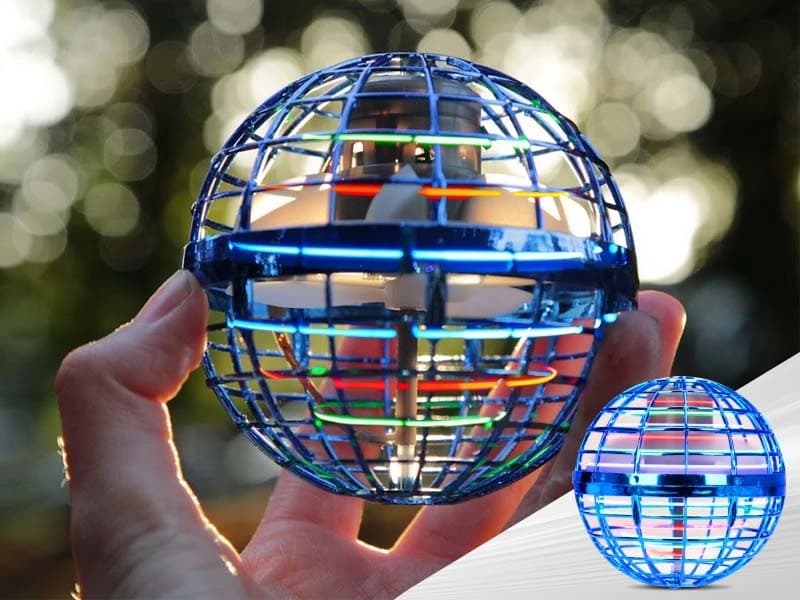
The caged orb hovers and curves back on its own motion sensors. Photo: The Orbi
Our verdict
For a cheap, glowing, screen-free toy that gets a whole room chasing it, the Orbi is worth it — with eyes open. The motion-sensing flight is real fun once you practice, and the RGB light show sells it for gifts and parties. Just know the 'boomerang' is a skill you build, the battery only lasts about ten minutes a charge, and the very same orb sells for $15–25 under generic names. Buy it for the convenience and the wow factor, ideally on one of its frequent discounts — and skip paying the full $49.99.
The short version
The Orbi is a palm-sized flying orb wrapped in a protective cage, lit by color-shifting RGB lights, with internal motion sensors that let it hover, curve and 'boomerang' back toward your hand. There's no remote and no app — you flick it off your palm and it reacts to the surfaces around it, which makes for genuinely fun, screen-free play in a backyard, park or big open room. It's also, honestly, a gimmick that rewards practice: the return trick takes a few sessions to master, the battery runs about ten minutes per charge, and the featherweight build won't love a driveway. Taken for what it is — cheap, glowing, active fun — it delivers.
Pros & cons
Pros
- No remote or app — the motion sensors do the flying, so kids pick it up fast
- Bright RGB LEDs make it eye-catching at dusk or in a dim room
- Ultra-light (~26g) caged design shrugs off most bumps and drops
- USB-rechargeable — roughly 10 minutes of flight from a ~25-minute charge
- Genuinely screen-free, active play for kids, teens and adults
- Small and packable — easy to toss in a bag for the park or a party
Cons
- The 'boomerang' return takes real practice — early throws often just drop
- Only about 10 minutes of flight per charge, so playtime is stop-and-go
- Near-identical generic orbs sell for $15–25, so you're paying for the brand
How it works
Charge it up
Top off the built-in battery over USB — about 25 minutes gets you roughly 10 minutes of flight.
Flick and release
Rest the orb on your open palm and give it a light toss or spin; the internal rotor spins up to keep it airborne.
Guide the boomerang
As it nears a hand, wall or the ground, the sensors auto-adjust its path so it curves and arcs back — the move you practice to nail the 'return' trick.
Who it's for
- Kids and teens who need to burn energy away from a screen
- Party and family-gathering entertainment
- Gift-buyers hunting a cheap wow-factor stocking stuffer
- Anyone with a yard, park or large open room to fly it in
How does the Orbi flying ball actually work — and does it really come back?
The Orbi hides a small motor, a spinning rotor and a cluster of motion and proximity sensors inside its plastic cage. When you toss or spin it off your palm, the rotor spins up to generate lift while the sensors read the surfaces around it, nudging the orb to hover, dodge and curve rather than simply drop. The RGB lights are pure showmanship, but they're the reason it looks so good arcing through a dim room or a backyard at dusk.
The 'boomerang' promise deserves an asterisk. The Orbi doesn't navigate back to you like a homing drone — it reacts to nearby surfaces, so the return trick is really you learning to launch it near your other hand or a wall so the sensors curve it back. Once it clicks it's genuinely satisfying, and it's a great thing to film — a budget action camera catches the glowing arcs far better than a phone. Just go in expecting a toy you get good at, not one that does the work for you.
The honest limitations: battery, durability and open space
Two things cap the fun. First, battery: expect around ten minutes of flight before a roughly 25-minute recharge, so an afternoon of play is really a series of short bursts. Second, space — the Orbi wants room to breathe. Indoors it will clip lampshades and ceiling fans; its happy place is a yard, gym or park with soft grass to land on.
Durability is middling. The cage protects the rotor from most knocks, but the whole thing weighs about as much as a few sheets of paper, and repeated hard landings on concrete will eventually crack the shell or bend a blade. Buyer feedback also flags the usual as-seen-online quality lottery: most units work fine, but a minority arrive that won't hold a charge or never lift off. Order from a seller with an easy return policy.
Is the Orbi boomerang ball worth $50?
Here's the part the ads skip: the Orbi is a rebranded version of a flying-orb toy you'll find under a dozen names — Flying Orb Ball, Cosmic Globe and so on — often for $15 to $25 on Amazon or in the toy aisle. Mechanically they're near-identical. At the Orbi's ~$50 sticker you're paying a premium for the brand and the funnel, not for better hardware.
So the buy/skip line is simple. If you want a glowing, screen-free toy for a gift or a party and you value ordering it in one click, it's a fun, low-stakes purchase. If you're price-sensitive and comfortable buying a generic, grab one of the $20 equivalents instead. Either way, wait for the frequent discount — paying the full $49.99 is the one thing we'd skip.
Frequently asked questions
Does the Orbi really fly back to you like a boomerang?
Sort of. It doesn't home in on you like a drone — the sensors react to nearby surfaces, so you learn to launch it near your hand or a wall so it curves back. The 'return' is a skill you build over a few sessions, and it's satisfying once it clicks.
How long does the battery last?
About 10 minutes of flight on a full charge, which takes roughly 25 minutes over USB. Play tends to come in short bursts, so some buyers keep a second one charged for back-to-back fun.
Can you fly it indoors?
Yes, but you need space. In a small room it will bump lampshades and ceiling fans. It's happiest in a yard, gym, basement or park with a soft surface to land on.
What age is it good for?
It's an easy, no-remote toy for roughly age 8 and up, and plenty of adults enjoy it too. Supervise younger kids around the spinning rotor and keep hair and fingers clear of the cage while it's running.
Is it hard to learn?
There's a learning curve. First throws often just drop to the floor; after a session or two most people can get consistent hovers and the curving 'boomerang' return.
Is the Orbi the same as the cheaper flying orbs online?
Essentially, yes. It's a rebrand of a widely sold flying-orb toy that appears under many names for $15–25. You're paying extra for the Orbi branding and one-click funnel, not different hardware. Our is The Orbi Boomerang Ball legit guide walks the buying process, the guarantee, and how the direct-store price compares to the Amazon generics.
Is The Orbi the same as NETGEAR Orbi WiFi?
No — they share a name and nothing else. The Orbi Boomerang Ball on this page is a $49.99 motion-sensing flying toy sold at theorbi.com. NETGEAR Orbi is a mesh WiFi router system from NETGEAR sold for hundreds of dollars. They're unrelated products from unrelated companies; search engines regularly blend the two together, but if the problem you're trying to solve is a slow connection in one room, our WiFi extender guide is the right page instead of this one.
When you buy through links on this page, TopCrate may earn an affiliate commission at no extra cost to you. The Orbi is a rebranded flying-orb toy — near-identical generics sell for less, and the 'boomerang return' is a skill that takes practice. Prices accurate as of publish time.