Quick take
- Verdict: The AutopulseX is a simple, affordable dash cam that does the important things: it records the road and the cabin, locks crash footage automatically, and starts on its own every time you drive. Ignore the "4K" label, since the brand's own spec is Full HD, and budget for a memory card.
- Best for: Drivers who want proof for insurance claims and disputed tickets
- Price: $69.99 from the official store
Our verdict
The AutopulseX is a simple, affordable dash cam that does the important things: it records the road and the cabin, locks crash footage automatically, and starts on its own every time you drive. Ignore the "4K" label, since the brand's own spec is Full HD, and budget for a memory card. For under $70, or $45 each in a four-pack, it's an easy way to give every car in the house a reliable witness, backed by a 30-day guarantee.
The short version
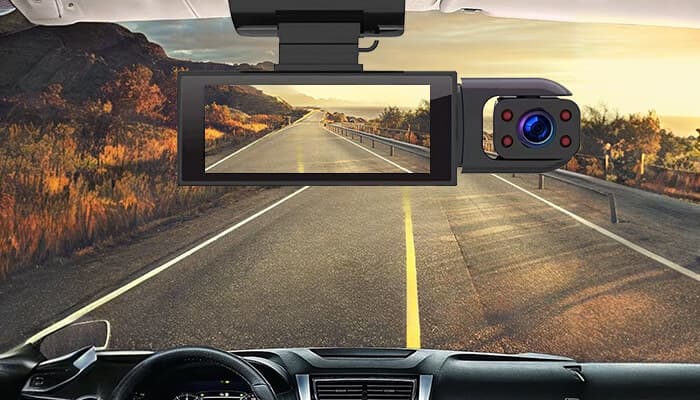
The AutopulseX is a compact dual-lens dash cam that sits behind your rearview mirror. A wide front lens (the brand says 170°) records the road, while a second lens with infrared LEDs (140°, per the brand) faces back into the car. Footage loops onto a memory card, a built-in G-sensor locks the clip if it feels a hard bump or collision, and a parking mode starts recording when it senses motion around the car. It plugs into your car's USB port, starts recording when you start the engine, and shows a live view on a 3.16-inch screen. The brand markets it as "4K," but its own spec line lists 1920 x 1080, so expect solid Full HD rather than true 4K. At $69.99 for one (less each in multi-packs), with a 30-day money-back guarantee, it's an easy, low-cost way to get a witness on your windshield.
Pros
- Two lenses in one unit: road ahead plus a cabin view with infrared LEDs for night
- G-sensor locks crash footage so loop recording can't overwrite it
- Parking mode records when it senses motion near the car, per the brand
- Large 3.16-inch screen makes setup and playback easy without a laptop
- Plugs into a USB port and starts recording on its own when you start the car
- $69.99 for one, dropping to $44.99 each in a four-pack
- 30-day money-back guarantee
Cons
- Sold as "4K," but the brand's own spec says 1920 x 1080, so treat it as Full HD
- The listed box contents don't mention a memory card, so plan to buy a microSD card
- Parking mode needs power with the engine off, which many car USB ports cut
- No GPS logging listed, unlike pricier name-brand dash cams
- Returns must be unused and in the original packaging, less shipping
How it works
Mount it
Attach the suction or sticker mount behind your rearview mirror, so the front lens sees the road and the second lens faces the cabin.
Add a memory card and power
Insert a microSD card, then run the cable to your car's USB port. Tuck the wire along the headliner for a clean install.
Drive
It starts recording when the car starts and loops over old footage when the card fills, skipping any clips the G-sensor has locked.
Pull the clip when you need it
Play footage back on the 3.16-inch screen, or move the card to a computer to save a clip for your insurer.
Who it's for
- Drivers who want proof for insurance claims and disputed tickets
- Rideshare and delivery drivers who want a record of the cabin too
- Parents of new drivers who want a simple, set-and-forget recorder
- Not for buyers who need true 4K or GPS logging
What the AutopulseX does well
A dash cam has one main job: to keep recording without you thinking about it, and to save the clip that matters when something goes wrong. The AutopulseX covers both. It powers on with the car, loops footage onto the memory card, and the built-in G-sensor locks a clip when it detects a sudden jolt, so a crash or a hard brake can't be recorded over later. That locked file is what an insurer or a police report needs.
The second lens is the part most budget dash cams skip. It points back into the car and has infrared LEDs, so it can see the cabin in the dark. That's useful for rideshare and delivery drivers, for parents of teen drivers, and for anyone who wants a record of what happened inside the car as well as on the road. The brand quotes a 170° front view and a 140° rear view, which together cover the road ahead and most of the cabin.
Is it really 4K? Read the spec line
The AutopulseX sales page calls it "4K Ultra HD," but the same paragraph describes the resolution as 1920 x 1080. That's Full HD, not 4K, which would be 3840 x 2160. We'd go by the number. Full HD is still the standard for budget dash cams and is usually enough to see what happened in a collision, but small details like distant license plates are harder to read at 1080p, especially at night or at speed.
If reading plates from far away is your top priority, a true 4K dash cam from a name brand will do better, at two to four times the price. If you want a clear record of what happened, from two angles, without spending much, the AutopulseX makes sense. Also note that the infrared night vision applies to the cabin lens with its LEDs; the road view relies on your headlights and street lights at night, like every dash cam.
Parking mode and power: what to check
The brand says parking surveillance starts recording when it senses motion around the car, which can catch a hit-and-run in a parking lot or someone tampering with the car. There's a catch common to every dash cam: parking mode only works if the camera still has power with the engine off. Its FAQ says it's powered through the car's USB port and stops recording when you turn the car off, and many cars cut power to USB and 12V sockets when parked.
If parking coverage matters to you, check whether your car's socket stays live with the ignition off. If it doesn't, a hardwire kit or an always-on socket is the usual fix, ideally installed by someone who knows car wiring. For daily driving coverage, the plug-in setup is all you need.
Price, bundles and the guarantee
When we checked the checkout, one AutopulseX was $69.99, two were $129.98 ($64.99 each), three were $149.97 ($49.99 each) and four were $179.96 ($44.99 each). The crossed-out "regular" prices are reference anchors, not what people pay. Multi-packs make sense if you have more than one car in the household. The checkout may also offer optional extras like package protection, so review your order summary before you pay.
AutopulseX offers a 30-day guarantee on unused purchases: send the item back in its original packaging for a refund or replacement, less shipping and handling. Because "unused" is in the terms, check the box contents and fit before you stick the mount to your windshield, and keep the packaging until you're sure you're keeping it.
AutopulseX vs other ways to protect your car
Name-brand dash cams with true 4K, GPS and a phone app usually cost $150 to $300. Your phone can also record, but it isn't built to loop footage all day or lock a clip on impact, and a phone on the windshield is one more distraction. The AutopulseX sits in between: a dedicated recorder with two angles and crash lock at a budget price.
It pairs well with other low-cost car safety gear. A code reader like FIXD tells you what a check-engine light means, and an emergency tool like React by ChargeHub covers breakdowns. A dash cam covers the moments those can't: the accident, the near miss and the disputed ticket.
Our verdict · 8.9/10
Try the AutopulseX for yourself
Available now for $69.99. Ships to your door.
Frequently asked questions
What is the AutopulseX dash cam?
It's a dual-lens dash cam that mounts behind your rearview mirror. One lens records the road ahead and a second lens with infrared LEDs records the cabin. It loops footage onto a memory card and locks clips automatically when its G-sensor detects a collision.
Is the AutopulseX really 4K?
The brand calls it 4K, but its own spec line lists 1920 x 1080, which is Full HD. That's typical for budget dash cams and fine for recording what happened, but don't expect true 4K detail.
Does it record at night?
Yes. The cabin lens has infrared LEDs for low light, and the brand says it uses WDR and infrared technology for night recording. The road view depends on headlights and street lighting, like any dash cam.
How is it powered?
Through your car's USB port. The brand says it starts recording when you turn the car on and stops when you turn it off.
Does parking mode work when the car is off?
Only if the camera still has power. Many cars cut USB power when parked, so check your socket, or use an always-on socket or hardwire kit if you want parking coverage.
Do I need a memory card?
Yes. It records to a memory card, and the box contents the brand lists (camera, rear camera, adapter with cable, suction holder, sticker and manual) don't mention one, so plan to add a microSD card.
How much does it cost?
When we checked, one was $69.99, two were $129.98, three were $149.97 and four were $179.96. Prices can change, so check the current offer.
What's the return policy?
AutopulseX offers a 30-day guarantee on unused items returned in the original packaging, for a refund or replacement less shipping and handling.
When you buy through links on this page, TopCrate may earn an affiliate commission at no extra cost to you. Specs, viewing angles and customer counts are the manufacturer's and were not independently tested. Check local laws on windshield mounting and in-car recording. Prices accurate as of publish time.