FOOTWEAR
How to Make Dress Shoes More Comfortable (Nine Real Fixes, Ranked by Effort)
Dress shoes hurt because they're stiff, unpadded and built on lasts that assume a foot narrower than most people actually have. Here are the fixes that work — a stretch, a proper insole, the right sock, and a heel-slip trick that costs nothing.
Nice leather dress shoes are engineered for line and shape, not for the foot inside them. The insole is a thin strip of leather or cheap foam over a rigid shank; the toe box tapers narrower than any human foot; the heel counter is stiff enough to raise blisters on the way to a meeting. The result is the familiar Wednesday-afternoon problem — a shoe that photographed beautifully in the shop and hurts every hour of the wedding, conference or long client dinner you actually bought it for.
The good news is that almost every dress-shoe complaint has a small, cheap fix that doesn't involve replacing the shoe. This guide runs through nine of them in rough order of effort and cost — starting with the free ones (better lacing, the heel-slip trick, the right socks) and moving up to the small at-home investments (a proper gel arch insole, a shoe stretcher, moleskin, silicone heel grips) that turn a stiff pair you dread wearing into a pair you actually reach for.
Why dress shoes hurt in the first place — and why sneakers don't
A running shoe has a sculpted foam midsole doing the shock absorption, a cushioned insole molded to a generic arch, a padded collar around the ankle, and a toe box wide enough for your toes to splay on impact. A dress shoe has none of that. The classic Goodyear-welted leather sole is beautiful and durable but has zero give — every step lands on a rigid surface with only a thin leather liner between your foot and the ground. The last (the wooden or plastic form the shoe is built around) is shaped for the aesthetic silhouette, not for the average human forefoot, so the toe box is usually tapered narrower than the widest part of your foot. And the heel counter is stiff on purpose so the shoe holds its shape — but stiff leather rubs your Achilles until it blisters, especially before the shoe has broken in.
Every one of those design choices exists for a reason (structure, appearance, longevity) and every one of them is exactly what causes the pain. The fixes below don't try to turn a dress shoe into a running shoe — they add back the cushioning, spread the friction, and give the shape a nudge in the right direction while keeping the look intact.
Fix 1 — Get the lacing right (free, two minutes, more powerful than most people think)
Standard shoelace patterns leave most of the tension across the top of the foot, which is exactly where a stiff dress shoe already presses. Two lacing tweaks change how the shoe feels immediately. For a shoe that pinches across the top of the foot (high instep): skip the middle eyelets so the laces bridge over the sore spot instead of digging into it — the foot still holds firmly in the heel and toe boxes but the pressure point is gone. For a shoe where your heel keeps slipping out: run the top lace back through the second-from-top eyelet from the outside to create a small loop on each side, then cross the laces through the opposite loops before tying. This 'heel lock' or 'runner's loop' pulls the ankle collar snug against your heel without over-tightening the rest of the shoe.
Also worth trying: switch to flat waxed laces if your shoes came with round ones — flat laces distribute pressure over a wider area, stay tied longer, and look sharper on oxfords and derbies. It's a $5 upgrade that most owners never think of.
Fix 2 — Wear the right socks (and it's not the pair that came with the shoes)
Thin dress socks look right but do almost nothing to cushion your feet or manage the sweat and friction that cause blisters. The two-sock upgrade that quietly changes everything: merino wool over cotton for the sock material (temperature-regulating, moisture-wicking, less friction), and a proper cushioned dress sock — brands like Bombas, Darn Tough or Smartwool make dress-appropriate versions with real reinforced heel and toe cushioning. The extra 1-2mm of dense padding under the ball of the foot dramatically reduces the pounding on long standing days without visibly changing how the shoe fits.
For serious blister-prone Achilles friction, silicone gel heel liner strips (drugstore, $6 for a pack of four) stick to the inside of the heel counter and give the back of your heel a slippery surface to glide against instead of raw leather. They're invisible when the shoe's on and add just enough cushion to end the classic new-shoe heel blister on day one. Combined with the right sock, most of the friction problem is solved before you even think about insoles.
Fix 3 — Add a real arch support (the single biggest comfort upgrade in a dress shoe)
The thin leather or foam liner in a typical dress shoe provides zero arch support, which is why the ball of your foot and your arch ache after a long day standing at a wedding or on a conference floor. Full-length aftermarket insoles rarely fit in dress shoes — there's simply no room under the flat leather sole for another quarter-inch of material without cramping your toes or lifting your heel out of the heel counter.
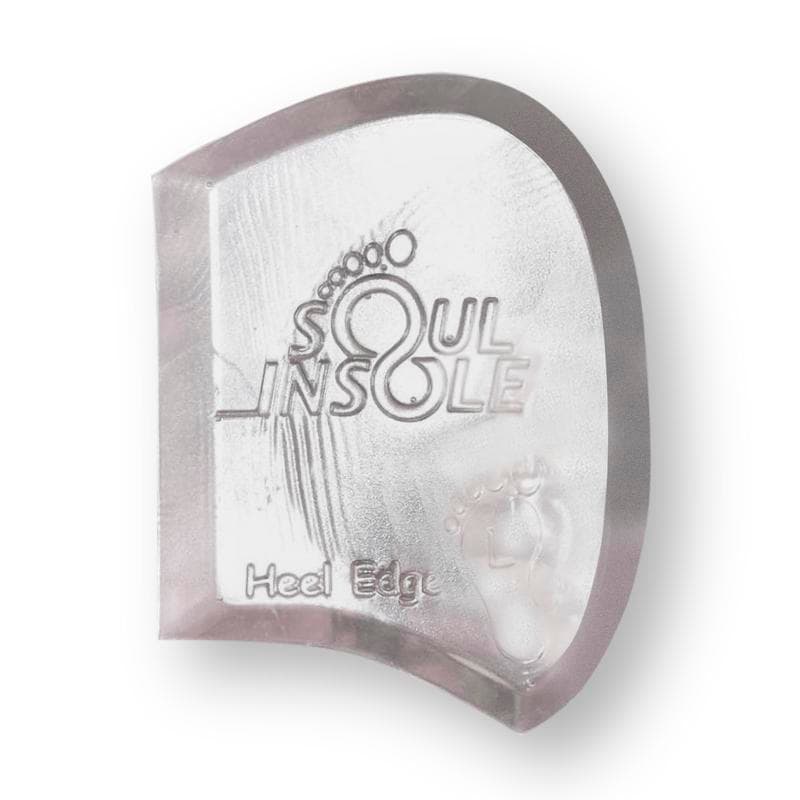
The specific tool built for this problem is a slim, self-adhesive gel arch pad — sized to sit only under the arch and heel rather than the whole footbed, so it adds the missing structure without changing shoe volume. The Soul Insole gel orthotic is the well-known example: a small teardrop-shaped medical-grade silicone insert that peels off and moves between any pair of shoes (dress shoes, sneakers, sandals, even loafers), grips in place without adhesive residue, and delivers the arch and heel support that the shoe's own liner never provided. For dress-shoe wearers whose feet ache by 3 PM the same day the shoes come out of the closet, this is the fix that changes the calculus most, and does it in under 30 seconds per shoe.
For the specific case of standing shifts in work boots or long retail-floor days in non-dress footwear, our guide to insoles for standing all day covers the full-length insole route where there's room for one. Dress shoes are the case where the slim gel arch pad wins by default.
Fix 4 — Stretch tight spots with a proper stretcher (or an at-home hack)
If a specific spot on your dress shoe pinches — the outside of the little toe, the pinky-toe knuckle, the widest part of the ball of the foot — the fix is a targeted stretch, not another layer of insole. A two-way shoe stretcher ($20-40 on Amazon) with removable pressure plugs lets you widen the shoe by a quarter to half a shoe size exactly where you need the room, without stretching the rest of the shoe. Spray the interior with a leather-stretching solution (a diluted mix of water and rubbing alcohol works cheaply), insert the stretcher, crank it out to the point of noticeable pressure, and leave it overnight. Two nights of that on stubborn leather is usually enough. Suede and canvas stretch even faster.
The classic at-home hack for a genuine pinch: put on two pairs of thick socks, wear the shoes around the house for 20 minutes with a hairdryer aimed at the tight spot on medium heat, then keep the shoes on until they cool. The leather relaxes slightly and settles to your foot shape as it cools. This works well for shallow pinches but won't move a shoe more than about a quarter size — for a real width mismatch, the stretcher is the more reliable fix.
Fix 5 — Fix a slipping heel (the fastest problem to solve on a shoe that's otherwise right)
Heel slippage is common on new leather shoes for two reasons: the heel counter hasn't broken in yet, and the shoe's interior volume is a hair larger than your foot. Both are solved with a $6 pair of adhesive heel grips (silicone, gel, or foam-backed leather) stuck to the inside of the heel counter. They shrink the interior volume just enough to lock your foot in place without cramping. Silicone grips are the most comfortable and last the longest; gel grips are the cushiest but wear out fastest; foam-backed leather grips are the most invisible if the shoe's interior lining is visible when off.
For heels that slip because the shoe genuinely is too big (rather than too new), no grip fully solves the problem — an insole added under the heel raises the whole foot slightly and can improve fit, but the honest answer at that point is to return or resell the shoe and buy a half-size smaller. A dress shoe that's meaningfully too large will always slip, always crease strangely across the toe box, and will never fit right regardless of how much you pad the inside.
Fix 6 — Break them in properly (patience beats blisters)
New leather dress shoes need a genuine break-in period — 10-20 hours of wear for the leather to soften and the shoe to mold to your foot shape. Skipping this by wearing brand-new shoes to an eight-hour event is exactly how people end the day with blisters on both heels. The professional break-in schedule: wear the new shoes for one hour on day one (around the house), two hours on day two (light errands), and gradually work up over 1-2 weeks. Bandage or moleskin any hot spots you feel starting, because a hot spot ignored for another hour becomes a blister that then takes a week to heal. If you have an event coming up in a new pair, start breaking them in at least two weeks before, not two days.
Two accelerators help. Applying a leather conditioner (Lexol, Saphir Renovateur) to the interior of the shoe before first wear softens the collar and heel counter faster than natural wear alone. And stuffing shoe trees into the shoes overnight between wears helps them hold their shape and dry out sweat, which extends the break-in benefit each time you wear them. Skip the cedar shoe trees for daily use — a $10 plastic pair works fine for maintenance and only cedar's odor-absorbing property matters for shoes that get sweaty every day.
Fix 7 — Moleskin, blister patches, and the emergency-kit rules
For the day-of emergency when a hot spot is already forming or you're an hour into an event with a new pair: cover the exact spot with adhesive moleskin (drugstore, $4 a pack) before it becomes a blister. Moleskin is a soft felt-like fabric with a strong adhesive backing — you cut it to size, stick it to the friction point on your foot (not the shoe), and it stays there for the rest of the day. For active blisters, hydrocolloid blister patches (Compeed brand is the gold standard) go directly over the blister and provide both cushioning and a moist healing environment that closes the blister faster than air exposure. Both belong in a small kit in your bag any time you're wearing new-ish dress shoes to something long.
Also worth carrying: a pair of the silicone heel liner strips mentioned in Fix 2, small enough to fit in a jacket pocket and instantly deployable inside any dress shoe that starts rubbing. For long standing events (weddings, industry conferences, all-day meetings), a swap-in fresh pair of merino dress socks at the halfway point does more for foot comfort than most people credit — dry socks reset the friction and moisture problem for the second half of the day.
Fix 8 — Choose a barefoot-adjacent dress shoe next time you're buying
The comfort revolution that's quietly happened in athletic footwear (wide toe box, zero-drop, thin flexible sole) has slowly reached the dress-shoe category too. Brands like Vivobarefoot, Xero Shoes, Lems and Anya's Shop now make genuinely dressy-looking derbies, oxfords and Chelsea boots on foot-shaped lasts with actual room for your toes and flexible soles that don't fight your foot with every step. They cost about the same as mid-tier traditional dress shoes ($150-250) and address the root cause of most dress-shoe pain — the shape mismatch between shoe and foot.
If you already own the Xero Shoes Prio for gym and casual wear and know you find barefoot-style shoes comfortable, the barefoot dress shoes from the same category will feel immediately natural. Not for every context — a very formal event or a strict business-formal office may still call for a traditional narrow-toed Oxford — but for most workplaces and social settings, the barefoot dress shoe is the underrated smart-money option that solves the comfort problem structurally instead of layering fixes on top.
Fix 9 — When the honest answer is professional (cobbler, podiatrist, or a different shoe)
Some fixes belong to a cobbler, not a DIY drawer. A cobbler can add a full-length rubber sole overlay to a leather-soled dress shoe ($25-45), which dramatically increases shock absorption on hard floors without visibly changing the top of the shoe; can stretch specific tight spots more aggressively than an at-home stretcher; can add topline padding for a heel counter that will never stop biting; and can re-heel a worn dress shoe so it doesn't wear crooked and torque your feet. For any dress shoe you paid real money for and expect to keep wearing for years, one cobbler visit within the first year pays back many times over.
The signs a fix isn't the answer and a specialist is: persistent sharp pain in the arch, ball of foot, or heel that doesn't resolve when you take the shoes off; numbness or tingling in the toes; visible bunions, hammertoes, or arch collapse that worsens over time. These aren't shoe problems — they're foot problems that any dress shoe will aggravate — and they deserve a podiatrist, not another insole. Custom orthotics prescribed for a specific structural issue are the ceiling of what a dress-shoe wearer can do, and worth the cost if you have a diagnosed condition. For everyone else, the fixes above cover the practical range: better lacing, better socks, a Soul Insole gel arch pad, moleskin in the bag, and a two-week break-in before any long day.
Read our Soul Insole gel orthotic review
The small teardrop-shaped gel arch pad that peels off and moves between any pair of dress shoes, sneakers or sandals — the specific fix that adds real arch and heel support without cramping the toe box of a leather dress shoe.
Read our Soul Insole gel orthotic reviewFrequently asked questions
What's the single most effective way to make dress shoes more comfortable?
Adding a proper arch support. A slim, self-adhesive gel arch pad like the Soul Insole gel orthotic sits only under the arch and heel — so it fits inside a dress shoe without cramping your toes or lifting your heel out — and adds the arch and heel structure that the shoe's own thin leather liner never provided. This is the specific fix that changes 'these hurt by 3 PM' into 'these are fine all day' for most wearers. Combine it with the right socks (merino wool, cushioned heel and toe) and silicone heel grips for slippage, and the vast majority of dress-shoe pain goes away.
How long does it take to break in leather dress shoes?
10-20 hours of wear for the leather to soften and the shoe to mold to your foot, typically over 1-2 weeks of gradual daily wear. The professional schedule: hour one on day one, two hours on day two, work up gradually — never wear brand-new leather shoes to an eight-hour event, that's how you end up with blisters on both heels. Applying a leather conditioner (Lexol, Saphir Renovateur) to the shoe's interior before first wear speeds break-in noticeably, and stuffing shoe trees between wears helps the shoe hold its shape. If you have an event coming up in a new pair, start breaking them in at least two weeks before.
How can I stop my heel from slipping in dress shoes?
Two-part fix. First try adhesive heel grips ($6 for a pack of four) stuck to the inside of the heel counter — silicone grips are the most comfortable and last the longest. Second, use a 'heel lock' or 'runner's loop' lacing pattern: run the top lace back through the second-from-top eyelet from the outside to create a small loop on each side, then cross the laces through the opposite loops before tying. This pulls the ankle collar snug against your heel without over-tightening the rest of the shoe. If neither fully solves it, the shoe is likely genuinely too big — return or resell, buy a half-size smaller.
How do I stretch tight dress shoes at home?
A two-way shoe stretcher ($20-40 on Amazon) with removable pressure plugs is the reliable method — spray the shoe interior with a leather-stretching solution (or a diluted mix of water and rubbing alcohol), insert the stretcher, crank it out to the point of noticeable pressure, and leave it overnight. Two nights on stubborn leather is usually enough. For a quick hack: put on two pairs of thick socks, wear the shoes with a hairdryer aimed at the tight spot on medium heat for 20 minutes, then keep them on until they cool. This works for shallow pinches but won't move a shoe more than about a quarter size — for real width mismatches, use the stretcher.
What kind of socks make dress shoes more comfortable?
Merino wool dress socks with reinforced cushioning at the heel and toe (brands like Bombas, Darn Tough, Smartwool make dress-appropriate versions). Merino regulates temperature and wicks moisture, both of which reduce the sweat-and-friction combination that causes blisters. The extra 1-2mm of padding under the ball of the foot dramatically reduces pounding on long standing days without visibly changing how the shoe fits. Thin traditional dress socks look right but do almost nothing to cushion your feet — the sock upgrade is one of the cheapest comfort wins in the category.
Can I put an insole in a dress shoe?
A full-length aftermarket insole rarely fits — there's no room under the flat leather sole for another quarter-inch of material without cramping your toes or lifting your heel out of the heel counter. The specific tool built for dress shoes is a slim, self-adhesive gel arch pad — sized to sit only under the arch and heel rather than the whole footbed. The Soul Insole gel orthotic is the well-known example: a small teardrop-shaped medical-grade silicone insert that peels off and moves between any pair of shoes, grips in place without adhesive residue, and delivers arch and heel support the dress shoe never had. For work boots or sneakers where there's more room, see our guide to best insoles for work boots.
Are barefoot-style dress shoes actually comfortable enough for real events?
For most workplaces and social settings, yes. Brands like Vivobarefoot, Xero Shoes, Lems and Anya's Shop make genuinely dressy-looking derbies, oxfords and Chelsea boots on foot-shaped lasts (wide toe box, zero-drop, flexible sole) that address the root cause of most dress-shoe pain — the shape mismatch between shoe and foot. They cost about the same as mid-tier traditional dress shoes and feel immediately more comfortable, particularly for anyone who's already comfortable in barefoot athletic shoes like the Xero Shoes Prio. Not for every context — a very formal event or a strict business-formal office may still call for a traditional narrow-toed Oxford — but for daily wear the barefoot dress shoe is a strong, structurally-comfortable alternative.
TopCrate is reader-supported. When you buy through links on our site we may earn an affiliate commission, at no extra cost to you. Content is for general information and isn't a substitute for professional advice.