TRENDING ON AMAZON
EltaMD UV Daily Tinted Broad-Spectrum SPF 40 Face Sunscreen Moisturizer (1.7 oz) Review: Is It Worth It?
The dermatologist-recommended zinc-oxide tinted face sunscreen and moisturizer in one — a hyaluronic-acid-hydrated SPF 40 with a universal sheer tint that evens tone, blurs pores and disappears under makeup without a white cast.
Quick answer: Yes — EltaMD UV Daily Tinted SPF 40 is worth its premium price, and it's the specific tinted face sunscreen we'd recommend to fair-to-medium-tone adults asking 'which daily tinted SPF should I buy' in 2026. 9% micronized zinc oxide delivers genuine broad-spectrum UVA/UVB protection, iron oxides add visible-light protection (specifically important for melasma and hyperpigmentation), hyaluronic acid hydrates like a light moisturizer, and the warm sheer tint evens skin tone and layers cleanly under makeup. Skip if you have deep skin tones (the tint reads ashy — try UV Physical Tinted or brands like Black Girl Sunscreen designed for deep tones), if you want a pure-mineral formula for pregnancy or reef safety (get EltaMD UV Physical instead), or if you're oily/acne-prone (get [EltaMD UV Clear SPF 46](/reviews/eltamd-uv-clear) instead — different formula for that skin type). For everyone else asking 'which tinted face SPF do dermatologists actually recommend,' this is the derm-office answer. Pair with a proper cleanser like [CeraVe Hydrating](/reviews/cerave-hydrating-cleanser) and evening retinol like [Neutrogena Rapid Wrinkle Repair](/reviews/neutrogena-rapid-wrinkle-repair) for a complete daily skincare routine.
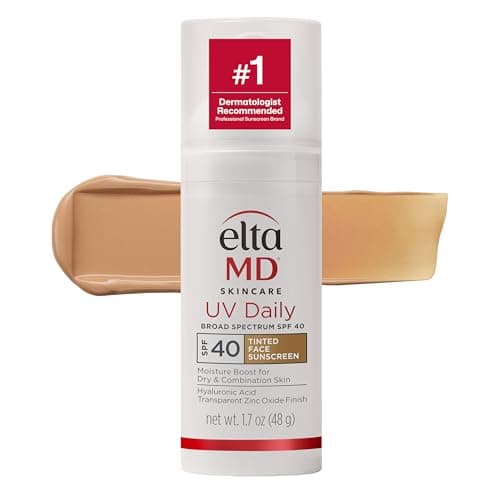
Product image from the Amazon listing.
Our verdict
Yes — EltaMD UV Daily Tinted SPF 40 is worth its premium price, and it's the specific tinted face sunscreen we'd recommend to fair-to-medium-tone adults asking 'which daily tinted SPF should I buy' in 2026. 9% micronized zinc oxide delivers genuine broad-spectrum UVA/UVB protection, iron oxides add visible-light protection (specifically important for melasma and hyperpigmentation), hyaluronic acid hydrates like a light moisturizer, and the warm sheer tint evens skin tone and layers cleanly under makeup. Skip if you have deep skin tones (the tint reads ashy — try UV Physical Tinted or brands like Black Girl Sunscreen designed for deep tones), if you want a pure-mineral formula for pregnancy or reef safety (get EltaMD UV Physical instead), or if you're oily/acne-prone (get [EltaMD UV Clear SPF 46](/reviews/eltamd-uv-clear) instead — different formula for that skin type). For everyone else asking 'which tinted face SPF do dermatologists actually recommend,' this is the derm-office answer. Pair with a proper cleanser like [CeraVe Hydrating](/reviews/cerave-hydrating-cleanser) and evening retinol like [Neutrogena Rapid Wrinkle Repair](/reviews/neutrogena-rapid-wrinkle-repair) for a complete daily skincare routine.
The short version
EltaMD UV Daily Tinted SPF 40 is the specific tinted mineral-hybrid face sunscreen dermatologists most commonly recommend when a patient asks 'which tinted SPF is safe for daily use, actually protects, and doesn't leave a white cast.' The formula pairs 9% micronized zinc oxide (the mineral filter that provides true broad-spectrum UVA/UVB protection) with octinoxate for the chemical-half booster that helps eliminate whitecast, hyaluronic acid for hydration, and a warm universal iron-oxide tint that evens skin tone and adds protection against visible light (the specific frequency implicated in melasma and post-inflammatory hyperpigmentation). It's marketed as three products in one: broad-spectrum SPF 40, daily moisturizer, and light tinted base. In practice it substitutes cleanly for a serum-primer-tinted-moisturizer stack — one product, 60 seconds, ready to leave the house. The 1.7oz tube lasts 8-12 weeks of daily face-plus-neck use. Skip if you have very deep skin tones (the tint reads warm-medium and can look ashy on deeper complexions — try the [EltaMD UV Physical Tinted](https://eltamd.com/products/uv-physical-broad-spectrum-spf-41) or a brand designed for deeper tones) or if you want a completely mineral formula (this contains octinoxate; UV Physical is the pure-mineral EltaMD alternative). For most people between fair and medium skin tones asking 'which tinted SPF should I buy,' this is the derm-office answer.
Pros & cons
Pros
- 9% zinc oxide provides genuine broad-spectrum UVA/UVB protection
- Sheer universal tint blurs pores and evens skin tone
- Iron oxides add protection against visible light — helpful for melasma and hyperpigmentation
- Hyaluronic acid hydrates like a moisturizer
- Fragrance-free, paraben-free, non-comedogenic
- Layers cleanly under makeup without pilling
Cons
- Warm-medium tint can look ashy on deep skin tones
- Contains octinoxate (not a pure-mineral formula; not reef-safe for Hawaii/Key West)
- Premium price vs drugstore tinted SPF
Why people love it
9% zinc oxide + iron oxides + octinoxate
Zinc oxide (mineral filter) reflects UVA and UVB energy off the skin; iron oxides add protection against visible light (which the untinted UV Daily doesn't have); octinoxate (chemical filter) helps eliminate the white cast pure-mineral formulas leave. The three-filter combination is what makes it a proper broad-spectrum SPF.
Hyaluronic acid hydration
Layered into the sunscreen base, HA pulls water into the stratum corneum during the day — so daily SPF also functions as a light moisturizer, replacing the moisturizer step for people who don't need heavier hydration.
Universal warm sheer tint
A single shade designed to visually 'read' as skin-tone-neutral across fair to medium complexions — evens redness, blurs pores, and skips the white cast pure mineral sunscreens leave. Not designed for deep skin tones (see UV Physical Tinted for deeper picks).
Who it's for
- Fair to medium skin tones wanting daily face SPF plus tint
- Melasma, hyperpigmentation or rosacea (visible-light protection matters)
- Retinol or tretinoin users (SPF is non-negotiable with actives)
- Anyone tired of pilling under makeup — this layers cleanly
Why EltaMD became the derm-recommended sunscreen brand — and where UV Daily Tinted fits in the lineup
EltaMD is a professional-tier skincare brand founded in 1988 by dermatologists specifically to address the specific problem that most drugstore sunscreens weren't good enough for patients with sensitive, acne-prone, rosacea-prone, or post-procedure skin. The original insight: most drugstore sunscreens use pure-chemical filter combinations that are elegant but cause reactions in sensitive skin populations, or pure-mineral filters that leave a heavy white cast and feel greasy. EltaMD's specific contribution to the category was engineering hybrid mineral-plus-chemical formulas that deliver mineral-tier protection with chemical-tier cosmetic elegance — the specific combination that made EltaMD the sunscreen most commonly recommended in dermatology offices, aesthetic clinics, and post-procedure care protocols.
The EltaMD sunscreen lineup breaks into four positions: UV Clear (5% zinc + niacinamide, for oily/acne/rosacea skin), UV Daily (9% zinc + hyaluronic acid, for dry-to-normal skin — both tinted and untinted versions), UV Sport (mineral-heavy water-resistant for outdoor use), and UV Physical (pure-mineral for the most sensitive skin, pregnancy, or reef-safe requirements). UV Daily Tinted specifically sits at the intersection of 'daily moisturizing SPF' and 'tinted for tone-evening.' The specific reasons it's the tinted version dermatologists reach for most: (1) the tint uses iron oxides that add visible-light protection (important for melasma and post-inflammatory hyperpigmentation, the specific pigmentation conditions where visible light contributes to worsening), (2) the warm sheer tint reads as natural skin on fair-to-medium tones without looking like makeup, (3) it layers cleanly under foundation without pilling — the specific problem that ruins most daily-SPF routines. Combined with the 9% zinc oxide broad-spectrum protection and hyaluronic acid hydration, UV Daily Tinted is the specific 'three products in one' recommendation dermatologists make when patients want a simplified morning routine that still delivers proper skin health.
The specific science behind tinted SPF and why iron oxides matter for melasma and hyperpigmentation
Standard sunscreens protect against UVA and UVB radiation — the specific wavelengths responsible for most skin cancer risk and sunburn. What they don't protect against, unless specifically formulated with iron oxides, is visible light (400-700 nm) and high-energy visible light (blue light, 380-500 nm). For most healthy skin, visible light exposure is cosmetically neutral — you don't burn from it, and it doesn't cause acute damage. But for specific pigmentation conditions — melasma (the 'pregnancy mask' hyperpigmentation), post-inflammatory hyperpigmentation from acne, and hormonal hyperpigmentation — visible light exposure is a documented contributor to worsening, and standard UVA/UVB-only sunscreens don't prevent this progression. Multiple dermatology studies show iron-oxide-tinted sunscreens deliver measurable protection against visible-light-induced pigmentation that untinted SPF (even higher SPF numbers) doesn't.
This is the specific reason EltaMD UV Daily Tinted is the pick over EltaMD UV Daily Untinted for anyone dealing with melasma, hyperpigmentation, or post-acne dark spots. The tint isn't just for cosmetic evening — it's a functional protective ingredient that specifically targets a wavelength range untinted SPF can't. Standard visible light exposure comes from sunlight (obviously), but also from indoor LED lighting, computer screens and phone screens — meaning even indoor-focused work-from-home routines involve visible-light exposure that a tinted SPF can meaningfully block. For melasma and hyperpigmentation specifically, dermatology consensus is that tinted mineral SPF with iron oxides is the specific product that helps prevent worsening (it doesn't reverse existing pigmentation — that requires treatment like tretinoin, azelaic acid, or a professional laser series — but it prevents the specific worsening pattern that comes from continued unprotected exposure). Combined with a proper anti-hyperpigmentation routine (vitamin C serum morning, tretinoin or Neutrogena Rapid Wrinkle Repair retinol night, and consistent daily SPF), UV Daily Tinted is the specific SPF that best supports the treatment protocol.
Building a complete morning skincare routine around EltaMD UV Daily Tinted
UV Daily Tinted is designed as a three-in-one (SPF + moisturizer + tinted base), which lets it simplify a morning routine dramatically without sacrificing protection. The specific full routine that works for most users: (1) cleanse — a gentle cleanser like CeraVe Hydrating Cleanser for dry-to-normal skin, or CeraVe Foaming Cleanser for oily-to-combination skin. (2) Vitamin C serum (optional but recommended for antioxidant protection — Skinceuticals CE Ferulic is the derm-favorite, or The Ordinary Ascorbyl Glucoside for a budget alternative). (3) Any prescription treatments (spot azelaic acid for pigmentation, etc.) if applicable. (4) EltaMD UV Daily Tinted SPF 40 — a quarter-teaspoon (two finger-lengths worth) applied evenly across face and neck, blended in circular motions until fully absorbed. Wait 60 seconds for full absorption. (5) Optional makeup on top if desired.
This 4-5-step routine takes 3-4 minutes total and delivers proper broad-spectrum SPF protection, hyaluronic acid hydration, visible-light protection via iron oxides, and cosmetic tone-evening. Comparison to the traditional morning routine it replaces: serum + moisturizer + primer + tinted moisturizer + SPF spray on top (typically 6-8 minutes and $150-300 in products). The specific value of UV Daily Tinted is consolidating that stack into one $40 tube that lasts 8-12 weeks. Skip the vitamin C serum if you want maximum simplification (SPF alone protects, but antioxidant serums add additional protection against oxidative damage from pollution and blue light). For anyone dealing with active acne, add benzoyl peroxide or Paula's Choice 2% BHA in the evening rather than the morning to avoid interfering with UV Daily Tinted absorption. For hyperpigmentation specifically, add azelaic acid (Paula's Choice 10% Azelaic Acid Booster or a prescription version) at night. The complete routine — cleanse, serum, treatment, SPF — is what actually improves skin quality over months, and UV Daily Tinted is the specific SPF that anchors it.
See EltaMD UV Daily Tinted on Amazon
Check the latest price, photos and buyer reviews on Amazon.
Check Price on Amazon →Sold and shipped by AmazonFrequently asked questions
Is EltaMD UV Daily Tinted SPF 40 worth it?
Yes — EltaMD UV Daily Tinted SPF 40 is worth its premium price for anyone with fair-to-medium skin tone wanting a daily face SPF that also functions as moisturizer and tinted base. The specific reasons: (1) 9% micronized zinc oxide delivers genuine broad-spectrum UVA/UVB protection (mineral filters don't degrade in sunlight the way pure-chemical filters do), (2) iron oxides add protection against visible light — the specific frequency implicated in melasma and post-inflammatory hyperpigmentation that untinted SPF doesn't touch, (3) hyaluronic acid hydration substitutes for a moisturizer step, (4) the sheer warm tint evens tone and blurs pores without a white cast, and (5) it layers cleanly under makeup without pilling. At $40-45 for a 1.7oz tube lasting 8-12 weeks of daily face-plus-neck use, cost-per-day lands around $0.50 — meaningfully cheaper than the serum-plus-primer-plus-tinted-moisturizer stack it replaces. Skip if you have deep skin (the tint reads ashy — try UV Physical Tinted or a brand designed for deep tones), if you want a pure-mineral formula (this contains octinoxate; the derm-favorite pure-mineral EltaMD alternative is UV Physical), or if you're headed to reef-restricted zones like Hawaii (octinoxate is restricted there — pack a mineral option instead).
EltaMD UV Daily Tinted vs UV Clear vs UV Physical — which EltaMD sunscreen should I buy?
Three different EltaMD SPFs for three different skin priorities. **EltaMD UV Clear SPF 46** (5% zinc + niacinamide, untinted, ~$40): the pick for acne-prone, oily, or rosacea-prone skin — niacinamide calms redness and controls oil, non-tinted so it works under any foundation. **EltaMD UV Daily Tinted SPF 40** (this page, 9% zinc + iron oxides + octinoxate, tinted, ~$40): the pick for fair-to-medium skin tones wanting a daily face SPF with light tint, evens tone, blurs pores, and adds visible-light protection helpful for melasma/hyperpigmentation. **UV Physical SPF 41** (9% zinc + 7% titanium dioxide, pure mineral, no octinoxate, both tinted and untinted versions, ~$40): the pick for sensitive skin, post-procedure skin, pregnancy (some patients avoid octinoxate), or reef-safe travel. Rule of thumb: UV Clear for oily/acne, UV Daily Tinted for daily tinted with light coverage, UV Physical for the most sensitive or reef-safe requirements. For most healthy adults asking 'which daily tinted face SPF,' UV Daily Tinted is the specific dermatologist-office answer, and it's the one to buy first.
Does the tint match all skin tones? What if I'm deeper than medium?
The tint is a single warm-medium universal shade, and it works best on fair to medium skin tones — roughly Fitzpatrick I-III (fair to olive/tan). For deep skin tones (Fitzpatrick IV-VI), the tint typically reads as ashy or gray-toned and isn't the correct pick. Better options for deeper tones: EltaMD UV Physical Tinted (a more olive-based tint that works on some deeper tones, though it also has limits), Black Girl Sunscreen SPF 30 (specifically formulated for deep skin tones with no white cast), or Live Tinted Hueguard SPF 30 (a broader shade range designed for melanated skin). For anyone unsure about tint compatibility, the safest test is to apply a small amount on the jawline or side of the neck and check in natural light — if it looks ashy or matches too obviously as makeup, it's the wrong shade for your tone. EltaMD's untinted UV Daily SPF 40 is the same formula minus the tint if you'd rather layer your own tinted product on top.
Can I use EltaMD UV Daily Tinted with retinol or tretinoin?
Yes — actually, this is one of the specific products dermatologists most commonly pair with retinol/tretinoin routines, because SPF is non-negotiable when using actives that increase photo-sensitivity. Retinol thins the outermost skin layer and makes skin more prone to sun damage; without daily SPF, retinol use actively accelerates the photoaging it's supposed to reduce. UV Daily Tinted delivers both protection and hydration in one product, which is what active-users need (retinol-flaked skin needs the extra hyaluronic acid buffer). Standard routine: use retinol at night (Neutrogena Rapid Wrinkle Repair is the dermatology-favorite OTC version), moisturize with a gentle cream, and apply UV Daily Tinted every morning as the last step before makeup. The daily SPF is what makes the retinol worth using — skip it and you're canceling out the benefits.
How long does one tube of EltaMD UV Daily Tinted last, and how much should I use?
A 1.7oz tube typically lasts 8-12 weeks with daily face-plus-neck application at the correct dose. The correct dose is roughly a quarter-teaspoon (about 2 finger-lengths of product on your index finger) for the entire face — most people under-apply SPF by 50-70%, which delivers dramatically less protection than the label claims. For proper SPF 40 protection you need the full dose; anything less delivers roughly SPF 15-25 in practice. Some derms teach the 'two-finger method': squeeze a line of sunscreen from the tip to the second knuckle of both your index and middle fingers, then apply that full amount to your face. Reapplication every 2 hours during high-UV exposure (outdoor activities, beach, hiking) — for daily indoor-plus-brief-outdoor use, one solid morning application is enough. Extend the tube life by storing it in a cool dry place (heat and light degrade the zinc oxide over time).
Is EltaMD UV Daily Tinted safe during pregnancy and while breastfeeding?
Generally yes, with one caveat. Zinc oxide (the main mineral filter) is considered safe during pregnancy and breastfeeding — it sits on the skin surface without absorption and has no known reproductive concerns. Hyaluronic acid, iron oxides, and the other cosmetic ingredients in the formula are also considered pregnancy-safe. The one asterisk is octinoxate, one of the chemical filters in this formula — some OB/GYNs and dermatologists prefer patients avoid chemical sunscreen filters during pregnancy out of caution, though the evidence base for actual concerns is weak. For pregnancy and breastfeeding specifically, the safer choice is EltaMD UV Physical SPF 41 Tinted, which uses only mineral filters (9% zinc + 7% titanium dioxide) with no chemical filters at all. UV Physical delivers similar protection with a purely-mineral profile that eliminates any octinoxate concern. Discuss with your OB or dermatologist for personalized guidance — pregnancy is a case where 'safest available option' usually wins over 'best-performing option' for daily-use products.
As an Amazon Associate, TopCrate earns from qualifying purchases at no extra cost to you. Illustrative image — see Amazon for the actual product. EltaMD UV Daily Tinted is a cosmetic sunscreen, not a medical treatment. Reapply every 2 hours during outdoor exposure. Product image, price, availability and ratings are shown on Amazon and are subject to change.
More reviews you might like
SKINCARE
Celimax Vita-A Retinal Shot Review: Best K-Beauty Retinal for Sensitive Skin?
SPORTS
Body Glide Original Review: The Anti-Chafe Balm That Actually Works
SKINCARE
Foreo Luna Mini 3 Review: Is the Silicone Cleansing Brush Worth It?
ORAL CARE