FOOT CARE 101
Insoles for Standing All Day: What Helps, How Long They Last, and How to Clean Them
Why standing still is harder on feet than walking, the 30-second wet footprint test, honest replacement timelines, and how to wash an insole without wrecking it.
If you work retail, nursing, a warehouse floor, a classroom, or a kitchen line, you already know the strange math of standing jobs: you can barely walk anywhere all day and still limp to the car. That's not weakness — standing still is genuinely harder on your feet than walking, for reasons that are pure mechanics. And the fix is rarely one magic product; it's a short stack of small levers, of which insoles are the biggest and cheapest.
This guide covers why standing punishes feet more than moving does, what actually helps, how to find your arch type in thirty seconds, the difference between cushioning and support, how long insoles last, how to clean them, and when sore feet are telling you something an insole can't fix.
Why Standing All Day Is Harder Than Walking
Walking is a load-sharing system. Every stride gives one foot a brief rest while the other works, and the rhythmic squeeze of your calf muscles acts as a second heart, pumping blood from your legs back upward. Standing still cancels both features. The same tissues in your arches and heels stay loaded continuously for hours, your leg muscles hold a constant low-level contraction just to keep you balanced, and with the calf pump idle, blood pools in your lower legs — which is why standing shifts end with swollen, heavy, aching feet even on days your step counter barely moved.
Add the typical flooring — concrete, tile, commercial hard surface — and there's no give anywhere in the system except your own body. Under hours of constant load, arches fatigue and flatten, and the soreness climbs the chain into knees and lower back. This is ordinary fatigue, not injury, but it compounds across a work week, and it's exactly the kind of problem where small mechanical fixes pay off daily.
What Actually Helps — Insoles Are One Lever of Several
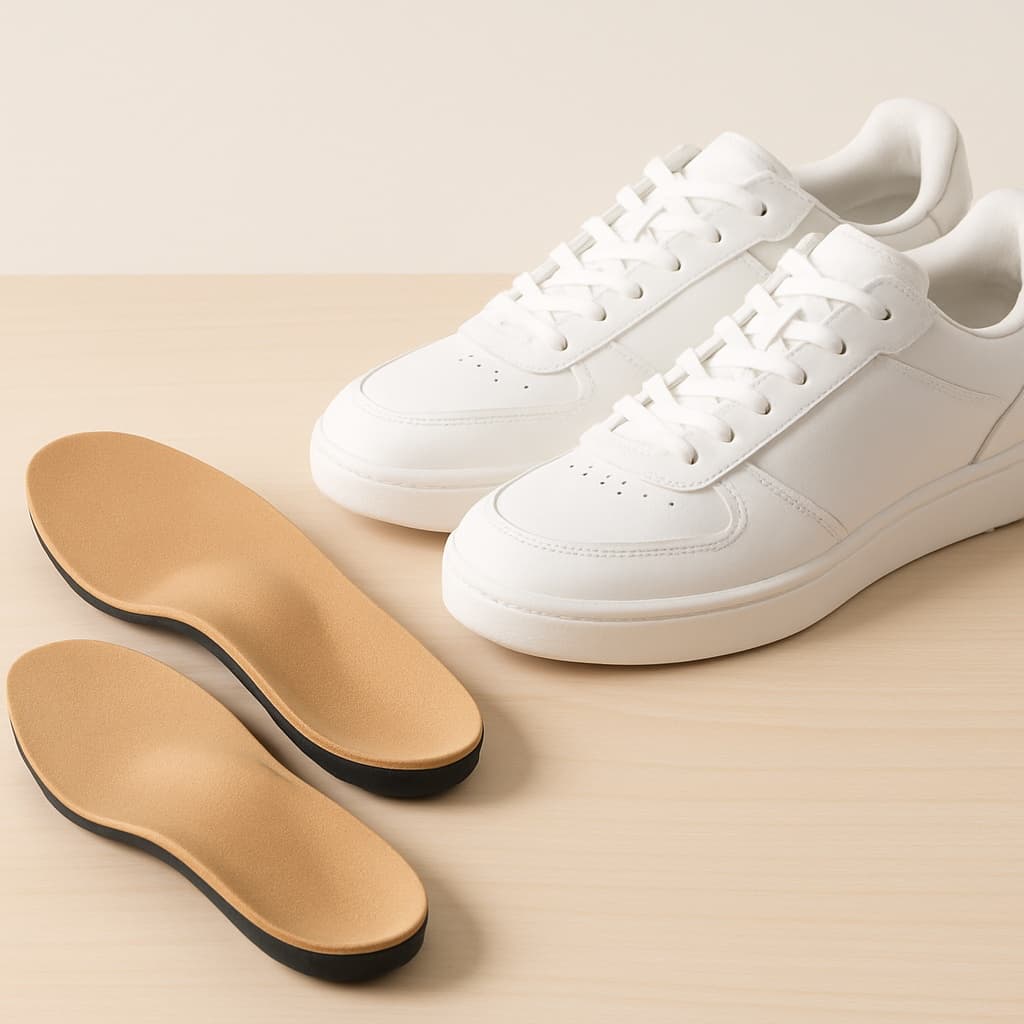
Honesty first: no insole makes a ten-hour standing shift feel like a rest day. What works is stacking levers. Supportive insoles are lever one, because they're working every minute you're upright — our tested pick Liftly pairs a contoured arch dome and deep heel cup with honeycomb cushioning, which is the combination standing shifts actually need. Lever two is rotating between two pairs of shoes: foam midsoles compress during a shift and need about a day to fully rebound, so alternating pairs means you're never standing on yesterday's flattened foam. If your shift happens in boots, our guide to the best insoles for work boots covers the boot-specific fit details.
Lever three is an anti-fatigue mat if you hold one station — a cashier stand, a prep counter, a workbench. The slight instability keeps your leg muscles making tiny adjustments, which restores some of the pumping action standing still takes away. Lever four is free: calf stretches and a minute or two of walking every hour, which drains pooled blood and gives loaded tissues their only break of the shift. Each lever is modest alone; together they're the difference between sore and wrecked.
Find Your Arch Type — and Know Cushioning From Support
Insole arch height should match your arch, and the wet footprint test tells you yours in thirty seconds: wet the sole of your foot, step firmly on a piece of cardboard or a paper bag, and read the print. Nearly the whole sole showing means a low arch. Roughly half your midfoot showing is a medium arch — the most common result. A thin strip along the outside edge means a high arch. Match the insole accordingly: too tall an arch feels like a stone; too low does nothing.
The other thing to know before buying: cushioning and support are different jobs. Pillowy foam feels wonderful for the first hour and then compresses into nothing — squish alone is not support. Support is structure: an arch that holds its shape under your weight and a heel cup that keeps your landing aligned. You want both, in that order — structure to hold your foot's geometry through the shift, cushioning layered on top to take the edge off a hard floor. An insole that offers only softness is a very thin mattress, not a fix.
How Long Do Insoles Last?
The typical lifespan is 6 to 12 months — and if you stand all day, expect the early end of that range, because bodyweight-hours are what kill an insole, not the calendar. The frustrating part is that insoles fail from the inside out: the supportive structure collapses well before the surface looks worn, so a decent-looking insole can be functionally dead.
The signs to check: an arch that's visibly flattened or squashes under your thumb with no push-back, a heel cup compressed flat so it no longer cradles your heel, a smell that survives washing (a sign the foam itself has broken down), and visible cracks or deep creases in the body of the insole. Any one of these means replacement. A practical habit: set a reminder for six months after you buy a pair, and do the thumb-press check then rather than waiting for your feet to file the complaint.
How to Clean Insoles
Pull the insoles out of the shoes — never wash them in place. Hand wash with mild soap and warm water, working over the surface with a soft brush or cloth; don't submerge or soak them, since waterlogged foam takes forever to dry and breaks down faster. Wipe away the soap with a clean damp cloth, press out excess moisture with a towel, and air dry completely overnight before they go back in. Completely is the operative word — a damp insole in a closed shoe is a microbe's dream apartment.
Never use a dryer, radiator, or direct heat: heat warps foam and dissolves adhesives, and a five-minute shortcut can total the insole. For odor between washes, the baking soda trick works: put the insoles in a bag with a couple of teaspoons of baking soda, shake to coat, leave overnight, and wipe them off in the morning. And the cheapest habit of all — take insoles out of your shoes at night so both sides dry. Sweat that evaporates overnight never becomes smell.
When Sore Feet Are Beyond an Insole
Insoles are comfort and support products, and it matters to be clear about where that job ends. Generalized tired, achy feet after a long shift is squarely insole territory. But some signals are not: numbness or tingling in your feet or toes, sharp stabbing heel pain with your first steps in the morning that persists for weeks, pain clearly on one side only, or swelling that doesn't settle overnight. Those patterns suggest something specific going on, and a specific problem deserves a diagnosis.
That means a podiatrist — not a more expensive insole, and not months of hoping it fades. A podiatrist can identify what's actually happening and, where it's warranted, prescribe custom orthotics built from a mold of your foot. Getting checked isn't the dramatic option; it's the efficient one. The right diagnosis first makes every dollar you spend on support afterward actually count.
Read our Liftly insoles review
The trim-to-fit arch-and-heel-cup pick we'd hand anyone facing a ten-hour shift on concrete.
Read our Liftly insoles reviewFrequently asked questions
What are the best insoles for standing all day?
Ones with real structure: an arch that matches your arch height, a deep heel cup, and cushioning layered over that support — not pillowy foam alone, which compresses into nothing within an hour. Our tested pick is Liftly, which pairs a contoured arch and deep heel cup with honeycomb heel cushioning and trims to fit any shoe.
How long do insoles last?
Typically 6 to 12 months — and closer to 6 if you stand all day, since load-hours wear them out faster than time does. Replace them when the arch flattens or squashes without resistance, the heel cup no longer cradles your heel, odor survives washing, or cracks appear. Support collapses before the surface looks worn, so judge by feel, not looks.
Can you wash insoles?
Yes — by hand. Remove them from the shoes, wash with mild soap and warm water using a soft brush, avoid soaking, and air dry completely overnight before reinserting. Never machine wash most insoles and never use a dryer or radiator; heat warps the foam and dissolves the adhesives. For odor between washes, coat them in baking soda overnight and wipe clean.
Do anti-fatigue mats actually work?
For fixed stations, yes — the slightly unstable surface keeps your leg muscles making constant small adjustments, which restores some of the circulation-pumping that standing still switches off. They only help where you actually stand, though, so they're a complement to supportive insoles for anyone who moves between stations, not a replacement.
Why do my feet hurt more when I stand than when I walk?
Walking gives each foot a rest every stride and uses your calf muscles to pump blood back up your legs. Standing loads the same tissues continuously and idles that pump, so blood pools and fatigue builds without relief. It's normal mechanics — but if the pain is sharp, one-sided, or persists for weeks, see a podiatrist.
How do I know if I have flat feet or high arches?
Do the wet footprint test: wet your sole, step on cardboard, and look at the print. Nearly the full sole showing means low arches, about half the midfoot showing means medium, and a thin outside strip means high arches. Match your insole's arch height to the result — the wrong height either digs in or does nothing.
TopCrate is reader-supported. When you buy through links on our site we may earn an affiliate commission, at no extra cost to you. Content is for general information and isn't a substitute for professional advice.