HANDS-ON REVIEW
Liftly Cushioning Support Insoles Review: Is It Worth It?
Trim-to-fit cushioning insoles with real arch support and honeycomb shock absorption — turning the flat foam in your shoes into actual foot support.
Quick answer: Liftly insoles are worth it for the standing-fatigue and tired-arch case the packaging targets — the trim-to-fit contour, real arch dome and honeycomb cushioning deliver the exact upgrade the flat factory liner in your shoes never did, at a price ($29.99) that makes retrofitting the whole closet rational. It's a comfort product, not a medical device, and it doesn't pose as one — so pair it with a podiatrist visit for any sharp or worsening pain, and treat it as the everyday support your $150 sneakers should have shipped with.
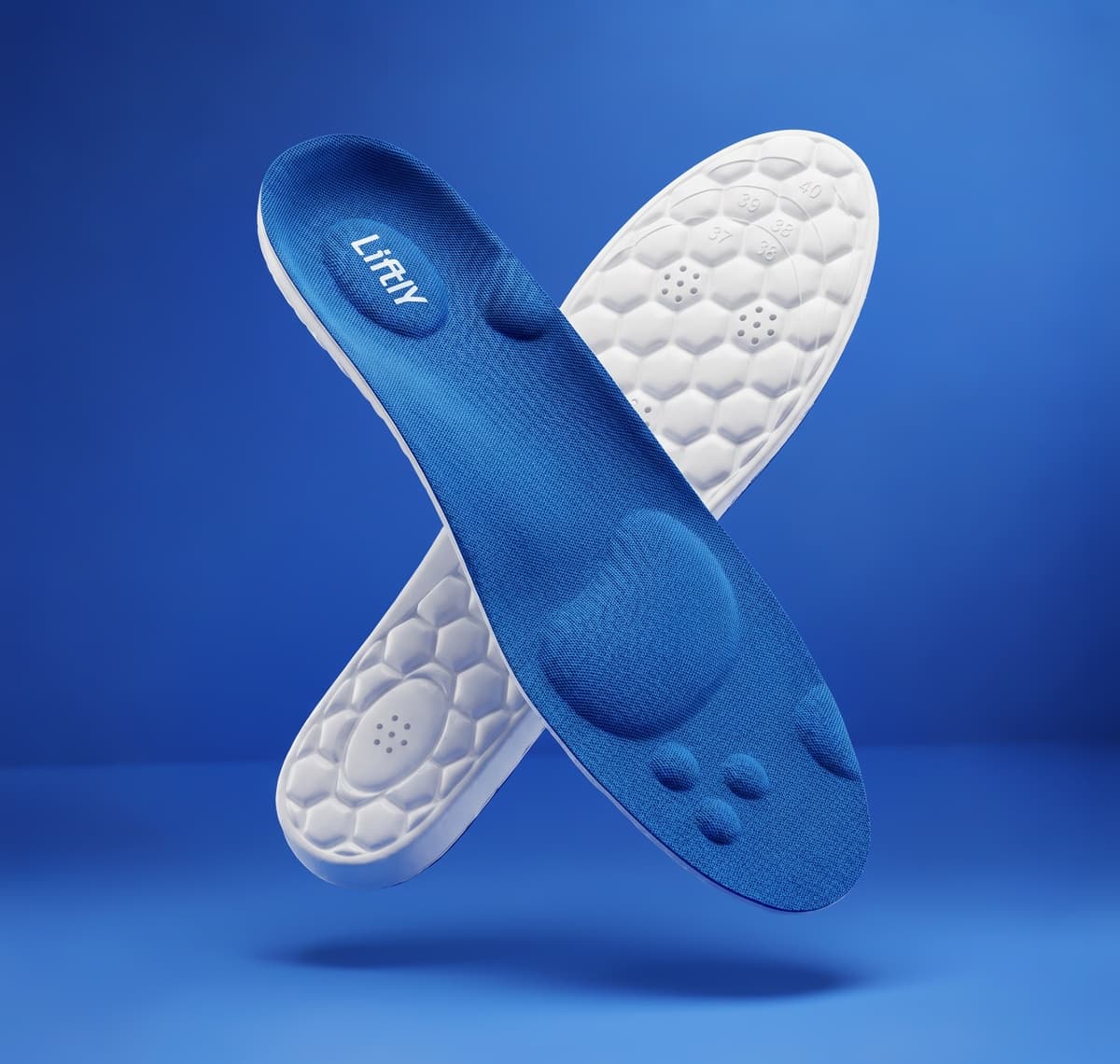
Liftly's contoured arch and honeycomb cushioning replace the flat factory liner in any shoe. Photo: Liftly
Our verdict
Liftly insoles are worth it for the standing-fatigue and tired-arch case the packaging targets — the trim-to-fit contour, real arch dome and honeycomb cushioning deliver the exact upgrade the flat factory liner in your shoes never did, at a price ($29.99) that makes retrofitting the whole closet rational. It's a comfort product, not a medical device, and it doesn't pose as one — so pair it with a podiatrist visit for any sharp or worsening pain, and treat it as the everyday support your $150 sneakers should have shipped with.
The short version
The insole that came in your shoe is a flat sheet of foam that flattened for good within a month — and it's what your arches stand on for 10,000 steps a day. Liftly is the upgrade the shoe should have shipped with: a contoured insole with a genuine arch dome, a cradling heel cup, and a honeycomb cushioning layer that returns some of every step instead of just absorbing your weight into nothing. Trim along the printed lines to your size, swap it in, and every pair of sneakers, boots or work shoes you own becomes dramatically more supportive. For tired arches, sore heels and standing-all-day fatigue, it's the cheapest intervention that actually changes the mechanics.
Pros & cons
Pros
- Real arch support replaces the flat factory liner
- Honeycomb cushioning absorbs heel-strike shock
- Deep heel cup stabilizes and aligns the landing
- Trim-to-fit: one pair adapts to any shoe you own
- Moves between shoes — upgrade the whole closet
- A fraction of the price of custom orthotics
Cons
- Comfort insoles, not prescription orthotics — see a podiatrist for real pathology
- New arch support takes a few days of adjustment
- Tight-fitting dress shoes may not have the volume
How it works
Trim to your size
Follow the printed size lines and trim the toe edge with scissors — thirty seconds per insole to match any shoe.
Swap the flat liner out
Pull the factory insole, drop Liftly in. The arch dome and heel cup position themselves where your foot actually loads.
Let your feet recalibrate
Arches used to nothing take a few days to trust support — mild awareness early is normal, then shoes just feel better.
Who it's for
- Retail, healthcare and trade workers on their feet all shift
- Walkers and casual runners whose shoes feel dead
- Flat-ish arches that ache by evening
- Anyone quoted $400 for custom orthotics and balked
Why factory insoles are the weak link in every shoe
Shoe brands spend their budget where you can see it — uppers, outsoles, colorways — and ship nearly every model with the same commodity item inside: a 3mm die-cut foam sheet with zero contour. It photographs fine and feels okay in the store, then packs flat within weeks, leaving your arch unsupported over a rigid midsole for the shoe's whole life. The industry's quiet consensus is that insoles are the owner's problem, which is why the aftermarket category exists at all.
What a contoured insole changes is load distribution. A flat surface concentrates your weight on heel and forefoot — the exact spots that burn after a long shift. An arch dome recruits the midfoot into carrying its share, the heel cup keeps the fat pad under the heel bone where it belongs, and cushioning under the strike zones meters the impact that otherwise travels up to knees and hips. None of that is exotic; it's what feet expected before flat floors and flat shoes.
Comfort insoles vs. custom orthotics: the honest tiers
The category has three tiers. Flat comfort pads (gel cushions, $10) add squish but no mechanics. Contoured support insoles — Liftly's tier — add the arch, heel cup and structured cushioning that fix the common complaints: tired arches, sore heels, all-day fatigue. Custom orthotics ($300–600 through a podiatrist) exist for actual pathology: significant deformity, diabetic offloading, post-injury correction. The middle tier is the right buy for the overwhelming majority who just stand and walk a lot on dead foam. Between full-length and custom lives a fourth option worth naming: the tiny stick-under-the-arch Soul Insole gel orthotic that moves between every pair of shoes you own — useful specifically for sandals, flats and dress shoes where a full-length insole simply can't fit, so many buyers own a Liftly in daily-driver sneakers and a Soul Insole covering everything else.
Where honesty matters: persistent heel pain that's sharpest on first morning steps, numbness, or pain that's worsening for weeks is a see-someone signal, not an insole shopping trigger — plantar fasciitis and its cousins deserve diagnosis. For garden-variety end-of-day ache, pair the insole upgrade with the rest of the recovery stack: a massaging foot recovery session after long shifts, toe-spacing socks in the evening, and shoes rotated before their midsoles die.
Are Liftly insoles worth $29.99?
The per-shoe math is the argument: one trim-to-fit pair upgrades whichever shoes you're wearing today and migrates between pairs, so $30 effectively retrofits the closet. Compare the alternatives people actually buy — $150 'comfort' sneakers that still ship with flat liners, $60-per-pair branded insoles sized to one shoe, or the custom-orthotic quote — and the contoured middle tier is where the value concentrates. Replace them when the cushioning packs down (6–12 months of daily wear), which is also the honest lifespan nobody prints on the box.
Break-in advice that prevents most returns: real arch support feels present for the first few days — like a hand under an arch that's used to freefall. Wear them in 2–4 hour stints for the first week rather than a 12-hour shift on day one, and the awareness fades into 'shoes just feel better.' If your dress shoes are volume-tight, trim for and dedicate them to your daily sneakers and work boots — that's where the 10,000 steps happen anyway.
Frequently asked questions
Will they fit my shoes?
Yes for nearly everything with a removable liner — sneakers, boots, work shoes, casual shoes. Printed lines let you trim to size in seconds; very tight dress shoes are the one squeeze.
Do they help with plantar fasciitis?
Supportive insoles often ease the strain pattern behind everyday heel and arch ache — but sharp first-step morning heel pain deserves a proper diagnosis. Liftly is a comfort upgrade, not a prescription device.
How long do they take to get used to?
A few days is typical — arches accustomed to flat foam notice real support at first. Ease in with partial days for the first week; the awareness fades as your feet recalibrate.
How long do they last?
About 6–12 months of daily wear before the cushioning packs down — swap them when the bounce goes. That's standard for every insole in this class, including ones costing twice as much.
Can I move them between shoes?
Yes — trim to your largest everyday pair and they'll transfer to same-size shoes freely. Many buyers grab a second pair so the work boots and sneakers are both permanently upgraded.
Comfort insoles or custom orthotics — which do I need?
For tired feet, standing fatigue and mild arch ache: this tier. For diagnosed conditions, significant deformity or worsening pain: a podiatrist and possibly customs. The $30 tier fixes the common case; the $400 tier exists for the exceptions.
Are Liftly insoles worth it?
For anyone whose shoes feel dead by evening — retail, healthcare, warehouse, trades, teachers, walkers with commodity sneakers — yes. One trim-to-fit pair upgrades the flat factory liner in every shoe you own with a real arch dome, heel cup and honeycomb cushioning, at a fraction of the cost of custom orthotics or premium replacement insoles. The value only breaks down in two cases: tight-volume dress shoes that can't accept the extra thickness, or diagnosed foot pathology that needs a podiatrist rather than an off-the-shelf insole. Our Liftly vs Akusoli comparison covers the main alternative in the direct-to-consumer aftermarket insole category, and are Liftly inserts legit? walks through the checkout and guarantee.
When you buy through links on this page, TopCrate may earn an affiliate commission at no extra cost to you. Liftly insoles are a comfort product, not a medical device; consult a podiatrist for persistent or worsening foot pain. Prices accurate as of publish time.