HANDS-ON REVIEW
Hears Adaptive Hearing Protection Earbuds Review: Is It Worth It?
Filter earplugs that take the harmful edge off loud environments while letting conversation and detail through — protection without the underwater feeling.
Quick answer: Yes — at $39.99 Hears earplugs are worth it for concerts, bars, mowers, motorcycling and loud commutes, and the reason is the insight the earplug industry ignored for decades: the best protection is the pair you'll actually keep in. Even, natural-sounding attenuation keeps you in the conversation while the damaging peaks come off the top, with no batteries and nothing to fail. Won't cancel a jet engine and industrial shifts still want rated earmuffs, but for the loud life's recurring events, it's the $40 your 70-year-old ears would insist on. If your loud is a snoring partner rather than a concert crowd, [Loop Quiet 2 earplugs](/reviews/loop-earplugs) are the sleep-specific version of the same idea.
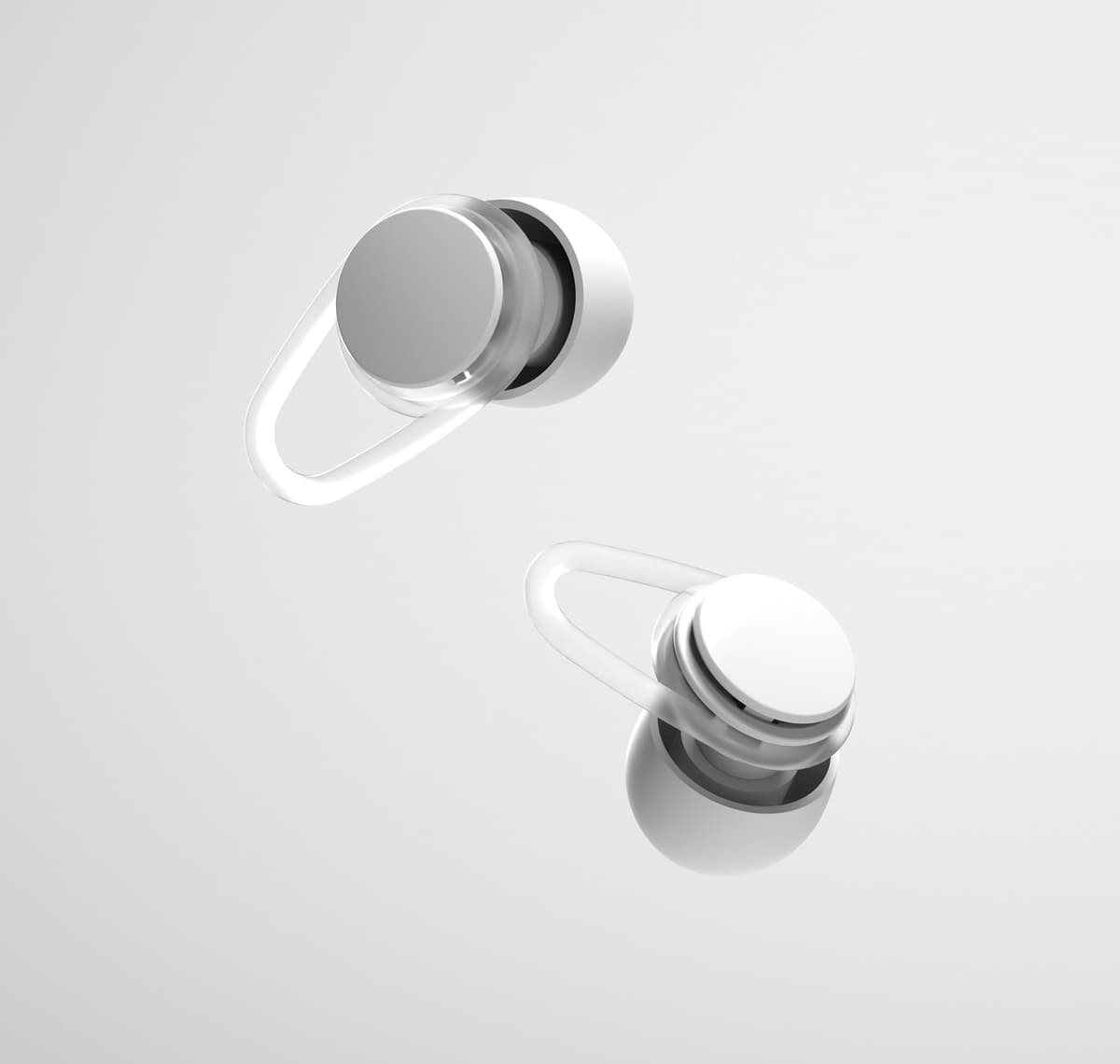
Low-profile filter earbuds that sit flush — protection you can wear through a whole event. Photo: Hears
Our verdict
Yes — at $39.99 Hears earplugs are worth it for concerts, bars, mowers, motorcycling and loud commutes, and the reason is the insight the earplug industry ignored for decades: the best protection is the pair you'll actually keep in. Even, natural-sounding attenuation keeps you in the conversation while the damaging peaks come off the top, with no batteries and nothing to fail. Won't cancel a jet engine and industrial shifts still want rated earmuffs, but for the loud life's recurring events, it's the $40 your 70-year-old ears would insist on. If your loud is a snoring partner rather than a concert crowd, [Loop Quiet 2 earplugs](/reviews/loop-earplugs) are the sleep-specific version of the same idea.
The short version
Foam earplugs treat all sound as the enemy — they mute the harmful peaks and the conversation equally, which is why nobody keeps them in. Hears takes the acoustic-filter approach: precision-tuned filters inside soft silicone buds attenuate volume across the board while preserving the frequency detail that keeps voices intelligible and music sounding like music, just quieter. Concerts stop ringing your ears, power tools lose their bite, the bar becomes conversational — without the sealed-in, underwater feeling of foam. No batteries or electronics: it's passive acoustics, with multiple tip sizes for an all-day comfortable seal and a pocket case for the pair.
Pros & cons
Pros
- Reduces harmful volume while keeping speech clear
- No underwater muffle — sound stays natural, just quieter
- Passive filters: no batteries, charging or electronics
- Low-profile fit sits flush — sleeps and helmets tolerate it
- Four tip sizes for a comfortable, effective seal
- Reusable and washable — one pair, years of events
Cons
- Not electronic ANC — it lowers volume, it doesn't erase it
- Protection depends on a proper tip seal (fit matters)
- For industrial all-day exposure, rated earmuffs still rule
How it works
Find your seal
Try the included tip sizes until the buds seal gently — a good seal is what turns the filters' rating into real protection.
Filters do the physics
Sound passes through a tuned acoustic channel that attenuates volume evenly, trimming the damaging peaks instead of blocking everything.
Hear less, catch more
The world drops to a safer volume with voices and detail intact — you protect your ears without leaving the conversation.
Who it's for
- Concert- and festival-goers tired of next-day ringing
- Motorcyclists and commuters in constant wind/traffic roar
- DIYers and mower-pushers who skip earmuffs 'just this once'
- Noise-sensitive people who still want to be present
Why 'quieter but clear' beats 'blocked'
Foam plugs fail at the human layer: they smear frequencies unevenly, killing the treble that carries consonants, so wearers feel sealed off, shout their own name wrong, and pull them out within the hour — at which point protection is zero. Acoustic filters attenuate more evenly across the spectrum, which is the entire trick: the mix drops in volume but keeps its shape, so speech stays intelligible and live music keeps its detail. Protection people actually leave in beats stronger protection they remove.
The stakes are worth stating plainly: noise-induced hearing damage is cumulative and permanent — hair cells don't regrow — and the post-concert ring is the sound of a threshold being crossed. Regular loud exposure (gigs, tools, engines, even relentless traffic) compounds quietly for years before it reads as 'why is everyone mumbling.' A $40 passive device that makes protection comfortable enough to be routine is about the highest-leverage hearing purchase there is — short of the hearing aids that unprotected decades eventually make relevant.
Fit is the feature: getting the seal right
Every filter plug's rating assumes a sealed ear canal, and most disappointment in this category is a fit problem wearing a product review's clothes. Use the tip-size ritual once, properly: start middle size, insert with a slight twist, then talk and listen — your own voice should sound present but the room should drop noticeably. If bass leaks in or the bud works loose in ten minutes, go up a size; if there's pressure-ache, go down. Ears are frequently different sizes; mix tips accordingly.
Habit placement is the other half: protection you don't have is protection you don't wear, and the pocket case exists to live on a keyring or in the jacket you grab for events. One pair covers the recurring calendar — gigs, the mower, the flight, the bar that's inexplicably at 95dB — the same set-and-forget logic as wearing sound-free sleep protection at night. Wash the silicone tips with mild soap now and then; the filters themselves just need to stay dry.
Are Hears worth $39.99?
The category runs from $0.50 foam (effective, hated, discarded) to $250+ electronic buds (excellent, battery-dependent, another thing to charge). The passive-filter middle — where Hears sits alongside $30–60 rivals — is the sweet spot for most real lives: no electronics to die mid-concert, protection that sounds natural enough to wear for hours, and a price that doesn't sting when a pair eventually rides the washing machine. Against a single night of post-gig tinnitus, $40 is a rounding error.
Honest boundaries: passive filters lower volume — they don't actively cancel engine drone like electronic ANC, and a 100dB+ industrial shift still calls for rated earmuffs layered over plugs. For the loud-life tier — concerts, tools, engines, city noise — filters are the correct technology, and the difference-maker is simply that you'll actually wear them. Your future self, the one who can still follow conversation in a crowded room, is the beneficiary.
Frequently asked questions
How are these different from foam earplugs?
Foam blocks everything unevenly, muffling voices into mush — so people take them out. Hears' tuned filters lower volume more evenly, keeping speech and music clear at a safer level, which makes them comfortable to leave in all event long.
Can I still have a conversation wearing them?
Yes — that's the design goal. Voices stay intelligible because the filters preserve the frequency range speech lives in; the room just gets quieter around the conversation.
Do they need batteries?
No — the filtering is pure passive acoustics. Nothing to charge, pair or update; they work every time, forever, which is half the argument versus electronic hearing protection.
What situations are they for?
Concerts, festivals, bars, motorcycling, mowing, power tools, flights and loud commutes — the recurring loud-but-not-industrial tier. For sustained industrial noise, layer rated earmuffs; that's a different job.
Will they fall out or hurt after an hour?
Not with the right tip size — four sizes are included, and the low-profile buds sit flush without the jaw-ache pressure of foam. Getting the seal right once is the whole setup.
How do I clean and maintain them?
Rinse or soap-wash the silicone tips and wipe the buds; keep the filter elements dry. Stored in their case, one pair covers years of events.
Are Hears earplugs worth it in 2026?
Yes — for the specific job of concerts, festivals, bars, motorcycling, mowers and loud commutes, Hears earplugs are worth $40. The passive-filter design lowers volume evenly instead of muffling everything into mush the way foam does, which is the specific reason people actually keep them in through a whole event (protection you take out is protection that isn't working). At the filter-earbud tier — where rivals like Loop and Eargasm run $30-60 — Hears sit in the sweet spot on price and comfort, with a four-tip-size fit kit and a pocket case that keeps the pair alive between events. Skip only for sustained industrial noise (rated earmuffs are the correct tool) or if you specifically want electronic ANC hearing protection (a different price tier). For a similar 'wear-forever' passive earplug tuned for sleep instead of events, look at Loop Quiet 2.
How do Hears ear buds compare to Loop earplugs?
Same category (passive acoustic filters), tuned for two different jobs. Hears are the concert/mower/motorcycle/bar pair — the filter is set to attenuate the harmful peaks in loud live audio while preserving the voice band so you can still hear the person next to you shouting a drink order. Loop Quiet 2 is the sleep-and-focus pair — a slightly deeper attenuation curve designed to knock a snoring partner or open-plan office down to something you can sleep or think through, at the cost of a slightly more muffled sense of speech. If you go to gigs and rev anything, buy Hears; if the loud thing in your life is at 3am next to you in bed, buy Loop Quiet 2; if both, they're compatible and cheap enough to own a pair for each job.
When you buy through links on this page, TopCrate may earn an affiliate commission at no extra cost to you. Hears is hearing protection, not a medical device; for existing hearing conditions or industrial exposure requirements, consult a hearing professional. Prices accurate as of publish time.