FOOT CARE 101
Best Insoles for Work Boots: What to Look For When You Stand on Concrete All Day
Why the foam that came in your boots was never going to cut it, how to match an insole to your arch, gel vs. foam vs. cork honestly compared, and when it's podiatrist territory.
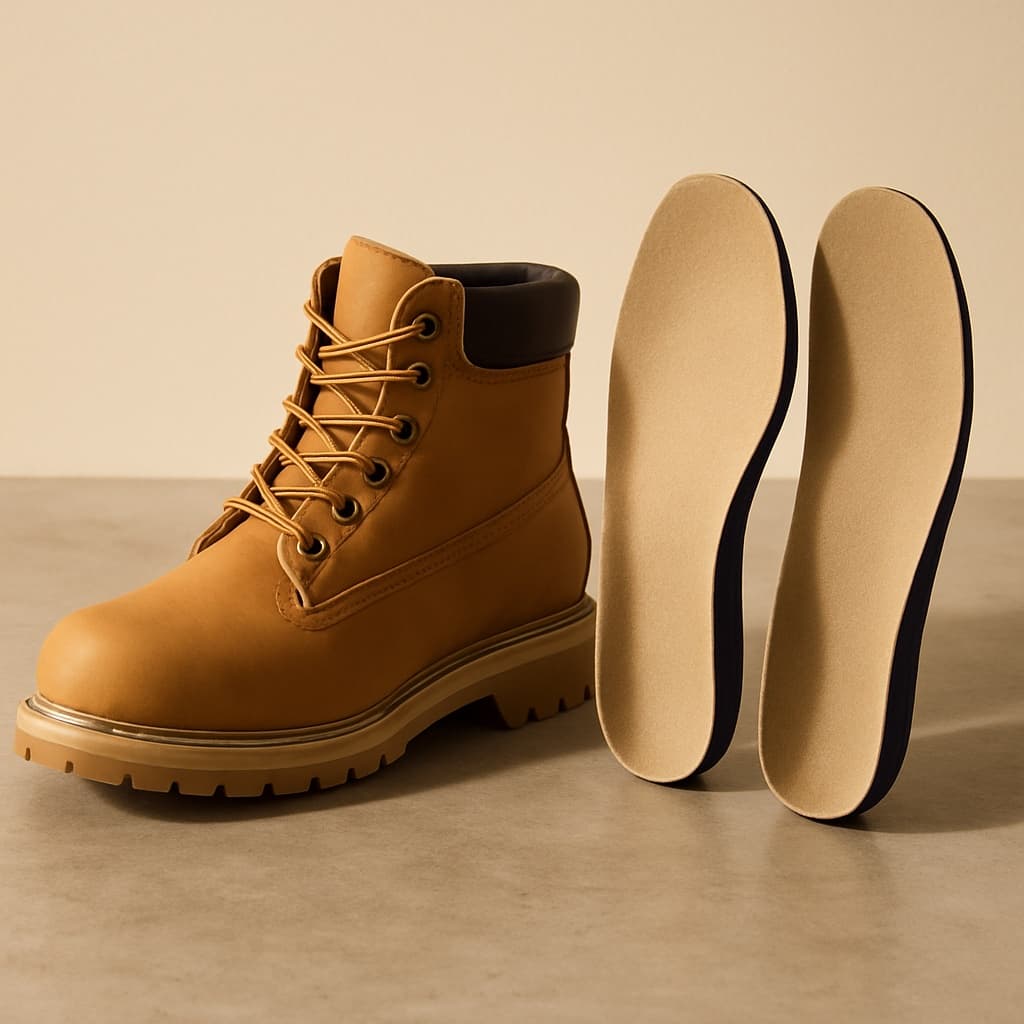
Here's the quiet scandal of the work boot industry: you can spend $200 on boots with premium leather, a Goodyear welt, and a safety toe rated to stop a falling engine block — and the insole inside is a flat sheet of die-cut foam that cost the manufacturer pennies. That sheet is what your entire body stands on for a ten-hour shift. It was never designed to support you; it was designed to make the boot feel acceptable in the store.
This guide covers why factory boot insoles fail so fast, what standing on concrete all day actually does to your feet, knees, and back, what to look for in a replacement insole, how to get the fit right inside a boot, when to replace insoles, and when the honest answer is a podiatrist rather than another product.
Why the Insoles That Came in Your Boots Are Terrible
Boot makers put their budget where buyers look: the leather, the outsole, the stitching, the safety toe. The insole is an afterthought — typically a thin slab of open-cell foam with a fabric top, no arch structure, and no heel cup. It feels fine for the first week because fresh foam compresses pleasantly. Then it stays compressed. Within a month or two of real shifts, most factory insoles are flattened pancakes doing approximately nothing.
That matters more in a boot than in a sneaker. Good sneakers build cushioning and arch geometry into the midsole itself, so the removable liner is only part of the story. Most work boots have stiff, flat interiors by design — durability and safety come first — which means the insole is carrying nearly all of the comfort job on its own. When it quits, there's nothing underneath to pick up the slack.
What Standing on Concrete All Day Does to Feet, Knees, and Back
Concrete has zero give, so every ounce of impact and load comes straight back into your body — there's no forgiving surface absorbing anything on your behalf. And standing is honestly harder on your feet than walking. Walking alternates the load: each foot gets a brief rest every stride, and the rhythmic contraction of your calf muscles pumps blood back up your legs. Standing still removes both reliefs. The same tissues stay loaded hour after hour, your stabilizing muscles hold a constant low-level contraction just to keep you upright, and with the calf pump idle, blood pools in your lower legs — which is why feet swell and ache by the end of a shift even when you barely walked.
The fatigue doesn't stay in your feet. When arches tire and flatten under sustained load, your ankles roll subtly inward, your knees follow, and your lower back compensates for all of it. None of this is catastrophic — it's ordinary fatigue mechanics, not damage — but it's why a long shift on concrete can leave your back sore when your back did nothing all day. Support at the floor level is the cheapest place to interrupt that chain. If your job is more standing than moving, our full guide to insoles for standing all day covers the rest of the toolkit — shoe rotation, mats, and stretches included.
What to Look For in a Work Boot Insole
Arch support matched to your arch height. This is the spec people skip, and it's the one that decides whether an insole feels like support or like a rock in your boot. Low arches want a moderate, gradual dome; high arches need a taller one that actually reaches the foot. An arch that's too tall for you creates a pressure ridge; one that's too low might as well not exist. If you don't know your arch height, the wet footprint test takes thirty seconds — wet your sole, step on cardboard, and read the shape.
A deep heel cup. Your heel has a natural fat pad that spreads under load; a deep, structured cup holds it together so your own padding does its job, and it keeps each landing aligned instead of letting the heel wander. Shallow saucer-shaped cups do very little. This is one of the clearest differences between a real supportive insole and a flat comfort liner.
Cushioning that doesn't bottom out. The honest comparison: foam is the most comfortable out of the box and molds nicely to your foot, but plain soft foam compresses fastest under bodyweight-hours — the plushest insole in the store is usually the first one to die. Gel absorbs shock brilliantly and lasts, but it's heavy, and gel alone provides squish rather than structure. Cork is the durability play — firm, supportive, and it slowly molds to your footprint — but it's the least pillowy of the three and can dry out and crack with age. The best work-boot insoles aren't a single material; they're a structured support layer with cushioning where you land, so you get shock absorption without giving up the arch.
Getting the Fit Right Inside a Boot
Rule one: pull the factory insole out first. Never stack a new insole on top of the old one — you'll raise your heel out of the boot's heel pocket, crowd your toes, and make the new arch sit at the wrong height. The old liner isn't useless, though: it's your trimming template. Most aftermarket insoles are trim-to-fit with printed size lines — lay the factory insole on top, trace, and cut conservatively along the lines. You can always trim more; you cannot trim less.
The good news for boot wearers: boots have generous interior volume compared to sneakers, so a full-length supportive insole that would crowd a low-profile running shoe usually drops into a work boot without drama. Re-lace snugly afterward so your heel stays seated against the new geometry. And give real arch support a few days — if your feet have been standing on flat foam for years, proper support feels unfamiliar at first. Unfamiliar is fine; pain is not.
When to Replace Insoles — and the Signs They're the Problem
Under heavy use — long shifts, concrete, five or six days a week — plan on replacing insoles every 6 to 12 months, and expect to land at the early end of that range. The trap is that insoles fail invisibly: the support structure collapses long before the surface looks worn. A fabric top can look nearly new while the arch beneath it has quit pushing back. Press the arch with your thumb — if it squashes flat with no resistance, or the insole folds limply instead of holding its shape, it's done regardless of appearance.
The signs your insoles are the problem rather than your boots: arches that start aching by lunch when they used to last the whole shift, new hot spots or friction points that weren't there before, and boots wearing unevenly — a heel counter leaning to one side or outsole tread wearing at an odd angle means your foot is landing crooked, and a collapsed heel cup is a prime suspect. Fatigue that arrives earlier and earlier in the shift is the classic tell of support quietly dying underneath you.
Budget Picks, Our Tested Pick, and When to Go Custom
You don't need to spend a fortune. A budget insole that holds a real arch and a real heel cup beats an expensive one that's all pillow — structure is the thing you're paying for, and some inexpensive options genuinely have it, at the cost of dying a bit sooner. Our tested pick is Liftly: a trim-to-fit insole with a genuine contoured arch dome, a deep heel cup, and honeycomb cushioning under the heel — the supportive-arch-plus-cushioned-heel combination that's exactly what a long standing shift asks for, at a fraction of what boot brands charge for their own upgrade liners.
Then there's the ceiling: custom orthotics. Those are podiatrist territory — prescribed from a mold or scan of your foot, built for a diagnosed structural issue, and priced accordingly. For most tired-footed workers they're overkill, but if you have a diagnosed condition, significantly different arches on each foot, or foot pain that persists for weeks despite well-fitted insoles, that's precisely when custom earns its cost. Persistent pain is a see-a-podiatrist situation, not a keep-buying-insoles situation — an insole is a comfort and support product, and a diagnosis is above its pay grade.
Read our Liftly insoles review
Our tested trim-to-fit pick — a real arch dome, deep heel cup, and honeycomb heel cushioning built for long shifts.
Read our Liftly insoles reviewFrequently asked questions
Are insoles worth it for work boots?
For anyone standing long shifts, yes — and they're one of the cheapest comfort upgrades in workwear. Factory boot insoles are thin flat foam that compresses within weeks, and most boots have stiff, flat interiors that offer nothing underneath. A structured insole with real arch support and a deep heel cup changes how the whole boot feels for a fraction of the boot's price.
Should I remove the factory insole before putting in new ones?
Yes, always — if it's removable, pull it out first. Stacking insoles lifts your heel out of the boot's heel pocket, crowds your toes, and puts the new arch at the wrong height. Use the old insole as a tracing template for trim-to-fit cutting, and cut conservatively along the printed lines.
Are gel or foam insoles better for work boots?
Gel absorbs shock better and lasts longer; foam is more comfortable immediately but soft foam bottoms out fastest under all-day loads. Neither alone is the answer — squish is not support. The best work-boot insoles pair a structured arch and heel cup with a cushioning layer, so you get shock absorption without losing the alignment.
How often should you replace insoles in work boots?
Every 6 to 12 months under heavy use, and closer to 6 if you're on concrete all shift. Judge by function, not looks — the arch support collapses before the surface wears. If the arch squashes flat under your thumb, your feet ache earlier in the shift than they used to, or your boots are wearing unevenly, the insoles are due.
Do insoles help with plantar fasciitis?
Insoles are comfort and support products, not a treatment. Good arch support and a deep heel cup can make long shifts more comfortable and take strain off tired arches, but sharp heel pain — especially stabbing first-step pain in the morning that persists for weeks — deserves a podiatrist, not another insole. Get the diagnosis first; the right support can follow it.
Why do my feet hurt after standing on concrete all day?
Concrete has no give, so your body absorbs every bit of load — and standing is harder than walking because the same tissues stay loaded constantly with no stride-by-stride rest, while your idle calf muscles let blood pool in your lower legs. Supportive insoles, moving briefly each hour, and rotating footwear all help. Pain that persists or gets worse week over week is worth a podiatrist visit.
TopCrate is reader-supported. When you buy through links on our site we may earn an affiliate commission, at no extra cost to you. Content is for general information and isn't a substitute for professional advice.