HANDS-ON REVIEW
Snap-N-Charge 3-in-1 Magnetic Power Bank Review: Is It Worth It?
A pocket power bank with snap-on magnetic tips for Lightning, USB-C and micro-USB — it hangs off your phone and charges with no cable at all.
Quick answer: Yes — Snap-N-Charge works and is worth $29.99 for anyone whose power bank keeps dying in a drawer: a pocket 3,000mAh bank with three magnetic tips (Lightning, USB-C, micro-USB) that park in your devices and let the bank snap on with no cable at all. It solves the real reason your power bank never saves you: the cable. Tips live in your devices, the bank snaps on one-handed, and 3,000mAh covers the daily red-battery panic across iPhone, Android and the junk-drawer gadgets alike. Know what it is — an everyday top-up, not a travel brick — and it's the most usable small bank we've tested.
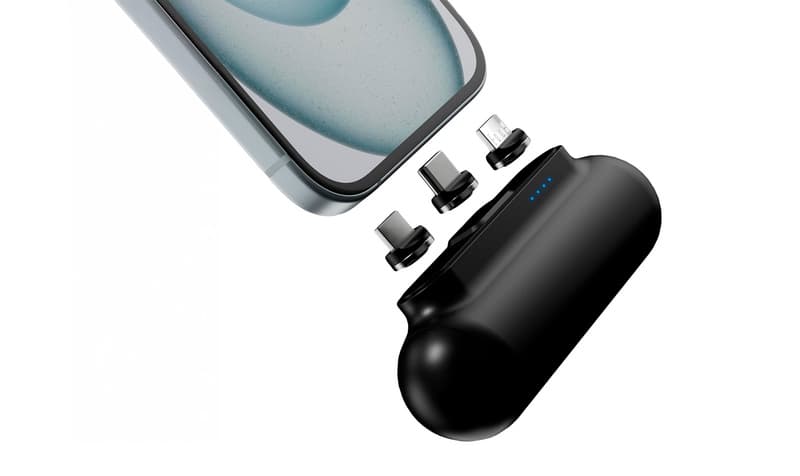
Three magnetic tips — Lightning, USB-C, micro-USB — snap Snap-N-Charge onto any device. Photo: Statik
Our verdict
Yes — Snap-N-Charge works and is worth $29.99 for anyone whose power bank keeps dying in a drawer: a pocket 3,000mAh bank with three magnetic tips (Lightning, USB-C, micro-USB) that park in your devices and let the bank snap on with no cable at all. It solves the real reason your power bank never saves you: the cable. Tips live in your devices, the bank snaps on one-handed, and 3,000mAh covers the daily red-battery panic across iPhone, Android and the junk-drawer gadgets alike. Know what it is — an everyday top-up, not a travel brick — and it's the most usable small bank we've tested.
The short version
Power banks die in drawers because of the cable you forgot. Snap-N-Charge by Statik deletes the cable: a pill-sized 3,000mAh bank with a magnetic port and three snap-on tips — Lightning, USB-C and micro-USB. Leave a tip in your device's port, and the bank snaps on magnetically (a strong 13-newton hold) and hangs there charging while you keep using the phone. It adds up to ~10 hours of use to most phones and recharges over USB-C.
Pros & cons
Pros
- No cables — magnetic tips snap the bank straight onto the port
- Covers all three plugs: Lightning, USB-C and micro-USB
- Strong 13N magnetic hold — it hangs on while you text
- True pocket size; 4-dot LED gauge shows what's left
- Charges earbuds, e-readers and older gadgets, not just phones
- Works with Statik's magnetic cable ecosystem
Cons
- 3,000mAh is a top-up (roughly half to one full charge), not a road-trip brick
- Lose a tip and that connector type is out until you replace it
- Adds a dangling weight to the phone while charging
How it works
Seat a tip
Pop the right tip — Lightning, USB-C or micro-USB — into your device's port. It sits flush and can simply live there.
Snap the bank on
Bring Snap-N-Charge close and the 13N magnet snaps it onto the tip, hanging securely off the phone with no cable run.
Charge and go
Keep texting while it fills. The 4-LED gauge shows the reserve; recharge the bank itself over USB-C at night.
Who it's for
- Anyone whose power bank is useless without the forgotten cable
- Households juggling iPhone + Android + micro-USB gadgets
- Commuters and travelers who want a pocket top-up, not a brick
- Earbud and e-reader owners with a drawer of mixed connectors
Why killing the cable actually matters
The dirty secret of power banks is that the battery is rarely the failure point — the cable is. It's the part that's in the other bag, the other coat, still plugged into the wall at home. Snap-N-Charge's magnetic tip system makes the connection part of the device itself: the tip lives in your port, the bank snaps to it in one motion, and there is simply no cable to forget.
The 13-newton hold (about 2.8 pounds of pull) is the difference between gimmick and tool: it's strong enough that the bank hangs off the phone while you walk and text, but releases with a deliberate tug. Magnetic charging also spares your port the thousandth insertion cycle — ports wear out; magnets don't.
One bank for iPhone, Android and everything in the junk drawer
Mixed-device households live in connector purgatory: Lightning for the older iPhones, USB-C for new phones and buds, micro-USB for the stubborn long tail of e-readers, trackers and headphones. Snap-N-Charge ships all three tips, so one bank serves the whole family — snap the right tip in whichever gadget is dying and hang the bank on it.
That flexibility is also its edge over MagSafe-style wireless banks, which only serve recent iPhones (and waste energy as heat). A wired magnetic tip charges faster than wireless at this size, works on devices with zero wireless support, and costs less. The trade-off: tips are small, and losing the one you need is the ecosystem's known failure mode — leave each tip parked in a device and you'll never hunt for one.
What 3,000mAh really buys you (honest capacity talk)
Statik's '10 hours added' framing translates to real-world terms: roughly half to a full charge for most modern phones, a couple of full charges for earbuds, and plenty for an e-reader. That's exactly the right size for the actual problem — the 6pm red-battery panic — while staying light enough that it hangs off the phone comfortably and lives in a pocket permanently.
If your use case is a weekend off-grid or multiple full recharges, this isn't the tool; carry a big brick and accept the cable. The winning setup we'd suggest: Snap-N-Charge as the everyday-carry that's always on you, the big bank as the planned-trip item. The bank you have beats the brick you left home.
Snap-N-Charge vs a MagSafe pack vs a cabled 10,000mAh brick — the real trade-offs
The three-way comparison decides where Snap-N-Charge earns its spot in your carry. Against a MagSafe wireless pack (Anker MagGo, Belkin BoostCharge, and the like): MagSafe wins on cleanliness — no tip to seat, snaps to the back rather than dangling from the port — but only serves iPhones from the 12 upward, wastes 15-30% of energy as heat (Qi wireless is meaningfully less efficient than a wired connection), charges more slowly at the same wattage, and gets expensive fast. Against a 10,000mAh cabled brick (Anker PowerCore Slim, Nimble Champ): the brick delivers roughly 3x the capacity and can charge multiple devices in sequence, but weighs 3-4x more, requires the cable you forgot, and lives in a bag rather than a pocket. Snap-N-Charge occupies the specific gap the other two miss: pocketable, cable-free, works on every device with a physical port including the older Android and micro-USB gear MagSafe can't touch.
The honest math on when to buy which: solo iPhone-only user who wants zero-fuss top-ups → MagSafe pack. Solo user who travels off-grid or works long days away from an outlet → 10,000mAh cabled brick. Everyone else — mixed-device household, family with kids on different platforms, someone who resents forgetting cables — Snap-N-Charge is the higher-use-rate pick, and use rate is what determines whether a power bank actually saves you or dies in a drawer. Many people end up carrying two: Snap-N-Charge in the pocket for daily use, a bigger brick in the bag for the once-a-month day it isn't enough.
The everyday-carry setup that makes Snap-N-Charge actually work (the tip-parking system)
The single biggest determinant of whether Snap-N-Charge lives up to its pitch is the tip-parking discipline. The design assumes you leave a tip permanently seated in each device you charge regularly — the tips are small enough to fit flush and effectively become part of your phone, earbud case, and e-reader. Do this and the system is genuinely one-handed: pull the bank out of your pocket, snap onto the parked tip, done. Skip it — carry all three tips loose in a pocket or a small pouch — and you'll spend the first ten seconds of every charge fumbling for the right connector, and eventually lose one, and eventually stop using the bank because it's become a hassle. The single behavior that separates 'best power bank I've ever owned' reviews from 'lost a tip in the couch and rage-quit' reviews is whether the owner parked the tips on day one.
The practical tip-inventory for a family: park the Lightning tip in the older iPhone or iPad (or your spouse's older device), the USB-C tip in the newer phone or in whatever gadget dies most often (AirPods Pro USB-C case, Kindle Scribe, Steam Deck), the micro-USB tip in the household's oldest active gadget (an older Kindle, a Bluetooth speaker, kids' toys, an older Fitbit). The tips also live happily in the port between snaps — they double as dust plugs, which is a small quiet win. If you want the cable half of the same ecosystem for wall-outlet charging at home, pair with the Whippy Charge 540° magnetic charging cable — same magnetic-tip idea, but a full cable for the desk and nightstand where a hanging pocket bank doesn't fit. Together they mean one connector standard runs your whole life; no cable-drawer archaeology, no port wear, no forgotten cord.
Try Snap-N-Charge for Yourself
Available now for $29.99.
Check Availability & Price →Ships to your doorFrequently asked questions
How does the magnetic charging work?
Three snap-on tips (Lightning, USB-C, micro-USB) seat into your device's port. The bank's magnetic port then snaps onto the tip with a 13N (~2.8 lb) hold, delivering a wired charge with no cable — it just hangs off the device.
How much charge does it hold?
It's a 3,000mAh pocket bank — roughly half to one full phone charge depending on your phone (a modern iPhone 16 Pro is a ~50% top-up; a smaller phone or older iPhone SE is closer to a full charge), or multiple charges for earbuds. Statik frames it as up to ~10 hours of added use; treat it as a daily top-up, not a travel brick. If you regularly need multiple full charges away from an outlet, size up to a cabled 10,000mAh bank and carry Snap-N-Charge as your always-in-pocket second.
Does it work with iPhone and Android?
Yes — that's the point of the three tips. Lightning covers older iPhones (14 and earlier), USB-C covers all new iPhones (15 and later) and Androids, micro-USB covers earbuds, e-readers and older gadgets. Unlike MagSafe-style banks, which only serve iPhone 12+, Snap-N-Charge works on every device with a physical charging port.
Will it fall off while I use my phone?
The 13N (~2.8 lb) magnetic hold is strong enough to hang on while you walk, text and shoot photos; it releases with a deliberate pull. It dangles below the port, so pocketing the phone mid-charge is the one awkward move — unclip, pocket the phone, reclip when you pull it back out. Some users use a small silicone hair tie around the phone-and-bank to secure it during walking, which is overkill for most but zero-hassle if you have kids or an active job.
How do I recharge the bank itself?
Over its USB-C input, like a phone — the 4-dot LED gauge shows the level. A full recharge from empty takes roughly 1.5 hours from a standard 5W USB-C wall charger, or under an hour from a 20W+ fast charger. Overnight top-ups keep it ready as an everyday carry, and the LED gauge means you'll never be surprised by a dead bank mid-day.
What if I lose a tip?
Each tip covers one connector type, so a lost tip sidelines that type until you replace it. The fix is habit: leave a tip parked in each device you top up regularly (they sit flush and double as dust plugs), and they never wander. Statik sells replacement tip packs at low cost, so a lost tip is a $5 fix, not a bricked ecosystem.
Is Snap-N-Charge safe for my phone's battery and port?
Yes on both counts. It's a wired charge delivered at standard 5V — the same voltage as a wall charger — with no wattage overload that could damage the battery, and the magnetic connection actually spares your port the wear of repeated cable insertions (ports have a rated insertion cycle count, magnets don't). The 13N magnetic pull is well below the force needed to damage the port hardware, and the breakaway design means a snagged cord releases cleanly instead of levering the port. If you charge from a car socket or a low-quality third-party source, the same rules apply as any charger — use a legitimate USB-C brick.
Snap-N-Charge vs a MagSafe power bank — which should I buy?
Depends on your device mix and priorities. MagSafe (Anker MagGo, Belkin BoostCharge, etc.) wins on cleanliness — snaps to the back of the phone rather than dangling from the port, no tips to seat — but only serves iPhones from the 12 upward, wastes 15-30% of energy as heat (Qi wireless is meaningfully less efficient than wired), charges more slowly at the same wattage, and typically costs 50-100% more. Snap-N-Charge wins on universality (works on Android, older iPhones, earbuds, e-readers, everything with a port), efficiency (wired is faster and cooler), and price. Buy MagSafe if you're a solo iPhone 12+ user who values the aesthetic; buy Snap-N-Charge if you're a mixed-device household or you care about the extra ~30% charging speed and lower heat.
When you buy through links on this page, TopCrate may earn an affiliate commission at no extra cost to you. Capacity and hold figures reflect the manufacturer's specifications; charge counts vary by device. Prices accurate as of publish time.