HANDS-ON REVIEW
SkyHawk 4K Foldable Camera Drone Review: Is It Worth It?
A pocketable, sub-$100 learner drone — just don't expect the '4K' to mean what you think.
Quick answer: Worth it — but only if you buy it for what it actually is: a $99 toy-grade learner drone, not a pocket DJI. The SkyHawk is a rebranded generic quadcopter with software-upscaled '4K,' no real GPS and a short, wind-sensitive flight time, so it will frustrate anyone expecting cinematic aerials. Set expectations at 'fun backyard flights and casual clips,' though, and it's a genuinely enjoyable, low-risk way to learn to fly for the price of a nice dinner.
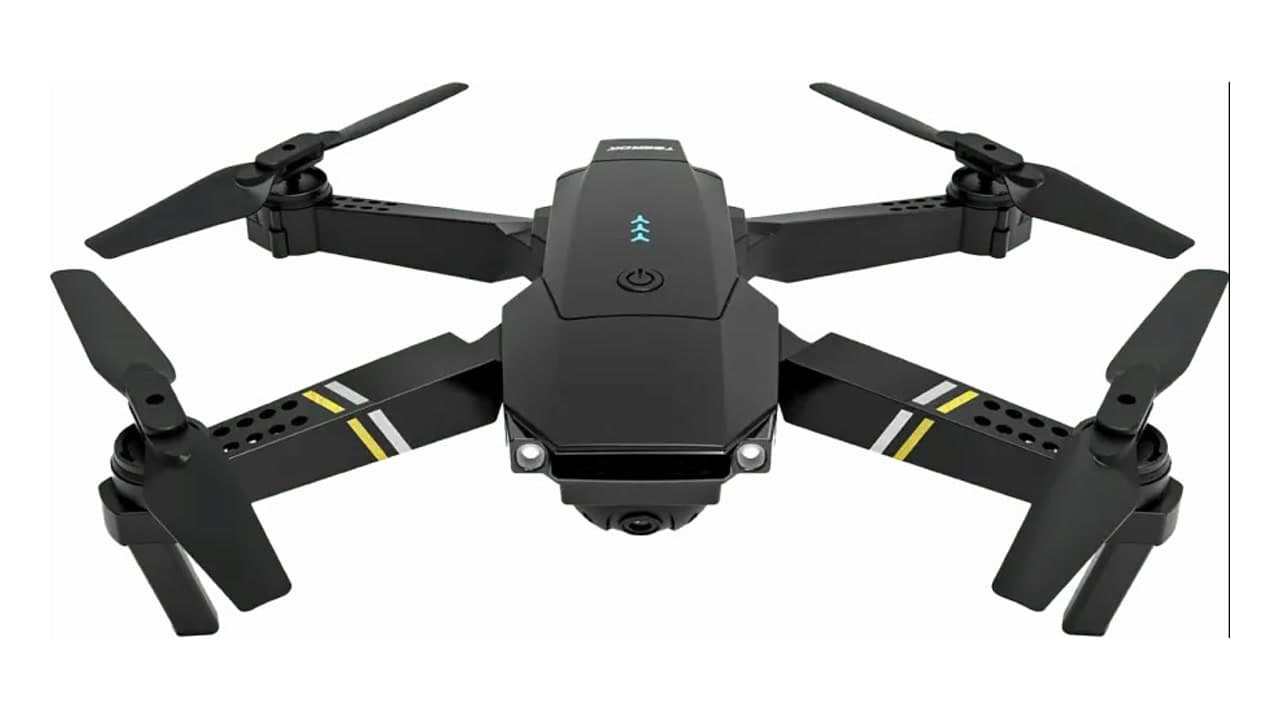
The SkyHawk foldable drone. Product photo: SkyHawk.
Our verdict
Worth it — but only if you buy it for what it actually is: a $99 toy-grade learner drone, not a pocket DJI. The SkyHawk is a rebranded generic quadcopter with software-upscaled '4K,' no real GPS and a short, wind-sensitive flight time, so it will frustrate anyone expecting cinematic aerials. Set expectations at 'fun backyard flights and casual clips,' though, and it's a genuinely enjoyable, low-risk way to learn to fly for the price of a nice dinner.
The short version
Sub-$100 '4K' drones like the SkyHawk are one of the internet's most-advertised gadgets — and one of the most oversold. The reality: this is a lightweight, foldable, rebranded generic quadcopter (the same hardware sells under a dozen names) that shoots software-upscaled video, not true 4K, and flies without real GPS. What you actually get for around $99 is a genuinely fun, pocketable learner drone with one-key takeoff, altitude hold and a spare battery or two — good for backyard flights and casual clips, as long as you go in knowing it's a toy-grade camera, not a DJI.
Pros & cons
Pros
- Genuinely affordable way to try aerial video without risking hundreds of dollars
- Foldable and pocket-sized, with a travel carry case included
- Under 250g, so US recreational flyers skip FAA registration
- Beginner-friendly: one-key takeoff/landing, altitude hold and headless mode
- Bundles typically add spare batteries for longer sessions
- Low-stakes, fun way to learn to fly before upgrading
Cons
- '4K' is software-upscaled, not a true 4K sensor — footage is really sharp-ish 1080p
- No real GPS: no reliable return-to-home, more drift, and easy to fly away or lose
- Very wind-sensitive, with only ~10-15 minutes of flight per battery
How it works
Charge and unfold
Top up the batteries and unfold the arms — it's ready to fly in under a minute and packs back into its case just as fast.
Pair the app and take off
Connect your phone over WiFi for the live FPV view, then hit one-key takeoff and let altitude hold keep it hovering steady.
Fly, film and land
Capture photos and clips to your phone, try the built-in modes, and land with one tap when the battery runs low.
Who it's for
- First-time flyers who want to learn without wrecking an expensive drone
- Kids and hobbyists after cheap backyard fun
- Travelers who want a foldable drone that fits in a bag
- Anyone curious about aerial video on a strict budget
Is the SkyHawk 4K drone's camera really 4K?
Short answer: not in the way the ads imply. Almost every sub-$100 '4K' drone, the SkyHawk included, hits that number through interpolation — software that upscales a lower-resolution sensor's footage to a 4K frame size. The file says 4K; the actual detail is closer to a decent 1080p clip, often with visible softness, motion blur and rolling-shutter wobble when the drone moves. On a phone screen it looks fine. Blown up on a TV next to footage from a real 4K camera drone, the gap is obvious.
The other half of the story is stabilization. Listings love to mention a '3-axis gimbal,' but a genuine motorized 3-axis gimbal costs more than this entire drone, so what you're really getting is electronic (software) stabilization plus altitude hold — helpful, but no match for a mechanical gimbal in wind. If your goal is sharp, steady video of what's in front of you rather than above you, a budget action camera will out-shoot the SkyHawk every time; the drone's appeal is the aerial angle, not the image quality.
SkyHawk vs a DJI: what a $99 drone can't do
The single biggest difference isn't the camera — it's GPS. Name-brand drones like DJI's Mini series use satellite GPS to hold a rock-steady hover, fly programmed paths, and automatically return home if they lose signal or run low on battery. The SkyHawk has none of that. It leans on altitude hold and, on some units, optical-flow sensing, which drifts in open spaces and offers no reliable return-to-home. Paired with its featherweight body, that makes it genuinely easy to lose in wind or over open ground — a complaint that repeats across every brand selling this same hardware.
It helps to know what you're actually buying. The 'SkyHawk' is a rebranded generic quadcopter built in the same factories as drones sold under names like Black Falcon and Stealth 4K — functionally identical hardware with a different sticker. That's not automatically bad; it's just why you shouldn't expect DJI features at a DJI-minus-90% price. A DJI Mini gives you GPS, obstacle sensing, a real gimbal and dependable footage for several hundred dollars. The SkyHawk gives you the fun of flying for about ninety.
Is the SkyHawk Drone worth $99?
It depends entirely on your expectations. As a first drone to learn stick control, buzz around the backyard and grab the occasional fun overhead clip, it's a reasonable ninety-dollar toy — and because it folds down small, weighs under 250 grams (so US recreational flyers skip FAA registration) and usually ships with a spare battery or two, it's easy to just toss in a bag and fly. Crashes sting a lot less at this price, which is exactly why it makes a smart learner.
If you're buying it to shoot real content — travel video, real estate, anything you'll put on a big screen — skip it and save toward an entry-level GPS drone instead. You'll spend more, but you'll get the stability, range and image quality the SkyHawk's marketing only pretends to offer. Buy it as a toy and it delights; buy it as a camera and it disappoints.
Try SkyHawk Drone for Yourself
Available now for $99.00.
Check Availability & Price →Ships to your doorFrequently asked questions
Is the SkyHawk really a 4K drone?
Not in the way the ads imply. It records software-upscaled ('interpolated') video marketed as 4K; the actual footage is closer to sharp 1080p and looks fine on a phone but won't hold up on a big TV next to a real 4K drone.
Does it have GPS?
No. It relies on altitude hold and, on some units, optical-flow sensing — not satellite GPS. That means no dependable return-to-home and more drift, so it's easier to lose in open or windy areas. Always fly it within sight.
Do I need to register it with the FAA?
SkyHawk-type drones weigh well under 250 grams, so US recreational flyers generally don't need to register it. You should still take the free FAA TRUST test and follow local rules before flying.
How long does it fly on a charge?
Expect roughly 10-15 minutes per battery in calm conditions, and less in wind. Bundles usually include two or three batteries, which is really how you get a worthwhile flying session.
Can it handle wind?
Not well. At around 85 grams it's very light, so even a light breeze pushes it around and drains the battery. It's happiest indoors in a large room or outside on a calm day.
Is it good enough for a beginner or for real photography?
It's a great, low-risk way to learn to fly without crashing a $500 drone. For actual photography or video work it isn't — the camera and stability simply aren't in that league.
When you buy through links on this page, TopCrate may earn an affiliate commission at no extra cost to you. The SkyHawk is a budget quadcopter sold under several brand names; its 4K is achieved through software interpolation, and specs vary by seller and bundle. Prices accurate as of publish time.