TRENDING ON AMAZON
Ridge Slim RFID-Blocking Wallet Review: Is It Worth It?
The slim front-pocket wallet that finally kills the bulky bifold — RFID-blocking, 1-12 cards, no bulge.
Quick answer: The Ridge earned its cult following honestly — it's the wallet that ends bulky bifolds without feeling gimmicky. Slim, RFID-blocked, one-handed to use, and backed by a lifetime warranty. If your current wallet is a folded leather brick, this is the upgrade.
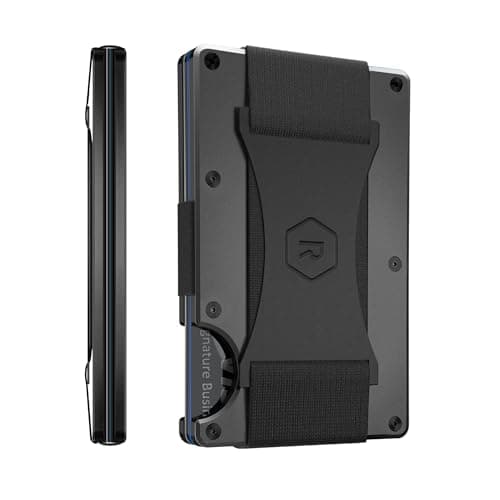
Product image from the Amazon listing.
Our verdict
The Ridge earned its cult following honestly — it's the wallet that ends bulky bifolds without feeling gimmicky. Slim, RFID-blocked, one-handed to use, and backed by a lifetime warranty. If your current wallet is a folded leather brick, this is the upgrade.
The short version
The Ridge replaces the fat leather bifold with two aluminum, titanium or carbon fiber plates held together by an elastic strap — it fits 1 to 12 cards, ejects them with a thumb push through the back, and disappears in a front pocket. It's RFID-blocking, has an interchangeable money clip or cash strap, and comes with a lifetime warranty. The result: a wallet you literally forget you're wearing.
Pros & cons
Pros
- Slim enough for a front pocket — no back-pocket bulge
- RFID-blocking (metal plates form a Faraday cage)
- Holds 1-12 cards, ejects with a thumb push
- Modular: money clip or cash strap included
- Lifetime warranty on the frame
- Available in aluminum, titanium, and carbon fiber
Cons
- Premium price for a wallet
- No dedicated coin pocket
- Cash needs the clip or strap accessory
Why people love it
Two plates, one elastic band
Cards stack between two metal or carbon-fiber plates held by an elastic band that flexes from 1 to 12 cards without loosening.
Thumb-push card ejection
Push cards up through a slot on the back; the ones you use most rise first, so you grab and go one-handed.
Cash on the outside
Swap between an integrated money clip or a fabric cash strap — no more folded bills wrinkling in a leather fold.
Who it's for
- Anyone with back pain from sitting on a bulky wallet
- Front-pocket wallet converts
- Frequent travelers who want RFID protection
- Minimalists who want a wallet that lasts a lifetime
Ridge Wallet vs Bellroy vs a cheap Amazon slim wallet: which is worth it?
Bellroy is the closest real competitor to the Ridge — beautiful leather slim wallets that hold 4-12 cards, with a more traditional 'wallet' feel and premium eco-tanned leather. Bellroys are quieter (no metal clink), more elegant to hand to a bartender, but they cost about the same as a Ridge and wear out faster over 5-10 years as the leather stretches. Ridge is louder and more modern-looking; Bellroy is quieter and more classic. Both are excellent — pick based on aesthetic preference.
Cheap Amazon aluminum slim wallets — usually $10-15 knock-offs — physically look similar but skip the details that make Ridge work: the elastic tends to loosen fast, the card-ejection slot on the back is often too tight or too loose, and the money clip attachment is flimsy. If you use your wallet daily for years, the extra spend on a Ridge pays off through longevity and warranty support. If you want to try the slim-wallet lifestyle before committing, a $15 aluminum knockoff is a reasonable test — many people upgrade to the real Ridge within a year.
Is a slim wallet actually better for your back and posture?
The 'wallet sciatica' story is real. Sitting on a thick wallet in your back pocket tilts your pelvis, misaligns your sacrum, and puts asymmetric pressure on the piriformis muscle and sciatic nerve — over years this contributes to lower-back pain, hip pain and even leg numbness. Chiropractors and physical therapists routinely recommend moving to a front-pocket wallet as one of the easiest posture fixes available. A slim wallet like the Ridge (about a quarter-inch thick) either fits comfortably in a front pocket or, if you insist on a back pocket, doesn't create the same tilt.
This isn't hypothetical for a lot of people. Anyone who commutes by car or sits at a desk with a full bifold in their back pocket for hours is applying constant asymmetric pressure on their spine. Switching to a slim front-pocket wallet doesn't require a Ridge specifically — any thin wallet works — but the Ridge is designed for exactly this use case, with a smooth aluminum profile that slides in and out of a front pocket without catching on fabric. If your wallet has been giving you back or hip pain, this is the fix.
How to use a Ridge Wallet (and organize your cards for one-handed access)
The trick to using a Ridge well is organizing your card stack by frequency of use. Put your most-used card (usually your primary debit or credit card) at the front of the stack, not the back — when you thumb-push cards up through the back slot, the front card rises first and can be pulled out one-handed. Second-most-used card goes second, and so on. Reserve the very back position for cards you rarely need (secondary insurance, backup credit card, gym membership).
Fan the cards slightly when ejecting — a quick thumb-push should raise the first two or three cards enough that you can pinch the one you want with your other hand. Don't try to eject one specific card from the middle of the stack; instead, push everything up and pull the target card out from the fan. For cash, use the money clip on the back for folded bills, or skip cash entirely (most transactions don't need it in 2026). The wallet lives in your front-right pocket for right-handed people, so you can draw and eject one-handed while walking. Once the Ridge lives in one front pocket, most people find the other one wants a similarly-small, purpose-built tool — a palm-sized multi-tool like the Kelvin 17 is the natural EDC companion: it consolidates a screwdriver, hex bits, a bubble level and an LED light into one grip that lives in a glovebox, a bag or the opposite pocket, so the everyday small-repair moments (loose glasses screw, hanging a picture, opening a battery panel) don't send you back to a toolbox.
See Ridge Wallet on Amazon
Check the latest price, photos and buyer reviews on Amazon.
Check Price on Amazon →Sold and shipped by AmazonFrequently asked questions
How many cards does a Ridge Wallet actually hold?
Officially 1-12 cards, and the elastic band genuinely flexes across that full range without loosening — this isn't marketing. Realistically, most people carry 4-8 cards comfortably; at 10-12 the wallet gets thick enough that ejecting cards feels tight and the profile stops being that much slimmer than a traditional bifold. The sweet spot is 4-6 cards plus your ID, which fits in about a third of the thickness of a leather wallet.
Does the Ridge Wallet really block RFID?
Yes — the two metal plates form a Faraday cage around your cards, and independent tests consistently show it blocks the 13.56 MHz frequency used by credit-card contactless chips. The one caveat: cards on the very top and bottom of the stack are less protected than cards in the middle, because the metal shielding is strongest between the plates. If you're worried about a specific card, keep it in the middle of your stack.
Aluminum vs titanium vs carbon fiber Ridge Wallet: which should you buy?
Aluminum is the everyday pick — lightest, most colors, cheapest, and durable enough for daily use (small scuffs will develop over years). Titanium is heavier, stronger, and has a more premium look with better scratch resistance; worth it if you drop your wallet a lot or want something more heirloom. Carbon fiber is the lightest and most unique looking, but shows scuffs on the edges over time and is the most expensive. For 90% of people, aluminum is the right answer.
Money clip or cash strap: which cash carrier should I choose?
Money clip is what most people prefer — a metal lever clip on the back that holds folded bills securely; you can pull cash out one-handed. Cash strap is a fabric band that stretches around the wallet to hold folded bills — quieter, lighter, but slower to access cash. If you carry cash rarely (most people), the money clip is more useful. If you carry cash never, use neither and skip the accessory.
Is the lifetime warranty legit?
Yes — Ridge has a genuine lifetime warranty on the frame (the two plates and the elastic band). Elastic bands do wear out after 3-5 years of heavy use and Ridge sends replacement elastic strips free. Frame replacements are covered for structural defects, though wear-and-tear scuffs are considered normal. The warranty makes the higher upfront cost more reasonable — this is a wallet you should have for a decade.
Will it fit modern chunky IDs and hotel key cards?
Yes for standard credit-card sized items (drivers licenses, credit cards, insurance cards, hotel key cards, transit cards). Anything thicker than a standard card — like some folded paper receipts or old-style medical insurance cards — won't fit well. Some state IDs that are slightly non-standard sizes (like older Texas or California vertical IDs) may require the wallet to be adjusted slightly, and stubborn chunky items should be carried elsewhere.
As an Amazon Associate, TopCrate earns from qualifying purchases at no extra cost to you. Product image, price, availability and ratings are shown on Amazon and are subject to change.