TRENDING ON AMAZON
Optimum Nutrition Micronized Creatine Monohydrate Powder Review: Is It Worth It?
Pure micronized creatine monohydrate from the biggest name in sports nutrition — the well-researched, dissolves-fast, mixes-clean pick.
Quick answer: Yes — this Optimum Nutrition creatine review lands where every honest one does: for anyone lifting weights in 2026, Optimum Nutrition Micronized Creatine Monohydrate is the safe, well-reviewed default. Pure creatine monohydrate from the biggest sports-nutrition brand, micronized for clean mixing, budget-friendly pricing and 80,000+ Amazon reviews averaging 4.8 stars backing it. Drug-tested athletes should choose [Thorne Creatine](/reviews/thorne-creatine); everyone else can just buy this and stop overthinking it.
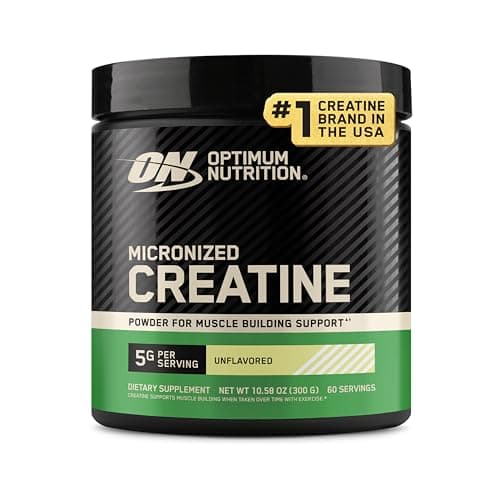
Product image from the Amazon listing.
Our verdict
Yes — this Optimum Nutrition creatine review lands where every honest one does: for anyone lifting weights in 2026, Optimum Nutrition Micronized Creatine Monohydrate is the safe, well-reviewed default. Pure creatine monohydrate from the biggest sports-nutrition brand, micronized for clean mixing, budget-friendly pricing and 80,000+ Amazon reviews averaging 4.8 stars backing it. Drug-tested athletes should choose [Thorne Creatine](/reviews/thorne-creatine); everyone else can just buy this and stop overthinking it.
The short version
Creatine monohydrate is the most-researched sports supplement in existence — hundreds of studies show strength, power and lean-mass gains at just 3–5 g per day. Optimum Nutrition is the biggest brand in the category, and their micronized monohydrate is the safe default: a fine milled powder that dissolves cleanly in water without the sandy texture cheap creatines leave behind, no flavor, and pricing that lands well below premium boutique creatines while sourcing the same effective form.
Pros & cons
Pros
- Pure creatine monohydrate — the most-researched form
- Micronized for easy mixing and fewer stomach issues
- Unflavored, mixes into any drink
- Best-selling creatine from the biggest sports-nutrition brand
- No loading phase needed — 5 g/day works
- Third-party tested for purity
- Big value tubs (60–120 servings)
Cons
- Slight water retention (mostly in muscles — that's the point)
- Not as fine as some premium brands
- Basic tub design
Why people love it
Take 5 g daily
Stir one scoop (5 g) into water, juice, coffee or a protein shake. No loading phase needed — daily consistency is what saturates the muscles over 3–4 weeks.
Muscles absorb and store it
Creatine is stored as phosphocreatine in muscle tissue, where it helps regenerate ATP — the energy currency for explosive movement. Fully saturated stores mean 1–2 extra reps and heavier top sets.
Drink extra water
Creatine pulls water into muscle cells (part of why muscles look fuller). Add 16–24 oz of extra water per day to support the effect and avoid mild dehydration.
Who it's for
- Anyone lifting weights for strength or size
- Recreational athletes
- Older adults preserving muscle
- Vegetarians and vegans (naturally low in creatine)
Optimum Nutrition Creatine vs Thorne, Nutricost, Momentous — which brand should you actually buy?
All four are pure creatine monohydrate, which is the same molecule regardless of brand — a well-manufactured monohydrate delivers identical physiological results. The difference is certification, price and mixing quality. Optimum Nutrition Micronized Creatine is the mainstream best-seller: reliable quality, good mixing, mid-market price (~$25 for 120 servings), no elite certification. Perfect default for most gym-goers.
Thorne Creatine is NSF Certified for Sport — mandatory if you're drug-tested. Slightly more expensive per serving, but the peace of mind is real. Nutricost Creatine is the value pick: pure creatine monohydrate at the lowest price per serving from a third-party tested brand, and if budget is the constraint it's a strong choice. Momentous Creatine is the premium pick with Informed Sport certification and heavier packaging aesthetics — worth the extra cost if you value the certification and design. Nothing about the muscle response changes; pick based on certification needs and budget.
Creatine for women, older adults and vegetarians — often the biggest beneficiaries
Creatine research historically focused on male strength athletes, but three groups actually see some of the biggest benefits per gram taken. Women often start with lower baseline muscle creatine stores, so saturation from 3–5 g/day produces noticeable strength and lean-mass gains — and no, creatine does not cause women to 'get bulky' any more than lifting weights does. Older adults benefit enormously: creatine plus resistance training slows sarcopenia (age-related muscle loss) and there's growing evidence of cognitive benefits in older populations.
Vegetarians and vegans have the largest baseline deficit because dietary creatine comes almost entirely from meat and fish. Studies consistently show plant-based eaters get bigger strength, muscle and cognitive gains from supplementation than omnivores do. If you fall in any of these groups and you're not taking creatine, you're leaving obvious training and health benefits on the table for what costs roughly $0.20 per day. Pair with a solid protein powder like Optimum Nutrition Whey — the same brand's gold-standard whey is the natural partner to their creatine.
How to actually use creatine — dose, mixing, and pairing with training
The winning protocol is boring on purpose: 5 g of micronized creatine monohydrate every day, mixed into water or any drink you're already having, taken at any time of day. Skip the loading phase unless you're on a deadline — daily 5 g saturates muscles in 3–4 weeks with no bloating. Don't cycle off; there's no benefit to stopping and starting. Drink extra water (16–24 oz per day beyond your normal) to support the intracellular water shift.
Pair with progressive-overload resistance training 3–4 times a week — creatine is a performance enabler, not a magic muscle-builder. You'll notice slightly heavier top sets, an extra rep or two on max efforts, better recovery between sets, and gradually more lean mass. For endurance athletes, creatine still helps with short high-power efforts (sprints, hill attacks) even if it doesn't affect long steady-state performance. Combine with a supplement stack of Nature's Bounty Fish Oil for recovery and Thorne Magnesium Glycinate for sleep, and you've got the three most-evidence-backed supplements for training-serious adults.
See ON Micronized Creatine on Amazon
Check the latest price, photos and buyer reviews on Amazon.
Check Price on Amazon →Sold and shipped by AmazonFrequently asked questions
Is this Optimum Nutrition creatine review positive — is it worth buying in 2026?
Yes — this Optimum Nutrition creatine review lands positive for most lifters and recreational athletes. Optimum Nutrition Micronized Creatine is the safe, well-reviewed, budget-friendly default with 80,000+ Amazon reviews averaging 4.8 stars: pure creatine monohydrate (the single most-researched sports supplement in existence), micronized for cleaner mixing than generic monohydrate, unflavored so it disappears into any drink, and cheap enough to take year-round at roughly $0.20 per serving. Alternatives worth considering: Thorne Creatine if you're drug-tested and want NSF Certified for Sport, Nutricost Creatine if you want the same active ingredient for the lowest price per serving, or Momentous Creatine if you want Informed Sport certification and premium packaging. All four work the same physiologically — you're paying for certification and packaging above the base formulation.
Do you need a loading phase with creatine monohydrate?
No — modern research shows that 3–5 g per day of creatine monohydrate saturates muscle stores in about 3–4 weeks with less water retention and no stomach discomfort. The old 20 g/day loading phase for 5–7 days gets you there in about a week but often causes bloating and GI issues. Skip loading unless you're on a very short training deadline; just take 5 g daily and let it work.
When is the best time to take creatine?
Any time of day works — total daily intake matters far more than timing. Some research suggests taking creatine post-workout with a carb or protein source slightly improves uptake, but the effect is small. Most people just make it a habit — with breakfast, in a coffee, or in a post-workout shake. Consistency beats timing tricks.
Is creatine safe for long-term use?
Creatine monohydrate is one of the most-studied supplements ever, with safety data going back over 30 years at 3–5 g/day and no significant adverse effects in healthy adults. Older concerns about kidney or liver issues have been consistently disproven in the literature. People with pre-existing kidney disease should check with a doctor. Everyone else can take it daily for years.
Does creatine cause hair loss?
The 'creatine causes hair loss' worry traces back to a single small 2009 study that measured DHT increases in rugby players — it did not measure actual hair loss, and hasn't been reliably replicated. If you're genetically prone to male pattern baldness you may want to be cautious, but the evidence for creatine directly causing hair loss is thin. For most people it's not a real risk.
Will creatine make you gain weight?
Yes, slightly — most people gain 1–3 lbs in the first few weeks, but this is water inside the muscle cells, not fat. That intracellular water is exactly what improves training performance and gives muscles a fuller look. Long-term, creatine can help you gain 2–5 lbs of actual lean muscle through improved training capacity. If you're weight-cutting for a sport, factor the ~2 lb water gain into your planning.
As an Amazon Associate, TopCrate earns from qualifying purchases at no extra cost to you. This is a dietary supplement, not a medical treatment — consult your doctor before starting, especially if you have kidney issues or are on medication. Product image, price, availability and ratings are shown on Amazon and are subject to change.