TRENDING ON AMAZON
Nature's Bounty Fish Oil Omega 3 1200 mg Review: Is It Worth It?
The everyday drugstore omega-3 that has quietly been the biggest-selling fish oil on Amazon for a decade — mainstream heart-health support at a supermarket price.
Quick answer: Yes, Nature's Bounty Fish Oil is good — for most adults who don't eat oily fish twice a week, the 1,200 mg softgels (360 mg EPA+DHA each) are a genuinely useful daily omega-3 at a price that lets you take them consistently. It's the best-selling drugstore fish oil for real reasons: mainstream sourcing, third-party purity testing, an enteric coating that handles fishy burps for most people, and standard dosing at supermarket prices. Premium brands like Nordic Naturals ProOmega or Carlson Elite Omega-3 deliver higher EPA+DHA per softgel and stronger purity certification if your budget stretches; if it doesn't, Nature's Bounty is the honest, pragmatic pick that quietly outperforms most house-brand competitors.
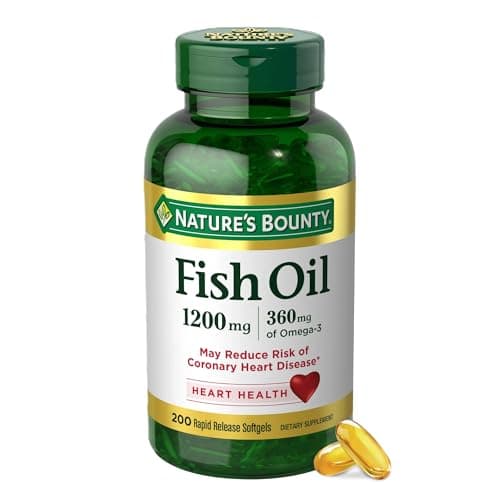
Product image from the Amazon listing.
Our verdict
Yes, Nature's Bounty Fish Oil is good — for most adults who don't eat oily fish twice a week, the 1,200 mg softgels (360 mg EPA+DHA each) are a genuinely useful daily omega-3 at a price that lets you take them consistently. It's the best-selling drugstore fish oil for real reasons: mainstream sourcing, third-party purity testing, an enteric coating that handles fishy burps for most people, and standard dosing at supermarket prices. Premium brands like Nordic Naturals ProOmega or Carlson Elite Omega-3 deliver higher EPA+DHA per softgel and stronger purity certification if your budget stretches; if it doesn't, Nature's Bounty is the honest, pragmatic pick that quietly outperforms most house-brand competitors.
The short version
Fish oil is one of the most consistently useful daily supplements — the EPA and DHA omega-3 fatty acids support cardiovascular, brain and joint health, and most people simply don't eat enough oily fish to get meaningful amounts from diet alone. Nature's Bounty is the best-selling drugstore fish oil for a reason: mainstream sourcing, 1,200 mg fish oil per softgel (yielding about 360 mg of combined EPA+DHA), enteric-coated to reduce fishy burps, and a price that lets you take it every day without thinking about it.
Pros & cons
Pros
- 1,200 mg fish oil (360 mg EPA+DHA) per softgel
- Enteric coating reduces fishy aftertaste and burps
- Best-selling mainstream drugstore fish oil
- Big-bottle value pricing (200+ softgels)
- Third-party purity tested
- Gluten and sugar-free
- No prescription needed
Cons
- Lower EPA+DHA per softgel than premium brands
- Softgels are large — hard for some to swallow
- Store in a cool place to prevent oxidation
Why people love it
Take 1–2 softgels with food
Take with a meal that contains some fat (breakfast or lunch works well) to maximize absorption. Fat-soluble fatty acids absorb dramatically better when consumed with dietary fat.
EPA + DHA fill a common gap
Most non-fish-eating adults get well under 250 mg/day of combined EPA and DHA from diet. Two softgels a day gets you to ~720 mg, closing the gap that heart-health research typically references.
Give it 8–12 weeks
Fatty acid supplementation takes time — cell membranes remodel gradually as EPA and DHA are incorporated. Blood-level changes appear within a few weeks; cardiovascular and cognitive benefits are longer-term.
Who it's for
- Adults who don't eat oily fish 2+ times a week
- Anyone focused on heart, brain or joint health
- Older adults
- People who want an affordable everyday omega-3
Nature's Bounty Fish Oil vs Nordic Naturals vs Carlson — do you need to spend more?
Fish oil quality varies more than most supplements. Nature's Bounty at ~$15 for 200+ softgels is the mainstream, third-party-tested, low-cost daily option — it works well and the enteric coating handles most fishy-burp complaints. Nordic Naturals ProOmega and Carlson Elite Omega-3 sit at the premium end (~$40–60 for a comparable count), with higher EPA+DHA per softgel, IFOS 5-star purity certification, and stronger oxidation controls. If your budget allows the upgrade or you're taking omega-3 therapeutically (post-cardiac event, triglyceride management), the premium tier is worth it.
For general daily use — closing the omega-3 gap in a normal diet, supporting heart/brain/joint health preventively — Nature's Bounty delivers 80% of the benefit at 25% of the cost. The key is actually taking it daily, and premium brands don't help if you skip doses because they're expensive. If you fish-eat aggressively (2+ oily-fish meals per week), you may not need a supplement at all. Between those poles, Nature's Bounty is the pragmatic pick most people should buy.
What omega-3 fatty acids actually do — heart, brain, joint and eye health
EPA and DHA — the two long-chain omega-3 fatty acids in fish oil — are structural components of every cell membrane in your body. That's why the research spans so many systems: cardiovascular (lower triglycerides, better arterial function), brain (DHA is roughly 30% of gray matter, and adequate omega-3 correlates with slower cognitive aging), eye (DHA is heavily concentrated in retinal tissue) and joint (EPA is a precursor to anti-inflammatory eicosanoids that reduce joint stiffness). Modern research is strongest for cardiovascular and triglyceride effects; brain and joint effects are real but harder to feel day to day.
Realistic expectations: fish oil at 500–1,000 mg EPA+DHA per day is a foundational nutrient like vitamin D or magnesium, not a fast-acting medicine. You will not feel dramatic changes in a week. Consistent daily intake over months and years improves markers you can measure (triglycerides, blood pressure, joint stiffness scores) and lowers risks you can't feel until they become problems. It's a preventive supplement, and the price makes it easy to take that long-term view. Pair with a solid daily vitamin routine and you've got the low-cost preventive-health basics.
Should you take fish oil for heart health? What the research actually shows
The evidence for omega-3s and heart health is nuanced. Multiple large studies (including REDUCE-IT and STRENGTH) show that high-dose prescription EPA (2 g twice daily) reduces cardiovascular events in patients with elevated triglycerides who are already on statin therapy. Over-the-counter fish oil at typical doses (250–1,000 mg EPA+DHA/day) shows more modest, less consistent effects in the general population, particularly for people without pre-existing cardiovascular risk. That doesn't mean it's useless — the mechanism-level evidence for triglyceride reduction and arterial-function improvement is solid.
Practical takeaway: if you don't eat oily fish (salmon, sardines, mackerel) at least twice a week, a daily fish oil supplement is a cheap, reasonable insurance policy for general cardiovascular and cognitive health. If you have elevated triglycerides or existing cardiovascular disease, talk to your doctor about prescription-strength EPA rather than relying on OTC fish oil alone. Nature's Bounty at 720 mg EPA+DHA/day (2 softgels) is a solid preventive dose; higher targets need medical guidance. Combine with cardio-friendly habits (regular exercise, low sodium, Ritual Multivitamin for baseline nutrients) and the small daily inputs compound over years.
See Nature's Bounty Fish Oil on Amazon
Check the latest price, photos and buyer reviews on Amazon.
Check Price on Amazon →Sold and shipped by AmazonFrequently asked questions
Is Nature's Bounty Fish Oil good — and is it good enough compared to premium brands?
Yes, Nature's Bounty Fish Oil is genuinely good for what it is: a mainstream, third-party purity-tested daily omega-3 delivering 1,200 mg fish oil (360 mg EPA+DHA) per enteric-coated softgel at supermarket pricing. It's not the highest-potency, cleanest-sourced option on the shelf — Nordic Naturals ProOmega packs roughly double the EPA+DHA per softgel with IFOS 5-star certification, and Carlson Elite Omega-3 is comparable — but those premium brands cost 2–3x more per day. For 80% of the cardiovascular, cognitive and joint benefit at 25% of the cost, Nature's Bounty is honestly good, and the low price is what makes daily consistency (the thing that actually matters for omega-3) realistic long-term. It stops being 'good enough' if you're taking fish oil therapeutically for elevated triglycerides or post-cardiac care — that's when the higher-purity, higher-EPA premium brands earn their price.
Is Nature's Bounty Fish Oil actually worth buying in 2026?
For most people who want a simple, mainstream, everyday omega-3, yes — it's the best-selling drugstore fish oil for a reason: purity is verified, dosing is standard (1,200 mg oil with 360 mg EPA+DHA per softgel), and pricing is low enough to make daily use realistic. If you want a higher-potency, cleaner-sourcing option, premium brands like Nordic Naturals ProOmega or Carlson Elite Omega-3 deliver more EPA+DHA per softgel and stronger purity testing at 2–3x the cost. For general heart/brain/joint support without breaking the budget, Nature's Bounty is the pragmatic pick.
How much fish oil should you take per day?
Most health authorities suggest 250–500 mg combined EPA+DHA per day for general health, and 1,000+ mg per day if cardiovascular disease is a concern (consult your doctor). Two Nature's Bounty softgels provide ~720 mg EPA+DHA, which comfortably covers the general-health range. Higher doses (2,000+ mg EPA+DHA) are common in triglyceride-lowering protocols but need medical guidance.
Does Nature's Bounty Fish Oil cause fishy burps?
The enteric coating on the softgels is specifically designed to reduce fishy burps by delaying dissolution until the softgel is past the stomach. It works for most people but not universally — some sensitive individuals still notice a mild aftertaste. Taking the softgels with a full meal, storing them in the refrigerator, and buying only from high-turnover retailers (fresher stock) all help. If burps persist, a higher-purity brand like Nordic Naturals often eliminates the issue entirely.
Fish oil vs krill oil vs algae oil — which is best?
All three deliver EPA and DHA. Fish oil (like Nature's Bounty) is the mainstream, cheapest, best-studied option and works well for most people. Krill oil provides phospholipid-bound omega-3s that some research suggests absorb slightly better, but it's much more expensive and delivers less EPA+DHA per capsule. Algae oil is the vegan-friendly source of true EPA and DHA (rather than the ALA in flax) and is the right pick for plant-based eaters — but it's also pricier per mg of active omega-3. For most omnivores on a normal budget, fish oil wins.
Can you take fish oil and creatine together?
Absolutely — fish oil and Optimum Nutrition Creatine are two of the most evidence-backed daily supplements for training-serious adults, and they work through completely different mechanisms with no interaction concerns. Creatine supports strength and power output; fish oil supports cardiovascular health, joint comfort and recovery. Pair with Thorne Magnesium Glycinate at night for sleep, and you've got the three-supplement core stack most sports-nutrition doctors recommend.
How should you store fish oil to prevent it from going rancid?
Fish oil oxidizes when exposed to heat, light and air — rancid oil isn't just gross, it's actually pro-inflammatory (the opposite of what you're taking it for). Store the bottle in a cool, dark place (or the refrigerator once opened), keep the cap tight, and finish the bottle within about 3 months of opening. If a softgel bursts and smells strongly fishy or metallic, it's oxidized — toss the bottle.
As an Amazon Associate, TopCrate earns from qualifying purchases at no extra cost to you. This is a dietary supplement, not a medical treatment — consult your doctor before starting, especially if you're on blood thinners or have a bleeding disorder. Product image, price, availability and ratings are shown on Amazon and are subject to change.