TRENDING ON AMAZON
Thorne Creatine Monohydrate Powder Review: Is It Worth It?
The 5g micronized creatine monohydrate powder that carries NSF Certified for Sport on every batch — the standard trusted by the NFL, NBA, MLB and Olympic programs.
Quick answer: Yes — Thorne Creatine Monohydrate is worth the premium if you're a drug-tested athlete or you value quality assurance across all supplements. NSF Certified for Sport on every batch, 5g clinical-dose micronized creatine, unflavored, made in a cGMP facility, trusted by NFL/NBA/MLB/Olympic programs. If you're a casual gym-goer who won't be drug-tested, a [Nutricost creatine](/reviews/nutricost-creatine) at half the price delivers identical results at the molecular level — the difference is certification, not creatine quality. Buy Thorne if drug-testing is a factor or if you already use Thorne products; buy value tier if pure cost-per-gram matters. Either way, take 5g daily without fail for 4+ weeks, train progressively, and expect real strength and body-composition improvements.
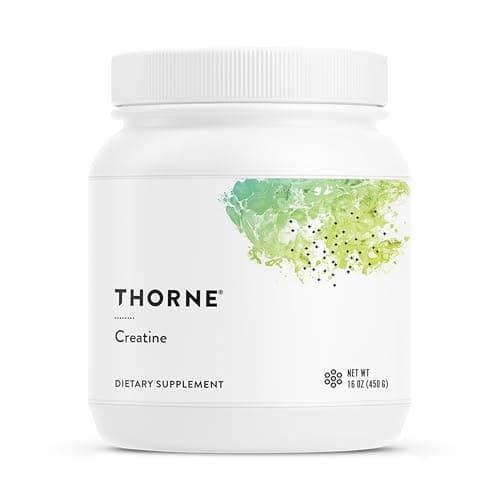
Product image from the Amazon listing.
Our verdict
Yes — Thorne Creatine Monohydrate is worth the premium if you're a drug-tested athlete or you value quality assurance across all supplements. NSF Certified for Sport on every batch, 5g clinical-dose micronized creatine, unflavored, made in a cGMP facility, trusted by NFL/NBA/MLB/Olympic programs. If you're a casual gym-goer who won't be drug-tested, a [Nutricost creatine](/reviews/nutricost-creatine) at half the price delivers identical results at the molecular level — the difference is certification, not creatine quality. Buy Thorne if drug-testing is a factor or if you already use Thorne products; buy value tier if pure cost-per-gram matters. Either way, take 5g daily without fail for 4+ weeks, train progressively, and expect real strength and body-composition improvements.
The short version
Creatine monohydrate is the most-studied, most-effective legal sports supplement — 200+ clinical trials showing consistent strength, muscle mass, and cognitive benefits at 5g/day. Every serious creatine works the same at the molecular level. What separates the tiers is manufacturing quality and third-party testing. Thorne's Creatine Monohydrate is unflavored, micronized (finer particles = easier mixing and slightly better absorption), and — critically — carries NSF Certified for Sport on every single batch. That certification means every lot is tested for banned substances, contamination and label accuracy. It's the standard used by NFL, NBA, MLB, PGA Tour and US Olympic/Paralympic programs, and it's the reason competitive and drug-tested athletes pay Thorne's premium over cheaper mass-market creatines. If you're a casual gym-goer, a Nutricost or Bulk Supplements creatine works fine at half the price. If you're competing in a drug-tested sport, or you just want the assurance that what's in the tub matches the label — Thorne is the reference tier.
Pros & cons
Pros
- NSF Certified for Sport — every batch, not annually
- 5g clinical-dose micronized creatine monohydrate
- Third-party tested for banned substances and contamination
- Unflavored — mixes into anything without sweeteners or additives
- 90 servings per tub
- Trusted by professional and Olympic athletes
- Made in the USA in a cGMP facility
Cons
- Premium price vs Nutricost or Bulk Supplements
- Unflavored — not for people who want a pre-mixed flavored creatine
- Micronized still needs 30-60 seconds of stirring for full dissolution
Why people love it
Take 5g daily
Mix one rounded teaspoon (5g) into water, juice, coffee, a shake or oatmeal once a day. Timing doesn't matter much — daily consistency is what fills muscle creatine stores.
Loading phase optional
Some protocols start with 20g/day for 5 days (a 'loading phase') to saturate muscle creatine stores faster. Skipping the load and just taking 5g/day works the same, it just takes 3-4 weeks to fully saturate instead of 5 days.
Feel the difference at week 3-4
Fully saturated muscle creatine stores show up as small (1-2%) strength and rep-count gains, better workout endurance, and a slight increase in muscle water (1-2 lbs weight gain). This isn't fake weight — it's what creatine does mechanically.
Who it's for
- Drug-tested athletes (NCAA, professional, Olympic)
- Serious gym-goers wanting maximum quality assurance
- Anyone taking multiple Thorne supplements
- People sensitive to sweeteners, dyes and additives
Why creatine is the most-studied supplement, and why brand matters less than you'd think
Creatine monohydrate has over 500 published clinical studies going back to the early 1990s, more than any other legal sports supplement. The consensus is remarkably strong: at 5g/day, creatine increases muscle phosphocreatine stores by roughly 20%, which produces 1-3% increases in maximum strength and 5-15% increases in rep-count during high-intensity exercise. It also modestly improves cognitive function under stress (recent research) and shows promise for age-related muscle loss. The mechanism is understood in detail — phosphocreatine donates a phosphate to regenerate ATP during short high-intensity efforts, effectively giving your muscles more energy currency during the exact moments strength training taxes.
Here's the key point: at the molecular level, creatine monohydrate is creatine monohydrate. A 5g dose from Thorne, Nutricost, Bulk Supplements, Optimum Nutrition or a supermarket house brand all produce the same physiological effect if the powder is legitimate creatine. What separates the tiers is manufacturing quality, third-party testing and brand assurance. Cheaper creatines from unknown brands occasionally test as under-dosed, contaminated, or (very rarely) contain banned substances that would fail a drug test. Thorne's NSF Certified for Sport on every batch is the assurance premium — it's why professional athletes and drug-tested competitors pay 2-3× more per gram than a Nutricost. For the average gym-goer, a well-known cheaper brand is fine; for competitive athletes and quality-conscious buyers, Thorne is the reference.
Thorne Creatine vs Nutricost vs Bulk Supplements — how to choose your tier
The creatine market has three practical tiers. Premium NSF-certified (Thorne, Klean Athlete, Momentous): $35-50 for 90 servings, third-party tested every batch, trusted by drug-tested athletes. Mainstream branded (Optimum Nutrition Creatine, MuscleTech Cell-Tech): $25-35 for 60-90 servings, well-known brands with generally reliable quality but not NSF Sport certified. Value bulk (Nutricost, Bulk Supplements, Naked Nutrition): $20-30 for 100-200 servings, third-party tested to varying standards, lowest cost per gram. All three deliver the same creatine molecule; the difference is manufacturing quality assurance.
For a competitive athlete or someone in a drug-tested sport: Thorne, no question. The small premium is insurance against failing a test due to contamination. For a serious gym-goer who values quality across all supplements (protein, vitamins, etc.) and already uses Thorne products: Thorne Creatine keeps your stack consistent. For a budget-conscious lifter who trains hard but doesn't get drug-tested: Nutricost at half the price works identically. For a beginner just testing whether creatine works for them: buy the cheapest reputable option, take 5g/day for 8 weeks, and see if you get stronger. If you do, upgrade to whichever tier fits your priorities. The wrong move is skipping creatine entirely because you can't afford Thorne — a $20 Nutricost tub delivers the same physiological benefit.
How to take creatine correctly (and the myths to ignore)
The correct protocol is embarrassingly simple: 5g of creatine monohydrate per day, mixed into any liquid, at any time, every day, indefinitely. That's it. All the marketing complexity around 'creatine cycling,' 'loading phases,' 'creatine HCl vs monohydrate,' 'timing with insulin,' 'washout phases' — most of it is either overstated or outright myth. The strongest evidence supports the plain-vanilla protocol above.
Myths to skip: (1) 'Cycle off creatine every 3 months.' No — creatine is safe for indefinite daily use, and cycling off reduces saturation and forces you to re-saturate. (2) 'Creatine HCl is better than monohydrate.' No — monohydrate is the most-studied form and works. HCl variants may dissolve slightly better but produce identical results at proper doses. (3) 'Take creatine with fast-acting carbs for insulin spike.' Marginal effect not worth engineering your routine around. (4) 'Creatine damages your kidneys.' Multiple long-term studies show creatine is safe for healthy kidneys at standard doses. People with pre-existing kidney disease should consult a doctor first. (5) 'Female athletes shouldn't take creatine.' False — women benefit identically to men, with roughly similar strength and muscle gains. The real determinants of success with creatine are (a) taking it daily without fail, (b) training consistently and progressively, and (c) eating enough protein (0.7-1g per pound of bodyweight) to support the muscle growth. Combine those three and creatine amplifies your gains predictably. Pair the training routine with a proper recovery protocol — sleep 7-9 hours (magnesium at night helps), stay hydrated (electrolytes like LMNT on hot training days), and consider a solid protein powder — and you'll see the strength and body-composition changes that the creatine literature promises.
See Thorne Creatine on Amazon
Check the latest price, photos and buyer reviews on Amazon.
Check Price on Amazon →Sold and shipped by AmazonFrequently asked questions
Is Thorne Creatine worth the premium over Nutricost or Bulk Supplements?
Depends entirely on whether you're drug-tested. For a competitive athlete in NCAA, NFL, NBA, MLB, PGA Tour or Olympic programs — yes, unambiguously. NSF Certified for Sport means every batch is tested for the specific banned substances your sport regulates, and Thorne carries this on every lot. A cheaper creatine without third-party testing carries a small but real risk of cross-contamination from a manufacturing facility that also makes other supplements. For casual gym-goers not in a drug-tested sport, a Nutricost creatine at about half the price works identically at the molecular level — same 5g creatine monohydrate, same effects. The premium buys you certification and assurance, not better creatine. Buy Thorne if drug-testing matters or if you value quality assurance across all your supplements; buy Nutricost or Bulk Supplements if pure cost-per-gram is the priority.
How much creatine should I take, and when?
5g per day, every day, at any time. That's the clinical-consensus dose that saturates muscle creatine stores and delivers all documented benefits. Timing (pre-workout, post-workout, with meals) doesn't meaningfully affect results — daily consistency is what matters. Skip the marketing myths about 'take with juice for insulin spike' — the effect is negligible. The one nuance: on training days, some evidence suggests post-workout timing gives a marginal edge because muscles are more receptive to nutrients after exercise. On rest days, take it whenever. If you take it inconsistently (only on training days, or occasionally), you never fully saturate muscle creatine stores and you get sub-optimal results. Consistency beats timing every time.
Do I need to do a creatine loading phase?
No, it's optional and mostly outdated. The classic loading phase (20g/day split into 4x5g doses for 5-7 days, then 5g/day maintenance) does saturate muscle creatine stores in about a week versus 3-4 weeks with just 5g/day. If you're competing soon and want the effect ASAP, loading works. For everyone else, just take 5g/day and be patient — same end result. Some people get GI discomfort from the high loading doses (bloating, mild diarrhea), which is another reason to skip it. Modern lifter recommendation: skip the load, take 5g/day from day one, and expect saturation by week 3-4.
Will creatine cause weight gain or bloating?
Yes to a small water-weight gain — no to genuine bloating. Creatine draws water into muscle cells (that's part of how it works), so most people gain 1-2 lbs of intramuscular water weight over the first 2-3 weeks. This isn't fat, and it isn't bloating — it's water inside the muscle, which is what makes muscles look slightly bigger and perform slightly stronger. Some people report mild bloating during a loading phase (the 20g/day protocol) but not on the standard 5g maintenance dose. Drink plenty of water (creatine actually improves hydration by increasing muscle water content), stay consistent, and the initial 1-2 lb gain plateaus. Long-term, creatine users usually gain lean muscle over months of training, so total scale weight goes up — but that's from the training, not the creatine directly.
Thorne Creatine vs Optimum Nutrition, Creapure, Klean Athlete — comparing sport-certified creatines
Thorne, Klean Athlete and Momentous are the three NSF Certified for Sport creatines most drug-tested athletes rotate through. Thorne carries NSF cert on every batch — the strictest. Klean Athlete is similar spec at similar price. Momentous is more expensive but with additional 'Cognitive' variant blends. Optimum Nutrition's Micronized Creatine is quality mainstream but doesn't carry NSF Sport cert. Creapure is a brand of creatine (German-manufactured, high-purity) that many quality brands use; Thorne uses Creapure-standard creatine. For drug-tested athletes: Thorne, Klean Athlete or Momentous. For serious non-tested users who value quality: any of the above works. For casual users who just want the strength benefit: Nutricost creatine at half the price. Combine with a proper training program and consistent protein intake — creatine alone doesn't build muscle, but it amplifies what training builds.
Can I take creatine with other supplements?
Yes, it stacks well with almost everything. Common stacks: creatine + protein powder (post-workout), creatine + beta-alanine (endurance training), creatine + caffeine (though some evidence suggests caffeine may slightly blunt creatine's effect if taken together — separate by an hour if concerned), creatine + electrolytes on hot training days. Do not combine with kidney medications without doctor consultation — creatine puts additional load through kidney filtration and can interact with certain medications. Otherwise, creatine is one of the safest, most-studied supplements available. Combine it with a good sleep-support routine — magnesium glycinate at night helps recovery — and consistent training, and the muscle and strength gains compound over months.
As an Amazon Associate, TopCrate earns from qualifying purchases at no extra cost to you. Creatine monohydrate is generally safe for healthy adults but consult a doctor if you have kidney disease, take prescription medications, or are pregnant/nursing. NSF Certified for Sport does not guarantee anything about individual results. Product image, price, availability and ratings are shown on Amazon and are subject to change.