TRENDING ON AMAZON
NeoCell Super Collagen Powder (Grass-Fed, Types I & III) Review: Is It Worth It?
The specific collagen powder that's been the Amazon best-seller for years — 12g of grass-fed hydrolyzed Type I & III peptides per serving, unflavored, mixes into anything.
Quick answer: Yes — NeoCell Super Collagen powder is the specific collagen supplement to buy if you're starting collagen supplementation and want the most effective product at the best price. The 12g per serving of hydrolyzed Type I & III peptides is exactly the format research supports, the grass-fed sourcing is legitimate, and at roughly $1 per daily serving it's the best per-serving value in the category. Not a miracle cure — realistic expectations for skin elasticity, nail strength and joint comfort over 8-12 weeks of consistent daily use, not overnight transformation. Combine with daily SPF, strength training, adequate protein and vitamin C for compounding effects. Take it every day for 3 months minimum before judging results, and it earns its spot in the daily routine.
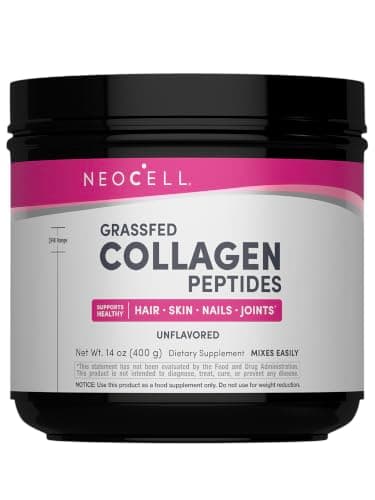
Product image from the Amazon listing.
Our verdict
Yes — NeoCell Super Collagen powder is the specific collagen supplement to buy if you're starting collagen supplementation and want the most effective product at the best price. The 12g per serving of hydrolyzed Type I & III peptides is exactly the format research supports, the grass-fed sourcing is legitimate, and at roughly $1 per daily serving it's the best per-serving value in the category. Not a miracle cure — realistic expectations for skin elasticity, nail strength and joint comfort over 8-12 weeks of consistent daily use, not overnight transformation. Combine with daily SPF, strength training, adequate protein and vitamin C for compounding effects. Take it every day for 3 months minimum before judging results, and it earns its spot in the daily routine.
The short version
NeoCell Super Collagen has been the Amazon best-seller in the collagen category for years, and the sales don't lie — over 80,000 monthly units at a 4.6-star average across tens of thousands of reviews. The formula is straightforward: hydrolyzed collagen peptides from grass-fed bovine (cow) sources, Types I and III (the collagen types that make up skin, bones, hair and nails), 12 grams per scoop, completely unflavored, and cheap enough at roughly $0.75-$1 per daily serving to fit any supplement budget. What it does well: the hydrolyzed peptide format dissolves cleanly in coffee, smoothies, oatmeal or water without clumping or taste, and the sourcing is legitimate grass-fed. The honest science: collagen supplementation has moderate but real evidence for skin elasticity, hair and nail strength, and joint comfort over 8-12 weeks of consistent daily use. It won't reverse aging, doesn't beat a topical retinoid for skin, and won't magically grow long hair — but as a supplemental protein source that specifically targets connective tissue, it delivers what the honest science supports. For anyone building a general anti-aging or joint-support supplement stack, this is the specific product to start with.
Pros & cons
Pros
- Grass-fed hydrolyzed collagen — bioavailable peptides
- 12g per serving covers full recommended daily dose
- Completely unflavored — dissolves in anything without taste
- Types I & III specifically target skin, hair, nail, joint tissues
- One of the best per-serving costs in the category
- 80,000+ monthly sales validates real-world satisfaction
Cons
- Not vegan (bovine-sourced)
- Moderate not miracle results — evidence supports 8-12 week timeline
- Powder can clump if added to hot liquids without stirring immediately
Why people love it
Mix one scoop into any beverage
Standard serving is one scoop (about 12g of collagen). Add to your morning coffee, smoothie, oatmeal, water or even soup — unflavored means it doesn't change the taste.
Stir until fully dissolved
Cold and room-temperature liquids dissolve cleanly with 20-30 seconds of stirring. Hot liquids need immediate stirring to prevent clumping — pour the collagen in as you stir rather than adding to a still cup.
Take daily for 8-12 weeks minimum
Collagen supplementation is a slow-build effect. Meaningful changes to skin elasticity, hair strength and joint comfort typically appear at the 8-12 week mark of consistent daily use. Sporadic use produces minimal benefit — daily habit is what compounds results.
Who it's for
- Adults 30+ concerned about skin elasticity
- Post-menopausal women (collagen production drops significantly)
- Athletes and lifters supporting joint recovery
- Anyone with brittle nails or thinning hair
Why hydrolyzed collagen peptides are the specific supplement format that works
Collagen supplementation isn't new — bone broth, gelatin desserts and collagen-heavy foods have been part of human diets for millennia. What's new since roughly 2015 is hydrolyzed collagen peptides as a supplement format, and understanding why this format works when older formats didn't clarifies why NeoCell (and similar products) actually deliver measurable results. Whole collagen from bone broth, gelatin or dietary sources is a very large protein molecule (up to 300,000 Daltons) that human digestion breaks down into amino acids for general protein use — you can't 'target' your dietary collagen intake to specifically rebuild skin or joints. The body uses those amino acids wherever it needs them next.
Hydrolyzed collagen peptides are pre-broken-down to short-chain peptides (2-5 kilodaltons) using enzymatic hydrolysis. Research shows these specific-sized peptides survive digestion partially intact, get absorbed into the bloodstream as short peptide chains (not just individual amino acids), and appear to have some direct signaling effect on the body's collagen-producing cells (fibroblasts in skin, chondrocytes in joints). The peptides also contain a specific dipeptide (prolyl-hydroxyproline) that's been directly measured in the blood after supplementation and appears to signal fibroblast activity. This is why hydrolyzed peptides at 10-15g daily doses produce measurable clinical outcomes that eating equivalent whole-protein collagen sources doesn't. NeoCell's 12g per serving of hydrolyzed peptides — combined with the specific Types I and III collagen that make up skin, bones and connective tissue — is exactly the format the research supports. Cheaper supplements labeled just 'collagen' without the 'hydrolyzed peptides' designation may be less bioavailable — always check for 'hydrolyzed peptides' on the label.
Building a complete anti-aging and joint-support routine (and what collagen isn't sufficient for)
Collagen supplementation is one component of a full skin-and-joint health approach, and the compounding benefits from combining it with other proven strategies are meaningful. For skin: daily broad-spectrum SPF (this matters more than any supplement — see our La Roche-Posay Anthelios review), nighttime retinoid (over-the-counter Naturium Multi-Peptide or prescription tretinoin), daily vitamin C serum in the AM, and a quality moisturizer. Collagen adds a systemic component that topical products can't reach. The four together over 6-12 months produce genuinely dramatic skin improvement in most people over 30 — better than any single approach alone. For joints: strength training 2-3 times per week (this is more important than any supplement for long-term joint health), adequate protein intake overall (at least 0.8g per pound of bodyweight daily), omega-3 fatty acids from fish or supplements, and collagen peptides for connective-tissue support. Add joint-specific mobility work with tools like the Chirp Wheel for the mid-back, or a Theragun Mini for muscle recovery around joints.
What collagen isn't sufficient for: reversing established fine lines and wrinkles (needs retinoids and other actives), curing arthritis or serious joint conditions (needs medical care), replacing daily SPF (nothing does), or fixing thin hair from genetic pattern baldness (needs minoxidil, finasteride or medical intervention). The reasonable expectation with 12-week daily NeoCell use: skin looks slightly more elastic and hydrated, nails grow slightly faster and less brittle, hair strands may be slightly stronger, joint comfort during physical activity may improve modestly. These are meaningful benefits over years of consistent use, but not overnight transformations. The most effective mental model: collagen is a slow-build supplement, similar to vitamin D or omega-3s — you take it because it moves multiple metrics slightly in the right direction over years, not because you'll feel a difference next week. Pair with realistic expectations and consistent daily use, and it earns its spot in a supplement stack.
The honest limitations of collagen supplementation (and when it's not the right investment)
Being clear about when collagen isn't the right supplement investment sharpens the value proposition for when it is. When to skip collagen: (1) Adults under 30 with no specific skin, hair or joint concerns — natural collagen production is still robust, and dollars are better spent on SPF, sleep and hydration. (2) People who don't consume adequate total protein (under 0.6g per pound of bodyweight daily) — collagen won't compensate for a protein-deficient diet; the base protein intake needs to be addressed first. Whey protein, casein or plant-based protein powders provide broader amino acid coverage at similar cost. (3) People who won't take it daily for 3+ months — sporadic supplementation delivers minimal benefit, and the dollars are wasted. (4) People with serious skin or joint conditions expecting supplement-level effects — dermatology and orthopedic care deliver dramatically better outcomes for actual medical concerns.
When collagen is the right investment: (1) Adults 30+ noticing early signs of skin aging, thinning nails, or joint stiffness during physical activity. (2) Post-menopausal women — natural collagen production drops significantly with estrogen decline, and supplementation has stronger evidence for this population. (3) Athletes and heavy lifters supporting joint recovery from training stress. (4) Anyone building a comprehensive daily supplement stack for long-term aging support. In these cases, NeoCell delivers a proven effect at the best price point in the category. For an $20-25 monthly cost, the return in slightly better skin, hair, nails and joints over years is a rational health investment. Just take it daily, take it for the long haul, and pair it with the other proven fundamentals — SPF, exercise, sleep, adequate protein and vitamin C — for the compounding effect that actually moves outcomes. Round out the healthy-aging stack with a Ritual Essential for Women multivitamin or equivalent for micronutrient coverage, and the daily supplement routine is complete.
See NeoCell Super Collagen on Amazon
Check the latest price, photos and buyer reviews on Amazon.
Check Price on Amazon →Sold and shipped by AmazonFrequently asked questions
Does NeoCell collagen actually work? What does the science say?
Yes, with realistic expectations. The science on hydrolyzed collagen peptide supplementation has grown substantially over the past decade, and the evidence supports moderate but real benefits in three specific areas. Skin elasticity and hydration: multiple randomized controlled trials show measurable improvements in skin firmness, wrinkle depth and hydration after 8-12 weeks of daily 10-15g collagen peptide supplementation compared to placebo. Nail and hair strength: emerging evidence supports improvements in nail growth rate and reduced brittleness. Joint comfort: sports medicine research shows modest improvements in joint pain during physical activity for people with age-related or activity-related joint discomfort. What it doesn't do: reverse existing wrinkles, regrow hair on bald areas, cure arthritis, or match the effect of dedicated skincare actives like retinol. NeoCell's 12g per serving is at the effective dose level supported by research. Full effects require 8-12 weeks of consistent daily use — short-term use (1-4 weeks) produces minimal measurable change. If you're expecting a supplement to work like a topical medication, you'll be disappointed; if you're expecting modest cumulative benefits over 3 months of daily use, you'll likely get what the research supports.
NeoCell vs Vital Proteins vs Sports Research: which collagen powder should I buy?
Three top-tier options with different strengths. NeoCell Super Collagen is the value pick — cheapest per serving, grass-fed, hydrolyzed Types I & III, best for straightforward daily supplementation on a budget. Vital Proteins Collagen Peptides is the premium brand with the strongest marketing and cleanest sourcing story — pasture-raised, grass-fed, third-party tested, more variety of formulations (flavored, marine-source, functional blends). Costs 40-60% more than NeoCell per serving. Sports Research Collagen Peptides is the middle option — grass-fed, hydrolyzed, third-party tested, moderate pricing, popular in fitness circles. For maximum-quality third-party testing and premium sourcing (or if brand and packaging matter): Vital Proteins. For serious athletes wanting sports-tested purity: Sports Research. For most people who just want effective daily collagen at the best price: NeoCell. The core hydrolyzed Type I & III peptide is essentially identical across all three — the meaningful differences are sourcing story, testing certifications, and price. If you're just starting collagen supplementation, NeoCell delivers 95% of the results at 60% of the premium-brand cost.
Is NeoCell really grass-fed? What about hormones and antibiotics?
Yes — NeoCell sources its bovine collagen from grass-fed cattle, and the company publishes third-party testing certifications for hormones and antibiotics (none detected). This is a legitimate quality claim, not marketing puffery — grass-fed bovine collagen has a slightly different amino acid profile than grain-fed collagen, and consumer preference has driven the category toward grass-fed sourcing over the past 5 years. NeoCell also publishes GRAS (Generally Recognized as Safe) certification and NSF Contents Certified verification for supplement quality. If you're specifically concerned about supplement quality: check for these certifications on any collagen product you buy. NeoCell, Vital Proteins and Sports Research all pass these tests; some cheaper generic Amazon brands don't. For a supplement you'll take daily for years, spending an extra $2-3 per bag for verified sourcing is genuine peace of mind.
How much collagen per day is actually effective?
Research consistently supports 10-15g of hydrolyzed collagen peptides daily for meaningful benefit. NeoCell's 12g per serving lands squarely in the effective dose range with a single scoop. Some enthusiasts double-dose to 24g daily — there's no strong evidence this produces better results, and the additional cost isn't matched by additional benefit for most people. If you're heavy-training or specifically working on joint recovery from injury, 20-24g daily may make sense (split into two doses, morning and evening). For general daily supplementation: one scoop, once per day, taken with vitamin C for optimal absorption (vitamin C is a cofactor in collagen synthesis). Consistency matters more than quantity — one scoop every day for 12 weeks produces better results than double doses taken irregularly.
When should I take collagen? Morning or night? With food or on empty stomach?
Any consistent time works — the specific timing matters far less than consistency. The most popular pattern (and the one most research studies use) is morning with coffee or a smoothie, where it becomes a habitual add-on to an existing daily routine. Take it with vitamin C (either from food or a small supplement) for optimal collagen synthesis — vitamin C is a required cofactor. On empty stomach vs with food: no meaningful difference in absorption for hydrolyzed collagen peptides, which are already broken down small enough to absorb readily. Athletes and lifters sometimes take collagen 30-60 minutes before workouts for joint-specific support, based on emerging research showing collagen synthesis peaks in tendons and ligaments during physical stress. For pure daily supplementation, morning is simply the most sustainable habit — pick whatever time you'll actually take it every day.
How long does one bag last, and what does it cost per serving?
A standard NeoCell Super Collagen 7 oz (200g) bag delivers about 16-18 servings at 12g each, at roughly $18-22 per bag on Amazon. That works out to $1-1.30 per daily serving — one of the best per-serving costs in the collagen category. Subscribe-and-save with Amazon adds a modest 10-15% discount. NeoCell also sells larger 14 oz bags (about 40 servings, roughly $30-35) that offer better per-serving value if you're committed to daily use. Compared to Vital Proteins ($40-50 for similar serving count) or Ancient Nutrition ($35-45), NeoCell is 30-50% cheaper per serving with equivalent formulation. For someone building a long-term supplement habit, that price differential adds up: $500 per year at NeoCell prices vs $800-1,000 per year at premium brand prices for the same effect. The extra spend on premium brands mostly buys packaging, marketing and certifications — not meaningfully better collagen.
As an Amazon Associate, TopCrate earns from qualifying purchases at no extra cost to you. NeoCell Super Collagen is a dietary supplement, not intended to diagnose, treat, cure or prevent any disease. Consult your doctor before starting any supplement, especially if pregnant, nursing or on medications. Product image, price, availability and ratings are shown on Amazon and are subject to change.