TRENDING ON AMAZON
Bloom Nutrition Greens & Superfoods Powder Review: Is It Worth It?
The flavored, TikTok-viral greens powder that made drinking your vegetables actually enjoyable — 30+ superfoods, digestive enzymes, prebiotics and probiotics in a strawberry-kiwi shake, at about a third the price of AG1.
Quick answer: Yes — Bloom Nutrition Greens is worth it for anyone who wants a daily greens habit without paying AG1 prices. The formula is genuinely well-composed (30+ real ingredients, digestive enzymes, pre- and probiotics), the taste is unusually good for the category, and at $35/month it's roughly one-third what AG1 costs for 80% of the benefit. It's not the most clinical option on the market, and it won't fix underlying digestive conditions, but for the specific job of 'daily greens shake that helps with bloating and I'll actually drink,' Bloom hits the mark. Give it 3 weeks of daily use, pair with a proper multivitamin for full nutritional coverage, and it's a solid mid-tier greens supplement at a fair price.
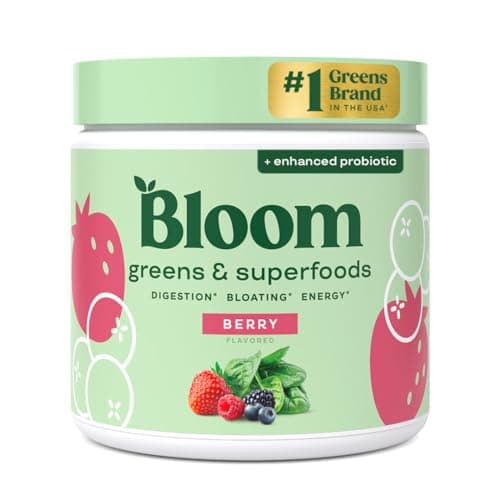
Product image from the Amazon listing.
Our verdict
Yes — Bloom Nutrition Greens is worth it for anyone who wants a daily greens habit without paying AG1 prices. The formula is genuinely well-composed (30+ real ingredients, digestive enzymes, pre- and probiotics), the taste is unusually good for the category, and at $35/month it's roughly one-third what AG1 costs for 80% of the benefit. It's not the most clinical option on the market, and it won't fix underlying digestive conditions, but for the specific job of 'daily greens shake that helps with bloating and I'll actually drink,' Bloom hits the mark. Give it 3 weeks of daily use, pair with a proper multivitamin for full nutritional coverage, and it's a solid mid-tier greens supplement at a fair price.
The short version
Bloom Nutrition Greens became the TikTok answer to AG1 by solving the one thing every other greens powder gets wrong: taste. A single scoop mixes into water to make a genuinely drinkable strawberry-kiwi (or original, mango, citrus, berry) shake with 30+ ingredients — spirulina, chlorella, wheatgrass, barley grass, beet root, digestive enzymes, prebiotics and probiotics — targeted at bloating, digestion and daily veggie backup. At about $35 for a 30-serving canister (vs $99 for AG1), it's the value pick in a category where premium prices have gotten silly. It's not a nutritional replacement for actual vegetables, and it's not a certified organic clinical formula like Athletic Greens — but for the specific job of 'daily green shake that helps with bloating and I'll actually drink,' Bloom hits the mark.
Pros & cons
Pros
- Actually tastes good — the reason people stick with it
- 30+ superfoods, digestive enzymes, prebiotics and probiotics
- Third-party tested for ingredient safety
- About one-third the price of AG1
- Multiple flavors (Original, Strawberry Kiwi, Mango, Citrus, Berry)
- Mixes cleanly in water without a blender
Cons
- Contains maltodextrin (used as bulking agent) — a small con for the purist
- Fewer 'greens' than premium clinical formulas — heavy on fruit/berry powders
- Not USDA organic or NSF certified
- Small amount of natural sweetener (stevia + monk fruit)
Why people love it
Scoop and mix
One rounded scoop into 8-12oz of cold water, shake or stir until dissolved — no blender needed. The strawberry-kiwi and mango flavors dissolve fastest; original has a mild green-tea note.
Drink first thing (or anytime)
Best on an empty stomach in the morning so the enzymes and probiotics work without competing with food. Fine to drink pre-workout or as an afternoon backup if your veggie intake was thin.
Give it two weeks
Bloating and gut-comfort improvements are what most people notice first, usually within 3-7 days. The nutrient-backup benefit is cumulative — like a multivitamin, not an energy drink.
Who it's for
- People with occasional bloating or sluggish digestion
- Anyone whose daily veggie intake is thin
- AG1 users looking for a cheaper alternative
- Women in the wellness-influencer space (Bloom's core demographic)
Is Bloom Nutrition Greens worth it, or is it a TikTok marketing product?
Bloom got famous through TikTok and influencer marketing, which triggers valid skepticism — plenty of viral wellness products are half-formulated garbage propped up by aesthetic branding. Bloom isn't one of them. The formula is genuinely well-composed for its price tier: 30+ real ingredients spanning greens, fruits, digestive enzymes, prebiotics, probiotics and antioxidants, third-party tested for ingredient safety, and formulated by dietitians on staff. It's not the most comprehensive greens powder on the market (AG1 is), and it's not certified organic (only some ingredients are), but the honest evaluation is that it's a solid mid-tier greens supplement at a reasonable price with an unusually palatable taste. The TikTok fame is genuine product-market fit, not empty hype.
Where the skepticism has some validity: Bloom's marketing emphasizes 'bloating relief' as the primary benefit, and while the enzymes and probiotics genuinely help with everyday bloating, the messaging occasionally overstates what the product does for people with underlying digestive conditions. It's a supplement, not a treatment. Also worth knowing: the label lists 'over 30 superfoods' but many are in a proprietary blend where individual amounts aren't disclosed, so you can't verify how much spirulina vs how much apple powder you're actually getting per scoop. That's industry standard for greens powders (AG1 does the same), but transparency-focused buyers should know. For most people using it as a 'daily greens shake for general wellness,' Bloom delivers what it promises at a fair price.
Bloom Nutrition Greens vs AG1: the honest side-by-side for real buyers
The AG1 (Athletic Greens) vs Bloom comparison is the single most-asked question in this category. Both are greens powders, both are marketed as daily foundational nutrition, both cost enough to matter. Here's the honest breakdown. AG1 has 75+ ingredients versus Bloom's 30+, which sounds like a huge gap but includes many overlapping antioxidants and adaptogens. AG1 is NSF Certified for Sport (meaning no banned substances, batch-tested) while Bloom is third-party tested but not NSF certified. AG1's greens blend leans heavier on nutrient-dense greens (spirulina, chlorella, moringa, wheatgrass — all in meaningful doses), while Bloom's blend has more fruit/berry powders that make it taste better but contribute less nutrient density per gram.
AG1 costs $99/month subscription (~$3.30/serving). Bloom costs $35/month direct (~$1.17/serving) — roughly one-third. For the price gap, AG1 delivers: more ingredients, better sourcing documentation, and the certifications athletes and clinical users need. Bloom delivers: better taste, easier daily habit formation, and a lower barrier to entry for people just starting greens supplementation. Real recommendation: if you're a serious athlete, clinical wellness-tracker, or just want the most rigorously formulated option regardless of price, buy AG1. If you're an average health-conscious adult trying to build a daily greens habit and $99/month feels excessive, Bloom is 80% of the benefit at 35% of the cost. Neither replaces actual vegetables or a proper multivitamin like the Ritual Essential — both should sit alongside real food and other supplements, not replace them.
How to actually use Bloom Greens for bloating, gut health and daily nutrition support
The single most important factor in whether Bloom (or any greens powder) delivers benefits is consistency — daily use for at least 2-3 weeks. The typical failure mode is buying a canister, using it for 5 days, forgetting for 3 weeks, and concluding 'it didn't work.' Set up the habit: canister on the counter next to the coffee maker, scoop pre-loaded in the shaker bottle at night for the next morning, drink it before touching your phone. For bloating specifically, drink it 30-45 minutes before your first meal so the digestive enzymes are active when food arrives. For general wellness support, any time of day works — some users prefer pre-workout for the light chlorophyll boost, some prefer afternoons as a coffee-alternative.
Stack Bloom with what it doesn't provide. It's low in protein, so pair it with breakfast eggs, Greek yogurt or collagen peptides if you're building daily protein habits. It's not a multivitamin, so pair with a real multi like Ritual for A, D, E, K, iron, folate and other essential micronutrients Bloom doesn't provide meaningful doses of. It's not a fiber supplement — the inulin content is prebiotic, not bulking, so add psyllium or actual vegetables for fiber. And drink water throughout the day; the digestive enzymes work best in a hydrated system. Give the routine 3 weeks, and if you don't notice reduced bloating, more consistent digestion or slightly better energy at some point in that window, the product isn't working for your specific body — try a different formulation or accept that greens powders aren't a fit.
See Bloom Nutrition Greens on Amazon
Check the latest price, photos and buyer reviews on Amazon.
Check Price on Amazon →Sold and shipped by AmazonFrequently asked questions
Bloom Nutrition Greens vs AG1: which greens powder is worth it?
Depends on your budget and priorities. AG1 (~$99/month) is the premium clinical option with 75+ ingredients, third-party NSF Certified for Sport testing, and a more research-backed formula for general nutrition. Bloom (~$35/month) is the value pick: 30+ ingredients, third-party tested but not NSF certified, flavored for daily drinkability, and specifically marketed for bloating and digestion. AG1 is the pick if you want the most rigorous formulation regardless of price. Bloom is the pick if you'd rather spend $65 less per month and actually enjoy drinking it — because a greens powder you skip has zero benefit. Many people start with Bloom, discover greens powders help them, and either stick with Bloom for the value or upgrade to AG1 for the deeper formulation.
Does Bloom Greens actually help with bloating?
For most people, yes — within the first week. The mechanism is a combination of digestive enzymes (amylase, protease, lipase, cellulase) that help break down food, prebiotics (inulin) that feed good gut bacteria, and probiotics (Lactobacillus acidophilus) that support gut flora. This targets the two most common causes of occasional bloating — incomplete digestion and gut-flora imbalance — rather than treating symptoms. It won't fix bloating caused by lactose intolerance, celiac disease, IBS or other clinical conditions; those need proper medical evaluation. But for the vague 'I feel puffy after meals' type of bloating that plagues most adults, Bloom's blend is well-formulated and users consistently report noticeable improvement within a week or two.
Does Bloom taste good — really?
Yes, for a greens powder. Strawberry Kiwi is the crowd favorite (mild fruit sweetness, no green aftertaste). Mango is second (tropical, slightly sweeter). Original is the closest to a traditional 'green' flavor — mild grassy note, still drinkable. Citrus and Berry sit in between. The sweetening is stevia + monk fruit, so it's naturally sweet without added sugar; some people notice the stevia aftertaste, most don't. Compared to unflavored greens powders (which taste like grass clippings) or AG1 (which most users describe as 'tolerable'), Bloom is genuinely enjoyable — which matters more than any single ingredient because the greens powder you actually drink daily beats the premium one gathering dust.
Is Bloom Greens safe to take every day long-term?
For most healthy adults, yes. The ingredients are food-derived (spirulina, chlorella, wheatgrass, fruit powders) plus common digestive enzymes and probiotics with well-established safety profiles. That said: talk to your doctor first if you're pregnant or nursing (some herbs like ashwagandha aren't recommended), on blood thinners (spirulina and chlorella can affect clotting), on immunosuppressants (probiotics can theoretically interact), or have kidney issues (concentrated greens contribute to potassium load). Also don't treat it as a multivitamin replacement — it's a greens supplement, not a full micronutrient formula. Pair with a proper multivitamin like the Ritual Essential if you want daily nutritional backup rather than just greens support.
What's in Bloom Greens that makes it different from a Costco spirulina powder?
Costco or Amazon-basic spirulina is a single ingredient. Bloom stacks 30+ ingredients across five functional blends: a greens blend (spirulina, chlorella, wheatgrass, barley grass, alfalfa, oat grass), a fruits/veggies blend (beet root, carrot, blueberry, strawberry, raspberry, apple, tomato), a digestive-enzyme blend (amylase, protease, lipase, cellulase, lactase, papain, bromelain), a prebiotic/probiotic blend (inulin + Lactobacillus acidophilus at ~250 million CFU), and an antioxidant blend (green tea extract, coenzyme Q10). It's the combination that produces the bloating-and-digestion benefits users report — a single ingredient doesn't. The trade-off: each individual ingredient is present at a lower dose than you'd get in a targeted single-ingredient supplement, which is why hardcore users often stack Bloom with a dedicated probiotic or fiber supplement.
How does Bloom compare to Athletic Greens, Live Well and Amazing Grass?
Athletic Greens (AG1) is the premium clinical option — most ingredients (75+), NSF Certified for Sport, most expensive (~$99/month). Amazing Grass Green Superfood is the drugstore mid-tier — 7 greens, wheat/barley grass focus, ~$20/month, less palatable but cheapest. Live Well is a value competitor with a similar profile to Bloom at a slightly lower price. Bloom sits in the middle: more comprehensive than Amazing Grass, less premium than AG1, tastier than either, and marketed toward the wellness-influencer demographic with more flavor variety. Buy AG1 for maximum clinical rigor, Bloom for the best taste-to-comprehensive-formula ratio, Amazing Grass for cheapest daily use, Live Well if it's on sale. Any of them beats not drinking greens at all.
As an Amazon Associate, TopCrate earns from qualifying purchases at no extra cost to you. This is a dietary supplement, not medical treatment; consult a healthcare provider before starting if pregnant, nursing, on medications, or managing a chronic condition. Statements about the product have not been evaluated by the FDA. Product image, price, availability and ratings are shown on Amazon and are subject to change.