TRENDING ON AMAZON
Chirp Wheel+ Back Pain Relief Yoga Wheel Review: Is It Worth It?
A firm foam wheel with a five-inch central spinal groove that lets you roll along your back without pressing on your vertebrae — an FDA-registered, chiropractor-endorsed tool for thoracic-spine tension and mid-back pain.
Quick answer: Yes — the Chirp Wheel is worth it for the specific job it does: relieving thoracic-spine tension in the mid and upper back safely and effectively at home. The central spinal groove is a real design innovation that makes rolling on the back comfortable where a foam roller isn't, the FDA registration and chiropractor endorsements aren't marketing fluff, and the 3-pack lets you scale intensity as your back adapts. Not the right tool for lower back pain, not a replacement for professional care of acute injuries, but for the specific problem of chronic mid-back tightness from desk work or moderate lifting, this is the specific tool that solves it. Start with the 12-inch, use it consistently, and pair with proper posture and mobility work for lasting results.
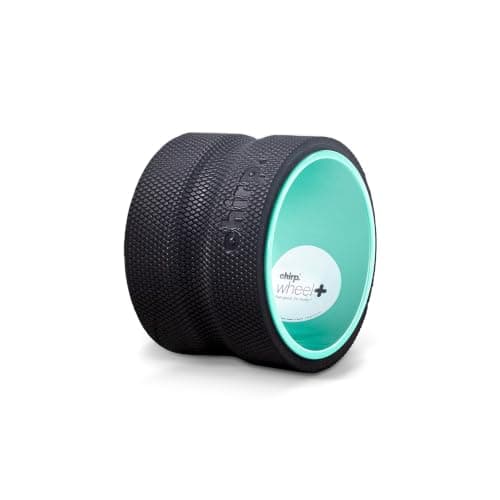
Product image from the Amazon listing.
Our verdict
Yes — the Chirp Wheel is worth it for the specific job it does: relieving thoracic-spine tension in the mid and upper back safely and effectively at home. The central spinal groove is a real design innovation that makes rolling on the back comfortable where a foam roller isn't, the FDA registration and chiropractor endorsements aren't marketing fluff, and the 3-pack lets you scale intensity as your back adapts. Not the right tool for lower back pain, not a replacement for professional care of acute injuries, but for the specific problem of chronic mid-back tightness from desk work or moderate lifting, this is the specific tool that solves it. Start with the 12-inch, use it consistently, and pair with proper posture and mobility work for lasting results.
The short version
Chirp Wheels (formerly the Plexus Wheel) are the specific back roller that turned this whole category from niche yoga gear into a Best Buy and Amazon best-seller. What makes them different from a foam roller is a central 5-inch cutout that runs along the spine, so the wheel massages the muscles alongside the spinal column while leaving the vertebrae themselves untouched — that's what makes them safe and comfortable where a standard round foam roller feels sharp and bony. They come in three sizes (6-inch for deep, targeted pressure; 10-inch for medium stretch; 12-inch for gentle full-back use), and Chirp sells all three in a set that lets you scale intensity as your back adapts. FDA-registered as a Class 1 medical device, real chiropractor endorsements, and thousands of positive Amazon reviews for tightness in the mid and upper back specifically.
Pros & cons
Pros
- Central spinal groove protects vertebrae during rolling
- FDA-registered as a Class 1 medical device
- Three sizes let you scale intensity (6", 10", 12")
- Durable EVA foam over a rigid plastic core
- Rated for 500+ lbs of body weight — no weight limit issues
- Chiropractor and physical therapist endorsements
Cons
- Steep learning curve — first-timers often go too aggressive
- Not designed for lower back (thoracic spine only)
- 6-inch wheel is intense and not for beginners
Why people love it
Central spinal groove
A 5-inch cutout runs along the middle of each wheel, aligning with the spinal column so the vertebrae don't take direct pressure — only the paraspinal muscles get worked.
Pick the right size for the intensity
12-inch wheel = gentle, full-back stretch (start here). 10-inch wheel = medium pressure, medium-length rolls. 6-inch wheel = targeted deep tissue on specific knots. Progress through sizes as your back adapts.
Roll along the thoracic spine
Place the wheel behind your shoulder blades and roll up and down between your neck and the bottom of your ribcage — the thoracic spine region. Never use on the lower back or lumbar region.
Who it's for
- Desk workers with mid-back and upper-back tension
- Lifters with thoracic tightness after heavy sets
- Anyone whose foam roller hurts too much on their spine
- People who can't afford regular chiropractic visits
Why the Chirp Wheel became the specific back-relief tool chiropractors keep recommending
Back rollers as a category existed for decades before Chirp launched, but they were mostly niche yoga props and never crossed into mainstream health-and-wellness marketing. What changed with the Chirp Wheel (originally the Plexus Wheel before rebranding) was the specific design element that made the tool genuinely different from a foam roller: the 5-inch central spinal groove. On a standard round foam roller, when you roll on your back, the hard cylinder presses directly against your vertebrae — which feels sharp, uncomfortable, and can actually irritate the vertebrae themselves. That direct-vertebral pressure is why so many people try foam rolling their back once, find it painful, and give up.
The Chirp's central cutout means when you roll along your spine, the vertebrae drop into the groove and only the paraspinal muscles (running alongside the spine) get worked. This is what makes the tool safe and comfortable for actual regular use, and it's why chiropractors and physical therapists actually endorse it — it addresses paraspinal tension without the risk of pressing directly on the vertebrae. Combine that with FDA registration as a Class 1 medical device, a rigid plastic core rated for 500+ lbs of body weight, and multiple sizes for scaled intensity, and you have a category-defining product. It's not just a foam roller with a hole in it; the geometry is the whole point.
Building a real thoracic-spine recovery routine with the Chirp Wheel (and what desk workers need to know)
Most people who buy a Chirp Wheel are desk workers with rounded shoulders, forward head posture, and constant mid-back tension. The specific problem they're solving: 8+ hours a day of hunched-over sitting causes the paraspinal muscles between the shoulder blades to lengthen and weaken, while the pectoral muscles in the front of the chest shorten and tighten. The result is chronic mid-back ache that never really goes away and gets worse in the evening. The Chirp Wheel addresses the mid-back symptom, but the full fix requires three things: rolling with the Chirp (5-10 min daily), stretching the pec muscles (doorway pec stretches, 30 seconds each side, 3-4 times daily), and strengthening the mid-back (rows, face-pulls, wall angels, 2-3 times per week). Doing only the rolling temporarily relieves symptoms; doing all three fixes the underlying pattern.
For the rolling routine specifically: warm up first (2-3 minutes of walking or light stretches), start with the 12-inch wheel and roll gently from shoulder blades to bottom of rib cage for 3-5 minutes, progress to targeted work on tight spots with slow, controlled movement. Never bounce or force through pain. If you feel an area 'give' or release, spend 20-30 seconds on that spot, then move on. Finish with 2-3 minutes of gentle stretching (child's pose, cat-cow, doorway pec stretches). Combine with a standing desk like the FlexiSpot E7 for actual posture improvement during the workday — the Chirp addresses accumulated tension, but sitting less is the long-term fix. If you're not a candidate for a standing desk, at least stand up and stretch every 45 minutes, and when you do have to sit for hours (long flights, road trips, stadium seats), a foldable air-cell Sondur travel seat cushion lifts weight off the tailbone and lumbar area so you're not undoing the day's rolling work in an economy seat.
Chirp Wheel vs Backpod vs Theracane vs professional chiropractor: what tool matches what problem
Different back-relief tools solve different specific problems. The Chirp Wheel is best for thoracic-spine paraspinal muscle tension and general mid-back tightness from desk work or moderate lifting — the daily-recovery tool. The Backpod is a smaller, harder targeted tool for the specific mid-back-between-the-shoulder-blades area — better for targeted rib-cage mobility work but more uncomfortable to use. The Theracane is a hooked stick for reaching specific trigger points on your own (upper traps, glutes, shoulders) — the self-massage tool for spot work. Professional chiropractic (or physical therapy) is for structural issues, acute injuries, and problems that don't respond to self-care within 2-3 weeks.
For most desk-worker adults with generic mid-back tension, the Chirp Wheel is genuinely the right tool — it addresses the most common complaint pattern effectively and can be used daily without professional supervision. The Backpod is a legitimate second tool if you have specific rib-cage restriction. The Theracane is useful for spot work anywhere on the body. Professional chiropractic is worth investing in if your problem is acute, radiating, or hasn't responded to self-care. For chronic tension that responds to rolling, the Chirp is the most cost-effective long-term investment — one purchase, unlimited sessions, no appointment needed.
See Chirp Wheel on Amazon
Check the latest price, photos and buyer reviews on Amazon.
Check Price on Amazon →Sold and shipped by AmazonFrequently asked questions
Does the Chirp Wheel actually work for back pain relief?
For mid-back and upper-back (thoracic spine) tension specifically, yes — the Chirp Wheel is one of the most effective at-home tools for that specific problem. What it does is stretch and release the paraspinal muscles (the muscles that run alongside the spine) while the central groove protects the vertebrae themselves from direct pressure. For desk workers with rounded shoulders, lifters with post-workout tightness, and anyone with 'my mid-back hurts and it's not sharp' complaints, 5-10 minutes of daily Chirp Wheel work often produces significant relief within a week. What it doesn't do: fix acute back injuries, replace physical therapy for structural issues, or relieve lower back pain (the Chirp is not designed for lumbar use — see the manufacturer's guidance on this). If your back pain is sharp, radiating, or persisting over weeks, see a doctor or physical therapist before trying self-treatment.
Which Chirp Wheel size should I start with — 6", 10", or 12"?
Start with the 12-inch wheel unless you have specific reasons to go smaller. The 12-inch gives a gentle full-back stretch and is genuinely comfortable for beginners; the 10-inch is medium intensity for people who've adapted to the 12-inch and want more targeted work; the 6-inch is intense deep-tissue for specific knots and is uncomfortable to painful for beginners. The 3-pack is genuinely the smart buy for most people — start with the 12-inch for 2-3 weeks, add the 10-inch when the 12-inch feels too easy, and use the 6-inch for targeted spot work on specific tight areas after warming up on the larger wheels. Skipping straight to the 6-inch is the most common beginner mistake and often causes people to give up on the Chirp entirely.
Chirp Wheel vs foam roller vs massage gun: which back-relief tool should I buy?
Different tools for different problems. Foam roller (typical 6-inch round): best for legs, hips, glutes and IT band — general full-body use. On the back it works but presses directly on the spine, which is uncomfortable and less effective. Chirp Wheel: specifically designed for thoracic spine — the central groove is the whole point. Best for mid-back and upper-back tension where a foam roller feels bony. Massage gun (Theragun, Hypervolt): best for spot-targeting specific muscle knots and areas you can reach with your hands (calves, quads, shoulders, forearms). Doesn't work well for the mid-back area you can't reach yourself. Pick foam roller for legs and general use, Chirp Wheel for the mid-back, Theragun Mini for spot work on legs/arms/neck. Most serious users own all three.
Can I use the Chirp Wheel on my lower back?
No, and this is important. The Chirp Wheel is specifically designed for the thoracic spine (mid-back and upper-back). The lower back (lumbar spine) is not designed to bend backward the way the mid-back can, and putting a hard wheel under the lumbar region can cause pain, hyperextension injury, or worsen existing lower-back issues. If your pain is in the lower back, use different tools: a lumbar traction device (like the Lumbo or Backpod), a professional-grade decompression brace, or see a physical therapist. Some Chirp Wheel users report gentle relief using the 12-inch wheel at the very bottom of the thoracic spine (T12-L1 junction), but this is not the recommended use. For lower back pain, this isn't the right tool.
How often should I use the Chirp Wheel, and how long per session?
Start with 5 minutes 3-4 times per week for the first 2 weeks, working up to 10 minutes daily as your body adapts. More is not better — the paraspinal muscles and connective tissue need recovery time between sessions, and overuse causes soreness that mimics the original problem. Best time: after a warm shower (muscles are warmer and more pliable) or before bed (helps release the day's accumulated tension). Avoid using cold, and avoid using immediately after eating a big meal (uncomfortable). If you experience acute pain during use, stop immediately and rest for a day — soreness is normal, pain is not. Consistency over 3-4 weeks produces better results than infrequent long sessions.
Is the Chirp Wheel worth it, or should I just get a $10 foam roller?
For general full-body rolling — legs, glutes, IT band, calves — a standard $10-20 foam roller is the right tool. For mid-back and upper-back tension specifically, the Chirp Wheel's central spinal groove is a real design advantage that a foam roller can't replicate. If you have specific thoracic-spine tightness (from desk work, lifting, poor posture) and you've found that foam rollers hurt your back to use, the Chirp is worth the price. If you don't have specific back issues and are shopping for a general recovery tool, a foam roller and a Theragun Mini covers 90% of use cases at similar total cost. Pair the Chirp with hot magnesium baths (a bag of Dr. Teal's Epsom salt is the classic wind-down) for a genuinely effective at-home recovery routine.
What about a wearable patch for pain that a foam wheel can't reach?
The Chirp Wheel is the sit-down tool for mid-back tension you can address with time and floor space. For pain that flares while you're already up and moving — a nagging low-grade backache during a work meeting, a shoulder that aches while driving, a joint that acts up mid-round of golf — a wear-and-forget drug-free option like the Kailo pain-relief patch slots in nicely. You stick it on the sore area under your clothes, it stays put, and it gives targeted relief without another pill or another rolling session. Many people who use the Chirp Wheel daily also keep a Kailo on hand for the times they can't stop and roll.
As an Amazon Associate, TopCrate earns from qualifying purchases at no extra cost to you. The Chirp Wheel is a wellness and recovery tool; consult a doctor or physical therapist for acute or persistent back pain. Never use on the lower back / lumbar spine. Product image, price, availability and ratings are shown on Amazon and are subject to change.