TRENDING ON AMAZON
La Roche-Posay Anthelios Melt-In Milk Sunscreen SPF 60 Review: Is It Worth It?
The chemical sunscreen most dermatologists reach for personally — invisible on skin, no white cast, elegant enough to wear under makeup or on its own, and the specific SPF that finally made daily sunscreen tolerable.
Quick answer: Yes — La Roche-Posay Anthelios is the specific sunscreen that most people should buy for daily face use, and it earns its dermatologist-favorite reputation. The elegant texture, invisible finish across all skin tones, no eye sting, and compatibility with makeup make it the SPF that people actually use daily rather than abandon after a week. Not the cheapest option, and not for people specifically wanting mineral filters — but for the target audience of 'I want to commit to daily SPF and need a product that doesn't fight me,' Anthelios is the answer. Pick the Melt-In Milk for dry skin, Invisible Fluid for combination, Ultra Fluid for very oily. Apply generously (more than you think), reapply every 2 hours in direct sun, and expect measurably better skin outcomes over years.
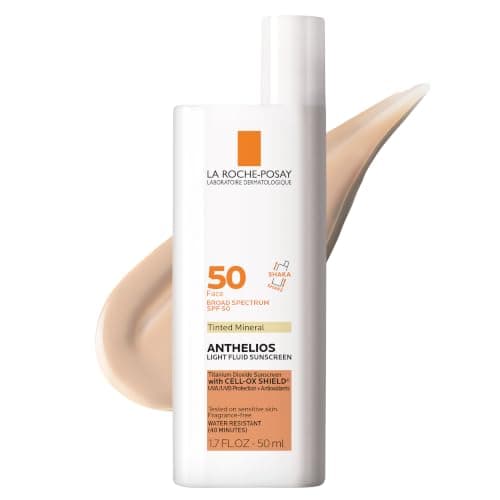
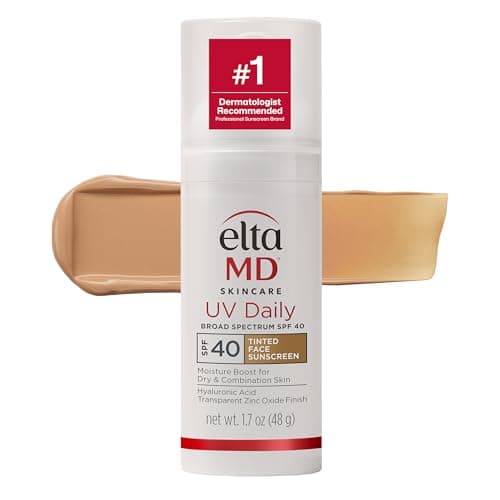
Product image from the Amazon listing.
Our verdict
Yes — La Roche-Posay Anthelios is the specific sunscreen that most people should buy for daily face use, and it earns its dermatologist-favorite reputation. The elegant texture, invisible finish across all skin tones, no eye sting, and compatibility with makeup make it the SPF that people actually use daily rather than abandon after a week. Not the cheapest option, and not for people specifically wanting mineral filters — but for the target audience of 'I want to commit to daily SPF and need a product that doesn't fight me,' Anthelios is the answer. Pick the Melt-In Milk for dry skin, Invisible Fluid for combination, Ultra Fluid for very oily. Apply generously (more than you think), reapply every 2 hours in direct sun, and expect measurably better skin outcomes over years.
The short version
The single biggest gap between what dermatologists recommend and what most people actually do daily is sunscreen — and the reason is texture. Most SPF 30+ sunscreens have historically been thick, greasy, white-casting or eye-stinging enough that daily use is a chore. La Roche-Posay Anthelios changed that. The Melt-In Milk SPF 60 (and its sister Invisible Fluid formulations) are chemical sunscreens engineered to feel like an elegant lotion — absorbs in 30 seconds, no white cast on any skin tone, no eye sting, layers cleanly under makeup or on bare skin, and delivers broad-spectrum SPF 60 protection with fragrance-free, water-resistant formulation. Dermatologists routinely name it as the specific SPF they use themselves, and Amazon reviews across skin tones and sensitivities confirm the same. Cost is moderate ($30-40 for a 5 oz tube), but this is genuinely the specific product that finally makes daily broad-spectrum SPF a habit instead of a chore. If you've bounced through cheap SPFs that left your face white or greasy and gave up on daily sunscreen, this is the specific product that fixes that.
Pros & cons
Pros
- Broad-spectrum SPF 60 chemical filter — genuine sun protection
- Invisible finish on every skin tone (no white cast, no ashiness)
- Elegant texture absorbs in 30 seconds under makeup or bare
- Fragrance-free formulation safe for sensitive and reactive skin
- Water-resistant up to 80 minutes for beach and outdoor use
- Dermatologist-recommended enough to be a category standard
Cons
- Chemical filters (not mineral) — not for people who prefer physical SPF
- 5 oz tube costs $30-40 — premium pricing per ounce
- Absorbs quickly but a large amount is needed for the full SPF claim
Why people love it
Apply as the final AM skincare step
After your morning cleanser, serum and moisturizer, dispense a generous nickel-sized amount for the face and neck. This is more than most people instinctively use — full SPF protection requires this dosage.
Spread evenly and let absorb 60 seconds
The Melt-In Milk formula rubs in without white cast and settles quickly. Wait 60 seconds for full absorption before applying makeup — this prevents any pilling or lift when foundation goes on top.
Reapply every 2 hours in direct sun
Water-resistant for 80 minutes at the pool or beach; general outdoor use requires reapplication every 2 hours. For daily indoor use with occasional sun exposure (commute, lunch outside), single AM application is usually sufficient.
Who it's for
- Anyone whose current SPF is too thick or leaves a white cast
- Daily-use SPF that layers under makeup
- Sensitive skin, rosacea, actives-user (retinol, tretinoin)
- Beach and pool goers needing genuine water-resistant protection
Why sunscreen compliance is the single biggest gap in skincare (and how texture fixed it)
Dermatologists have known for 30+ years that daily broad-spectrum sunscreen is the single most impactful product for long-term skin health — more impact on aging, hyperpigmentation, and skin cancer prevention than any serum, retinol or in-office treatment combined. Multiple prospective studies show that daily SPF use over 4-5 years produces measurably younger-looking skin (fewer wrinkles, more even pigmentation, better texture) than any topical anti-aging active. Yet compliance has always been terrible. Studies consistently show only 15-25% of adults use daily facial sunscreen even when they know they should, and the primary reason isn't lack of information — it's that most sunscreens have been unpleasant to wear.
La Roche-Posay's decades-long project with Anthelios has been specifically to close this compliance gap through better texture engineering. The Anthelios formulations use European-approved sunscreen filters (Mexoryl SX/XL) that the US market didn't have for years, plus proprietary emulsion technology, plus obsessive iteration on how the product feels on skin. The result is a chemical SPF that feels like an elegant serum — invisible finish, no eye sting, no white cast, and it plays beautifully under makeup. This is genuinely why dermatologists recommend it: it's the specific product that patients actually use daily after being prescribed daily SPF. The cost differential vs cheap drugstore SPF is real ($30-40 vs $10-15), but the outcome differential is enormous: 365 days of actual SPF wear vs 30-60 days of grudging use before giving up. If you've historically bounced through cheap sunscreens and abandoned daily SPF because 'they all feel gross,' Anthelios is the specific solution to that specific problem.
Building a full sun-protection routine (and where sunscreen alone isn't enough)
Sunscreen is the foundation, but it's not a complete strategy for anyone spending real time outdoors. The full stack: (1) Daily broad-spectrum SPF 30+ (Anthelios or equivalent) applied every morning to face, ears and neck. This handles baseline daily UV exposure — commuting, outdoor lunch, errands. (2) Physical sun protection during outdoor time: wide-brim hat (dermatologists love the classic wide-brim UPF fedora), UPF 50 clothing for extended outdoor exposure, and sunglasses with UV protection for eye and eye-area skin. (3) Timing awareness: UV intensity peaks between 10 AM and 4 PM; whenever possible, schedule outdoor activities before or after peak. (4) Reapplication discipline: every 2 hours during outdoor time, and always after swimming or heavy sweating. For beach and pool days, the reapplication step is non-negotiable — a single morning application delivers about 25% of the total sun exposure protection the day requires.
For skin-cancer prevention specifically, add annual dermatologist skin checks (especially for anyone over 30, fair-skinned, or with family history), and know the ABCDE moles rule (Asymmetry, Border irregular, Color varied, Diameter over 6mm, Evolving over time). For hyperpigmentation and melasma prevention: strict daily SPF is the single most impactful action, plus avoiding UV exposure during peak hours entirely if you're prone to sun-triggered pigmentation. For anti-aging: pair daily SPF with a nighttime retinoid like The Ordinary Retinol or Naturium Multi-Peptide — SPF prevents new damage; retinoids and peptides help repair existing damage. The combination over 5-10 years produces measurably better outcomes than either alone. Under-eye sun exposure specifically causes fine lines that eye creams can't fix — always extend SPF application under and around the eyes, and add sunglasses whenever outdoor for extended time.
The honest limitations of Anthelios (and when to use something else)
Anthelios isn't a universal solution. Where it's not the right pick: (1) People who specifically want mineral (physical) sunscreens for pregnancy, chemical sensitivity, or personal preference — use La Roche-Posay Anthelios Mineral Tinted, EltaMD UV Clear (contains niacinamide), or Blue Lizard Sensitive. (2) Very oily or acne-prone skin that finds even Invisible Fluid too rich — try Supergoop Unseen Sunscreen (silicone-based, mattifying) or Biore UV Aqua Rich (Korean, mattifying). (3) Very sensitive skin that reacts to chemical filters — mineral is the safer route; try EltaMD UV Physical or Vanicream Sunscreen. (4) People wanting tinted SPF for makeup-substitution purposes — Anthelios Mineral Tinted works, but for true tinted-sunscreen-as-foundation use, Ilia Super Serum Skin Tint SPF 40 or Charlotte Tilbury Invisible UV Flawless Poreless are better options. (5) Extended outdoor use where water resistance matters most — Anthelios Water Resistant is genuine but Coppertone Sport, Neutrogena Beach Defense or Blue Lizard Sport are engineered specifically for sports use.
Where Anthelios is the right pick: daily-wear face SPF for combination, normal, and dry-to-normal skin types where elegant texture drives compliance. It's the specific product that solves the 'I know I should wear SPF daily but they all feel gross' problem, and it does so better than almost any other single product on the market. For $30-40 every 2-3 months of daily use, you're buying reliable daily broad-spectrum protection with a texture that doesn't fight you. For most people who care about their skin health long-term but haven't been able to commit to daily SPF because of texture issues, Anthelios is the specific solution — and dermatologists' near-universal recommendation is exactly why it deserves the reputation. Pair with the CeraVe Hydrating Cleanser and Neutrogena Hydro Boost for a genuinely dermatologist-approved daily routine that costs under $100 total for 2-3 months of use.
See La Roche-Posay Anthelios on Amazon
Check the latest price, photos and buyer reviews on Amazon.
Check Price on Amazon →Sold and shipped by AmazonFrequently asked questions
Anthelios Melt-In Milk vs Invisible Fluid vs Anthelios Ultra: which formulation should I buy?
The Melt-In Milk SPF 60 is the flagship — thickest coverage, most water-resistant, best for dry-to-normal skin and outdoor use. The Invisible Fluid SPF 50+ is the go-to for combination and oily skin — lighter, faster-absorbing, better under makeup, but slightly less rich moisturization. The Anthelios Ultra Fluid SPF 60 (also called Anthelios Ultra Light Fluid) is a lightweight liquid formulation — the pick for very oily skin or hot climates where any richness feels greasy. Which to buy depends on skin type: dry-to-normal skin, cool climate → Melt-In Milk. Combination-to-oily, moderate climate → Invisible Fluid. Very oily, hot/humid climate → Ultra Fluid. If you're not sure and don't fall in an extreme, Invisible Fluid is the safest first-purchase — it works for most skin types and layers cleanly under any makeup. All three deliver equivalent SPF protection; only texture and finish differ.
Is La Roche-Posay Anthelios actually better than cheaper drugstore sunscreens?
Yes, and specifically for daily-wear texture and finish. Cheaper drugstore SPFs (Neutrogena Beach Defense, Coppertone Sport, Banana Boat) often deliver equivalent raw SPF protection but with textures that make daily use unpleasant — greasier, whiter, more likely to sting eyes, harder to layer under makeup. What you pay for with Anthelios is the elegant texture and formulation refinement, which translates directly into 'you actually apply it every day.' A $10 sunscreen you don't use because it's unpleasant delivers 0 SPF; a $35 sunscreen you happily use daily delivers full advertised SPF. For occasional beach or pool use where texture matters less, cheaper drugstore options are fine. For daily face SPF (which is what dermatologists actually want you to commit to), Anthelios is worth the premium because you'll actually use it. The Korean beauty market and dermatologist recommendations both converge on this: elegant texture drives compliance, and compliance drives skin outcomes.
Is Anthelios safe? What are chemical vs mineral sunscreens?
Anthelios uses chemical (organic) sunscreen filters — Mexoryl SX/XL, avobenzone, ecamsule and others — which absorb UV radiation and convert it to heat, releasing it from the skin. Chemical filters have been used for decades and have well-established safety data. The persistent internet claim that chemical sunscreens cause harm hasn't been substantiated by major dermatology organizations. Mineral sunscreens (using zinc oxide, titanium dioxide) work by reflecting UV physically; they're an alternative for people who prefer non-chemical filters, but they typically have thicker texture and more white cast — the trade-off Anthelios chemical formulation specifically avoids. For pregnant users or those specifically wanting mineral: La Roche-Posay also makes Anthelios Mineral Tinted Sunscreen with zinc oxide. For most healthy adults, either mineral or chemical is safe; the deciding factor is texture and skin tolerance. Anthelios is dermatologist-recommended precisely because its chemical formulation delivers elegant texture without compromising sun protection.
How much should I apply, and how often?
For face and neck: about half a teaspoon (or a full nickel-sized dollop) is the amount needed for the full SPF 60 protection claim. Most people underapply sunscreen dramatically — using a quarter to a third of what's needed — and functionally get 15-25% of the labeled SPF as a result. When you buy Anthelios, plan to use it more generously than you're used to. A 5 oz tube should last about 2-3 months of daily face application for one person; if it lasts significantly longer, you're underapplying. For daily indoor use with occasional sun exposure (commute, outdoor lunch, quick errands), single AM application is usually sufficient. For actual outdoor time (beach, pool, gardening, sports), reapply every 2 hours — sunscreen breaks down under UV exposure and sweats off. Water-resistant claim is for 80 minutes of immersion; after swimming, always reapply. Apply 15-30 minutes before sun exposure so it can fully absorb and bond to skin before you hit the sun.
Can I use Anthelios under makeup, and will it cause pilling?
Yes, it layers under makeup better than almost any other sunscreen, but the technique matters. Apply Anthelios and let it fully absorb (60-90 seconds) before applying any foundation, tinted moisturizer, or primer. If you apply makeup while sunscreen is still tacky, pilling and lift are guaranteed. The other pilling cause is layering incompatible bases: silicone-based primers can clash with the water-based Anthelios formula. If you're primer-forward, use a water-based primer, or apply primer before Anthelios (which is often preferred). Best sequence: skincare (cleanser, serum, moisturizer), wait 5-10 minutes for absorption, Anthelios (wait 60-90 seconds), primer if using, makeup. For minimal-makeup days: skincare, Anthelios, tinted moisturizer or a light BB cream, done. Anthelios plays especially well with the Charlotte Tilbury Flawless Filter and other water-based skin tints. It's less compatible with heavy, silicone-forward foundations — those may pill without careful technique.
How does Anthelios compare to Korean sunscreens like Beauty of Joseon or Round Lab?
Korean sunscreens have become the daily-wear texture benchmark that Western brands like La Roche-Posay compete with. Beauty of Joseon Relief Sun Rice + Probiotics SPF 50 is the K-beauty gold standard — extraordinarily elegant texture, dewy finish, blends invisibly into all skin tones, and costs $15-20 per tube (dramatically cheaper than Anthelios per ounce). If your priority is daily-wear elegance and value, Beauty of Joseon is often the winner. Round Lab Birch Juice Moisturizing SPF is a close second. Where Anthelios still wins: water resistance (better for beach and outdoor use), higher SPF ratings (SPF 60 vs Korean brands' SPF 50), and easier availability in the US market (Anthelios is stocked at every major US drugstore; Korean sunscreens require Amazon or specialty retailer purchase). For pure everyday daily SPF, Korean sunscreens have arguably surpassed Western equivalents in texture. For water-resistant outdoor use and pharmacy availability, Anthelios still wins. Many users own both — Beauty of Joseon for daily face wear, Anthelios for beach and pool days.
La Roche-Posay sunscreen review: is Anthelios really the one dermatologists use themselves?
Yes, and the reason it earns that reputation is the combination of three things most sunscreens sacrifice at least one of: real broad-spectrum SPF 60 protection with modern chemical filters (including Mexoryl), an elegant texture that absorbs in 30 seconds without a white cast on any skin tone, and a fragrance-free formulation safe enough for reactive, rosacea-prone and retinoid-using skin. Dermatologists reach for it personally because it's the specific SPF that makes daily broad-spectrum use a habit instead of a chore — which is what actually drives long-term skin outcomes. Amazon reviews across skin tones, sensitivities and use cases keep converging on the same verdict. Pay a bit more per ounce, use it every day, and it's the sunscreen you don't regret.
Are there any reviews or testimonials about La Roche-Posay sunscreens from people with oily skin?
Yes — Amazon reviews from oily-skinned buyers are consistent across all three Anthelios formulations, and the takeaway is that formulation choice is what makes or breaks the experience. Oily-skinned reviewers overwhelmingly recommend the Anthelios Ultra Fluid SPF 60 (also sold as Anthelios Ultra Light Fluid) and the Invisible Fluid SPF 50+ over the richer Melt-In Milk. Common phrases in oily-skin reviews: 'doesn't feel greasy at all,' 'controls shine better than my previous SPF,' 'my foundation actually stays on top of it,' and 'no midday breakthrough oil like other sunscreens.' Where oily-skin reviewers push back: a small minority report that even the Ultra Fluid feels slightly emollient in very humid climates (Florida, Southeast Asia); for those users, Supergoop Unseen Sunscreen (silicone-based, mattifying) or a Korean pick like Biore UV Aqua Rich is the harder-mattifying alternative. The other common oily-skin complaint is under-eye pilling with makeup — solved by giving Anthelios a full 60-90 seconds to absorb before foundation goes on. For acne-prone oily skin specifically, Anthelios is non-comedogenic and fragrance-free, which the acne community also confirms in long-term reviews. Rule of thumb: skip Melt-In Milk if you're oily, pick Ultra Fluid for very oily or humid climates, and Invisible Fluid for combination-oily in moderate climates. Pair it with an oil-controlling AM routine like Paula's Choice 2% BHA to keep pores clear underneath — the two together are the specific combination oily-skinned dermatology patients most often report using.
As an Amazon Associate, TopCrate earns from qualifying purchases at no extra cost to you. Contains chemical sunscreen filters. Patch-test if you have very sensitive skin. Not a substitute for physical sun protection (hats, clothing, shade) for extended outdoor exposure. Product image, price, availability and ratings are shown on Amazon and are subject to change.
More reviews you might like
SKINCARE
Celimax Vita-A Retinal Shot Review: Best K-Beauty Retinal for Sensitive Skin?
SPORTS
Body Glide Original Review: The Anti-Chafe Balm That Actually Works
SKINCARE
Foreo Luna Mini 3 Review: Is the Silicone Cleansing Brush Worth It?
SKINCARE