TRENDING ON AMAZON
Kitsch Satin Pillowcase with Zipper for Hair & Skin Review: Is It Worth It?
The satin pillowcase that reduces hair frizz, breakage and morning sleep lines at a fraction of the cost of silk — 3.6 million+ sold, machine washable, and dozens of colors.
Quick answer: Yes — Kitsch satin pillowcase reviews are right: it's actually good, and specifically good enough that 3.6 million units sold isn't marketing hype. At $15-20 for machine-washable satin that reduces hair frizz, prevents morning sleep lines, and keeps your skincare on your face instead of your pillow, it's one of the highest-return hair-and-skin upgrades you can make. Not identical to real silk, but delivers 80% of the benefit at 20% of the cost — the mainstream answer for anyone curious about satin/silk pillowcases without spending $85+ upfront on [Slip](/reviews/slip-silk-pillowcase).
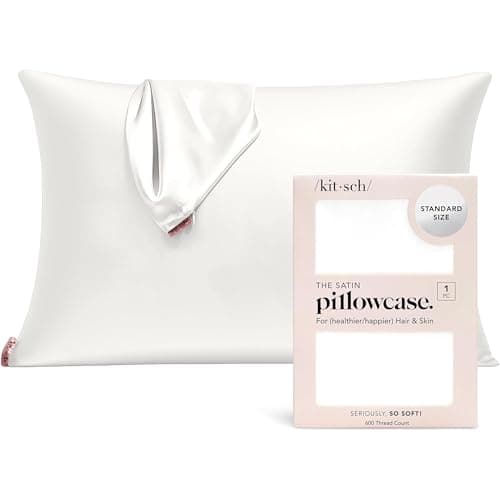
Product image from the Amazon listing.
Our verdict
Yes — Kitsch satin pillowcase reviews are right: it's actually good, and specifically good enough that 3.6 million units sold isn't marketing hype. At $15-20 for machine-washable satin that reduces hair frizz, prevents morning sleep lines, and keeps your skincare on your face instead of your pillow, it's one of the highest-return hair-and-skin upgrades you can make. Not identical to real silk, but delivers 80% of the benefit at 20% of the cost — the mainstream answer for anyone curious about satin/silk pillowcases without spending $85+ upfront on [Slip](/reviews/slip-silk-pillowcase).
The short version
Kitsch has sold over 3.6 million satin pillowcases, which is the kind of scale you only reach when a product solves a real problem cheaply. The pillowcase itself is soft polyester satin — smoother than cotton by a large margin — that reduces friction against your hair while you sleep. In practical terms, this means noticeably less morning frizz, fewer split ends and breakage from hair snagging on cotton, no more morning bedhead crease lines on your cheeks (from face-planting into a cotton pillow), and the case stays cooler through the night. It's not real silk (that's the pricier alternative like Slip), and honest reviewers point out the polyester feel isn't identical to silk. But for $15-20 vs $85+ for silk, and machine-washable versus hand-wash-only, it's the accessible everyday option that captures 80% of the benefit for 20% of the price.
Pros & cons
Pros
- Reduces hair frizz and breakage overnight
- Prevents morning sleep lines on cheeks
- Machine washable — silk pillowcases usually aren't
- 20+ colors including neutrals and jewel tones
- Cool to the touch — good for hot sleepers
- Zipper closure keeps the case in place
Cons
- Not real silk (softer than cotton, less than Slip)
- Slippery — some pillows shift under it
- Cheaper versions on Amazon are lower quality
Why people love it
Slip it on your standard or queen pillow
Kitsch pillowcases fit standard (19x26 in) and queen (20x30 in) pillows. The full-length zipper closes on one side so the case stays put.
Sleep normally
The smooth satin surface reduces friction between hair, skin and pillow — no snagging, no crease lines, no morning frizz.
Wash weekly with regular laundry
Machine wash cold on gentle cycle, tumble dry low or hang to dry. The satin is much easier to care for than silk (which typically requires hand-washing).
Who it's for
- Anyone with curly, wavy or fine hair prone to frizz
- People who wake up with cheek sleep-line creases
- Sensitive-skin sleepers
- Silk pillowcase curious but not ready for $80+
Why 3.6 million satin pillowcases sold: what problem Kitsch actually solves
Kitsch has sold over 3.6 million satin pillowcases, which is scale you only reach when a product solves a genuine problem at an accessible price. The specific problem: cotton pillowcases (the default that most people sleep on without thinking about it) are actively bad for hair and skin. Cotton fibers are microscopically rough, cotton absorbs the natural oils and skincare products from your hair and face, and cotton creates the deep morning sleep lines on cheeks. For decades, the alternative was expensive real silk from luxury brands ($85-150+ per case, hand-wash only) — which meant satin/silk pillowcases were an aspirational item that most people never actually bought.
Kitsch's insight was that most of the hair-protection and sleep-line benefits of silk come from the smooth surface texture, not the specific fiber, and that polyester satin delivers that smoothness at 20% of the cost with easier care. They then made the satin case available in 20+ colors (matching various bedroom aesthetics), included a zipper closure so it stays in place, and priced it as an impulse-buy at $15-20 rather than a luxury purchase. The result is that satin pillowcases went from a hair-forum recommendation to a mainstream haircare basic. For anyone who has curly hair that gets frizzy overnight, long hair that tangles, or a skincare routine they don't want their pillow to absorb, the switch pays off within one week. Pair with a proper Casper Original pillow or Coop Home Goods adjustable pillow underneath and the Kitsch case slides on cleanly and stays put via the zipper.
Satin vs silk vs cotton pillowcases: what actually works and what's marketing
The three-way comparison people actually face, with the honest breakdown of each. Cotton is the default that most people sleep on: cheap, breathable, easy to wash, and specifically bad for hair (friction breakage, frizz), somewhat bad for skin (absorbs skincare, causes deep sleep lines), and hot for hot-sleepers. Cotton is fine if you have short easy hair, don't care about morning frizz, and don't have a skincare routine. For everyone else, upgrading is worth it.
Polyester satin (Kitsch, Bedsure, most Amazon options) is the affordable upgrade: smooth enough surface to deliver most of the hair and skin benefits, machine washable, cheap, comes in colors. The downsides are that polyester isn't as breathable as silk (some hot sleepers still find it warm), the specific feel is slippery-smooth rather than truly luxurious, and cheaper knockoffs have real quality issues (uneven weaves, weak zippers). Real mulberry silk (Slip is the market leader, plus some smaller premium brands) is the top tier: naturally cooling, most breathable, best hair and skin benefits, longest-lasting when cared for. But it's $85-150 per case, requires delicate laundry care, and shows wear over years even with proper care. For most people the right answer is: switch from cotton to Kitsch satin as the low-risk upgrade that pays off immediately. If you love it after a year and have the budget, upgrade to Slip silk for your primary bed and keep the satin for guest beds and travel. Skip claims about 'copper-infused' or 'anti-aging' pillowcases — the marketing outpaces the actual evidence for those additions.
Building a full haircare-and-skincare bedtime routine around a satin pillowcase
A satin pillowcase is one leg of a three-legged stool for overnight hair and skin care. The other two legs multiply the benefit dramatically. First, a good overnight hair product: for straight and wavy hair, a light leave-in conditioner or an OUAI hair oil applied to damp hair before bed keeps hair from over-drying overnight and reduces morning tangling. For curly hair, a leave-in cream plus a satin-lined bonnet or pineapple hairstyle preserves curl definition. For color-treated or damaged hair, a weekly Olaplex No.3 or Kérastase mask on top of the routine repairs damage that the satin pillowcase prevents.
Second, an overnight skincare routine that leverages the pillowcase not absorbing products. Layer serums, moisturizers and any nighttime actives (retinol, peptides, hyaluronic acid) as normal, and finish with a heavier occlusive like Aquaphor healing ointment or a slugging balm. Cotton pillowcases would absorb 30-50% of that product overnight, but satin doesn't absorb it, so the products stay on your face working. This is one of the more meaningful skincare upgrades most people never consider. For lips specifically, a heavier Laneige Lip Sleeping Mask plus satin pillowcase means the mask stays on your lips all night instead of transferring to the pillow. Combined, the routine of leave-in hair product + skincare + slugging + satin pillowcase produces genuinely better-looking hair and skin within 2-4 weeks. And for the sleep quality itself, pair with a Manta blackout sleep mask or Yogasleep Dohm white noise machine and you've built a bedroom optimized for both beauty and rest.
See Kitsch Satin Pillowcase on Amazon
Check the latest price, photos and buyer reviews on Amazon.
Check Price on Amazon →Sold and shipped by AmazonFrequently asked questions
Is a satin pillowcase actually worth it?
Yes — especially if you have curly, wavy, fine, or color-treated hair. The core benefit is real: satin reduces friction between hair and pillow surface, which means less overnight breakage, less morning frizz, and hair that holds its style longer. Skin benefits are also real: less morning sleep-line creasing on cheeks, less absorption of nighttime skincare products by the pillowcase (which happens with cotton). The size of the benefit varies by person — people with very short hair or straight fine hair may see minimal difference; people with long curly hair or heavily-styled hair see dramatic overnight improvement. For $15-20, it's a low-risk upgrade with high payoff for the right hair type.
Kitsch satin pillowcase vs Slip silk pillowcase: is real silk worth 4x the price?
Depends on your priorities. Real mulberry silk (Slip is the market leader) has a genuinely different feel — silkier, more natural fiber, more breathable, and slightly more effective at hair protection. It also has skincare benefits (less product absorption, better temperature regulation) that satin doesn't fully match. But Slip pillowcases run $85-90 vs Kitsch's $15-20 — a 4-6x price difference. Real silk requires hand-washing or delicate cycle in a laundry bag; satin is machine washable normally. For casual users trying to protect their hair, Kitsch delivers 80% of the benefit for 20% of the price. For serious hair-care investment (professionally-colored hair, extensions, keratin treatments) or luxury feel, Slip silk is worth it. Own Kitsch for the extra bedroom, guest bed and travel — Slip for the primary bed if the budget allows.
Does the Kitsch pillowcase actually reduce hair frizz and breakage?
Yes, and there's a physical reason. Cotton pillowcase fibers are rough at the microscopic level, and hair strands snag on those rough fibers as you move your head during sleep. Over 6-8 hours of tossing and turning, this friction causes broken split ends and roughens the hair cuticle, which is what creates morning frizz. Satin (and silk) have much smoother surface fibers that hair slides across rather than snagging on. In practice: expect noticeably less morning frizz within the first week, less overnight tangling for long hair, hairstyles (blow-outs, curls, braids) that hold better through the night, and gradually reduced split ends over months of consistent use. For curly hair specifically, sleeping on satin extends the life of a curl definition by 1-2 days.
Does a satin pillowcase help with skin (wrinkles and acne)?
For sleep lines and morning creases: yes, meaningful improvement. Cotton creates deep temporary sleep lines on the cheek when you sleep face-down or side-sleeping, and over years these repeated creases can contribute to fine lines. Satin's smoother surface causes far less creasing. For actual wrinkle prevention: honest answer is unclear — most peer-reviewed research shows the main wrinkle drivers are sun exposure, smoking, and facial expression, not pillow contact. Satin probably helps at the margins. For acne: satin doesn't cause acne directly, but it also doesn't magically prevent it. If you're breaking out and blaming your pillowcase, the issue is more likely dirty pillowcases (wash weekly regardless of material), face-cream residue, or unrelated factors. Wash your satin pillowcase weekly and the acne question resolves for most people.
How do I wash the Kitsch satin pillowcase, and how long does it last?
Machine wash cold on gentle cycle with mild detergent, tumble dry low or hang to dry. Don't use fabric softener (it degrades satin fibers over time) or bleach (obviously). Iron on low if you want it perfectly smooth, but usually not necessary. Wash weekly (or after 5-7 nights of use) same as any pillowcase. Expected lifespan: 1-2 years of daily use before the satin surface starts to show wear, at which point the friction benefit drops and it's time to replace. Kitsch pillowcases are cheap enough ($15-20) that annual replacement isn't a major cost. Keep a rotation of 2-3 so you have a clean one available when one is in the wash.
Do Kitsch pillowcases fit standard and queen pillows?
Yes — Kitsch sells two main sizes: standard (19x26 inches, fits standard/queen pillows) and king (20x36 inches, fits king pillows). The zipper closure runs the full length of one side, which keeps the pillowcase from slipping off. If your pillow is unusually thick (memory foam or luxury down-alternative), the standard size might be a snug fit — check your pillow dimensions before ordering. For travel pillows, Kitsch also sells smaller travel-pillow satin covers separately. If you use a specialty pillow like a wedge or contour pillow, Kitsch's standard sizes may not fit properly, and a satin pillowcase specifically sized for your pillow style is a better choice.
Is the Kitsch satin pillowcase actually good, or is the hype overblown?
Is the Kitsch pillowcase good? Yes, and specifically for its price point it is one of the highest-return purchases in the affordable haircare category — but the 'good' is context-dependent, so honest reviewers should qualify it. Where Kitsch is genuinely good (worth every dollar): if you currently sleep on cotton and have any of curly hair, long hair, color-treated hair, morning frizz, morning cheek sleep-lines, or a bedtime skincare routine. In those cases the improvement is noticeable within a week — less frizz, less breakage, hairstyles that hold overnight, no more crease marks by breakfast. Where Kitsch is fine-but-not-life-changing: short easy hair, no skincare routine, back sleepers who don't press cheek into the pillow. Where Kitsch is not the right choice: you want true luxury feel and can afford the premium (get Slip real silk instead), you have very sensitive skin that reacts to synthetic fibers, or you're specifically buying for medical hair-loss protection where real mulberry silk performs marginally better. For roughly 80% of people who ask 'is it good?', the answer is a clear yes.
As an Amazon Associate, TopCrate earns from qualifying purchases at no extra cost to you. Product image, price, availability and ratings are shown on Amazon and are subject to change.
More reviews you might like
SKINCARE
Celimax Vita-A Retinal Shot Review: Best K-Beauty Retinal for Sensitive Skin?
SPORTS
Body Glide Original Review: The Anti-Chafe Balm That Actually Works
SKINCARE
Foreo Luna Mini 3 Review: Is the Silicone Cleansing Brush Worth It?
SKINCARE