TRENDING ON AMAZON
Aquaphor Healing Ointment Review: Is It Worth It?
A jar of petrolatum-based healing ointment that fixes everything from chapped lips and cracked heels to tattoos, eczema patches and windburn — the medicine cabinet MVP.
Quick answer: Yes — Aquaphor is good for face, but only used the right way: a thin layer at night on chapped, cracked, post-procedure or slugging-ready skin, not as an all-over daytime moisturizer under makeup. That targeted use is why the $10 jar quietly outperforms most $40 skincare — the 41% petrolatum formula does the one thing damaged skin most needs, seal in moisture so it can repair itself. It's the ointment dermatology offices, tattoo studios, pediatricians and makeup artists reach for by reflex. Not a lotion, not a daily face cream — a targeted healing ointment for chapped lips, cracked heels, new tattoos, eczema patches, windburn and anything else that needs to heal. Buy one jar, keep it forever.
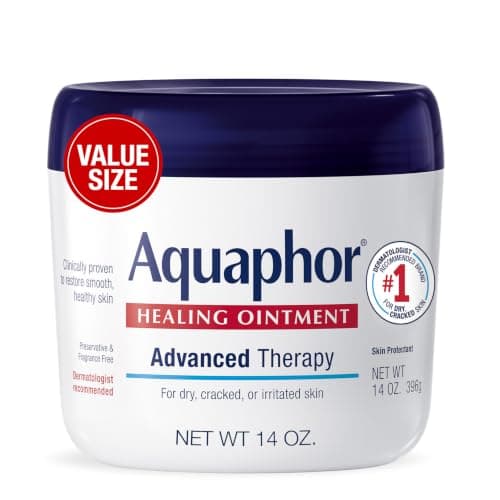
Product image from the Amazon listing.
Our verdict
Yes — Aquaphor is good for face, but only used the right way: a thin layer at night on chapped, cracked, post-procedure or slugging-ready skin, not as an all-over daytime moisturizer under makeup. That targeted use is why the $10 jar quietly outperforms most $40 skincare — the 41% petrolatum formula does the one thing damaged skin most needs, seal in moisture so it can repair itself. It's the ointment dermatology offices, tattoo studios, pediatricians and makeup artists reach for by reflex. Not a lotion, not a daily face cream — a targeted healing ointment for chapped lips, cracked heels, new tattoos, eczema patches, windburn and anything else that needs to heal. Buy one jar, keep it forever.
The short version
Aquaphor is the unofficial 'fix any skin problem' staple of dermatologists, tattoo artists, pediatricians and makeup artists. The 41% petrolatum formula creates a semi-occlusive seal that locks in moisture and lets skin repair itself underneath — which is why it's the recommended aftercare for everything from new tattoos and lip flips to baby diaper rash and post-procedure healing. It's also the cheapest, most-effective fix for chapped lips, dry cuticles, cracked heels and windburn winter cheeks. One jar in every bathroom, one tube in every bag.
Pros & cons
Pros
- Heals, soothes and seals — almost universally useful
- 41% petrolatum forms a semi-occlusive moisture barrier
- Trusted aftercare for tattoos, piercings, post-procedure skin
- Fragrance-free, dye-free, hypoallergenic
- Tube + jar sizes for bathroom, bag and travel
- Inexpensive — one of skincare's best dollar-for-dollar buys
Cons
- Greasy feel — it's an ointment, not a lotion
- Can clog pores if used as a face moisturizer
- Will stain fabric if you apply heavily before dressing
Why people love it
Clean the area
Wash with mild soap and pat dry — Aquaphor seals, so apply to clean skin you want to heal.
Apply a thin layer
A little goes a long way. Spread a thin layer over the area; thick globs aren't more effective and feel greasy.
Let it work
The ointment forms a semi-permeable seal that traps moisture in and lets your skin repair underneath. Reapply 2-3x daily.
Who it's for
- New tattoo and piercing aftercare
- Anyone with chapped lips, cracked heels or dry cuticles
- Babies with diaper rash
- Eczema patches and windburn season
What Aquaphor actually does — and why it's a dermatologist staple
Aquaphor's reputation comes down to a simple fact about how skin heals: skin repairs faster when it's kept moist than when it dries out and scabs over. That's the principle behind 'moist wound healing,' and it's why dermatologists have recommended petrolatum-based ointments for decades for everything from a healing tattoo to a postpartum nipple to a kid's scraped knee. Aquaphor's 41% petrolatum base creates a semi-occlusive seal — it locks water in but lets the skin underneath continue its repair work.
What makes it different from pure Vaseline is the supporting cast. Aquaphor adds glycerin (a humectant that pulls water into the skin), panthenol (provitamin B5, soothing and healing), and bisabolol (an anti-inflammatory derived from chamomile). The combination is why it earned the role of 'aftercare ointment' across so many specialties — it's not just sealing skin; it's actively encouraging it to repair. That's also why the jar costs about ten dollars and lasts months.
Every way to use Aquaphor (and the times you shouldn't)
The 'unofficial uses' list is what makes Aquaphor a medicine cabinet MVP. Chapped lips: thicker and more healing than any lip balm. Cracked heels and dry hands: apply before bed, wear cotton socks or gloves overnight, wake up with smooth skin. New tattoos: standard derm-recommended aftercare for the first 3-5 days. Cold-induced raw skin under the nose, windburn cheeks, baby diaper rash, ear-piercing aftercare, eczema flare spots — Aquaphor handles all of them.
Where it's the wrong tool is anywhere you don't want a sealing layer. Don't use it as a daily face moisturizer on oily or acne-prone skin — it can trap sebum and bacteria and trigger congestion. Don't use it on a fresh sunburn that needs to breathe, and don't slather it on before getting into white sheets unless you want a stained pillow. Use it as targeted skin first-aid, not a daily all-over moisturizer.
Aquaphor vs. Vaseline vs. CeraVe Healing Ointment
The petrolatum-ointment shelf has three classics, and they're aimed at slightly different jobs. Vaseline is 100% petrolatum — fully occlusive, the strongest seal, the slipperiest feel, and the cheapest. It's the right pick for raw 'slugging' overnight, for protecting against windburn, and for the absolute simplest barrier. Aquaphor adds the humectants and soothers, making it the better choice for active healing — tattoos, post-procedure, fresh wounds, baby skin. CeraVe Healing Ointment is the newer entrant, with ceramides added to the petrolatum base — great for eczema-prone skin that wants both a seal and barrier-rebuilding ingredients.
The honest answer for most people is one Vaseline tub and one Aquaphor jar covers the entire petrolatum job. Vaseline for slugging and lips on a budget, Aquaphor for actual healing situations where you want a little extra active help. CeraVe is the right upgrade only if eczema or chronic barrier issues are part of your story.
See Aquaphor on Amazon
Check the latest price, photos and buyer reviews on Amazon.
Check Price on Amazon →Sold and shipped by AmazonFrequently asked questions
What's the difference between Aquaphor and Vaseline?
Vaseline is pure petrolatum — fully occlusive, meaning nothing in, nothing out. Aquaphor is 41% petrolatum mixed with humectants like glycerin, panthenol and bisabolol, which makes it semi-occlusive: it still traps moisture, but it lets some skin breathing and active healing happen. For wound and tattoo aftercare, Aquaphor is the dermatologist pick.
Is Aquaphor good for tattoos?
Yes — it's the most commonly recommended aftercare ointment for the first few days of a new tattoo. Apply a thin layer 2-3 times a day; switch to a fragrance-free moisturizer like Lubriderm or Cetaphil once the tattoo starts peeling.
Is Aquaphor good for face?
Yes, on dry patches, around the lips, on raw skin from a cold or a peel, and as an overnight 'slugging' seal to lock in your nighttime skincare — that's exactly what Aquaphor is designed for. No, as an all-over daytime face moisturizer under makeup or on oily/acne-prone skin — the 41% petrolatum forms an occlusive layer that can trap sebum and bacteria and trigger congestion. The right way to use Aquaphor on face is targeted: a thin layer where the barrier is broken, at night, on clean skin. If you break out easily, patch-test on a small area for a week before doing full-face overnight slugging.
Is it safe for babies?
Yes — Aquaphor's baby diaper rash and skin formulations are pediatrician-recommended. The base ointment is safe for diaper rash, cradle cap and dry baby skin patches.
How is Aquaphor different from a regular lotion?
A lotion is mostly water with humectants — it adds moisture. Aquaphor is an ointment — it seals moisture in. They do different jobs: lotion daily, ointment when skin is damaged or healing.
What about the 'slugging' trend with Aquaphor?
Slugging is the K-beauty technique of sealing your nighttime skincare with a thin layer of ointment to lock in moisture overnight. Aquaphor works for it, though most slugging guides specifically recommend pure Vaseline because it's even more occlusive and lower-cost. If you tend to break out, patch test first — for some skin types it's transformative; for others it triggers congestion.
Aquaphor Healing Ointment reviews: what do buyers actually complain about?
Across hundreds of thousands of Amazon reviews the pattern is very consistent: 90%+ are 4-5 stars, and the small share of complaints fall into three buckets that aren't really about the product working. First, greasiness — expected, because it's an ointment; use a thin layer, not a glob. Second, it clogged pores when used as a face moisturizer — also expected; it's a spot healer, not a daily face cream. Third, the tube caps can crack — buy the jar for home and keep the tube for travel. Complaints that Aquaphor failed to heal chapped lips, cracked skin or tattoos are rare, and when they appear they usually involve skipping the clean-the-area step or using Aquaphor on the wrong problem (fresh sunburn, actively infected skin). For its intended jobs it's one of the most consistently well-reviewed products in all of skincare.
As an Amazon Associate, TopCrate earns from qualifying purchases at no extra cost to you. Product image, price, availability and ratings are shown on Amazon and are subject to change.
More reviews you might like
SKINCARE
Celimax Vita-A Retinal Shot Review: Best K-Beauty Retinal for Sensitive Skin?
SPORTS
Body Glide Original Review: The Anti-Chafe Balm That Actually Works
SKINCARE
Foreo Luna Mini 3 Review: Is the Silicone Cleansing Brush Worth It?
SKINCARE