TRENDING ON AMAZON
Blue Lizard Sensitive Mineral Sunscreen SPF 50+ Review: Is It Worth It?
Dermatologist and pediatrician favorite mineral sunscreen — 100% zinc oxide and titanium dioxide, sensitive-skin formula, reef-friendly and genuinely worth reapplying.
Quick answer: Yes, Blue Lizard Sensitive Mineral Sunscreen SPF 50+ is worth buying — it's the #1 pediatrician-recommended mineral sunscreen for good reason, and the 100% zinc oxide and titanium dioxide formula is the top pick for sensitive skin, kids, pregnancy and reef-conscious beach use. For daily facial wear on tolerant adult skin, a lighter chemical or hybrid sunscreen is often more elegant; Blue Lizard is the go-to for body, beach and anyone who needs pure mineral protection.
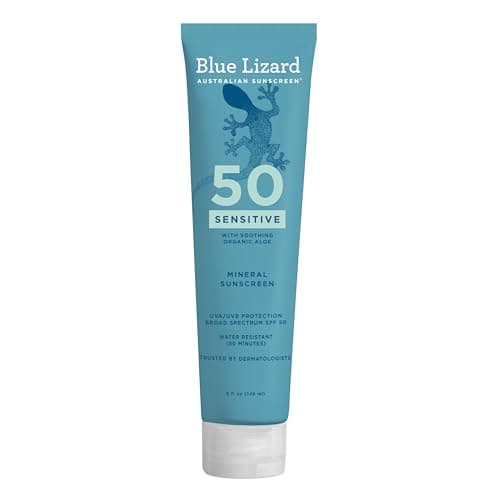
Product image from the Amazon listing.
Our verdict
Yes, Blue Lizard Sensitive Mineral Sunscreen SPF 50+ is worth buying — it's the #1 pediatrician-recommended mineral sunscreen for good reason, and the 100% zinc oxide and titanium dioxide formula is the top pick for sensitive skin, kids, pregnancy and reef-conscious beach use. For daily facial wear on tolerant adult skin, a lighter chemical or hybrid sunscreen is often more elegant; Blue Lizard is the go-to for body, beach and anyone who needs pure mineral protection.
The short version
Blue Lizard Sensitive is what dermatologists actually put on their own kids and their sensitive-skin patients. It's 100% mineral (zinc oxide and titanium dioxide) — no chemical UV filters — so it blocks UVA and UVB by sitting on the skin rather than absorbing into it, and it's the #1 pediatrician-recommended mineral sunscreen brand in the US. The Sensitive formula strips out fragrance, parabens and phthalates and layers in aloe vera, which is why so many people who can't tolerate chemical sunscreens finally have one that works.
Pros & cons
Pros
- 100% mineral — zinc oxide + titanium dioxide, no chemical UV filters
- #1 pediatrician-recommended mineral sunscreen brand
- SPF 50+ broad-spectrum UVA/UVB protection
- Fragrance, paraben and phthalate-free
- Water-resistant for 40 minutes
- Reef-friendly formulation
- Trusted for over 20 years
Cons
- Noticeable white cast, particularly on medium/deep skin
- Thicker texture than chemical sunscreens
- Better for body than daily facial wear
Why people love it
Physical UV block on the skin
Zinc oxide and titanium dioxide form a mineral barrier that reflects and scatters UVA and UVB radiation, protecting skin without being absorbed. That's why mineral sunscreens are the go-to for sensitive skin, kids and post-procedure use.
Apply 15 minutes before sun
Apply liberally to dry skin 15 minutes before going outside. Rub in thoroughly to minimize the white cast, then don't skimp — most people under-apply sunscreen, which drops the effective SPF significantly.
Reapply every 2 hours
Reapply every 2 hours and immediately after swimming, sweating heavily or toweling off. Water resistance is rated to 40 minutes, so long swims need fresh application after.
Who it's for
- Sensitive skin and rosacea-prone skin
- Kids and pregnant women
- Post-procedure and post-retinol skin
- Beach, boat and reef-conscious use
Blue Lizard vs Supergoop vs EltaMD — which sunscreen brand should you buy?
The sunscreen brand fight in 2026 is really a filter-type fight. Blue Lizard is the mainstream 100% mineral option — trusted by pediatricians, dermatologists and sensitive-skin patients, water-resistant, and the SPF 50+ range covers beach and outdoor use well. If you need a mineral sunscreen and want the most-trusted mainstream brand, this is it. Downside: the visible white cast makes it less pleasant for daily facial wear compared to more elegant options.
Supergoop! is the cosmetic-first daily-face pick — lighter chemical formula, more elegant textures, better under makeup, and specifically designed for reapplication throughout a normal workday. If your skin tolerates chemical sunscreens and you want the sunscreen you'll actually wear every day on your face, Supergoop wins on daily wearability. EltaMD UV Clear is the dermatologist-recommended in-between: a chemical/mineral hybrid with niacinamide, well-tolerated even by acne-prone and rosacea-prone skin, and the elegant texture the pure-mineral Blue Lizard can't quite match. Blue Lizard for the body and beach; a lighter formula for daily facial use is the common two-sunscreen setup dermatologists actually recommend.
Mineral vs chemical sunscreen — which is actually safer and more effective?
Both mineral (zinc oxide, titanium dioxide) and chemical (avobenzone, oxybenzone, octinoxate, etc.) sunscreens are FDA-approved and effective at preventing UV damage when used correctly. The differences that matter for buying decisions: mineral sunscreens sit on the skin (physical barrier), typically leave a white cast, are considered reef-friendlier, and are the safer choice for sensitive skin, pregnancy, kids and post-procedure use. Chemical sunscreens absorb UV into the skin's outer layer, are typically more cosmetically elegant, and some filters have been detected in bloodstream (though FDA has not concluded this indicates harm).
The 'which is safer' debate has more heat than light. For skin cancer prevention, both work — the mineral-vs-chemical distinction is dwarfed by the massive difference between applying sunscreen consistently versus not at all. For genuine sensitivity or specific concerns (pregnancy, reef-safe travel, kids under 6, freshly-treated skin), mineral is the smart default and Blue Lizard is the pick. For daily cosmetic wear on adults with tolerant skin, a well-formulated chemical or hybrid is often more wearable and therefore more consistently used. The best sunscreen is the one you'll actually apply every day.
How to actually use mineral sunscreen so it works (and doesn't look ashy)
Application technique makes or breaks mineral sunscreen. Use more than you think — the recommended amount is a full shot glass for full-body coverage, and most people use about half that. Divide the body into zones (face, neck, arms, legs, back, chest) and apply generously to each, then work in with your palms for 30–60 seconds until absorbed. On the face, warm the sunscreen between your fingers first — it spreads and blends much better warm than cold.
To minimize white cast, apply to slightly damp skin (right after moisturizer, before it fully dries) and press in with palms rather than rubbing. On darker skin tones, look at Blue Lizard's tinted face formula, EltaMD UV Elements or a Korean tinted mineral like Beauty of Joseon Relief Sun for a more skin-matching finish. Reapply every 2 hours in direct sun — a mineral setting powder over makeup is the easiest reapplication method for the face. Pair sun protection with strong antioxidant support (vitamin C serum morning, retinol like CeraVe Retinol at night, and a solid moisturizer like CeraVe Lotion or Neutrogena Hydro Boost) and you've got the complete photodamage-prevention stack dermatologists actually recommend.
See Blue Lizard Sunscreen on Amazon
Check the latest price, photos and buyer reviews on Amazon.
Check Price on Amazon →Sold and shipped by AmazonFrequently asked questions
Is Blue Lizard Sensitive Sunscreen worth it, or should I buy chemical sunscreen?
For sensitive skin, kids, pregnancy, post-procedure skin, or anyone worried about chemical UV filters (oxybenzone, octinoxate, homosalate), Blue Lizard Sensitive is the top-recommended mineral option and worth the small premium. If your skin tolerates chemical sunscreens well and you prioritize a cosmetically elegant, no-white-cast daily face sunscreen, a Korean or Japanese chemical formula like Supergoop! or an Asian chemical SPF is more comfortable for daily face wear. Many people use both — Blue Lizard for kids, beach and body; a lighter chemical formula for daily facial use.
Does Blue Lizard Sunscreen have a white cast?
Yes — like all high-percentage zinc oxide mineral sunscreens, Blue Lizard leaves a visible white cast, particularly on medium to deep skin tones. On the body it rubs in acceptably; on the face it can look ashy. For daily face use on darker skin tones, a tinted mineral sunscreen (which mixes iron oxides to blend with skin) is the better mineral option. For body, beach, kids and sensitive-skin protection, the white cast is a fair trade-off for the tolerability.
Is Blue Lizard reef-safe or reef-friendly?
Blue Lizard is formulated without oxybenzone or octinoxate, the two chemical UV filters most linked to coral reef damage and now banned in several jurisdictions (Hawaii, parts of Mexico, Palau). The mineral filters (zinc oxide, titanium dioxide) it uses are considered reef-friendly, which is why it's a common choice for beach and snorkeling use. Note that even 'reef-friendly' sunscreens have some environmental impact in high volumes — physical coverage (rash guards, hats) plus mineral sunscreen on exposed skin is the best combination.
Blue Lizard Sensitive vs Blue Lizard Sport vs Face — which formula should you buy?
Blue Lizard Sensitive (this review) is the base mineral formula — fragrance-free, no chemical filters, gentle enough for kids and reactive skin. Blue Lizard Sport is a similar mineral formula with better water and sweat resistance for active use. Blue Lizard Face is a lighter, more elegant mineral formula specifically for daily facial use with less white cast. Buy Sensitive for kids and general body use, Sport for water sports and hot workouts, Face if you want the brand's daily-face-friendly version.
Is SPF 50 enough sunscreen, or do you need SPF 100?
SPF 50 blocks about 98% of UVB radiation; SPF 100 blocks about 99%. The real-world difference is small, and the marginal 1% comes with a false sense of security that often leads to less-frequent reapplication. The single biggest factor in actual sun protection isn't the SPF number — it's applying enough sunscreen (most people use half the recommended amount, which cuts effective SPF roughly in half) and reapplying every 2 hours. SPF 50 applied liberally and reapplied on schedule beats SPF 100 applied thinly and left on all day.
Can you use Blue Lizard Sunscreen on babies?
For infants under 6 months, the general medical guidance is to keep them out of direct sun rather than use sunscreen, and to rely on shade and protective clothing. For babies 6 months and older, Blue Lizard Sensitive is one of the most commonly pediatrician-recommended options because of the mineral-only formula and lack of fragrance and chemical filters. As always, patch-test on a small area first and consult your pediatrician if you have concerns about a specific baby.
As an Amazon Associate, TopCrate earns from qualifying purchases at no extra cost to you. Sunscreen supports sun protection but does not eliminate skin-cancer risk — combine with shade, protective clothing and regular skin checks. Product image, price, availability and ratings are shown on Amazon and are subject to change.
More reviews you might like
SKINCARE
Celimax Vita-A Retinal Shot Review: Best K-Beauty Retinal for Sensitive Skin?
SPORTS
Body Glide Original Review: The Anti-Chafe Balm That Actually Works
SKINCARE
Foreo Luna Mini 3 Review: Is the Silicone Cleansing Brush Worth It?
SKINCARE