TRENDING ON AMAZON
CeraVe Resurfacing Retinol Serum with Ceramides Review: Is It Worth It?
The $20 dermatologist-approved retinol with encapsulated slow-release and ceramides — the beginner retinol that actually works without wrecking your barrier.
Quick answer: Yes — CeraVe Resurfacing Retinol Serum reviews add up to the same conclusion 12 weeks in: this is the smart-money OTC retinol pick and the right first serum for a retinol routine. Encapsulated slow-release retinol keeps irritation manageable, three ceramides plus 4% niacinamide let your barrier survive the ramp, and $20 buys 3+ months of nightly use — an order of magnitude cheaper than luxury tiers with matching or better formulation. Consistent nightly use over 3-6 months genuinely improves texture, tone and fine lines. Sustainable, effective, dermatologist-favored: if you're starting or maintaining a retinol routine, this is the one.
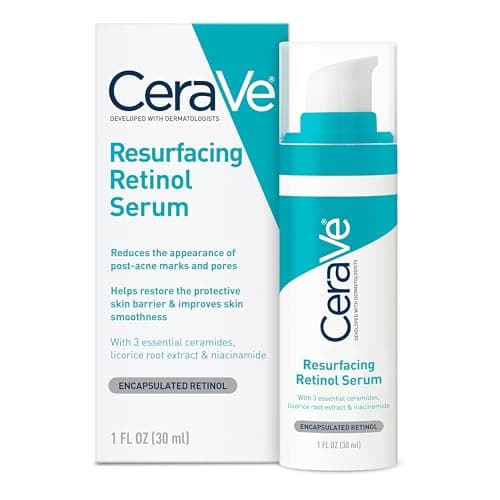
Product image from the Amazon listing.
Our verdict
Yes — CeraVe Resurfacing Retinol Serum reviews add up to the same conclusion 12 weeks in: this is the smart-money OTC retinol pick and the right first serum for a retinol routine. Encapsulated slow-release retinol keeps irritation manageable, three ceramides plus 4% niacinamide let your barrier survive the ramp, and $20 buys 3+ months of nightly use — an order of magnitude cheaper than luxury tiers with matching or better formulation. Consistent nightly use over 3-6 months genuinely improves texture, tone and fine lines. Sustainable, effective, dermatologist-favored: if you're starting or maintaining a retinol routine, this is the one.
The short version
CeraVe's Resurfacing Retinol Serum is the specific retinol product dermatologists hand to patients who want anti-aging or acne-scar treatment without the harshness of prescription tretinoin. It uses encapsulated retinol (a slow-release delivery form that reduces irritation), 3 essential ceramides that repair the skin barrier as retinol works, plus niacinamide for tone-evening. At around $20 for a 1-oz pump, it's a fraction of the price of luxury retinols and matches or beats their formulation. Results come slowly — expect 8-12 weeks for visible texture improvement and 3-6 months for meaningful anti-aging effects — but that's true of all retinols; anyone promising 2-week results is selling something else. If you're starting a retinol routine or want a barrier-friendly maintenance retinol, this is the pick.
Pros & cons
Pros
- Encapsulated retinol = slow release, less irritation
- 3 essential ceramides repair skin barrier
- Niacinamide for tone-evening and acne
- Dermatologist-formulated, fragrance-free
- Pump packaging protects retinol from air/light
- Under $25 at most retailers
Cons
- Slow — real results take 8-12+ weeks
- Not as strong as prescription tretinoin
- Some sensitive users still experience mild irritation initially
Why people love it
Encapsulated retinol delivery
The retinol molecule is encapsulated in a slow-release delivery system, meaning it releases into skin over hours rather than all at once — this significantly reduces the flushing and peeling that traditional retinol causes.
Ceramide barrier repair
CeraVe's signature blend of ceramides 1, 3 and 6-II (the three most abundant in healthy skin) replenishes the lipid barrier at the same time retinol is turning over cells — barrier stays intact instead of breaking down.
Niacinamide for tone
4% niacinamide addresses tone irregularities, reduces the appearance of pores, and calms redness — a proven complement to retinol therapy that shortens the visible-results timeline.
Who it's for
- Retinol beginners nervous about irritation
- Anti-aging maintenance in your 30s-50s
- Post-acne texture and mild scar treatment
- Anyone whose skin barrier was wrecked by aggressive actives
Is CeraVe Retinol Serum genuinely effective, or is prescription tretinoin the only real retinoid?
This is the most common gatekeeping in skincare — the idea that OTC retinols are 'baby retinols' and only prescription tretinoin is a real anti-aging treatment. It's partly true and mostly wrong. Prescription tretinoin (retinoic acid) is the strongest, most-studied retinoid and produces the most dramatic results — but it's also the most irritating, requires a doctor's visit, and many people can't tolerate it long enough to see results. OTC retinols like CeraVe's Resurfacing Retinol are chemically converted to retinoic acid in skin, delivering the same fundamental mechanism at roughly 10-20% the potency. The tradeoff: 5-6× longer to see results, but far higher tolerability meaning users actually stick with them long enough to work.
For most people who aren't dealing with severe acne or dramatic aging, the CeraVe encapsulated retinol at a level they can use nightly for years produces better real-world results than a prescription they can only use twice a week or eventually abandon. The ceramides and niacinamide in the formula also address the barrier disruption that's the primary reason people quit retinol. So the honest answer is: prescription tretinoin is stronger and faster, but CeraVe Retinol used consistently for 12+ months delivers real, measurable improvement in texture, tone and fine lines that's fully worth using. Consider it the 'sustainable maintenance retinol' — not weaker in the ways that matter for long-term skin health.
Retinol vs retinal (retinaldehyde) vs bakuchiol: sorting out the retinoid landscape
The retinoid category has expanded fast, and the naming is confusing. Retinol is the OTC standard — a vitamin A derivative that converts to retinoic acid in skin. Retinal (retinaldehyde) is one step closer to retinoic acid — meaning faster conversion, faster results, but also more expensive and less shelf-stable. A few OTC brands now offer retinal serums; they're a legitimate middle-tier between retinol and prescription tretinoin. Bakuchiol is a plant-derived compound that mimics some retinol effects (anti-aging, cell turnover) without vitamin A chemistry — it's marketed as a 'natural retinol alternative' and is much gentler but with weaker results.
For most people the progression makes sense: bakuchiol for those who cannot tolerate any retinol or are pregnant/breastfeeding (retinoids are contraindicated in pregnancy); CeraVe Resurfacing Retinol as the everyday workhorse; a retinal serum if you want faster results and can afford $60-80 bottles; prescription tretinoin for severe acne or serious anti-aging goals. Bakuchiol and retinol can also be layered — bakuchiol in the morning as a gentle antioxidant, CeraVe retinol at night as the workhorse retinoid. Skip products that combine retinol with other harsh actives in one bottle; layering separately gives you control over concentrations.
How to build a real retinol routine (and the mistakes that make people quit)
The biggest mistake with retinol is going too aggressive too fast, hitting the 'retinization' phase of dry flaking skin, deciding retinol doesn't work for you, and quitting. Start with 2-3 nights per week for 3-4 weeks; ramp to nightly only when skin is comfortable. Apply to fully dry skin (not damp) — wet skin drives retinol deeper and dramatically increases irritation. Use a pea-sized amount for the whole face; more doesn't work faster. Wait 15-20 minutes before applying moisturizer; layering immediately can reduce retinol penetration.
The 'sandwich method' is a useful technique for sensitive skin: apply a light layer of moisturizer, wait 5 minutes, apply retinol, wait 10 minutes, apply another light layer of moisturizer. This reduces irritation dramatically for barrier-compromised skin. Avoid: waxing/tweezing/laser hair removal for 2-3 days after using retinol (skin is more sensitive), physical exfoliants like scrubs while adjusting to retinol, and stacking retinol with other actives simultaneously (space them by days). Do: use SPF 30+ every single morning, hydrate consistently with a barrier-supportive moisturizer, and give it 3+ months before deciding if it's working. Consistency over intensity is the retinol truth.
See CeraVe Retinol Serum on Amazon
Check the latest price, photos and buyer reviews on Amazon.
Check Price on Amazon →Sold and shipped by AmazonFrequently asked questions
CeraVe Resurfacing Retinol Serum reviews: what do actual users say after 3+ months?
The pattern across the hundreds of thousands of reviews is consistent: at weeks 1-3, mild flushing or dryness as the barrier adjusts (much less than pure retinol serums thanks to the encapsulation); at weeks 4-8, the first honest wins — smoother texture, calmer post-acne redness, foundation sitting flatter; at weeks 8-12, visible tone-evening and softer fine lines around the eyes; at months 3-6, dark spots and mild acne scars gradually fade and 'my skin just looks brighter' becomes the most-repeated line. The most-repeated complaints are three: (1) 'nothing happened' from users who ran it 3-4 nights and quit — retinol biology needs 8-12 weeks minimum; (2) initial dryness from users skipping moisturizer or SPF; (3) the pump occasionally jamming (fix: prime it upside-down twice). The 4.5-star average holds because the barrier-repair ingredients (ceramides + niacinamide) let people stick with it long enough for the encapsulated retinol to actually work — the specific reason it earns the 'best-value dermatologist retinol' badge instead of just being another OTC serum.
How is encapsulated retinol different from regular retinol?
Encapsulated retinol is chemically the same active molecule, but wrapped in a slow-release delivery vehicle (usually a liposome or microsphere) that gradually breaks down after application. This means the retinol releases into skin over 8-12+ hours instead of all at once. The practical benefit: dramatically less initial irritation (the 'retinization' redness, flaking, peeling phase most people fear), while delivering the same total dose of active retinol over the day. It's why CeraVe's formula is tolerated by more people than harsher pure-retinol serums.
CeraVe Retinol vs The Ordinary Granactive Retinoid vs prescription tretinoin: which should I use?
Three tiers for three levels of experience. The Ordinary Granactive Retinoid (Hydroxypinacolone Retinoate) is the gentlest — a next-gen retinoid ester that's slower and less irritating than traditional retinol; great for extremely sensitive skin or first-time users, but slower results. CeraVe Resurfacing Retinol is the sweet spot: real encapsulated retinol with barrier-repair ingredients and niacinamide; meaningful results in 8-12 weeks with minimal irritation. Prescription tretinoin (Retin-A, generic) is the medical standard for stubborn acne and anti-aging: 5-10× stronger than OTC retinol, requires prescription, causes more initial irritation but delivers fastest and most-dramatic results. Progression is common: The Ordinary → CeraVe → tretinoin as skin builds tolerance. Most users are best served staying at the CeraVe level long-term.
How long until I see results?
Faster than most people expect for the small visible changes, slower than marketing implies for the dramatic ones. Weeks 1-3: some initial irritation (mild flushing or dryness) as skin adjusts. Weeks 4-8: skin texture starts improving — smoother feel, less rough patches. Weeks 8-12: visible tone evening, mild acne scar softening, and general 'my skin looks brighter' effect. Months 3-6: fine lines soften, pores appear smaller, and dark spots gradually fade. Real anti-aging results (deeper wrinkle reduction, dramatic acne scar remodeling) take 12+ months of consistent nightly use. Anyone promising visible results in 2-4 weeks isn't being honest about how retinol biology works.
How do I use it? Every night or every other night?
Start slowly to let skin adapt. Week 1-2: apply 2-3 nights per week, not consecutive. Week 3-4: 3-4 nights per week. Week 5+: nightly if skin tolerates. Application: apply to clean dry skin (not damp — that increases irritation), a pea-sized amount for the whole face, wait 15-20 minutes before applying moisturizer, and always follow with SPF the next morning. Skip if skin feels irritated, and space out with hydrating serums or moisturizer-only nights when needed. If you feel any burning or persistent redness, drop to fewer nights per week for a couple of weeks, then rebuild. Consistency over months matters more than intensity.
Can I use CeraVe Retinol with vitamin C, AHAs, BHAs or benzoyl peroxide?
Mostly yes with timing. Vitamin C (morning) + retinol (night) is the gold-standard anti-aging combo — they complement without conflict. AHAs and BHAs (like glycolic acid or salicylic acid) shouldn't be layered simultaneously with retinol at first (compounds irritation), but can be alternated on different nights or used in the morning while retinol goes at night. Benzoyl peroxide can degrade retinol if applied together, so use benzoyl peroxide in the morning and retinol at night. Niacinamide is compatible any time. Simple rule: retinol goes at night, other actives space around it, always use SPF in the morning.
Do I still need sunscreen if I'm using CeraVe Retinol?
Absolutely yes — SPF is non-negotiable with any retinoid. Retinol accelerates skin cell turnover, which means fresher, more UV-sensitive skin at the surface. Skipping SPF while using retinol dramatically increases sunburn, dark spot risk and negates the anti-aging benefits (UV damage causes exactly the aging effects retinol is treating). Use a broad-spectrum SPF 30+ every morning without exception, reapply mid-day for extended outdoor time. This applies to all retinols including OTC ones like CeraVe — the SPF requirement isn't just about prescription tretinoin.
As an Amazon Associate, TopCrate earns from qualifying purchases at no extra cost to you. CeraVe Retinol Serum is a cosmetic product, not a treatment for medical skin conditions. See a dermatologist for prescription-strength retinoids or specific skin concerns. Product image, price, availability and ratings are shown on Amazon and are subject to change.
More reviews you might like

SKINCARE
Celimax Vita-A Retinal Shot Review: Best K-Beauty Retinal for Sensitive Skin?

SPORTS
Body Glide Original Review: The Anti-Chafe Balm That Actually Works

SKINCARE
Foreo Luna Mini 3 Review: Is the Silicone Cleansing Brush Worth It?

SKINCARE