Quick take
- Verdict: SafeSleeve's Air-Tube headphones are a smart, inexpensive answer for anyone who'd rather not have a speaker or a Bluetooth radio in their ear all day. The hollow-tube design keeps the electronics down the cord, the phone stays away from your head on calls, and there's nothing to charge.
- Best for: People who want to keep their phone away from their head on long calls
- Price: $34.99 from the official store
Our verdict
SafeSleeve's Air-Tube headphones are a smart, inexpensive answer for anyone who'd rather not have a speaker or a Bluetooth radio in their ear all day. The hollow-tube design keeps the electronics down the cord, the phone stays away from your head on calls, and there's nothing to charge. Take the 99% EMF figure as SafeSleeve's claim, not a lab result we've seen, and expect a slightly airier sound than standard earbuds. At $34.99, with bundles near $24 a pair and a 30-day guarantee, it's an easy, low-risk upgrade for heavy phone users.
The short version
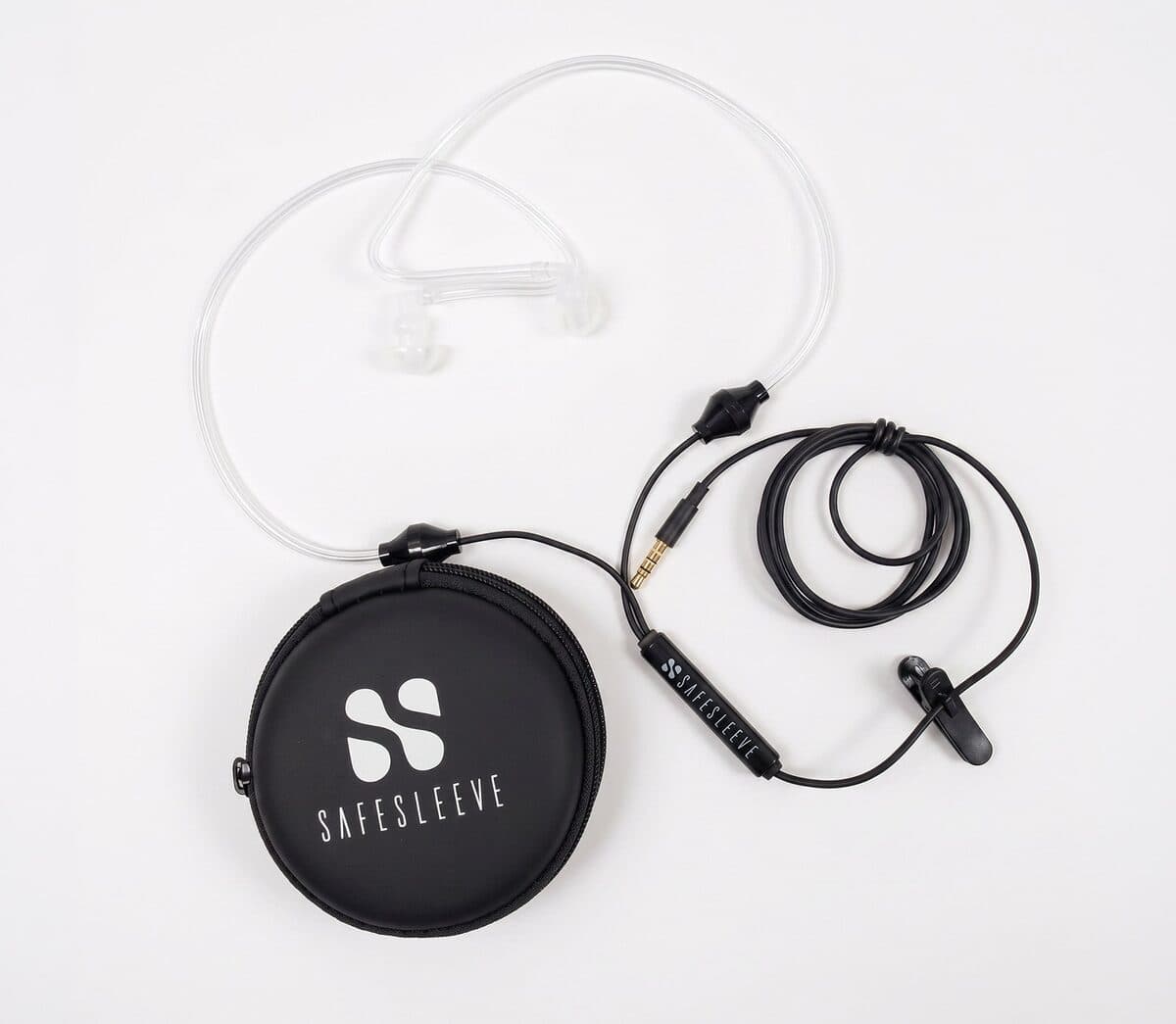
Regular earbuds put a tiny speaker, a magnet and, with Bluetooth, a radio transmitter right in your ear. SafeSleeve's Air-Tube headphones take a different approach, borrowed from the clear coiled earpieces security staff wear. The speaker drivers sit down the cord, and sound travels up clear silicone tubes to soft ear tips, so nothing electronic touches your head. They plug into a 3.5mm jack, come with a USB-C adapter, and have an in-line remote and mic for hands-free calls. SafeSleeve says they reduce EMF exposure to your head by up to 99%. Independent testing of that figure isn't published, but the practical benefit is simple: you take calls with the phone away from your head and no wireless earbud in your ear. They're $34.99, with buy-two-get-one deals and a 30-day guarantee.
Pros
- No speaker, magnet, battery or Bluetooth radio at your ear
- Keeps the phone away from your head for calls, with an in-line mic and remote
- 3.5mm plug plus an included USB-C adapter for newer phones
- Nothing to charge or pair, and no battery to wear out
- Carrying case included; bundles bring the price under $25 a pair
- 30-day money-back guarantee
Cons
- The '99% less EMF' figure is SafeSleeve's own claim, with no published test report
- Air-tube designs generally trade some bass and detail for the hollow-tube path
- Wired, so you give up the convenience of true wireless earbuds
How it works
Plug in
Connect the 3.5mm plug to your phone, laptop or tablet, or use the included USB-C adapter if your phone has no headphone jack.
Fit the tubes
The clear air tubes loop over and into your ears with soft silicone tips. The speakers sit lower on the cord, away from your head.
Listen and take calls
Use the in-line remote and mic for music, podcasts and hands-free calls while the phone stays at arm's length.
Who it's for
- People who want to keep their phone away from their head on long calls
- Anyone who'd rather not wear Bluetooth earbuds for hours a day
- Parents looking for simple wired headphones with no battery or wireless radio
- Office and call-heavy workers who want a cheap, charge-free headset
How air-tube headphones work
A normal earbud is a small speaker: a magnet, a coil and a diaphragm, all sitting in your ear canal. Bluetooth earbuds add a battery and a radio that's constantly talking to your phone. Air-tube headphones split that apart. SafeSleeve puts the speaker driver in a housing partway down the cord. The sound it makes travels up a clear, hollow silicone tube to a soft ear tip, the same way a stethoscope carries sound. The part in your ear is just plastic and air.
SafeSleeve's version adds what you'd expect from a modern wired headset: a 3.5mm plug, a USB-C adapter in the box, an in-line remote and a built-in microphone for hands-free calls, plus a zip carrying case. There's nothing to pair or charge, and SafeSleeve says they work with phones, tablets and laptops.
What about the EMF claims?
SafeSleeve says Air-Tube headphones reduce EMF exposure to your brain by up to 99% and that they've been tested in an FCC-accredited lab. We couldn't find a published test report behind that number, so treat it as the brand's claim. It's also worth knowing where the science stands. The FDA's view is that the weight of scientific evidence hasn't linked cell phone radio-frequency exposure to health problems at the levels phones are allowed to emit. We don't think you should buy these out of fear, and they aren't a medical device.
What's not in dispute is the practical part. If you'd like less exposure anyway, using a wired headset or speakerphone so the phone isn't pressed to your head is the most commonly suggested step, and an air-tube design also removes the speaker and wireless radio from your ear. If you mostly want a cheap, reliable wired set for calls, standard wired buds like Apple EarPods (USB-C) are the comparison. If you're after earbuds for sleep, Soundcore Sleep A20 solves a different problem. Air-Tube is for people who specifically want nothing electronic at the ear.
Are SafeSleeve Air-Tube headphones worth it? Price and guarantee
One pair is $34.99 plus shipping on the official order page, down from a listed $39.99, and includes a USB-C adapter. Buy 2, Get 1 Free is $79.98 and Buy 3, Get 2 Free is $119.97, both with free shipping and a USB-C adapter, which works out to about $24 to $27 a pair. Orders usually ship within 24 to 48 hours, and US delivery takes about 3 to 5 business days.
Sound is good for calls, podcasts and everyday music. SafeSleeve says they deliver rich bass and crisp highs, but expect the slightly airier sound all tube designs have, rather than audiophile punch. SafeSleeve says the headphones have more than 7,500 five-star reviews, and the 30-day money-back guarantee lets you return them hassle-free if they're not for you. For a charge-free headset that keeps the phone and the electronics away from your head, it's a fair price.
Our verdict · 9.1/10
Try the Air-Tube Headphones for yourself
Available now for $34.99. Ships to your door.
Frequently asked questions
Do SafeSleeve Air-Tube headphones really reduce radiation?
SafeSleeve says they reduce EMF exposure to the head by up to 99% and cites FCC-accredited lab testing, but we couldn't find a published report, so treat the number as brand-reported. The design does keep the phone away from your head and removes the speaker and any wireless radio from your ear.
Is cell phone radiation dangerous?
The FDA's position is that the weight of scientific evidence hasn't linked cell phone radio-frequency exposure to health problems at permitted levels. People who want to lower their exposure anyway often use a wired headset or speakerphone. These headphones aren't a medical device and don't treat any condition.
Do they work with iPhone and USB-C phones?
Yes. They have a 3.5mm plug, and a USB-C adapter is included. SafeSleeve says they're compatible with all devices. iPhones with a Lightning port would need Apple's Lightning-to-3.5mm adapter.
Do they have a microphone?
Yes. There's a built-in mic and an in-line remote for hands-free calls and playback control.
How is the sound quality?
Clear for calls, podcasts and everyday music. Air-tube headphones send sound through a hollow tube, which tends to sound a little airier with less deep bass than a standard earbud. SafeSleeve says they deliver rich bass and crisp highs.
Are they safe for kids?
SafeSleeve markets them for all ages, with no magnets or Bluetooth at the ear. As with any headphones, keep the volume moderate for children.
How much do Air-Tube headphones cost?
$34.99 for one pair, $79.98 for Buy 2 Get 1 Free, or $119.97 for Buy 3 Get 2 Free, each with a USB-C adapter. Prices can change, so check the current offer.
What's the return policy?
SafeSleeve offers a 30-day money-back guarantee. If you're not satisfied, you can return them hassle-free.
When you buy through links on this page, TopCrate may earn an affiliate commission at no extra cost to you. EMF-reduction figures are SafeSleeve's own claims; Air-Tube headphones are an audio accessory, not a medical device, and are not intended to diagnose, treat or prevent any condition. Prices accurate as of publish time.