BEAUTY 101
Silk vs Satin Pillowcase: One Is a Fiber, One Is a Weave — and the Difference Is the Whole Story
Why 'satin' pillowcases are almost always polyester, what momme weight actually measures, how each fabric performs for frizz and sleep creases, and an honest framework for picking between a $15 case and a $90 one.
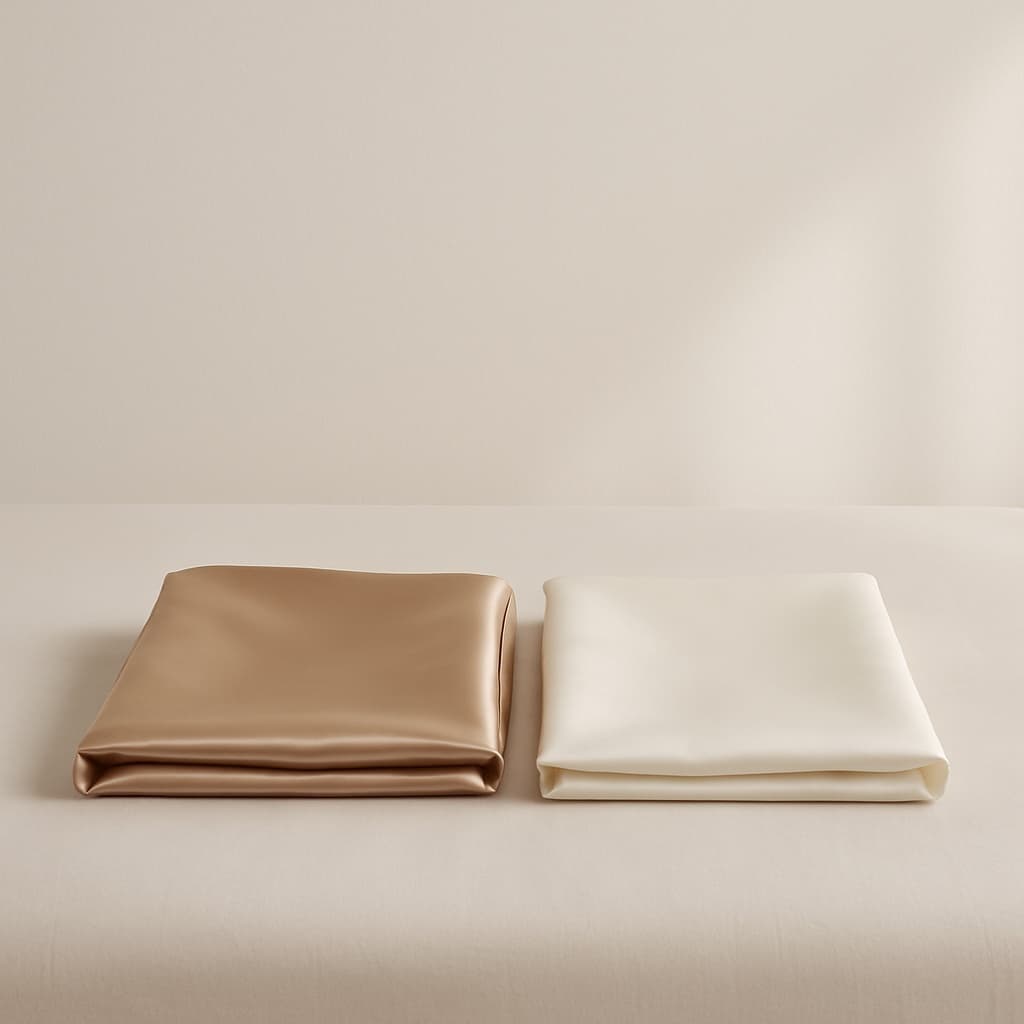
Silk vs satin looks like a choice between two fabrics. It's actually a category error, and untangling it is the single most useful thing you can know before buying a pillowcase: silk is a fiber, spun by actual silkworms, while satin is a weave — a way of arranging threads — and the threads in a store-shelf satin pillowcase are almost always polyester. So the real comparison isn't silk versus satin. It's a natural protein fiber versus plastic wearing silk's hairstyle.
This guide covers the fiber-versus-weave distinction properly, what momme weight means and why 19 to 25 is the pillowcase sweet spot, how each fabric actually performs for hair frizz and skin creasing, the durability and washing gap, the price reality, how to spot fake silk before you pay real-silk money for it, and a verdict framework that depends on your budget rather than anyone's marketing.
Silk vs Satin: One Is a Fiber, the Other Is a Weave
Silk is a material — a protein fiber that silkworms spin into cocoons, harvested and woven into fabric for a few thousand years now. Mulberry silk, the kind worth buying, comes from silkworms raised on mulberry leaves, which produce long, uniform, unbroken fibers that weave into a smoother and more durable fabric than wild silk. When a label says 100% mulberry silk, it's describing what the pillowcase is made of.
Satin describes none of that. Satin is a weave: threads floated long across the surface of the fabric to create that glossy face and dull back. You can weave satin out of anything — and here's the twist, real silk pillowcases are usually satin-woven silk, sold as silk charmeuse. But when a pillowcase is sold simply as 'satin,' the fiber underneath the shine is nearly always polyester, occasionally nylon. Same finish, completely different material — which is why the two feel similar for the first week and age like different species.
Momme Weight, Explained — and Why 19 to 25 Is the Sweet Spot
Momme is silk's density measure: the weight, in pounds, of a bolt of silk 100 yards long and 45 inches wide. A 22-momme pillowcase means that bolt weighs 22 pounds — more silk packed into every inch, which translates to a fabric that's more opaque, more substantial in hand, and much more tolerant of repeated washing. It's the closest thing silk has to a thread count, except it actually predicts quality.
The pillowcase sweet spot is 19 to 25 momme. Under 19, the fabric is thin, faintly sheer, and wears out fast once washing enters the picture. The 19-to-22 range is where quality starts, with 22 momme the industry standard for a premium pillowcase. At 25 you get a denser, more luxurious hand at a higher price; beyond that you're paying for weight a pillowcase doesn't need. Bonus intel: momme only applies to silk, so a listing that proudly states its momme weight is quietly telling you the silk is real — and a 'silk' listing with no momme number anywhere deserves a suspicious squint.
Silk vs Satin for Hair and Skin: What Each Actually Does
Here's the honest part the silk industry mumbles: both fabrics deliver the headline benefit. The magic ingredient for hair and skin is a smooth, low-friction surface — hair slides across it overnight instead of snagging and roughing up against cotton's comparatively coarse weave, which means less frizz, less breakage, and blowouts that survive until morning. Skin gets the same deal: less drag means fewer of those pressed-in sleep creases on your cheek at 7am. Polyester satin is smooth. It genuinely does most of this. If your only comparison point is cotton, a $15 satin pillowcase is a real upgrade.
Where real silk pulls ahead is everything besides slipperiness. Silk is a breathable protein fiber that regulates temperature — cool when you're warm, not clammy when you're not — and it doesn't drink moisture out of your hair and skin the way cotton does. Polyester is plastic: it traps heat, builds static, and can leave hot sleepers sweating against the shine. If you run hot at night or you're chasing skin benefits rather than just frizz control, that breathability gap is the difference you'll actually feel.
Durability, Washing, and the Price Reality
Price first, because it frames everything: a satin pillowcase runs $10 to $20, while quality mulberry silk starts around $50 and climbs to $100 — with premium brands like Blissy and Slip sitting at the top of that range. That's a 5x gap for fabrics that look nearly identical on a made bed, which is exactly why the satin market is so healthy.
The care gap runs the other way. Polyester satin shrugs off the washing machine, but it pills, snags, and loses its slickness over time — it's a replaceable item, and at $15 that's fine. Silk demands gentler treatment — cold water, a delicates detergent, no dryer — but rewards it by lasting two to four years of nightly use; our guide on how to wash silk pillowcase covers the exact routine. Skip the care and you can ruin a $90 pillowcase in a single hot cycle, which is the most expensive laundry lesson in this category. And whichever you choose, the pillow underneath still collects years of sweat and skin oils — our guide on how to wash pillows handles that less glamorous chore.
How to Spot Fake Silk
The fakes hide in the wording. 'Satin silk,' 'silky satin,' 'silk-like,' and 'silk touch' are all polyester wearing a borrowed name — legally accurate, deliberately confusing. Price is the other tell: real mulberry silk costs real money to produce, so a $20 pillowcase claiming to be 100% silk has some explaining to do. The definitive check is boring and infallible: the fiber content label. It must say 100% silk or 100% mulberry silk — polyester has to legally disclose itself there, no matter what the product title claims. A stated momme weight and an OEKO-TEX certification are two more marks of the genuine article.
And yes, the burn test is real, as trivia: a snipped thread of true silk burns with a burnt-hair smell (it's protein, like your hair), self-extinguishes, and crumbles to ash, while polyester melts into a hard plastic bead and smells like a chemistry accident. File that under party tricks. Nobody needs to set fire to their bedding when the answer is printed on the tag.
The Verdict: Satin If Budget-First, Mulberry Silk If It's an Investment
Buy satin if the budget is the point. For $15 you get the low-friction surface that delivers most of the hair benefit and a good share of the skin benefit, it survives careless laundry, and replacing it costs less than lunch. It's also the smart way to test the concept — if a month on satin visibly calms your frizz, that's evidence the upgrade is worth it. Just don't expect it to breathe.
Buy real mulberry silk — 19 to 25 momme, fiber content label checked — if you sleep hot, care about skin creasing as much as frizz, and want one pillowcase that lasts years instead of a rotation of cheap ones. The benefits compound: better temperature regulation every single night, plus durability that makes the per-year math surprisingly reasonable. Satin is a good trick at a great price; silk is the actual fabric, at the price the actual fabric costs.
Read our Blissy silk pillowcase review
The 22-momme mulberry silk case everyone compares against — our full take on whether it earns the price.
Read our Blissy silk pillowcase reviewFrequently asked questions
What is the difference between silk and satin?
Silk is a natural protein fiber made by silkworms. Satin is a weave — a way of arranging threads to create a glossy surface — and commercial satin pillowcases are almost always woven from polyester. Confusingly, real silk pillowcases usually use a satin weave too (silk charmeuse), so the real question is always the fiber: silk or polyester.
Is satin or silk better for hair?
Both beat cotton clearly, because the benefit comes from a smooth, low-friction surface that stops hair snagging and roughing up overnight. Satin delivers most of the frizz and breakage benefit for $10 to $20. Silk adds breathability, temperature regulation, and years more durability — better overall, but not dramatically better for hair alone.
Are satin pillowcases as good as silk?
For frizz control and sleep creases, satin gets you most of the way at a fraction of the price. Where it falls short: polyester satin traps heat, builds static, and pills over time, while silk breathes, sleeps cooler, and lasts two to four years with proper care. Budget pick versus long-term pick.
What momme weight is best for a silk pillowcase?
19 to 25 momme, with 22 as the industry standard for premium pillowcases. Momme measures silk density — the weight in pounds of a 100-yard by 45-inch bolt. Under 19 momme the fabric is thin and wears out quickly; above 25 you're paying for heft a pillowcase doesn't need.
How can you tell if a silk pillowcase is real?
Read the fiber content label — it must say 100% silk or 100% mulberry silk, because polyester has to disclose itself there regardless of the product name. A listed momme weight is a good sign, since momme only applies to real silk. Names like 'satin silk' or 'silky satin,' and prices under about $30, almost always mean polyester.
Why are silk pillowcases so expensive?
Real mulberry silk is genuinely costly to produce — silkworms, long unbroken fibers, careful weaving — so quality pillowcases run $50 to $100. The consolation is durability: cared for properly, a good 22-momme pillowcase lasts two to four years, which makes the per-year cost closer to the satin you'd be replacing annually.
TopCrate is reader-supported. When you buy through links on our site we may earn an affiliate commission, at no extra cost to you. Content is for general information and isn't a substitute for professional advice.