BEAUTY 101
How to Wash a Silk Pillowcase: Hand-Wash Routine, Machine Settings, and the Drying Rules That Keep It Alive
The pH-neutral detergent rule that protects silk's protein fibers, exact hand-wash and machine methods, why wringing and sunlight are the two silent killers, and the care habits that stretch a $90 pillowcase across years.
A silk pillowcase is the rare bedding upgrade you can destroy in one laundry cycle. Silk is a protein fiber — chemically closer to your hair than to your sheets — and the things that ruin hair ruin silk: harsh detergent, hot water, heat, and rough handling. The good news is that washing silk correctly isn't hard or slow. It's maybe ten minutes of light effort, and every one of the rules exists for a specific reason.
This guide covers the care-label check that comes first, the hand-wash method step by step, the machine settings that make the washer safe for silk, the drying rules — never wring, never tumble, never direct sun — plus ironing, wash frequency, storage, and how this small routine turns an expensive pillowcase into a multi-year purchase.
Step Zero: Read the Care Label — and Confirm It's Actually Silk
Every silk brand cuts and finishes its fabric a little differently, so the care label outranks any general guide, including this one. Most quality pillowcases allow both hand-washing and a gentle machine cycle; a few insist on hand-wash only. Thirty seconds of reading beats guessing with a $90 item.
While you're at the tag, check the fiber content. If it says polyester, congratulations — you own a satin pillowcase, every rule below relaxes, and a normal cold gentle cycle will do fine. Our silk vs satin guide covers the difference in full, but the short version is that polyester is plastic and shrugs off machines, while real silk is protein and needs the routine that follows.
How to Hand-Wash a Silk Pillowcase
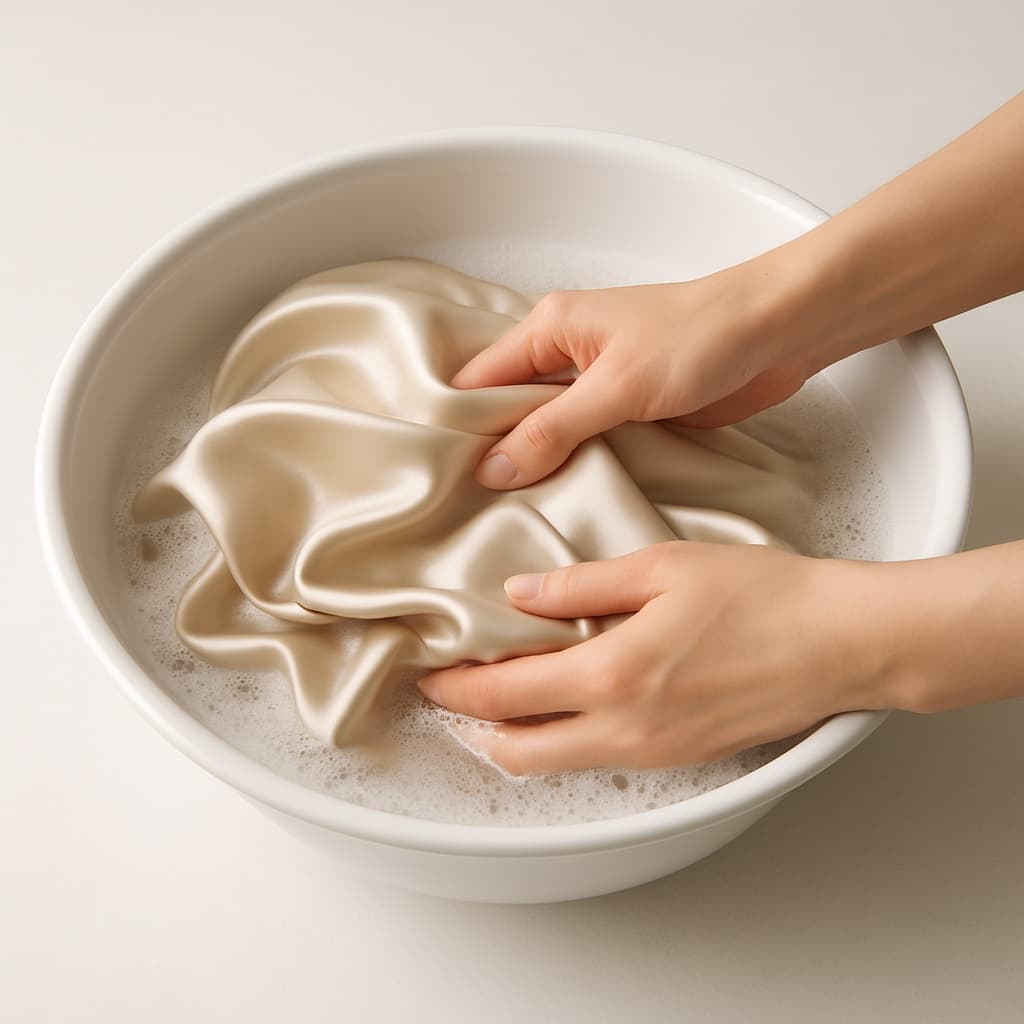
Fill a clean basin with cold water and add a few drops of a pH-neutral detergent made for silk and delicates. This is the one non-negotiable product choice: regular laundry detergent is built to attack protein stains with enzymes and alkaline cleaning agents, and silk is protein — the same chemistry that lifts food off a T-shirt breaks down silk's fibers, stripping the sheen and weakening the fabric wash by wash. Bleach is even worse and is never an option; chlorine outright destroys silk. Skip fabric softener too — it just coats the fibers and dulls the surface silk already has naturally.
Turn the pillowcase inside out, submerge it, and soak for three to five minutes — no longer, since extended soaking does silk no favors. Swish it gently through the water; no scrubbing, no twisting, nothing your hairdresser wouldn't do to your head. Rinse in cool water until it runs clear, and resist the instinct to wring. That instinct gets its own section.
How to Machine-Wash Silk Without Ruining It
The machine is workable if you stack every setting in silk's favor. Turn the pillowcase inside out and zip it into a mesh delicates bag — the bag is what stands between silk and every zipper, hook, and drum fin in the load. Run cold water on the delicate or gentle cycle with the same silk-safe pH-neutral detergent, and use the lowest spin speed your machine offers.
Load composition matters more than people expect: wash silk with other smooth, lightweight fabrics only. Towels, denim, and anything with hardware are sandpaper and grappling hooks in this context. Premium brands like Blissy rate their pillowcases machine-washable on exactly this setup, and it genuinely works — though hand-washing is still the gentler option, and rotating between the two is a reasonable compromise for something you wash weekly.
Drying and Ironing: Never Wring, Never Tumble, Never Direct Sun
Silk fibers are at their weakest when wet, which is why wringing — the default human response to wet fabric — is the fastest way to stretch and break them. Instead, lay the pillowcase flat on a clean towel, roll the two up together like a sleeping bag, and press gently to transfer the water. Then air dry flat, or over a smooth hanger, somewhere out of direct sunlight — UV light yellows and weakens silk, so the sunny windowsill that dries it fastest is also quietly bleaching it. The dryer is banned entirely: even low heat damages protein fiber, and a silk pillowcase air-dries in a few hours anyway.
Wrinkles usually fall out on their own once the pillowcase is back on the pillow. If yours need help, iron inside out on the lowest silk setting while the fabric is still slightly damp, keeping the iron moving — or hold a garment steamer a few inches away and let steam do it without contact at all.
How Often to Wash a Silk Pillowcase, Storage, and the Long Game
Wash it about weekly, with the rest of your pillowcases. Silk absorbs less of your skin oils and product than cotton, but a pillowcase still spends eight hours a night pressed against your face collecting sweat, sebum, and whatever your skincare didn't absorb — and letting that build up defeats the point of sleeping on silk for your skin. The pro move is owning two and rotating: each one gets washed half as often, and the pair lasts far longer than two cases run back to back. The pillow underneath needs attention too, just less often — our guide on how to wash pillows covers that a-few-times-a-year job.
Store spare silk somewhere cool, dry, and dark, in a breathable cotton bag rather than sealed plastic, which traps moisture against a fiber that hates it. Do all of this and the math changes completely: a quality 22-momme pillowcase that would die in months of careless laundry instead delivers two to four years of nightly use. Ten minutes of cold water and the right detergent each week is the entire price of admission.
Read our Blissy silk pillowcase review
If you're going to baby a pillowcase, it should be one worth the effort — our full review of the 22-momme benchmark.
Read our Blissy silk pillowcase reviewFrequently asked questions
Can you wash a silk pillowcase in the washing machine?
Usually, yes — check the care label first. Turn it inside out, zip it into a mesh delicates bag, and run cold water on the delicate cycle with a pH-neutral silk-safe detergent and the lowest spin speed, alongside only smooth lightweight fabrics. Hand-washing is still the gentler option for maximum lifespan.
What detergent should you use on silk?
A pH-neutral detergent made for silk and delicates. Regular detergent uses enzymes and alkaline agents designed to break down protein — and silk is a protein fiber, so it gets attacked along with the stains, losing sheen and strength. Never use bleach, and skip fabric softener, which just coats the fibers.
How often should you wash a silk pillowcase?
About weekly, like any pillowcase — it collects sweat, skin oils, and skincare residue all night regardless of fabric. Owning two and rotating them halves the wear on each and keeps a fresh one on the pillow while the other dries.
Can you put a silk pillowcase in the dryer?
No — heat damages silk's protein fibers even on low settings. Roll the pillowcase in a clean towel to press out water, then air dry it flat away from direct sunlight. It only takes a few hours, and it's the single biggest factor in how long the pillowcase lasts.
Why is my silk pillowcase turning yellow?
Two usual suspects: accumulated sweat and skin oils oxidizing in the fabric, and sunlight, which yellows and weakens silk over time. Regular weekly washing handles the first; drying and storing it out of direct sun handles the second. Never try to fix yellowing with bleach — chlorine destroys silk.
Can you iron a silk pillowcase?
Yes, carefully: inside out, on the iron's lowest silk setting, while the fabric is slightly damp, keeping the iron moving. A garment steamer held a few inches away works without any contact. Most wrinkles release on their own once the case is back on the pillow, so often you can skip this entirely.
TopCrate is reader-supported. When you buy through links on our site we may earn an affiliate commission, at no extra cost to you. Content is for general information and isn't a substitute for professional advice.