SLEEP 101
How to Wash Pillows: Machine-Washing Down, Rescuing Memory Foam, and Beating Yellow Stains
The care-tag rule that prevents a ruined pillow, the exact washer and dryer settings for down and down-alternative, why memory foam must never see the inside of a machine, and the soak that fixes yellow stains.
You wash your sheets every week and your pillowcases with them, but the pillow underneath quietly collects years of sweat, skin oils, drool, and dead skin — which is exactly the buffet dust mites show up for. Even the best pillows need an actual wash a few times a year, and the good news is that most of them can go straight into the washing machine. The bad news is that the ones that can't — memory foam and latex — are ruined by it, which is why this job starts with reading a tag, not pushing a button.
This guide covers the whole routine: how often pillows really need washing, the care-tag check that decides everything, the exact washer and dryer settings for down and down-alternative pillows, how to clean foam pillows without destroying them, the soak that rescues yellowed pillows, and the drying step that separates a fresh pillow from a mildewed one.
Why Pillows Need Washing (and How Often)
A pillow spends roughly a third of your life pressed against your face, absorbing sweat, skin oils, saliva, hair product, and a steady snowfall of dead skin cells. Dust mites — the most common indoor allergen trigger — feed on those skin cells, so an unwashed pillow isn't just stale, it's a habitat. A pillowcase slows the buildup; it doesn't stop it. If your pillow has a faint yellow tint or smells like anything at all, that's the accumulated evidence.
The cadence is simpler than people expect: wash pillowcases weekly with your sheets, and wash the pillows themselves two to four times a year — every three to six months, or more often if you sleep hot, skip a shower before bed, or share the bed with pets. One prerequisite worth thirty minutes: if your washer has a mildew smell or a grimy gasket, clean your washing machine first. A pillow is a giant sponge, and it will happily absorb whatever is lurking in the drum.
Step One: Check the Care Tag Before You Touch the Washer
The care tag settles every question in this article, so read it before anything else. As a rule, pillows filled with down, feathers, down-alternative, or loose polyester fill are machine washable. Pillows made of a solid piece of memory foam or latex are never machine washable — no exceptions, no gentle-cycle loophole. Buckwheat and some specialty fills have their own rules, and the tag will say so.
If the tag is long gone, squeeze the pillow. If the fill shifts, clumps, and moves around inside the shell, it's almost certainly washable. If it's one solid, springy slab that returns to shape, treat it as foam and keep it away from water entirely. When in doubt, wash the cover and spot-clean the core — the cautious route costs you nothing, while the optimistic route can cost you the pillow.
How to Wash Down and Down-Alternative Pillows in the Washing Machine
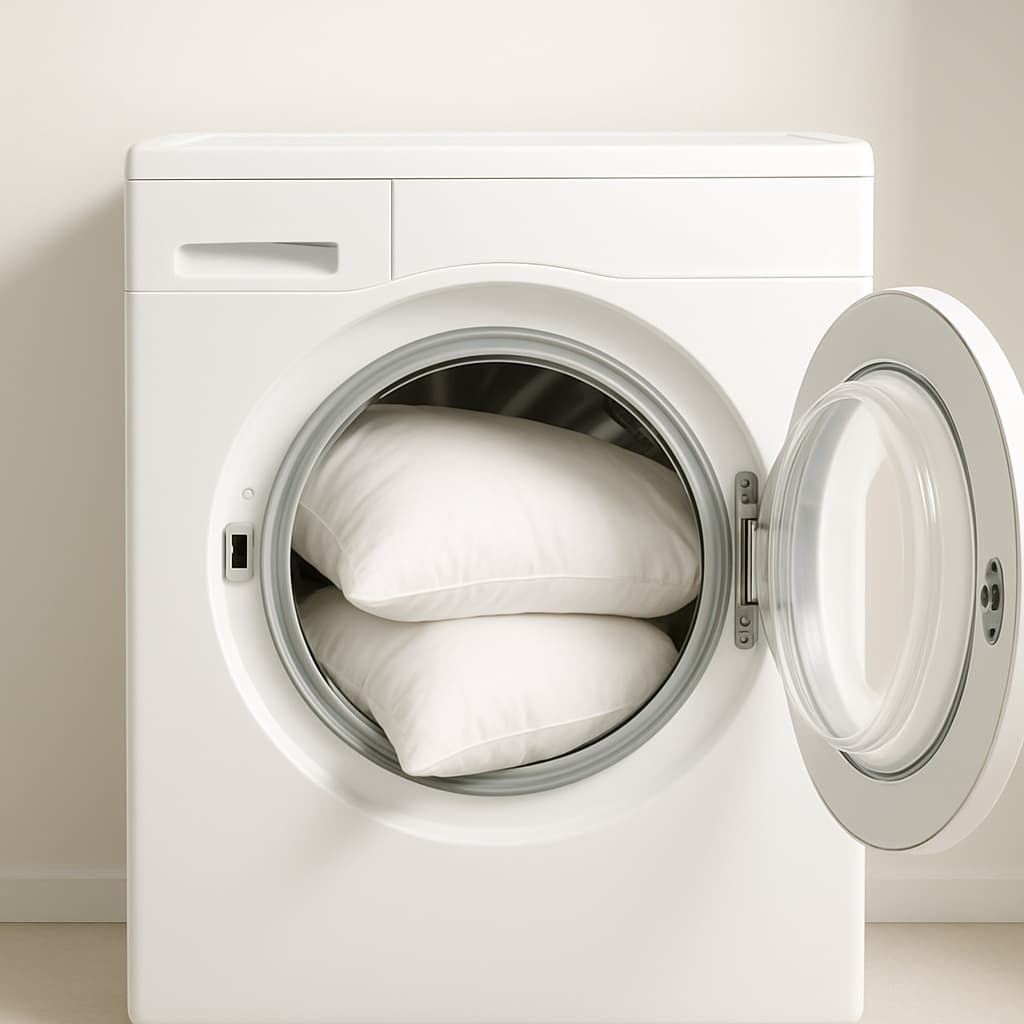
Strip off the pillowcase and protector, check the seams for loose stitching (a burst seam mid-cycle is a snow globe you cannot unsee), and load two pillows at a time — they balance the drum so it spins evenly instead of thumping one soggy pillow around. Run warm water on the gentle cycle with a small dose of mild liquid detergent; half the normal amount is plenty, because excess suds are miserable to rinse out of dense fill. Then run an extra rinse cycle — detergent residue left in the fill stiffens it, dulls the loft, and can irritate skin.
Two machine notes. A front-loader or an agitator-free top-loader is ideal. If your top-loader has a center agitator, place the pillows vertically on either side of it so it can't twist and tear them, and stick to the gentle cycle. When the wash ends, run an extra spin to throw off as much water as possible — every minute of spinning saves ten in the dryer. The same routine works for a machine-washable body pillow, with one change: it washes alone, because it fills the drum by itself.
Memory Foam and Latex Pillows: Never Machine Wash
Water and agitation are a two-part demolition for foam. The spinning drum tears the foam's structure apart, and the foam itself soaks up water like the sponge it technically is — then can't release it. A waterlogged foam core takes days to dry, and long before it does, mold and mildew set up in the middle where air never reaches. Plenty of washers have also been damaged by the sheer thrashing weight of a soaked pillow. However grimy a foam pillow looks, the machine makes it worse.
The right routine: unzip and machine-wash the removable cover (that's where most of the grime lives anyway), then vacuum the foam on both sides with an upholstery attachment to pull out dust and skin cells. For odors, sprinkle baking soda over the surface, let it sit for an hour or two, and vacuum it off. For stains, dab with a cloth dampened in a mild soap-and-water solution — blot, never soak or scrub — then press dry with a towel. Finish by airing the pillow in a ventilated spot out of direct sunlight, which degrades latex and yellows foam, until it is completely dry. Budget a full day.
How to Get Yellow Stains Out of Pillows
The yellow is sweat — specifically, sweat and skin oils that soaked through the pillowcase and oxidized in the fill, the same chemistry that yellows white T-shirt armpits. It happens to every pillow eventually and says more about human biology than your housekeeping. A regular wash cycle lightens fresh yellowing but usually can't touch the set-in kind, which needs a soak.
For white machine-washable pillows: fill a bathtub or top-loader with warm-to-hot water, dissolve a scoop of oxygen bleach (like OxiClean) or half a cup of borax along with your usual dose of detergent, submerge the pillows, and let them soak for one to four hours, turning them occasionally. Then run the normal gentle wash and extra rinse. Skip chlorine bleach — it's harsh on down and can actually react with protein stains to make yellowing worse. Deep, years-old oxidation may fade rather than vanish; if a pillow is still stubbornly yellow after a soak, that's usually a pillow telling you its age.
Dry Pillows Completely — the Step That Decides Everything
Drying is where washed pillows are won or lost, because a pillow that feels dry on the outside can still be damp in the core — and a damp core means clumped fill, a musty smell, and mildew growing in the exact spot where you put your face. Tumble dry on low heat only (high heat scorches down and melts synthetic fibers) with wool dryer balls or a couple of tennis balls tied in socks, which pound the fill apart as it dries and restore the loft. Expect two hours or more, pausing every thirty minutes or so to pull the pillows out and fluff them by hand. They're done when they're evenly fluffy, completely clump-free, and smell like nothing — if you squeeze the center and feel any coolness or dampness, keep going. An hour of airing out on a rack afterward is cheap insurance.
One honest caveat: washing revives a dirty pillow, not a dead one. Most pillows last roughly 18 to 36 months — cheap polyester at the short end, latex at the long end — and no wash cycle restores collapsed fill. Fold the pillow in half: if it springs back open, it has life left; if it stays folded or slumps back slowly, replace it instead of laundering it. If your neck has been complaining at dawn, start with our guide to the best pillow for neck pain rather than buying a like-for-like replacement. And whatever you buy next, put it in a zippered pillow protector from day one — it blocks the sweat and oils that cause yellowing, keeps dust mites out, and turns this whole chore into a twice-a-year formality.
See our Best Pillows of 2026 guide
If your pillow failed the fold test, we ranked the pillows actually worth replacing it with — for every sleep position and budget.
See our Best Pillows of 2026 guideFrequently asked questions
Can you wash pillows in the washing machine?
Most of them, yes. Down, feather, down-alternative, and polyester-fill pillows are machine washable: warm water, gentle cycle, a small dose of mild detergent, two pillows at a time to balance the drum, plus an extra rinse. Memory foam and latex pillows are the exception — never machine wash them; the agitation tears the foam apart and the core never dries.
How do you wash yellow pillows?
Yellow stains are oxidized sweat and skin oils, and they need a soak, not just a wash. Submerge white machine-washable pillows in warm-to-hot water with detergent plus oxygen bleach or half a cup of borax for one to four hours, then run a gentle cycle with an extra rinse. Avoid chlorine bleach, which is harsh on fill and can worsen protein-stain yellowing.
Can you wash memory foam pillows?
Not in a machine, and never fully submerged — foam soaks up water, tears under agitation, and grows mildew in the core because it can't dry. Instead, machine-wash the removable cover, vacuum the foam with an upholstery attachment, deodorize with baking soda, spot-clean stains with mild soapy water, and air it out completely away from direct sunlight.
How often should you wash pillows?
Two to four times a year — every three to six months — with pillowcases washed weekly alongside your sheets. Wash more often if you sleep hot, use hair products at night, or share the bed with pets. A zippered pillow protector, washed monthly, stretches the interval and blocks most of the staining.
How do you dry pillows after washing?
Low heat only, with wool dryer balls or tennis balls in socks to break up clumps, pausing every thirty minutes to fluff by hand. Expect two hours or more. A pillow is done when it's evenly lofted and the center feels warm and dry when squeezed — any dampness or coolness at the core means keep drying, because a damp core turns into mildew.
When should you replace a pillow instead of washing it?
Every 18 to 36 months for most pillows — sooner for budget polyester, longer for latex. Use the fold test: fold the pillow in half, and if it doesn't spring back open on its own, the fill is done supporting anything. Permanent lumps, flat spots, and morning neck pain are the other signs that it's a replacement, not a wash, that you need.
TopCrate is reader-supported. When you buy through links on our site we may earn an affiliate commission, at no extra cost to you. Content is for general information and isn't a substitute for professional advice.