SLEEP 101
Do Cooling Blankets Work? The Science, the Limits, and Who They Actually Help
Cool-touch fabric is real textile science with a lab spec behind it — here's how cooling blankets actually work, where the effect honestly ends, and how to pick one that isn't just slippery polyester.
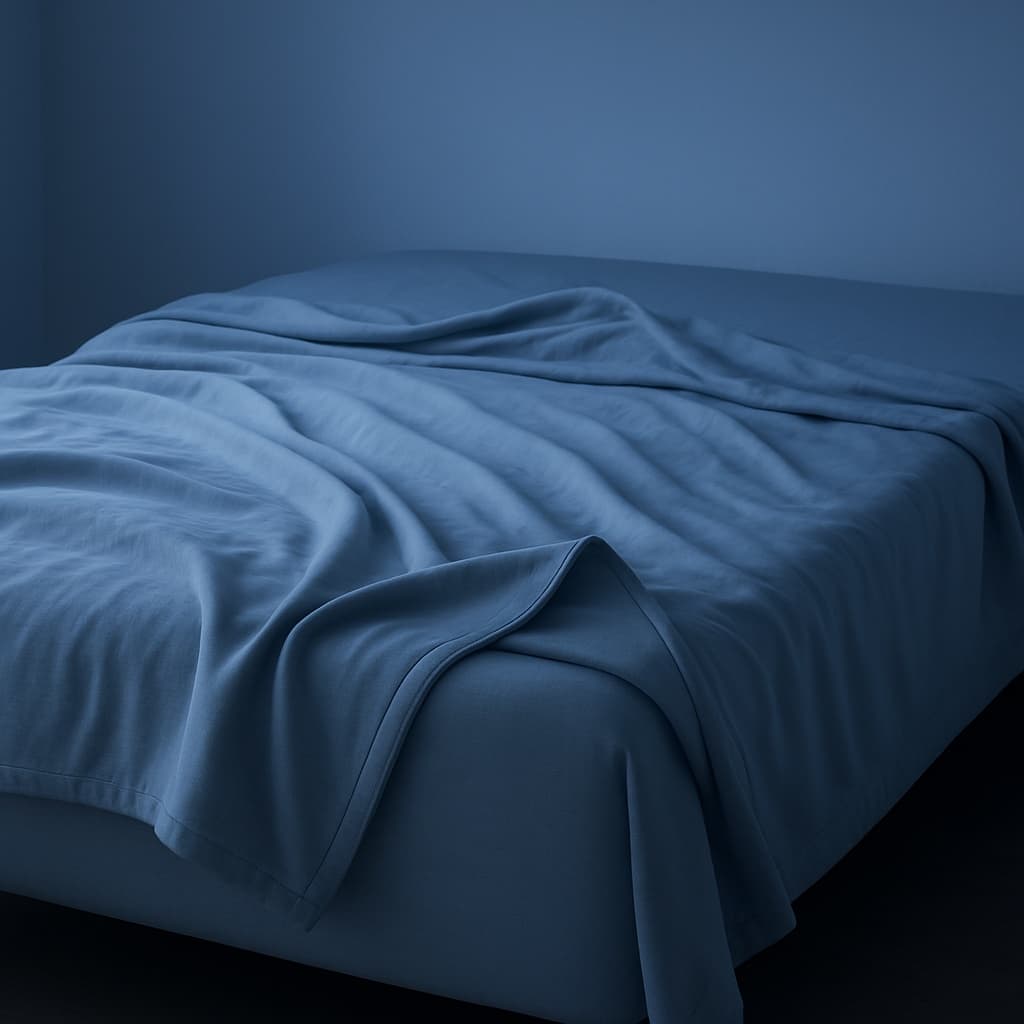
Press your palm on a cooling blanket in a store and it genuinely feels cold — which immediately raises the suspicion that something is being faked. It isn't, exactly. The cold is real, it's measurable, and there's a lab spec for it. But what your palm feels in three seconds and what a blanket does across eight hours of sleep are different questions, and the marketing does its best to blur them.
This guide covers how cooling fabrics actually work, the Q-Max number that separates real cool-touch fabric from slippery polyester, where the effect honestly ends, who gets the most out of a cooling blanket, how it compares to cooling sheets and comforters, and the care mistakes that quietly ruin the cooling.
How Cooling Blankets Actually Work: Conduction, Not Refrigeration
A cooling blanket has no motor, no water, no refrigerant — so how can fabric be cold? The answer is that it isn't colder than the room; it's faster at stealing your heat. Every material conducts heat at a different rate, and your skin reads rapid heat loss as cold. It's why a metal bench feels freezing while the wooden one beside it feels neutral, even though both sit at the exact same temperature. Cooling fabrics are engineered to be the metal bench: high-conductivity fibers — typically nylon blended with thermally conductive mineral content like jade or mica — pull heat out of your skin much faster than cotton or fleece would.
Ordinary bedding does the opposite on purpose. Cotton, fleece, and down are insulators that trap a warm boundary layer of air against you — exactly what you want in January and exactly the problem in July. A cooling blanket flips the design goal: shed heat instead of hoarding it. That's the entire mechanism. No magic, no gimmick — just a fabric that moves heat in the direction summer wants it to go.
Q-Max: The Number That Separates Real Cooling Fabric From Marketing
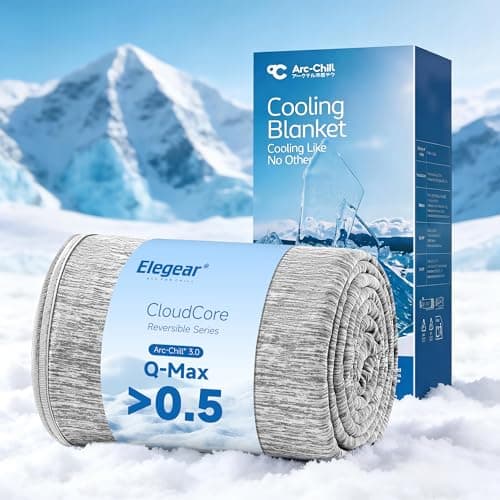
The cool-touch sensation has a lab measurement: Q-Max, which quantifies how much heat a fabric draws from skin in the first instant of contact. In textile testing, a Q-Max above roughly 0.34 qualifies as officially cool-touch; ordinary cotton lands well below that threshold. The best cooling blankets publish their number — the category-leading Elegear rates its Arc-Chill fabric above 0.5, which is why its first touch is unmistakable rather than subtle.
Q-Max is also your defense against the fake stuff. Plenty of blankets are marketed as 'cooling' because they're thin, or slippery, or blue. If a listing won't name its Q-Max rating or at least its cooling-fiber technology, you're probably looking at ordinary polyester with a chilly-sounding product name. The same label-reading skepticism that applies to 'silk' bedding applies here: the spec is the product, and a listing that hides the spec is answering your question by dodging it.
The Honest Limits: What a Cooling Blanket Can't Do
Three limits, stated plainly. First, the cold-touch sensation is strongest at first contact and fades as the fabric under you warms to skin temperature — then renews when you shift to a fresh patch. Owners learn to like this rhythm, but it's a rhythm, not a constant refrigerated hum. Second, a blanket cannot lower your bedroom's temperature; it moves your body heat into the fabric and the air, so in a sealed, genuinely hot room, everything eventually equalizes and the effect shrinks. Give the heat somewhere to go — a fan, a cracked window, AC set a few degrees higher than usual — and the blanket keeps its edge all night. Our guide on how to cool a room without ac covers that side of the equation.
Third, a cooling blanket is a comfort product, not a treatment. If your problem is a warm room or running hot at night, it's the right tool. If your problem is drenching, recurring night sweats — waking soaked regardless of the season or bedding — that's a symptom with real medical causes, from hormones to medications to conditions a doctor should rule out. Buy the blanket for comfort; take persistent night sweats to a physician.
Who Actually Benefits From a Cooling Blanket
The best-case buyer is the classic hot sleeper: the person who kicks off the covers by 2am, flips the pillow for the cold side, and dreads July under any blanket heavier than a bedsheet. For them, swapping an insulating top layer for a conductive one attacks the problem directly, and the difference shows the first night. Couples split across the thermostat are the second big winner — a cooling blanket on one side of the bed lets the furnace sleep comfortably while the other person keeps their duvet.
It also earns its keep for summer sleepers rationing air conditioning: pairing a cooling blanket with a fan lets many people set the AC several degrees higher without misery, which is where a $30 blanket quietly pays for itself. Skip it if you sleep cold, if you love the weight and warmth of heavy bedding year-round, or if you're expecting it to fix a sweltering room on its own — that job belongs to ventilation and shade, not fabric.
Cooling Blanket vs Cooling Sheets vs Cooling Comforter
These are layers of the same strategy, not rivals. The blanket is the direct-contact top layer and the strongest single upgrade — it's the piece your arms and shoulders touch, the cheapest to buy, and the easiest to test. Our pick there is the Elegear Arc-Chill, the best-selling cool-touch blanket and the one whose published Q-Max backs the sensation. Cooling sheets matter because your back spends all night against the bottom sheet; breathable or actively cooling sets change the surface you actually lie on — the silver-infused Miracle Sheets are the known name in that lane, pairing a cooling weave with an anti-odor angle.
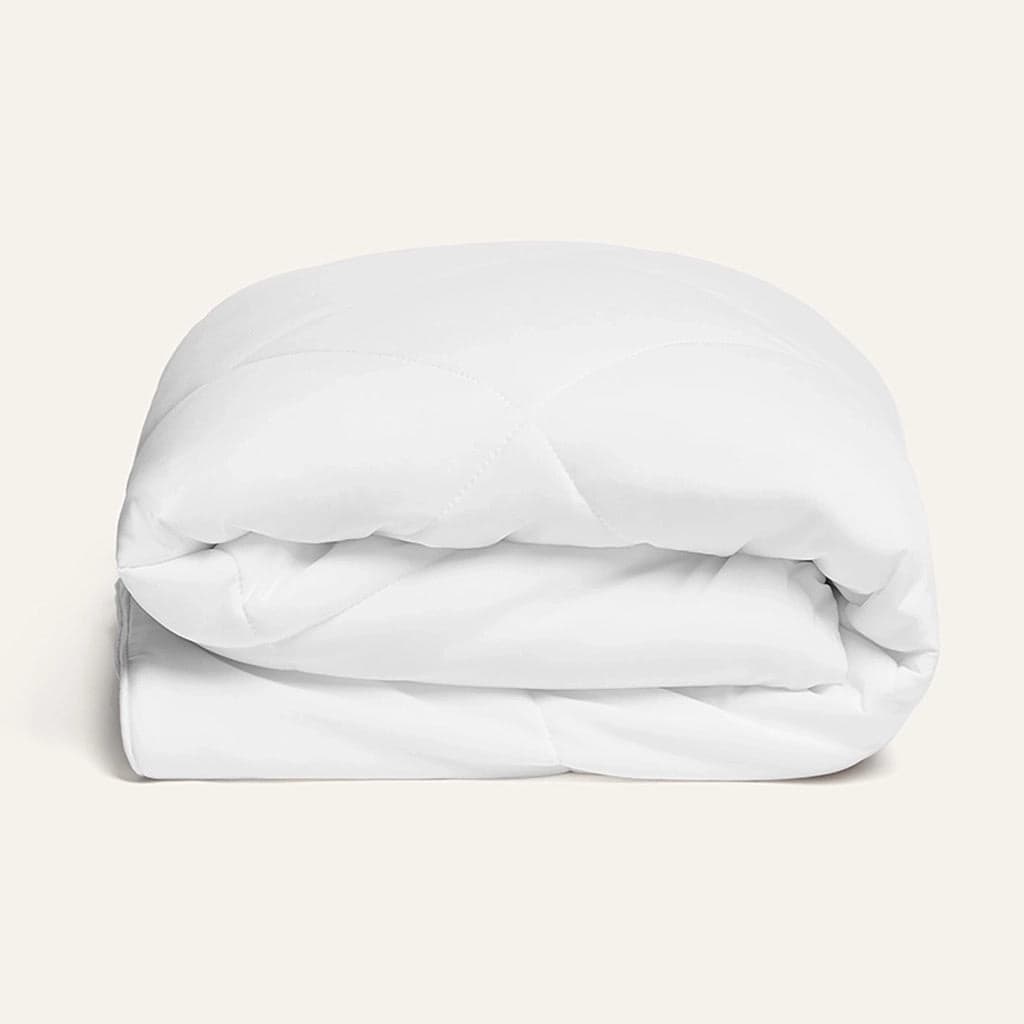
A cooling comforter replaces the duvet entirely — the year-round, higher-priced version of the same idea, worth it once you know cool-touch bedding works for you. The sensible order: blanket first as the cheap test, sheets second for full-surface coverage, comforter last as the commitment purchase. A hot sleeper running the full stack in a ventilated room has effectively rebuilt the bed around heat-shedding — and it costs less than one month of cranked air conditioning.
Care: The Two Mistakes That Ruin a Cooling Blanket
Cooling fabric dies two ways, and both happen in the laundry room. Mistake one is fabric softener: it works by coating fibers in a waxy film, and that film sits exactly where the skin-to-fiber heat transfer happens, dulling the cool-touch effect wash by wash — the same mechanism that ruins towel absorbency. Skip it entirely. Mistake two is heat: a hot dryer degrades the conductive fibers and the smooth face they're woven into. Machine wash cold on gentle, then air dry or tumble on the lowest setting.
Treated that way, a quality cooling blanket keeps its cold touch for years, which turns a $30 purchase into infrastructure. One last buying note: get a size bigger than instinct says. The fabric is light, so a larger size costs nothing in heat — and half the joy of owning one is a leg finding a fresh, cold patch at 3am. A cooling blanket you have to fight your partner for isn't cooling anyone.
Read our Elegear Cooling Blanket review
The best-selling Arc-Chill blanket with the Q-Max rating to back the cold touch — our full verdict for hot sleepers.
Read our Elegear Cooling Blanket reviewFrequently asked questions
Do cooling blankets actually work?
Yes, for cooling you — not the room. Cool-touch fabrics conduct heat away from skin faster than cotton, which reads as genuine cold, especially at first contact and on fresh spots. The effect is measurable (the Q-Max spec) and real, but no blanket lowers a room's temperature — pair it with a fan or ventilation in real heat.
What is a Q-Max rating on a cooling blanket?
Q-Max measures how much heat a fabric pulls from your skin in the first moment of contact — the lab number behind the cold-touch feeling. Above roughly 0.34 counts as cool-touch; the best cooling blankets rate above 0.5, while ordinary cotton lands far below. A 'cooling' product that won't state its Q-Max or fiber technology is usually just polyester.
Why does my cooling blanket stop feeling cold?
Because the patch under you warms to skin temperature — cool-touch fabric is a conductor, not a refrigerator. The sensation renews when you move to a fresh spot, and the blanket keeps shedding heat all night as long as the room has some airflow. If it never feels cold at all, check that the smooth cooling side is against your skin.
Do cooling blankets help with night sweats?
They help with being a warm sleeper — less trapped heat means less sweating for most people. But drenching, recurring night sweats that soak bedding regardless of temperature are a medical symptom, not a bedding problem: hormones, medications, and several conditions can cause them, and that conversation belongs with a doctor, not a blanket listing.
What's the difference between a cooling blanket and cooling sheets?
The blanket is the top layer your arms and chest touch; the sheets are the surface your back lies on all night. The blanket delivers the strongest cool-touch sensation and is the cheapest way to test cool bedding; sheets cover more skin for more of the night. Hot sleepers who love the blanket usually add the sheets next.
How do you wash a cooling blanket?
Cold water, gentle cycle, no bleach, and critically: no fabric softener, which coats the cooling fibers and dulls the effect. Air dry or use the lowest dryer heat — high heat is the other thing that degrades cool-touch fabric. Cared for this way, the cooling lasts for years.
TopCrate is reader-supported. When you buy through links on our site we may earn an affiliate commission, at no extra cost to you. Content is for general information and isn't a substitute for professional advice.