COMPARISON
Miracle Sheets vs Copper Sheets: Silver-Infused vs Copper-Infused Bedding — Which Antimicrobial Sheet Set Should You Buy? (2026)
Miracle Sheets and copper-infused bedding (Cariloha copper, Pure Earth copper, and the generic "copper sheets" Amazon staples) are the two most-searched antimicrobial sheet categories in 2026, and they compete for the same buyer who wants cleaner, cooler, less-washed sheets. One infuses natural silver into a lyocell-cotton sateen; the other infuses copper into a cotton or bamboo-rayon weave. Here's how the two metal fibers actually differ, what each one does and doesn't deliver, and which sheet set is the honest pick for your bed.
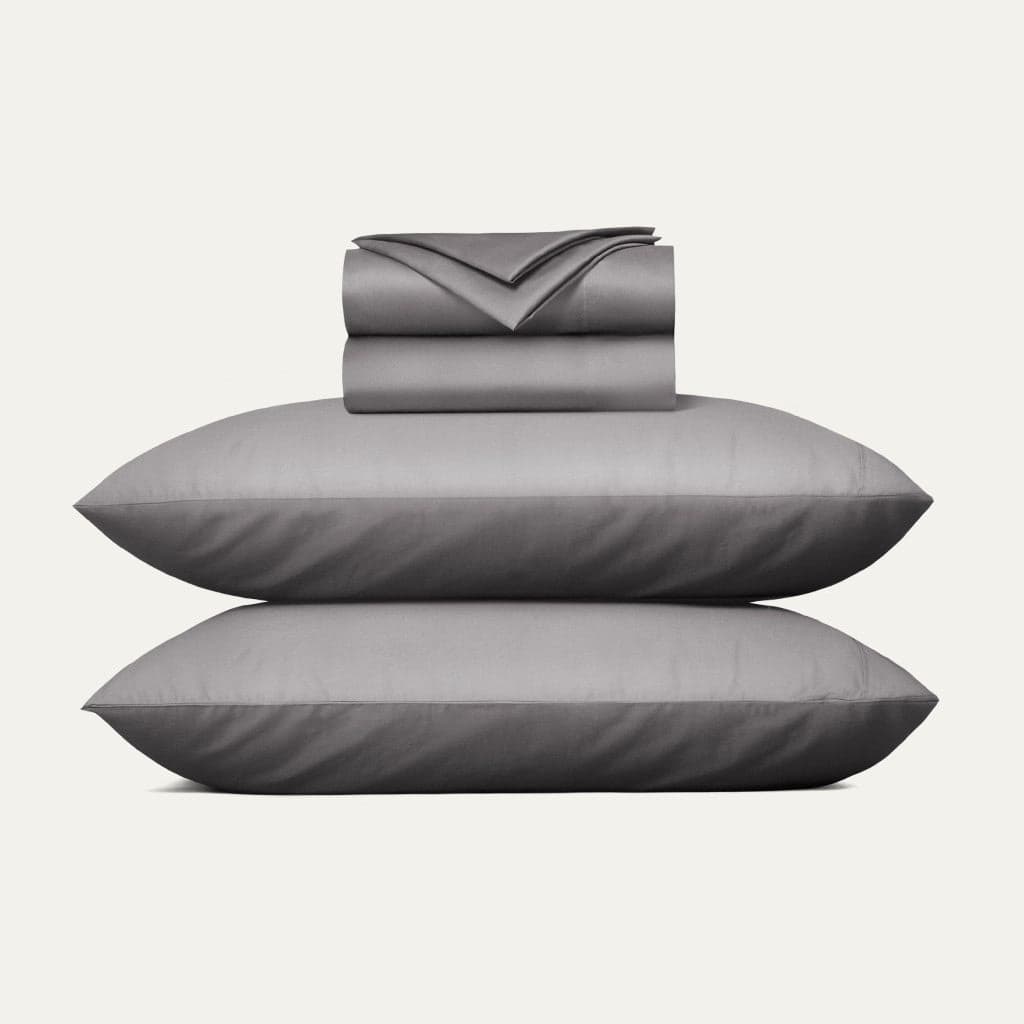
Miracle Sheets and copper-infused sheets are the two most-searched antimicrobial bedding categories in 2026, and they target the same buyer: someone whose current sheets are perfectly fine but who wants cleaner, less-washed, less-smelly, less-humid bedding — especially night-sweating or hot-sleeping adults, people with sensitive skin that reacts to detergent build-up, and anyone who's gotten tired of hauling king-size sheet sets through a laundry cycle every week. Miracle Sheets, from the Miracle brand, are a lyocell-cotton sateen weave infused with proprietary silver fiber threads; the brand's claim is that the silver's antimicrobial action reduces the bacteria that cause sheet odor by up to 99.7% in controlled lab testing, which lets you reasonably wash the sheets every 10-15 days instead of weekly. Copper-infused sheets — a category rather than a single brand, with Cariloha copper, Pure Earth copper, and various Amazon staples as the main anchors — use copper fiber woven into cotton or bamboo-rayon sateen, with a similar antimicrobial argument based on copper's own well-documented bacteria-and-fungus-killing properties.
So the right pick isn't "silver vs copper is better in the abstract" — both metals do have published antimicrobial action, and both infusion methods produce real sheet sets that function like normal bedding. It's which brand-and-weave combination best fits your bed, your sleep heat profile, your skin sensitivities, your budget, and your tolerance for the specific marketing claims each category makes. If you want the thinner, cooler, more drape-y feel of a lyocell-cotton sateen; if you want a direct-to-consumer brand's full ecosystem (sheets, pillowcases, comforter, mattress protector) in one place; if the 30-day money-back guarantee and the brand's return process matter more than the Amazon ecosystem; Miracle is the honest pick at ~$109-$209 depending on tier and size. If you want the familiar heft and feel of a cotton or bamboo-rayon sateen; if you prefer a lower price point in exchange for less-polished marketing; if you want to buy from Amazon with its return-and-review ecosystem; the generic copper-sheet category (anchored by Cariloha copper for the premium pick and Amazon copper-sheet staples for the budget pick) is the honest alternative at roughly $70-$150 for a comparable queen set.
A disclosure from us: TopCrate is a paid affiliate for Miracle Made Sheets and earns a commission when readers buy through our links. It doesn't change the verdict on this page, and it doesn't push Miracle into use cases copper sheets handle better — the fit rules below keep copper sheets in play for the specific preference patterns (cotton feel, lower price, Amazon purchase) they genuinely serve better. Our full Miracle Made bed sheets review covers the sheet-set experience in depth; this comparison names what you give up on either path. One name-related note before we start: this guide uses "copper sheets" the way shoppers search it — meaning copper-infused bed sheets, the bedding product. Not copper roofing or craft copper sheet material. If you landed here looking for metal copper sheets for a craft or construction project, this is the wrong guide.
Miracle Sheets vs copper sheets at a glance
Miracle Sheets: priced at $109 (Luxe queen) to $209 (Original king) direct from miraclebrand.co; a lyocell-cotton sateen weave with roughly 500 thread count; infused with proprietary silver-fiber threads woven into the fabric itself (rather than a surface coating that washes out); the brand cites up to 99.7% reduction in sheet-odor-causing bacteria in controlled lab testing on silver-treated textile samples; stated manufacturer recommendation is to wash the sheets every 10-15 days instead of weekly; 30-day money-back guarantee on standard-price orders through the brand's own funnel; Verizon MVP small-business program alumnus (not Shark Tank — a common mistake); the brand ecosystem extends to pillowcases, duvet covers, comforters, mattress protectors and bath towels in the same silver-infused family.
Copper sheets (the category): priced from ~$70 (Amazon generic queen set) to ~$150 (Cariloha copper queen set) and up through ~$180 (Pure Earth copper king); typically a cotton sateen or bamboo-rayon sateen weave at 300-600 thread count; infused with copper fiber threads similarly woven into the fabric (not a surface coating); copper's antimicrobial action is EPA-registered on hard-surface copper (a well-established fact used in hospital doorknobs and railings) and documented in a smaller but real body of textile-specific research on copper-infused yarn; wash-frequency guidance varies by brand but tends to recommend every 1-2 weeks rather than weekly; return terms vary (Amazon's standard window for Amazon-staple brands, brand-direct policies for Cariloha and Pure Earth); fewer brands offer a full ecosystem beyond sheets and pillowcases.
The metal difference: silver has a longer institutional history in textile infusion (silver-ion treatments have been used in athletic apparel for over a decade and in medical dressings for far longer) and is the lighter, more drape-y choice when woven into a lyocell-cotton blend. Copper has an older history in antimicrobial surfaces (ancient Egyptian and Greek documents mention copper vessels for water storage specifically because copper slows bacterial growth) and has an EPA registration for hard-surface antimicrobial claims; textile-copper is a newer application but is well-studied enough to be a legitimate alternative to silver for the same antimicrobial purpose.
The weave difference: Miracle's lyocell-cotton sateen is thinner, lighter and more drape-y than a traditional cotton percale and runs cooler against the skin — which matters a lot for night-sweating hot sleepers. Copper sheets most often come in a cotton sateen (heavier, more lustrous, slightly warmer) or a bamboo-rayon sateen (very soft, drapes similarly to lyocell, slightly less durable over time). Neither category is "better"; the weave is a feel-and-temperature preference as much as a performance one.
What silver and copper actually do (and don't do) in a sheet
Both silver and copper have real, published antimicrobial action — this is settled science at the material-chemistry level, not a wellness-marketing claim invented by sheet brands. Silver ions disrupt bacterial cell membranes and interfere with the enzyme systems bacteria use to replicate; copper ions do similar membrane disruption plus some reactive-oxygen-species generation that further kills bacteria and fungi. Both metals are documented to inhibit the Staphylococcus, Escherichia coli, Candida and related microorganisms responsible for the odor-and-film-build-up that makes unwashed sheets smell. Neither metal is a sanitizer, a disinfectant, or an FDA-approved medical device; both are legitimate antimicrobial textile additives that slow the growth of the microorganisms that cause sheet odor.
The important caveat on both: the 99.7%-reduction claims that both silver and copper textile categories use come from lab testing on the metal fibers themselves under controlled conditions (specific bacterial strain, specific exposure time, specific humidity), not from testing on your actual sheets after your actual night-sweat exposure, your actual wash cycle, and your actual bedroom humidity. The real-world antimicrobial effect in your bed is somewhere between the lab number and no effect at all; it's a meaningful real reduction in sheet odor and film build-up for most buyers (which is what reviewers consistently report), not literally a 99.7% kill rate on the organisms in your bed. Both silver and copper sheets honestly deliver cleaner, less-smelly bedding; neither honestly delivers a hospital-grade sanitized surface.
What neither metal does: cure anything. Both Miracle Sheets and copper sheets are consumer bedding products in the cosmetic/wellness category, not medical treatments for any skin condition, allergy, infection or sleep disorder. If you have active acne, atopic dermatitis, bacterial folliculitis or a diagnosed skin or sleep condition, a clinician's recommendation beats either sheet category; the sheets are a hygiene-and-comfort upgrade that pairs cleanly with any dermatology plan, not a replacement for one. And both brands say so plainly in their own fine print.
The weave feel difference most buyers underweight
The honest sheet-shopping question isn't usually "which antimicrobial metal" — it's "which fabric feel do I actually like." Miracle's lyocell-cotton sateen is a cool, lightweight, drape-y feel that runs noticeably cooler against the skin than a traditional 100% cotton sheet of the same thread count. Lyocell (the Tencel brand's generic version) is a wood-pulp-derived cellulose fiber with a smooth surface and high moisture-wicking capacity; blending it with cotton makes a sheet that feels like a slightly-silkier cotton with a lot more cooling power. For night sweaters and hot sleepers specifically, this weave difference is often more valuable than the silver infusion itself — the sheet physically pulls humidity away from your skin faster than a cotton-only sheet can.
Cotton-copper sheets feel like high-end cotton sheets, because that's what they fundamentally are — a 300-600 thread count cotton sateen with copper fiber woven in. The feel is familiar, slightly heavier than lyocell, more lustrous, and runs warmer than lyocell against the skin (because cotton holds moisture in the fiber rather than wicking it to the surface the way lyocell does). Hot sleepers often find cotton sheets of any treatment less temperature-regulating than lyocell; cool sleepers often prefer the cotton feel because the extra warmth is a feature, not a problem. Bamboo-rayon-copper sheets split the difference — very soft, cool-leaning, slightly less durable over many wash cycles than cotton.
The honest translation: pick the weave that matches your sleep heat profile first, and let the antimicrobial metal be a secondary consideration. A hot sleeper on cotton-copper sheets will likely be hotter than on lyocell-cotton Miracle sheets regardless of which metal does the antimicrobial work. A cool sleeper on lyocell-cotton Miracle sheets may find them lighter than they want and prefer the heft of a cotton-copper sheet. There's no antimicrobial substitute for picking the right fabric for your body.
The wash-frequency claim and whether it matters
Both Miracle Sheets and copper sheets lean on a wash-frequency reduction as a core selling point: because the metal infusion slows the growth of odor-causing microorganisms, you can wait longer between washes without the sheets smelling or developing a film. Miracle specifically cites a 10-15 day wash window versus the standard weekly recommendation; copper-sheet brands cite similar 1-2 week recommendations. The real-world evidence from long-term buyers is that this holds up most of the time: both categories genuinely stay fresher-smelling and less-filmy than untreated cotton sheets over a 10-day stretch, which is the specific win most buyers notice first.
Where the wash-frequency math pays off: the lifetime cost math on either sheet category is competitive with mid-tier cotton sheets once you factor in the half-as-often laundry cycle. A $150 queen set of Miracle Sheets washed every 10-14 days consumes meaningfully less water, electricity and detergent over three years than a $100 queen cotton set washed weekly, and the wear-and-tear on the sheets from fewer washes also extends their useful life. For a single person doing their own laundry, this is marginal; for a two-person household or a parent doing kids' sheets too, the time and utility savings compound.
Where it doesn't: night-sweaters, people recovering from illness, pet owners whose cats or dogs sleep on the bed, allergy sufferers in high-pollen season, or anyone whose bedroom is at a high humidity level. In any of these cases, washing the sheets on your regular weekly cadence is the right move regardless of the antimicrobial treatment, and the sheets still function (and the metal still slows odor between washes) if you do; the wash-reduction is a nice-to-have, not an obligation. The honest framing: both sheet categories give you the option to wash less often, not a requirement.
Price and value: when the premium is worth it
Miracle's standard-price range runs $109 (Luxe queen) to $209 (Original king). Copper-sheet pricing is lower on average: $70-$80 for a decent Amazon generic queen set, $120-$150 for a Cariloha copper queen (the premium cotton-copper brand), $180-$200 for a Pure Earth copper king. For a straight queen-set comparison on roughly comparable thread count and weave quality, Miracle Luxe runs about $109 and Cariloha copper queen runs about $140-$150, which is a modest Cariloha premium. For comparing to a bottom-tier Amazon copper-sheet set at $70-$80, Miracle is a clear premium, and the question is whether the brand ecosystem, the direct-funnel return terms and the lyocell weave justify the gap for you.
The honest value framing: at the top of the market, Miracle Original (~$180-$209) and Pure Earth copper (~$180-$200) are roughly peer products in price and quality; the choice between them is weave and brand ecosystem rather than value. In the middle, Miracle Luxe (~$109) and Cariloha copper (~$140-$150) are comparable premium options with Miracle holding a slight price edge on the cheaper tier; the choice between them is weave feel (lyocell vs cotton) and brand ecosystem (Miracle offers the full bedding ecosystem; Cariloha focuses on cotton bedding and bamboo apparel). At the bottom, Amazon copper-sheet staples at $70-$80 are the cheapest antimicrobial-sheet option, with the usual Amazon-staple caveats about variable quality, review-pooling across variants, and no direct-brand return process.
Where Miracle's premium is clearly worth paying: hot sleepers who need the lyocell weave specifically, buyers who want the full brand ecosystem (bath towels, comforter, mattress protector all in the same antimicrobial family), and buyers who value a brand-direct 30-day money-back guarantee over an Amazon return path. Where copper's lower price is the better deal: cool sleepers who prefer the cotton feel, Amazon-ecosystem shoppers who want Prime shipping and the Amazon return window, and buyers who just want the antimicrobial fiber in a sheet without paying for the brand's broader ecosystem.
Return terms, warranties and the direct-funnel fine print
Miracle's return and refund terms: 30-day money-back guarantee on standard-price orders through miraclebrand.co, measured from delivery date, with the usual fine print on bundle-tier promotional orders (shorter window on deep discounts, final-sale language on some multi-set bundles). Returns go through the brand's own customer-service team rather than Amazon. Buyer typically pays return shipping; original shipping charges are non-refundable; the sheets must be in resalable condition (which, for sheets you've slept on, usually means laundered). The brand's funnel also runs a subscribe-and-save discount tier (~20-30% off single-set pricing in exchange for an auto-renewing shipment every 90-120 days) that you should be aware of before clicking pay.
Copper-sheet return terms vary by brand. Amazon-staple copper-sheet brands follow Amazon's standard 30-day return window with Amazon customer service as the recourse. Cariloha copper sells through its own direct funnel and through select retailers with its own 100-day return window on standard-price orders (longer than Miracle's). Pure Earth copper sells through its own site with a 30-day return window. The specific terms you'll get depend on where you buy, and the brand-direct terms are usually better than the Amazon-reseller terms for the same brand because the direct brand has access to its own full return policy.
The honest hygiene move on either side: before buying, pull up the specific return and refund terms for the specific tier you're about to pay on (not the general FAQ, but the fine print tied to the specific SKU and promotional tier), screenshot them, and note the window from the delivery date. If you're buying a bundle (a two-set household order, a holiday-gift pack), read the bundle-specific return terms; multi-set bundles across both categories sometimes carry tighter restrictions than single-set orders.
A disambiguation on brand names
"Miracle" and "miracle sheets" are a legitimately confused space on Bing and Google because several unrelated brands use similar names. The Miracle brand (miraclebrand.co, the one TopCrate reviews) sells silver-infused bedding and bath towels across the Original and Luxe tiers. Separately, there are detergent-sheet brands and powdered-laundry brands sometimes called "miracle" or sold at bath-and-beauty retailers; those are not the same company and don't carry the silver-infused sheet-set product. And "miracle bed sheets" sometimes blends in search results with generic "antimicrobial sheets" listings on Amazon that have no formal connection to Miracle the brand. If you've landed on a sheet set at a $20-$30 queen price point calling itself a "miracle sheet," that is almost certainly a generic Amazon listing rather than the Miracle-brand product our review covers.
On the copper side, "copper sheets" as a bedding search term pulls in two very different categories. The one this guide covers is copper-infused bed sheets — cotton or bamboo-rayon sateen with copper fiber woven in. The other is actual metal copper sheet (thin copper roll stock for roofing, crafting and construction) which has nothing to do with bedding. If you've landed here looking for metal sheet copper by the square foot, you'll want a hardware or metal-supply site rather than a bedding review.
Where neither category is the right answer
If your current sheets are the specific problem you're trying to solve, both Miracle Sheets and copper sheets will meaningfully help with sheet odor and film build-up and will probably run cooler (if you pick the right weave for your sleep heat). If your problem is somewhere else — a mattress that's past its useful life, a comforter that traps heat, a pillow that's wrong for your sleep position, a bedroom that's too hot or humid in the ambient — neither sheet set fixes the upstream issue, and the honest spend is on the upstream problem first. Our pillow category covers the loft-and-shape question (our Derila review is the butterfly-contour pick for side sleepers); our cooling-blanket and comforter writeups cover the heat-trapping side.
If you have a diagnosed skin or allergy condition (eczema, atopic dermatitis, dust-mite allergy, chronic urticaria), the specific sheet treatment that helps most is a clinician's recommendation rather than either antimicrobial category. Both Miracle and copper sheets can be a legitimate hygiene-and-comfort upgrade on top of a dermatology plan, but neither replaces one. For dust-mite allergy specifically, the honest answer is a tightly-woven dust-mite-barrier mattress and pillow encasement with the sheet category chosen on comfort rather than antimicrobial action.
If you sleep extremely hot and the lyocell weave still isn't enough, both sheet categories hit a cooling-performance ceiling that no antimicrobial infusion can push past. The next step up is active cooling (a bed cooler like a BedJet, or a cooling-mattress-topper like a ChiliPad) that cycles cool water or air through the mattress, which is a different product category entirely at a $200-$1,500 price point.
The honest decision rule
If you're a hot sleeper or a night sweater who wants the lyocell weave cooling effect specifically; if you want the full brand ecosystem (sheets + comforter + mattress protector + towels in the same antimicrobial family); if you value a brand-direct 30-day money-back guarantee and are willing to work through the direct-funnel checkout with its bundle-tier and shipping-protection hygiene steps: Miracle Sheets at $109-$209 is the honest pick. If you're a cool sleeper who prefers the familiar cotton feel; if you want a lower price point for the antimicrobial feature; if you prefer the Amazon ecosystem for shipping and returns, or the longer 100-day Cariloha return window on a direct-brand purchase: copper-infused sheets (Cariloha copper for the premium pick, Pure Earth or an Amazon-staple set for the budget pick) at $70-$180 are the honest alternative.
The 10-second rule we'd offer a friend: hot sleeper → Miracle; cotton loyalist → copper; Amazon shopper on a budget → generic copper queen set; brand-ecosystem shopper → Miracle (sheets + towels + comforter together); first-ever antimicrobial-sheet purchase → Miracle Luxe queen ($109) if the lyocell feel sounds right, Cariloha copper queen (~$140-$150) if the cotton feel sounds right, and judge from there whether to upgrade the rest of your bedding or step up to the Original tier. Our full Miracle Made bed sheets review covers the daily-use experience in depth; the sheet set earned our pick for the specific lyocell-weave and brand-ecosystem use cases above.
Read our full Miracle Made bed sheets review
Our verdict on Miracle's silver-infused lyocell-cotton sheet set — what the 10-15 day wash cycle actually looks like in practice, which weave tier (Luxe or Original) fits which sleeper, and the specific use cases where the brand's premium is worth paying over the generic antimicrobial-sheet alternatives.
Read our full Miracle Made bed sheets review →Frequently asked questions
Miracle Sheets vs copper sheets — which should I buy first?
Pick the weave your body wants first, and let the antimicrobial metal be secondary. Hot sleepers and night sweaters get the biggest practical win from Miracle's lyocell-cotton sateen, which runs noticeably cooler than cotton sateen regardless of the metal in it; the silver infusion is a bonus on top of a weave that already wicks moisture better than cotton. Cool sleepers and cotton loyalists get the biggest practical win from a copper-infused cotton sateen (Cariloha copper for the premium pick, or an Amazon-staple set for the budget pick), where the familiar cotton feel and heft is what you actually want and the copper does the antimicrobial work. There's no antimicrobial substitute for picking the right fabric for your sleep heat profile.
Does silver really kill bacteria in sheets — or copper?
Both do, within specific limits. Silver and copper both have real, published antimicrobial action at the material-chemistry level; both metals disrupt bacterial cell membranes and slow the growth of the organisms (Staphylococcus, E. coli, Candida) that cause sheet odor and film build-up. The 99.7%-reduction claims in both categories come from lab testing on metal-fiber samples under controlled conditions rather than your bed; the real-world effect is a meaningful reduction in sheet odor and film build-up over a 10-day wash cycle, not a sanitized hospital-grade surface. Both sheet categories honestly deliver cleaner, less-smelly bedding; neither replaces a medical treatment for a skin or sleep condition.
Can I really wash Miracle Sheets or copper sheets only every 10-15 days?
Yes for most buyers, no for some. For a single person or couple without pets, without night-sweat issues and in a normal-humidity bedroom, both sheet categories genuinely stay fresher-smelling and less-filmy over a 10-day stretch than untreated cotton — the published wash-reduction guidance holds up in practice. Where you'd want to wash on your normal weekly cadence anyway: heavy night sweats, pet owners whose cats or dogs sleep on the bed, allergy sufferers in high-pollen season, high-humidity bedrooms, or sickness recovery. The sheets still function (and the metal still slows odor) if you wash more often; the wash-reduction is a nice-to-have option, not a requirement.
Is Miracle on Shark Tank?
No, this is a common misconception. Miracle Brand (miraclebrand.co, Bayport NY, founded 2018) is a Verizon MVP (Mobile Innovation Program) alumnus — a Verizon-run small-business support program — not a Shark Tank company. The confusion is real enough that Miracle's own FAQ page addresses it. Separately, Shark Tank has featured several unrelated bedding and laundry companies over the years, and some blog roundups mix them up with Miracle. If you're verifying the brand, miraclebrand.co's BBB profile (Bayport NY, founded 2018) is the credible source.
What about Cariloha copper vs Miracle Sheets specifically?
Peer products at the premium tier. Cariloha copper (~$140-$150 queen, ~$180-$200 king) is a cotton-copper sateen sheet from the Cariloha bamboo-apparel brand, with a 100-day return window on direct orders and a well-regarded brand reputation in bamboo-and-eco-conscious bedding. Miracle Luxe (~$109-$130 queen, ~$155-$180 king) is a lyocell-cotton silver-infused sateen with a 30-day return window and a broader bedding ecosystem (comforter, mattress protector, towels). Cariloha wins on return-window length and on cotton feel; Miracle wins on cooling (the lyocell weave) and on brand ecosystem; prices are close enough that the decision is about weave feel and secondary features rather than price. Hot sleeper → Miracle Luxe; cool sleeper who likes cotton heft → Cariloha copper.
Are copper sheets the same as copper-grounding sheets?
No, two different categories. Copper-infused antimicrobial sheets (what this guide covers) are cotton or bamboo-rayon sateen with copper fiber woven in for antimicrobial action. Copper-grounding sheets or "earthing" sheets are a separate product category that claims to electrically ground the sleeper to the earth through a conductive copper mesh — a wellness claim about the body's electrical charge that has a smaller evidence base and a specific audience. If you've landed here looking for grounding/earthing sheets, that's a different category with its own brands and its own evidence discussion, and the antimicrobial copper sheets this guide covers don't make grounding claims.
TopCrate is reader-supported. When you buy through links on our site we may earn an affiliate commission, at no extra cost to you. Content is for general information and isn't a substitute for professional advice.