HEAD TO HEAD
Chamelo Shield vs Julbo Fury Reactiv: Electronic Tint vs Photochromic Running Sunglasses (2026)
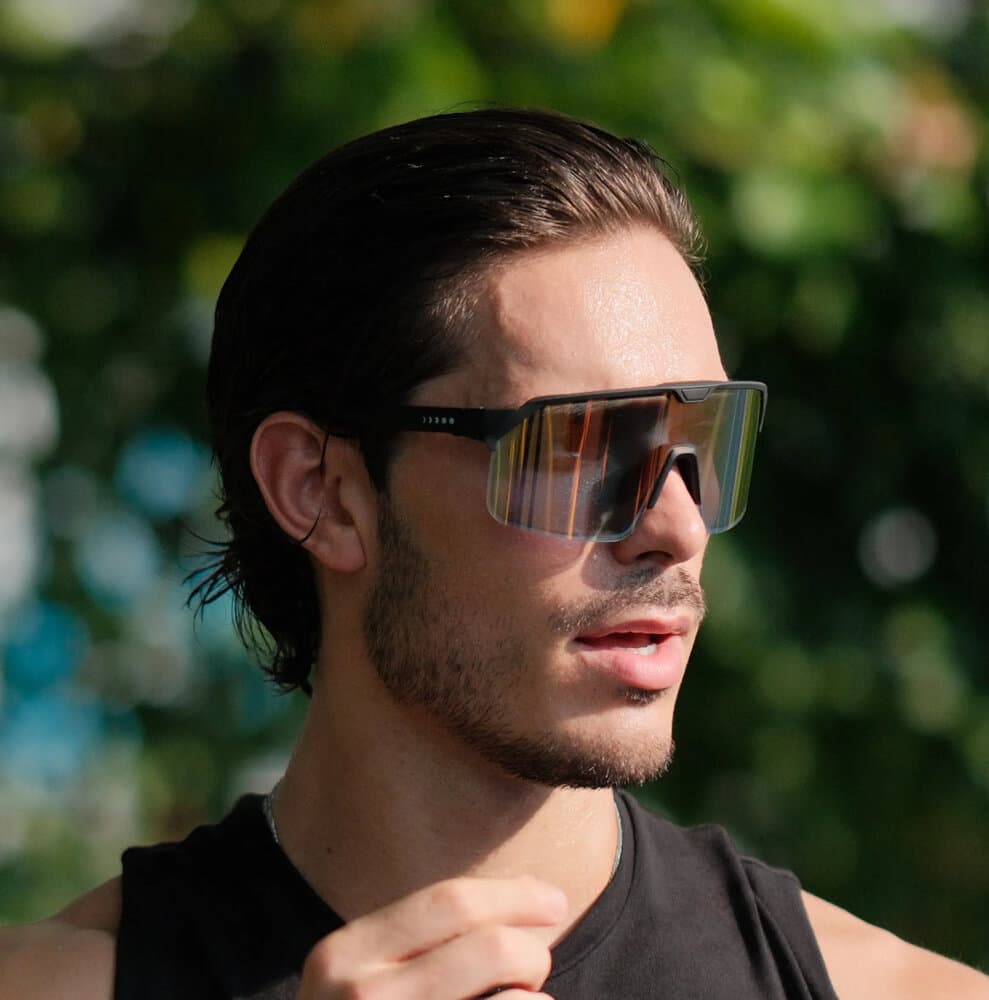
Chamelo Shield changes tint electronically in about 0.1 seconds; the Julbo Fury Reactiv darkens on its own in sunlight. We compare speed, tint range, weight, price, warranty and the return fine print, and say plainly where the Julbo is the better pair.
Chamelo Shield vs Julbo Fury comes down to one choice: do you want lenses you control instantly, or lenses that adjust on their own with nothing to charge? The Chamelo Shield uses electronic Eclipse lenses that shift tint in about 0.1 seconds with a frame slider or an automatic light sensor, and it costs $149.99 at the offer we link to. The Julbo Fury with REACTIV lenses is a lighter, photochromic running and cycling frame that darkens by itself in sunlight, listed at $239.95 on Julbo's US site.
Both are serious sports sunglasses for people who move between shade and sun. The Shield wins on speed, control and price. The Fury wins on weight, tint range, warranty and simplicity. Below we go through each difference using what the two brands publish and what independent testers found. For the Shield on its own, read our full Chamelo Shield review.
Chamelo Shield vs Julbo Fury at a glance
Chamelo Shield: electronic tint-adjustable lenses, 54 to 17 percent visible light transmission per the brand, tint change in about 0.1 seconds, manual slider plus an Autopilot light-sensor mode, 37 grams (1.3 ounces), 100 percent UV protection, Smoke or Fire lenses, an IPX4 sweat rating and about 52 hours of tint battery per charge, according to Chamelo. Price: $149.99 for one pair at the offer checkout, against $199 on chamelo.com. Guarantee: 30 days, plus a one-year warranty.
Julbo Fury REACTIV: photochromic lenses that adjust to changing light by themselves, with no battery. Julbo's US site lists the REACTIV 1-3 Light Amplifier lens at 75 to 17 percent transmission and the REACTIV 1-3 High Contrast lens at 72 to 13 percent, plus a REACTIV 0-3 option, in a 25 gram frame. Price: $239.95 on julbo.us. Warranty: lifetime coverage on manufacturing defects for the original owner, for US purchases from certified Julbo dealers. Returns: 30 days, unused, with a $10 return label fee.
How the tint changes: electronic Chamelo vs photochromic Julbo
This is the real difference between the two pairs. Chamelo's lenses are electronic: a small current changes the tint, so it responds the moment you slide a finger along the arm, or the moment the ambient light sensor sees a change when Autopilot is on. That is why Chamelo can quote a change in about 0.1 seconds, and why the lenses behave the same whatever the temperature or UV level.
Julbo's REACTIV lenses are photochromic. They react to light on their own, with no controls and nothing to charge. The trade-off is speed. In road.cc's test of the Fury Reactiv, the reviewer found the lenses reasonably quick, going from fully light to fully dark in about 20 seconds in direct sun, but said they won't keep up with frequent switches between light and shade under tree cover. A 2026 running-sunglasses guide from Fittux makes the same general point: a photochromic transition is not instantaneous, and it can be affected by temperature and the amount of UV reaching the lens.
If your route ducks in and out of trees, tunnels or city shadows every few seconds, Chamelo Shield's instant response is the bigger advantage. If you mostly run or ride in light that changes slowly, from dawn into full sun, a photochromic lens like the Fury's keeps up fine and asks nothing of you.
Tint range and lens options
On paper the Julbo Fury covers more ground. Its REACTIV 1-3 Light Amplifier lens runs from 75 percent transmission, which is close to clear, down to 17 percent, and the High Contrast version goes from 72 down to 13 percent. Road.cc described the category 1 to 3 range as dark enough for bright sunshine and clear enough for riding at night.
Chamelo Shield's range is 54 to 17 percent, per the brand. It gets just as dark as the Light Amplifier lens in bright sun, but its lightest setting is still noticeably tinted, so it is less suited to riding in real darkness. GearJunkie made a similar point about the related Chamelo Music Shield, finding the tint change useful but wanting more range. Chamelo describes the Shield's lenses as partially polarized; Fittux lists the Julbo Fury as non-polarized. If you want a wider swing from almost clear to dark, the Julbo wins here.
Weight, fit and battery
The Julbo Fury is the lighter pair at 25 grams, against 37 grams for the Chamelo Shield. Road.cc found the Fury comfortable, with arms that grip well when you are sweaty, though it noted the nosepiece is not adjustable and the soft case offers little protection. Run Oregon found the Shield's frame secure with no bounce, but noted it may be a little wide for smaller faces, and Chamelo's own size guide calls it unisex, medium-large.
Battery is where the two designs part ways completely. The Fury has none. The Shield needs charging: Chamelo lists about 52 hours of tint adjustment per charge and roughly 80 percent in 30 minutes. If it runs flat, the lenses stay at their resting tint, so you still have sunglasses, just not adjustable ones. For people who already charge a watch and headphones after every session, that is a small habit; for people who want to grab their glasses and go, it is a real point in the Julbo's favor.
Price: Chamelo Shield vs Julbo Fury
Chamelo Shield is the cheaper pair. The offer we link to lists one pair at $149.99, compared with $199 on Chamelo's own site. When we checked the checkout earlier this month, two pairs were $139.99 each and three were $129.99 each, with free shipping on two or more and a $14.99 shipping line on a single pair. On our latest visit the checkout page did not show dollar amounts in its text, so confirm the total, including any optional ChameloCare cover or shipping protection, before you pay.
The Julbo Fury with REACTIV lenses is listed at $239.95 on julbo.us, about $90 more than the Shield offer. European prices vary by retailer and lens, and road.cc's 2020 test listed it at 155 pounds, noting that the REACTIV lens roughly doubles the price compared with the standard lens. Julbo also sells the Fury with a fixed Spectron 3 lens, which is cheaper but does not change tint at all, so make sure the listing says REACTIV if adjustable tint is the point.
Warranty, guarantee and returns compared
The Julbo's warranty is the stronger promise. Julbo's US site lists a lifetime warranty for the original owner, covering manufacturing defects in materials and workmanship, for US purchases from certified Julbo dealers. It excludes wear and tear, damage and scratched lenses. Returns are accepted within 30 days of receipt if the glasses are unused and in their original packaging with a return authorization number, and a $10 return label fee comes off the refund. Julbo does not offer exchanges.
Chamelo Shield comes with a 30-day money-back guarantee and a one-year warranty. The checkout wording says you send the glasses back in their original packaging for a full refund or replacement, less shipping and handling, so the original shipping is not refunded. Unlike Julbo's, the guarantee is pitched as a trial: you can wear them and still send them back within 30 days. Because some Chamelo buyers on Trustpilot report a pair that would not charge or stopped working, charge and test the Shield the day it arrives. Our Is Chamelo Shield legit? guide reads the guarantee and the complaints in detail.
Chamelo Shield is not Ampere Dusk, Chameleon lenses or a Julbo
Search results blend a few similar names, so here is what is what. Chamelo is the brand that makes the Shield. Ampere is a separate company: Chamelo's Dusk Classic is developed by Ampere LLC and distributed by Chamelo, and an older Ampere Dusk model still turns up on retail listings, but the Shield is a Chamelo sport frame, not an Ampere product. Chameleon is also a generic word some sellers use for photochromic lenses, and those are a different technology from Chamelo's electronic lenses.
Julbo is an eyewear brand with no connection to Chamelo, and REACTIV is Julbo's own name for its photochromic lenses. The two companies are different businesses selling different technologies. Chamelo also makes other models, including the Music Shield with speakers, so check the model name on any review you read.
Which should you buy?
Buy the Chamelo Shield if you want instant, hands-on control of your tint, you run or ride through rapidly changing light, you like an automatic mode that reacts in a blink, and you would rather pay $149.99 than about $240. Plan to charge it and test it inside the 30-day window. Our Chamelo Shield review and verdict covers the specs and who it suits.
Buy the Julbo Fury REACTIV if you want the lightest pair, the widest tint range from nearly clear to dark, nothing to charge and a lifetime defect warranty, and you can accept that the lenses take seconds rather than a fraction of a second to change. TopCrate earns a commission only on the Chamelo Shield offer, not on Julbo, and that does not change the verdict: for slow-changing light and long days out, the Julbo is the more carefree pair. If you are still deciding whether to trust the Chamelo purchase, start with our Chamelo Shield legit check.
Read our full Chamelo Shield review
Specs, tint range, battery, price and our verdict on the electronic tint-adjustable sports sunglasses.
Read our full Chamelo Shield review →Frequently asked questions
Is Chamelo Shield better than Julbo Fury?
It depends on your light. Chamelo Shield changes tint electronically in about 0.1 seconds and costs less at $149.99. The Julbo Fury REACTIV is lighter at 25 grams, has a wider tint range and needs no charging, but its photochromic lenses take around 20 seconds to darken in direct sun, per road.cc.
How fast does the Julbo Fury Reactiv lens change?
Road.cc's tester found it went from fully light to fully dark in about 20 seconds in direct sun, and said it won't keep up with frequent light-to-shade switches under trees. Chamelo quotes about 0.1 seconds for the Shield.
How much does the Chamelo Shield cost compared with the Julbo Fury?
The Chamelo Shield offer lists one pair at $149.99 (Chamelo's own site lists $199). The Julbo Fury with REACTIV lenses is $239.95 on julbo.us.
Does the Chamelo Shield need charging?
Yes. Chamelo lists about 52 hours of tint adjustment per charge and about 80 percent in 30 minutes. If the battery runs out, the lenses stay at their resting tint. The Julbo Fury has no battery.
Which has the better warranty, Chamelo or Julbo?
Julbo lists a lifetime warranty on manufacturing defects for the original owner on US purchases from certified dealers. Chamelo lists a one-year warranty plus a 30-day money-back guarantee, less shipping and handling.
Is Chamelo the same company as Julbo or Ampere?
No. Chamelo and Julbo are different companies. Ampere LLC develops Chamelo's Dusk Classic, which Chamelo distributes, but the Chamelo Shield is a Chamelo sport frame.
TopCrate is reader-supported. When you buy through links on our site we may earn an affiliate commission, at no extra cost to you. Content is for general information and isn't a substitute for professional advice.