TRENDING ON AMAZON
WHOOP Peak Membership (WHOOP 5.0 Tracker) Review: Is It Worth It?
The subscription-based 24/7 recovery and strain tracker that goes deep — WHOOP 5.0 hardware bundled with Peak's advanced healthspan insights.
Quick answer: Yes, WHOOP Peak is worth the ~$239/year for serious athletes and longevity-focused adults — the WHOOP 5.0 hardware, 24/7 recovery/strain/sleep tracking, and Peak's added healthspan, cardiovascular and hormonal-cycle insights are the deepest fitness-tracker data set you can buy in 2026. Casual users are better served by a one-time Fitbit or Apple Watch purchase.
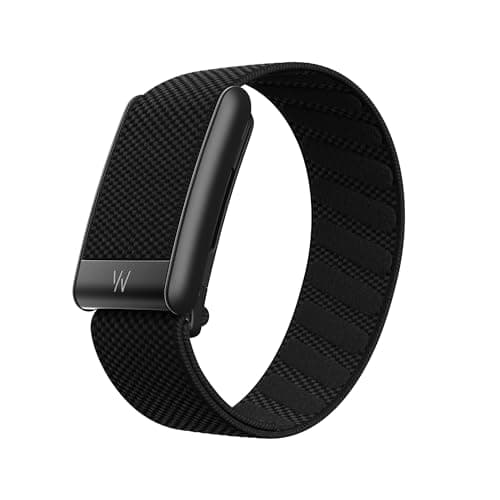
Product image from the Amazon listing.
Our verdict
Yes, WHOOP Peak is worth the ~$239/year for serious athletes and longevity-focused adults — the WHOOP 5.0 hardware, 24/7 recovery/strain/sleep tracking, and Peak's added healthspan, cardiovascular and hormonal-cycle insights are the deepest fitness-tracker data set you can buy in 2026. Casual users are better served by a one-time Fitbit or Apple Watch purchase.
The short version
WHOOP is the strapless, screenless fitness tracker athletes actually use — you buy a membership, they send you the WHOOP 5.0 device, and it reads your heart rate, HRV, respiratory rate and sleep 24/7 to score your daily strain and recovery. Peak is the 2026 flagship tier at around $239/year that adds longevity and healthspan analytics, blood pressure insights and hormonal-cycle tracking on top of the standard strain-and-recovery loop. Its 14-day battery and no-buttons design make it easier to actually wear all the time.
Pros & cons
Pros
- 14-day battery life on WHOOP 5.0 — set it and forget it
- No screen or notifications — just data
- Peak tier adds longevity, cardiovascular and cycle insights
- Recovery + strain framework beats step counts for real athletes
- Sleep tracking is class-leading
- Waterproof, wear-in-the-shower design
- Included hardware refresh with membership
Cons
- Subscription model — no ownership, ~$239/year for Peak
- Wrist HR is less accurate than a chest strap in HIIT
- No display means the app is required to see anything
- Peak is overkill for casual fitness
Why people love it
Subscribe, they ship the WHOOP 5.0
WHOOP is subscription-only — Peak is around $239/year and includes the WHOOP 5.0 tracker itself. No separate hardware purchase, and the device is refreshed when tiers upgrade.
Wear it 24/7
14-day battery and a waterproof band mean you can shower, sleep and train without taking it off. Continuous heart rate, HRV, temperature and respiratory data feed the daily strain and recovery scores.
Peak-only insights
On top of standard strain/recovery/sleep, Peak layers in healthspan and longevity analytics, cardiovascular stressors and hormonal cycle insights — the pitch is 'help you extend your prime,' not just log your workouts.
Who it's for
- Serious athletes and endurance trainees
- Anyone chasing sleep and recovery gains
- Longevity-focused adults
- People who hate wearing a smartwatch
Is WHOOP Peak the right tier for you — or is Life or Standard enough?
WHOOP moved to a tiered subscription in 2025, and the difference between Standard, Life and Peak is real. Standard is the historic WHOOP experience — 24/7 strain, recovery and sleep, plus the WHOOP 5.0 tracker. It's plenty for most fitness-minded people who just want data-driven feedback on training load and sleep quality. Life adds an ECG, blood-pressure insights and a first layer of Healthspan analytics; it makes sense if you have a cardiac reason to care about ECG or you want the healthspan foundation without going all-in on Peak.
Peak, at about $239/year, is the flagship. On top of everything Life includes, you get deeper longevity coaching, hormonal cycle tracking (a genuine differentiator for women planning training around cycle phases), cardiovascular stressor analysis and 'stay at your peak longer' recommendations. It's aimed squarely at longevity-conscious adults and serious athletes who want the whole picture. For a casual runner or someone who mostly wants sleep tracking, Standard or Life is the smarter buy — the marginal daily value of Peak's extra features drops off quickly if you're not going to change behavior on them.
WHOOP 5.0 vs Fitbit vs Garmin vs Oura — where WHOOP wins and where it loses
Against a Fitbit or Apple Watch, WHOOP wins on framework and battery. The recovery-and-strain model tells you how hard to train today based on HRV and sleep, which no step-count-first tracker really matches. The 14-day battery means continuous sleep data (a nightly-charge smartwatch always has a gap). Against Garmin, WHOOP wins on 24/7 recovery science and loses on GPS training features — Garmin still owns outdoor endurance sport, and if you race or need mapping, a Garmin is the better single choice.
Oura Ring is the closest philosophical competitor: no screen, sleep and recovery focus, subscription model. Oura wins on comfort (no strap, just a ring) and gets slightly better sleep data thanks to the finger PPG signal. WHOOP wins on daytime strain tracking, biometric depth and workout detection. Many people who want the ultimate stack wear Oura at night and WHOOP by day, but if you're picking one, WHOOP suits training-serious users; Oura suits sleep-and-longevity-first users. For a cheaper entry point look at our take on the Fitbit Charge 6 or the Apple Watch SE.
How to actually use WHOOP data without becoming obsessed
The biggest mistake new WHOOP wearers make is treating the recovery score as a mood check every morning. Recovery is meant to be a signal for training decisions — if you're in the red, back off the intensity today and lean into an aerobic or mobility session; if you're green, that's the day to push hard intervals. Chasing a green score by cutting workouts entirely defeats the purpose; you'll never build fitness. Use it to modulate intensity, not to skip training.
On sleep, the highest-ROI habits are the boring ones: consistent bed and wake times, cool room, no screens in the last hour, no alcohol close to bed. WHOOP's sleep coaching largely nudges you toward those habits and shows the HRV and resting-heart-rate proof when you follow them. Peak's longevity dashboard extends this to cardiovascular stress and hormonal cycle — genuinely useful if you act on it, wasted money if you don't. Pair WHOOP with a good sleep environment (weighted blanket like the YnM, a supportive pillow like the Coop Pillow, and a magnesium supplement like Thorne Magnesium Glycinate at night) and the recovery data starts moving in the right direction within a couple of weeks.
See WHOOP Peak on Amazon
Check the latest price, photos and buyer reviews on Amazon.
Check Price on Amazon →Sold and shipped by AmazonFrequently asked questions
Is WHOOP Peak worth $239 a year in 2026?
If you actually use the recovery-and-strain framework to plan training and sleep, yes — Peak gets you the WHOOP 5.0 hardware, the standard strain-recovery-sleep loop, and the added healthspan, cardiovascular and hormonal cycle insights that Life and Standard tiers don't include. If you just want a step counter and daily heart rate, Peak is overkill — a Fitbit Charge 6 or an Apple Watch SE is a much cheaper one-time buy. Peak is for people who plan training around HRV and recovery, or want the longevity metrics.
WHOOP Peak vs WHOOP Life vs WHOOP Standard — what's the difference?
Standard is the entry tier with core strain, recovery and sleep tracking. Life adds blood pressure insights, ECG and Healthspan basics. Peak sits on top with the deepest longevity analytics, hormonal cycle tracking (particularly useful for women), cardiovascular stressors and personalized healthspan coaching. All three tiers include the WHOOP 5.0 hardware. Choose Standard if you just want strain/recovery/sleep, Life if you want ECG and blood-pressure, Peak if you want the full longevity picture.
How accurate is WHOOP 5.0 heart rate compared to a chest strap?
Independent tests show WHOOP 5.0's wrist and biceps heart rate rivals Polar chest straps for steady-state cardio and long runs. It falters, like every optical wrist sensor, during HIIT with rapid heart-rate spikes and heavy wrist movement — a Polar H10 or Garmin HRM-Pro chest strap will still beat it there. For sleep, HRV and 24/7 tracking, the accuracy is class-leading.
Do you need to charge WHOOP every day?
No — WHOOP 5.0 pushed battery life to about 14 days on a charge, and the battery pack slides on over the band so you can charge without taking the strap off. That's the single biggest difference between WHOOP and a smartwatch: no nightly charging, no gap in your sleep data, and no daily habit to remember.
Can you use WHOOP without a subscription?
No — WHOOP is subscription-only, and the hardware doesn't work without an active membership. That's the trade-off: you never buy hardware outright, but you always have the latest generation as part of your plan. If you cancel, the tracker stops recording. If you want a buy-once tracker instead, look at a Garmin Vivoactive 5 or Fitbit Charge 6.
Is WHOOP better than an Apple Watch or Garmin for training?
For pure recovery, strain and sleep science, yes — WHOOP was built around the recovery-strain framework and does more with HRV and sleep data than most watches. What it can't do: show you time, notifications, contactless pay, GPS routes, or maps. Serious athletes often wear both — a Garmin Forerunner or Apple Watch on runs for GPS and pace, WHOOP 24/7 for recovery. Peak makes the case that its longevity analytics justify sole use, but pairing works for most training-serious users.
What is the difference between WHOOP Peak and Life?
Both tiers include the same WHOOP 5.0 hardware, 24/7 strain, recovery and sleep tracking, on-demand ECG readings and blood-pressure insights. What Peak adds on top of Life: deeper Healthspan longevity coaching, hormonal cycle tracking (a genuine differentiator if you plan training around cycle phases), cardiovascular stressor analysis and the personalized 'stay at your peak longer' recommendations. Priced at about $239/year for Peak vs a lower Life fee, the ~$60-80 gap is worth it if you'll actually act on the longevity, cycle and cardiovascular guidance; if you only care about ECG plus the core recovery/strain/sleep loop, Life covers you for less.
As an Amazon Associate, TopCrate earns from qualifying purchases at no extra cost to you. WHOOP is a wellness and fitness tracker, not a medical device — insights are informational, not diagnostic. Product image, price, availability and ratings are shown on Amazon and are subject to change.