TRENDING ON AMAZON
Nature's Bounty High Absorption Magnesium Glycinate 240mg Review: Is It Worth It?
The mass-market chelated magnesium capsule that actually delivers 240mg of elemental magnesium in a well-absorbed glycinate form — the smart-money sleep-and-cramp fix from the drugstore aisle.
Quick answer: Yes — Nature's Bounty Magnesium Glycinate 240mg is the smart-money starting point for anyone wanting to try magnesium for sleep, muscle cramps, or general stress. It delivers real chelated magnesium at a mainstream drugstore price, from a brand with legitimate quality control, and it's the specific bottle to grab before spending 3× the price on Thorne or Pure Encapsulations to see if magnesium supplementation is going to help you personally. Take 1-2 capsules 30-60 minutes before bed nightly for 4 weeks. If it works — most people notice a real difference — you can stay on it long-term or upgrade to premium tiers if you have specific needs. If it doesn't, you're out $15 and know magnesium wasn't the missing piece.
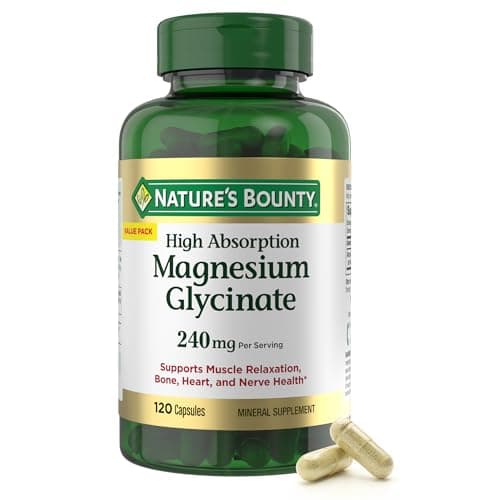
Product image from the Amazon listing.
Our verdict
Yes — Nature's Bounty Magnesium Glycinate 240mg is the smart-money starting point for anyone wanting to try magnesium for sleep, muscle cramps, or general stress. It delivers real chelated magnesium at a mainstream drugstore price, from a brand with legitimate quality control, and it's the specific bottle to grab before spending 3× the price on Thorne or Pure Encapsulations to see if magnesium supplementation is going to help you personally. Take 1-2 capsules 30-60 minutes before bed nightly for 4 weeks. If it works — most people notice a real difference — you can stay on it long-term or upgrade to premium tiers if you have specific needs. If it doesn't, you're out $15 and know magnesium wasn't the missing piece.
The short version
Magnesium glycinate has quietly become the supplement dermatologists, sleep coaches and personal trainers all suggest first, because it fixes three of the most common everyday complaints — trouble falling asleep, muscle cramps at night, and general 'tense and wired' evenings — with a mineral most adults are genuinely low on. Nature's Bounty's version is the drugstore workhorse: 240mg of elemental magnesium per two-capsule serving, chelated with glycine for gentler absorption than magnesium oxide (which gives most people digestive issues), non-GMO, gluten-free, and vegetarian. It's not the fanciest option — that's Thorne or Pure Encapsulations at 2-3× the price — but at roughly $0.15 per serving from a mainstream brand your parents already trust, it's the specific bottle to start with when you want to see if magnesium is going to help.
Pros & cons
Pros
- 240mg elemental magnesium per 2-capsule serving
- Glycinate chelate — gentle on stomach, no laxative effect
- Non-GMO, gluten-free, vegetarian
- Mainstream Nature's Bounty quality-control track record
- Under $0.20 per serving
- 120 count / 60 servings — 2-month supply
Cons
- 2-capsule serving is larger than some capsule-averse users prefer
- Not third-party tested to NSF Sport standard (see Thorne for that)
- Contains gelatin capsule shell — vegan users need alternative
Why people love it
Chelated with glycine
Magnesium bonded to glycine amino acid absorbs more consistently than magnesium oxide or citrate and doesn't cause the laxative effect that limits how much magnesium oxide people can tolerate.
240mg elemental per serving
Two capsules deliver 240mg of actual elemental magnesium (not just 'magnesium glycinate compound weight' — this is the number that matters for meeting your RDA of 320-420mg/day).
Take 30-60 minutes before bed
Magnesium supports GABA activity and muscle relaxation; taking it 30-60 minutes before bedtime is when most users notice the sleep and cramp benefits. Some people split it: one capsule morning, one before bed.
Who it's for
- Adults with trouble falling asleep or restless nights
- Nighttime leg-cramp or calf-cramp sufferers
- People with high-stress jobs feeling 'tense and wired'
- Athletes and gym-goers with muscle recovery needs
Why magnesium became the sleep supplement everyone quietly recommends
Magnesium is one of the most abundant minerals in the human body, involved in over 300 enzymatic reactions including muscle contraction, nerve transmission, and — critically — GABA receptor function. GABA is the brain's primary inhibitory neurotransmitter, and it's what allows you to relax, wind down, and fall asleep. When magnesium levels drop, GABA activity drops, and you get the specific symptoms most Americans complain about: trouble falling asleep, restless nights, muscle twitches, calf cramps, jaw clenching, and the 'tense and wired' feeling that comes with stress. Research consistently shows around 50% of American adults consume less than the RDA of magnesium from diet alone — leafy greens, nuts, and whole grains provide most of it, and modern diets skimp on all three.
This is why sleep coaches, functional-medicine physicians and personal trainers have converged on magnesium glycinate as the first supplement to recommend for adults with sleep issues, muscle cramps, or general stress symptoms. It fixes a genuine deficiency in most Americans, has an excellent safety profile at recommended doses, and produces noticeable results within 1-3 weeks for the majority of people. The specific glycinate form is chosen because it's gentle on digestion (no laxative effect that limits how much you can take), well-absorbed (chelated forms bypass the oxide-form absorption problems), and the glycine molecule itself has mild calming properties. It's not a miracle supplement — magnesium won't fix sleep apnea, insomnia caused by anxiety disorders, or muscle cramps caused by dehydration or electrolyte imbalance. But for the very common 'I sleep OK but not great, I have occasional cramps, and I feel wired at night' cluster of complaints, it's genuinely effective for most people who try it.
Nature's Bounty vs Thorne vs Pure Encapsulations vs Nature Made: which magnesium glycinate is right for you?
The magnesium glycinate market has four tiers of quality claim. Drugstore mainstream (Nature's Bounty, Nature Made, Kirkland Costco): ~$0.10-0.20 per serving, cGMP-compliant, real chelated magnesium, adequate quality control for daily supplementation in healthy adults. Practitioner-grade (Pure Encapsulations, Klaire Labs, Designs for Health): ~$0.30-0.45 per serving, hypoallergenic formulations, more rigorous testing, the choice for people with sensitivities or specific practitioner recommendations. Certified for Sport (Thorne NSF, Momentous NSF, Klean Athlete): ~$0.35-0.50 per serving, tested for banned substances, the choice for tested athletes and anyone requiring certified sport supplements. Boutique premium (BiOptimizers, Momentous, Just Ingredients): variable pricing but often $0.60-1.00+ per serving with heavy marketing and multi-form magnesium 'complexes' — mostly marketing markup with modest quality upgrades over practitioner-grade.
For the average adult without specific health needs or professional athletic testing requirements, the mainstream tier (Nature's Bounty or Nature Made) is genuinely sufficient — you get real chelated magnesium at a reasonable price, from a large brand that has to maintain quality control. Upgrade to practitioner-grade if you have multiple food sensitivities or your doctor specifically recommended a hypoallergenic formula. Upgrade to certified-for-sport if you're subject to drug testing. Skip the boutique tier — the multi-form magnesium complexes and heavy marketing rarely translate to meaningful additional benefit for most users. Start with Nature's Bounty and see if magnesium is helping you at all before deciding to spend more on the premium tiers.
How to actually use magnesium glycinate for sleep, cramps, and stress (the details that matter)
Timing and consistency matter more than dose. Take magnesium 30-60 minutes before bedtime for sleep and cramp support — that's when GABA receptor support and muscle relaxation matter most for the night. For general daily supplementation or muscle recovery, morning or split-dose (one capsule morning, one evening) also works. The most common mistake is inconsistent use — magnesium builds up in tissues over 1-3 weeks; a magnesium supplement taken 'when I remember' produces much smaller benefits than daily consistency. Set a phone reminder for 30-45 minutes before your target sleep time, and take it every night for at least 4 weeks before evaluating whether it helps.
Pair magnesium with other sleep-hygiene basics for compound benefits: a cool bedroom (65-67°F ideal), no screens 30 minutes before bed, consistent sleep/wake times, and a wind-down routine. If racing thoughts are your primary sleep problem, magnesium relaxes the body but doesn't quiet the mind — pair with a wind-down tool like the Dodow breathing metronome or a Hatch Restore sunrise-alarm routine. For nighttime leg cramps specifically, also address hydration (drink 8+ oz of water in the evening) and consider adding calcium if you're low. For muscle recovery from workouts, take magnesium within 60 minutes post-workout for maximum benefit. For chronic stress and jaw clenching, magnesium is one part of a broader picture that should include stress-management practices, sleep quality improvement, and sometimes medical evaluation. Track what you notice over 4-8 weeks — most benefits become obvious within that window if magnesium is going to work for you.
See Nature's Bounty Magnesium Glycinate on Amazon
Check the latest price, photos and buyer reviews on Amazon.
Check Price on Amazon →Sold and shipped by AmazonFrequently asked questions
Nature's Bounty Magnesium Glycinate vs Thorne vs Pure Encapsulations vs Nature Made: honest comparison?
All four are legitimate magnesium glycinate products from real brands — the difference is price and pharma-grade positioning. Nature's Bounty (this review): 240mg per serving, drugstore quality control, ~$0.15/serving, GMP certified. Nature Made Magnesium: comparable formula, USP verified, similarly priced, arguably slightly better quality-control paperwork. Thorne Magnesium Glycinate: NSF Certified for Sport, 200mg per capsule, ~$0.40/serving — worth the premium if you're a tested athlete or want the strictest quality guarantee. Pure Encapsulations Magnesium Glycinate: practitioner-grade, hypoallergenic, ~$0.35/serving — the choice for people with sensitivities or on doctor recommendation. For most people starting out, Nature's Bounty or Nature Made gives you 90% of the benefit for a third of the cost of Thorne. Try the drugstore version first; upgrade only if you specifically need certified-for-sport or hypoallergenic.
How much magnesium do I actually need daily, and can I take too much?
The RDA for adults is 320mg (women) to 420mg (men) of elemental magnesium daily, from food and supplements combined. Most Americans get roughly 250-300mg from diet (leafy greens, nuts, whole grains), leaving a 50-150mg gap that a supplement can fill. Nature's Bounty's 240mg per serving is at the high end — many people do fine with one capsule (120mg) daily, especially if their diet already includes magnesium-rich foods. The upper limit for supplemental magnesium set by the Institute of Medicine is 350mg per day (this is for supplements only, not counting food); above that, you may experience loose stools, but true toxicity is rare and requires either kidney disease or multi-gram doses. Start with 120-240mg (1-2 capsules) daily and adjust based on how you feel.
How long until I notice magnesium glycinate working for sleep or cramps?
Muscle cramps: often within the first week — some users report their nightly leg cramps stopping after just 2-3 nights of consistent supplementation. Sleep: 1-3 weeks for most people, though some notice easier sleep onset within days. Stress and 'wired' feeling: 2-4 weeks of consistent daily use. Restless legs and jaw clenching: 2-6 weeks. The magnesium 'reserves' in your muscles and tissues take a while to build back up if you've been chronically low, which is why patience matters. If you notice zero difference after 4 weeks of consistent daily use, either your baseline magnesium was already adequate (bloodwork can confirm), or your sleep/cramp issue has a non-magnesium cause and you should consult a doctor. Pair with wind-down tools like the Dodow breathing metronome if racing thoughts are your bigger sleep problem — magnesium relaxes the body, but if the mind is the issue, that's a different fix.
Is magnesium glycinate really better than magnesium citrate or oxide for sleep?
For most people, yes — glycinate is the best-tolerated form for daily sleep supplementation. Magnesium oxide is the cheapest form but only ~4% bioavailable and famously causes loose stools even at moderate doses (that's why it's in many laxatives — Milk of Magnesia is magnesium hydroxide/oxide-based). Magnesium citrate is well-absorbed but also has a laxative effect at typical doses, which limits how much you can take without digestive issues. Magnesium glycinate (chelated with glycine) is well-absorbed AND doesn't cause the laxative effect, AND the glycine itself has calming, sleep-supportive properties. For sleep and general daily use, glycinate wins. For occasional constipation relief, citrate is the specific fix. For anything else, glycinate is the smart default.
Can I take magnesium glycinate with other supplements or medications?
Generally yes for most supplements — magnesium is compatible with vitamin D, zinc, most B-vitamins, and other minerals. The one supplement interaction to be aware of: calcium supplements can compete with magnesium for absorption, so if you take both, space them 2+ hours apart. Medication interactions matter more: magnesium can reduce absorption of certain antibiotics (tetracyclines, quinolones), bisphosphonates for osteoporosis, and levothyroxine for thyroid — take these medications at least 2 hours before or after magnesium. If you're on any prescription medication or have kidney disease, check with your pharmacist or doctor before starting. For healthy adults not on medications, magnesium glycinate is one of the safest daily supplements available.
Nature's Bounty is a big mainstream brand — is quality really as good as premium options?
For magnesium glycinate specifically, yes. Nature's Bounty is manufactured in cGMP-compliant facilities, the raw materials are sourced from established chelate suppliers, and the label claims are consistent with what independent testing labs find in the bottles. It's not NSF Certified for Sport (that's Thorne's differentiator) and it's not practitioner-grade (Pure Encapsulations's angle), but for daily magnesium supplementation in a healthy adult, the product does what the label says. The scenarios where premium brands matter: professional/tested athletes needing certified-for-sport supplements to avoid banned substances, individuals with severe multi-substance sensitivities needing hypoallergenic formulations, or people on doctor recommendation for a specific pharma-grade brand. For everyone else, the Nature's Bounty label buys you the same magnesium at a third of the price.
As an Amazon Associate, TopCrate earns from qualifying purchases at no extra cost to you. Product image is illustrative — see Amazon for the actual product. Magnesium glycinate is a dietary supplement, not a medical treatment. Consult a doctor before starting if you have kidney disease, take prescription medications, are pregnant or nursing. Product image, price, availability and ratings are shown on Amazon and are subject to change.