HANDS-ON REVIEW
HearDirect Wireless TV Headset Review: Is It Worth It?
A lightweight under-chin TV headset with its own volume control — you hear every word clearly at your level while the room keeps the TV at theirs.
Quick answer: Yes — HearDirect is worth it if you're stuck in a nightly TV-volume war: it solves the problem with the correct physics — move the sound to the ear instead of turning the room up. Dialogue snaps into focus, the volume wars end in a draw everyone wins, and the dock-to-charge base removes the dead-battery excuse. It's a one-trick device — that trick is just the one your living room fights about every single night.
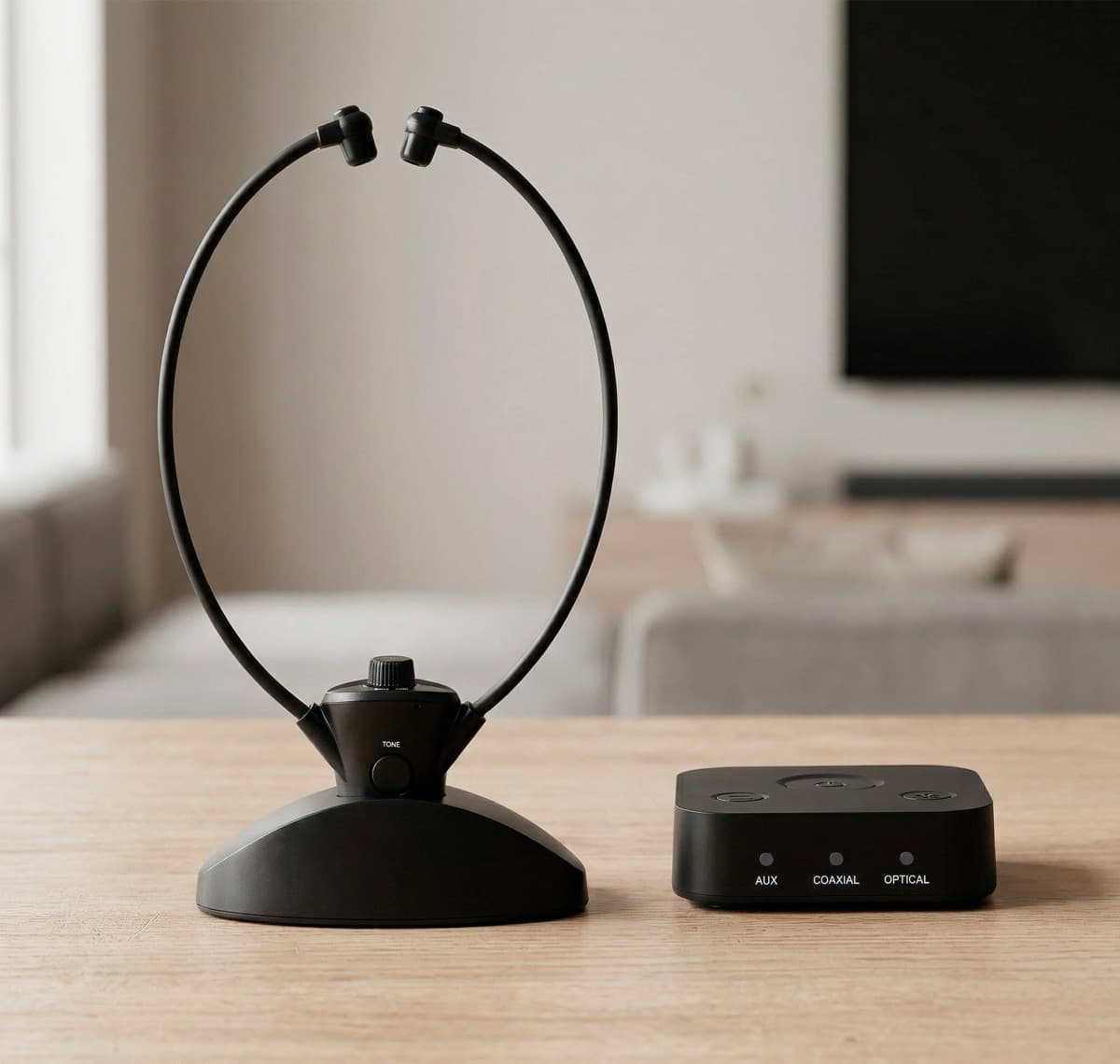
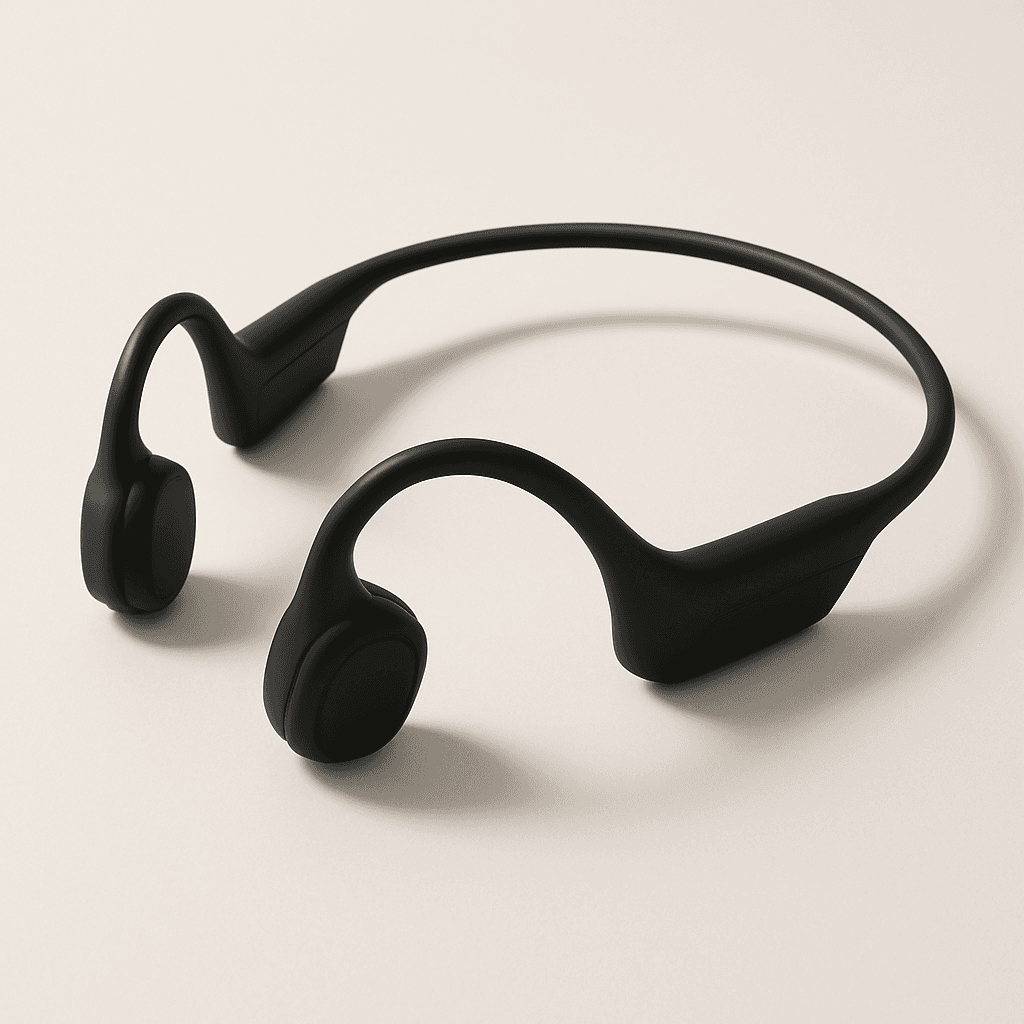
The headset and its transmitter base, which plugs into any TV's audio output and doubles as the charging dock. Photo: HearDirect
Our verdict
Yes — HearDirect is worth it if you're stuck in a nightly TV-volume war: it solves the problem with the correct physics — move the sound to the ear instead of turning the room up. Dialogue snaps into focus, the volume wars end in a draw everyone wins, and the dock-to-charge base removes the dead-battery excuse. It's a one-trick device — that trick is just the one your living room fights about every single night.
The short version
In every long marriage there is a TV volume war, and modern TVs made it worse — flat screens have thin, rear-firing speakers that smear dialogue into the soundtrack. HearDirect is a truce: a featherweight stethoscope-style headset that gets TV audio beamed straight into your ears from a transmitter base plugged into the TV, with its own volume dial. You set your loudness; the TV speakers keep playing normally at everyone else's. Voices arrive inches from your ears instead of across the room, so dialogue snaps into clarity without the whole neighborhood hearing the news. The base is also the charging dock — drop the headset on it when you're done, like hanging up a phone.
Pros & cons
Pros
- Personal volume without changing the room's volume
- Dialogue clarity: audio travels wirelessly, not across the room
- Under-chin design — light, no headband, glasses-friendly
- Base connects to any TV (optical, AUX or coaxial) and charges the headset
- Long listening range — kitchen trips don't drop the audio
- TV speakers stay on for everyone else simultaneously
Cons
- It's TV-dedicated — not a Bluetooth headphone for your phone
- One more base station living under the television
- Not a hearing aid and doesn't claim to be one
How it works
Plug in the base
Connect the transmitter to your TV's optical, AUX or coaxial audio output — one cable, five minutes, any TV of any age.
Wear the headset
The under-chin design rests light as reading glasses and beams audio wirelessly from the base with the ears' own volume dial.
Everyone wins the remote
You turn yourself up; the TV speakers play at normal level for the rest of the couch. Dock the headset on the base to recharge.
Who it's for
- Couples whose comfortable volumes are 20 clicks apart
- Anyone rewinding for mumbled dialogue every night
- Late-night watchers with sleeping households
- Older ears that lost the TV to modern flat-screen speakers
Why you can't hear modern TV dialogue
It's not (only) your ears — it's physics and mixing. Flat TVs have millimeters of space for speakers, which fire downward or backward off a wall; then streaming-era soundtracks are mixed for cinema dynamics, with dialogue dozens of decibels below the explosions. The result is the nightly ritual: volume up for the mumble, volume down for the ad break, subtitles as surrender. Age-related hearing loss — which starts with exactly the high frequencies consonants live in — multiplies the problem.
Distance is the lever nobody talks about. Sound loses roughly six decibels per doubling of distance, and a couch sits three doublings from the screen. HearDirect simply removes the room: audio is transmitted wirelessly to a speaker an inch from each ear, so consonants arrive crisp before the room's echo and the dishwasher get a vote. Users consistently describe the same thing — 'I stopped rewinding' — which no amount of TV-speaker volume achieves.
One TV, two volumes: the household fix
The usual 'solutions' all sacrifice somebody. Blasting the TV sacrifices the neighbors and everyone else's ears; Bluetooth headphones sacrifice the room (most TVs mute their speakers when paired); subtitles sacrifice the experience. The transmitter-base design is what makes HearDirect different: it taps the TV's audio output without silencing the TV's speakers, so two volume systems run in parallel — the room's, and yours.
The under-chin stethoscope layout is deliberately un-headphone-like for good reasons: nothing presses on hair or hearing-aid-adjacent spots, glasses arms stay comfortable, and it weighs so little that two-hour movies don't create hot spots. It's also why this category — pioneered by TV Ears at a higher price — has always looked like this. Pair the TV upgrade path sensibly: if the whole room struggles with dialogue, a soundbar helps everyone; if one person struggles, a personal headset fixes the actual problem for half the cost.
Is HearDirect worth $129?
The named competitor, TV Ears, runs $130–$300 depending on generation; hearing-aid-grade TV streamers cost more still and require the hearing aids. At $129, HearDirect sits at the accessible end of the category with the base-station convenience (dock-to-charge means it's never dead) and any-TV compatibility — the optical/AUX/coaxial trio covers sets going back decades.
Be precise about what it is: an assistive TV listener, not a hearing aid — it makes one audio source clear and personal, and does nothing for conversations or restaurants. If TV is the main frustration, it's the targeted fix at a fraction of hearing-aid money; if hearing loss is broader, an actual OTC hearing aid addresses the whole day, and the two coexist happily. For the specific nightly battle over the remote's volume buttons, this is the peace treaty that costs less than a nice dinner for two.
Frequently asked questions
Does the TV still play sound for everyone else?
Yes — the transmitter taps the TV's audio output while the TV speakers keep playing normally. You get a private volume; the room keeps theirs. That's the entire point.
Will it work with my TV?
Effectively any TV: the base connects via optical (standard on modern sets), AUX, or coaxial audio out. Setup is one cable and the base's power plug.
Is this a hearing aid?
No — it's a TV listening headset. It makes television dialogue clear and personally loud, but it doesn't amplify conversations or the world. For all-day hearing help, look at OTC hearing aids; many people use both.
How long does the battery last?
Plenty for an evening of viewing, and the base doubles as the charging dock — hang it up after watching like a telephone handset and it's full again by tomorrow night.
Can I walk away from the TV?
Yes — the wireless range comfortably covers a kitchen snack run or a bathroom break without the audio dropping, so you stop missing plot at the worst moments.
Is it comfortable with glasses?
Yes — the under-chin design has no headband and doesn't touch the temples, so it stacks cleanly with glasses and doesn't flatten hair. It weighs about as much as a TV remote.
HearDirect vs TV Ears vs Sennheiser RS 175 vs Bluetooth headphones — which TV listening device is right?
Four different paths for four different priorities. **HearDirect ($129, this review)** — the balanced pick: under-chin stethoscope form, plugs into any TV via optical/AUX/coaxial, base doubles as a charging dock, keeps the TV speakers on for everyone else. **TV Ears (Original ~$130 / Digital ~$180 / Voice Clarifying Digital ~$249)** — the original in the category and the direct competitor; nearly identical mechanics and the Digital tier adds a voice-emphasis mode that boosts dialogue over background music. TV Ears is the established brand if that matters; HearDirect is the current-generation take at the lower tier's price. **Sennheiser RS 175 (~$300)** — over-ear closed headphones with a dedicated TV base, higher-fidelity audio for music-lovers watching concerts and movies with real soundtracks, but it mutes the TV speakers by default (needs a splitter to keep the room's audio on). **Standard Bluetooth headphones (AirPods, Sony WH-CH720N, etc.)** — cheapest if you already own them, but most TVs cannot stream to Bluetooth headphones without a separate transmitter, and the ones that can typically mute their internal speakers when paired. Buy HearDirect or TV Ears if the room's other people need normal TV audio; Sennheiser if audio quality matters more than a shared living-room compromise; Bluetooth headphones only if you watch alone and already have the audio path solved.
When you buy through links on this page, TopCrate may earn an affiliate commission at no extra cost to you. HearDirect is a TV listening device, not a hearing aid or medical device; consult a hearing professional about hearing loss. Prices accurate as of publish time.