TRENDING ON AMAZON
CeraVe Hydrating Mineral Sunscreen SPF 30 Face Sheer Tint Review: Is It Worth It?
The tinted mineral SPF 30 with ceramides, niacinamide and iron oxides that finally solved the white-cast problem — a sheer universal tint that reads flattering on every skin tone, blocks blue light and evens tone as it protects.
Quick answer: Yes — CeraVe Hydrating Mineral Sunscreen SPF 30 Face Sheer Tint is worth it, and it's the specific tinted mineral SPF to recommend to almost anyone starting a daily face-sunscreen habit. Genuine 100% mineral filters (safe for pregnancy, breastfeeding, kids, sensitive skin, reef environments), a sheer universal tint from iron oxides that neutralizes the white cast that killed older mineral sunscreens, and the same ceramide plus niacinamide plus hyaluronic acid skin-barrier support as the rest of the CeraVe lineup. Iron oxides also block high-energy visible light in the blue-violet range that drives hyperpigmentation and melasma — a real additional benefit no untinted sunscreen provides. Under $20 versus $40-45 for the EltaMD and La Roche-Posay alternatives, at 90% of the finish and formulation quality. Not the pick for high-SPF beach days (upgrade to a higher-SPF option there), and very deep skin tones may prefer a specialty-formulated option. For everyday face SPF as the final step of a morning skincare routine, this is the specific product that finally makes tinted mineral sunscreen work in real life.
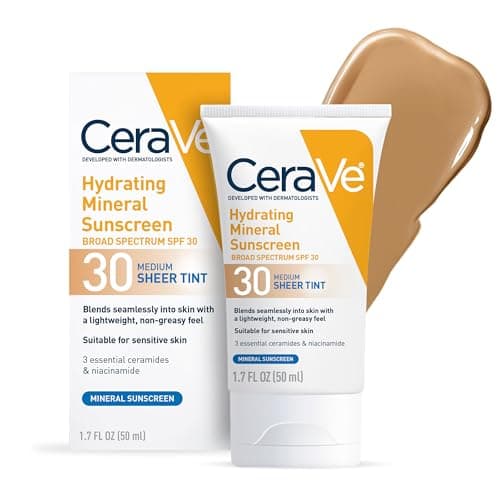
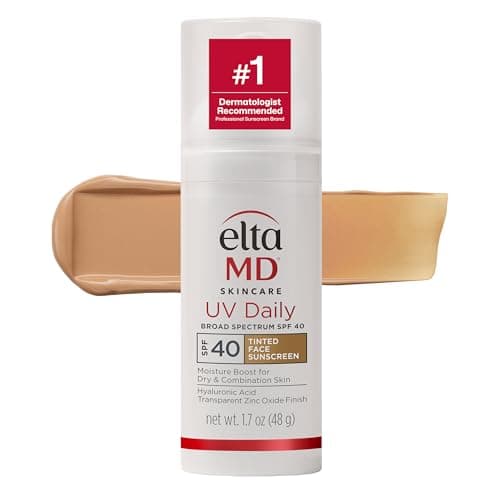
Product image from the Amazon listing.
Our verdict
Yes — CeraVe Hydrating Mineral Sunscreen SPF 30 Face Sheer Tint is worth it, and it's the specific tinted mineral SPF to recommend to almost anyone starting a daily face-sunscreen habit. Genuine 100% mineral filters (safe for pregnancy, breastfeeding, kids, sensitive skin, reef environments), a sheer universal tint from iron oxides that neutralizes the white cast that killed older mineral sunscreens, and the same ceramide plus niacinamide plus hyaluronic acid skin-barrier support as the rest of the CeraVe lineup. Iron oxides also block high-energy visible light in the blue-violet range that drives hyperpigmentation and melasma — a real additional benefit no untinted sunscreen provides. Under $20 versus $40-45 for the EltaMD and La Roche-Posay alternatives, at 90% of the finish and formulation quality. Not the pick for high-SPF beach days (upgrade to a higher-SPF option there), and very deep skin tones may prefer a specialty-formulated option. For everyday face SPF as the final step of a morning skincare routine, this is the specific product that finally makes tinted mineral sunscreen work in real life.
The short version
For years, mineral sunscreens were the safe-but-ugly option — they protected well but left a chalky white cast on anything darker than porcelain skin. CeraVe's Hydrating Mineral Sunscreen SPF 30 Face Sheer Tint fixed that with a sheer, universally-flattering tint (from iron oxides, not synthetic dyes) that reads well on skin tones from very fair to deep. The formula is genuine 100% mineral — non-nano zinc oxide and titanium dioxide as the only active filters, none of the chemical filters some people avoid — plus CeraVe's signature ceramides, niacinamide and hyaluronic acid that support the skin barrier as it protects. The iron oxides pull double duty: they provide the tint AND block visible light in the blue-violet range that drives hyperpigmentation and melasma. It's the mineral sunscreen a dermatologist recommends to a patient who's tried and hated every other mineral SPF, and it's under $20. Compared to $40+ tinted mineral options from EltaMD and La Roche-Posay, it delivers 90% of the finish at half the price.
Pros & cons
Pros
- Genuine 100% mineral filters (non-nano zinc + titanium)
- Sheer universal tint from iron oxides flatters most skin tones
- Iron oxides also block visible light (helps with melasma)
- Contains ceramides 1, 3, 6-II — supports skin barrier
- Niacinamide + hyaluronic acid for redness and hydration
- Fragrance-free, non-comedogenic, safe for sensitive skin
- Under $20 at most retailers
Cons
- SPF 30 only — reapply more often than SPF 50
- Tint is sheer — very deep skin tones may see slight lightness
- Mineral finish is dewier than a matte chemical sunscreen
Why people love it
Apply as the last step in morning skincare
Shake well, then dispense a nickel-sized amount for the face (about 1/4 tsp). Apply as the final layer over your moisturizer and before makeup — mineral sunscreens sit ON TOP of skin, so they should be the last skincare step.
Zinc + titanium reflect UV; iron oxides block visible light
Non-nano zinc oxide and titanium dioxide reflect UVA and UVB before they reach skin. Iron oxides add tint AND block high-energy visible light in the blue-violet range that penetrates deeper than UV and drives hyperpigmentation, melasma and photo-aging.
Reapply every 90 minutes outdoors
Like all sunscreens, protection degrades over time and with sweat, water and towel-drying. Reapply every 90 minutes when outdoors, or apply a fresh coat before extended sun exposure. The tint makes reapplication over makeup easier than a white mineral SPF.
Who it's for
- Anyone who wants mineral SPF without the white cast
- Sensitive-skin users who react to chemical filters
- People with melasma, hyperpigmentation or PIH
- CeraVe-routine users looking for a matching SPF
- Anyone under a retinol or exfoliating-acid routine
Why tinted mineral sunscreens became the biggest skincare trend of the last three years
Mineral sunscreens have been available for decades, but they had a specific reputation problem that limited their adoption: white cast. Zinc oxide and titanium dioxide — the two mineral UV filters approved by the FDA — reflect UV by sitting on top of skin as tiny opaque particles. On very fair skin, they blend acceptably. On medium and deep skin tones, they created a ghostly gray-white appearance that was cosmetically unacceptable for daily wear. This is why chemical sunscreens (which absorb into skin transparently) dominated the market for decades, and why the 'mineral vs chemical' debate was largely academic — most people used chemical because mineral looked terrible on them.
The tinted mineral sunscreen category emerged in the 2010s primarily from dermatology-office brands (EltaMD, La Roche-Posay, SkinCeuticals, ISDIN), and it grew rapidly starting around 2020-2021 as TikTok skincare influencers popularized specific products. The specific breakthrough was iron oxides. When formulated correctly, iron oxides serve two functions: they add a sheer warm-toned tint that neutralizes the white cast of the zinc oxide, AND they block high-energy visible light (HEVL) — specifically the blue-violet portion of visible light that penetrates deeper than UV and drives hyperpigmentation, melasma and photo-aging. This HEVL protection is invisible on ingredient labels (iron oxides get listed as 'inactive' or as pigment) but represents a real additional benefit that no untinted sunscreen provides.
CeraVe's entry to this category in 2022-2023 brought mass-market accessibility to what had been a premium dermatologist-office product. Same iron-oxide tint approach as EltaMD UV Clear Tinted at half the price, plus CeraVe's signature ceramide plus niacinamide plus hyaluronic acid formulation that supports the skin barrier. The result: a genuine daily-use tinted mineral sunscreen for under $20 that delivers legitimate skin-protection performance including HEVL blocking. Since launch it's become one of Amazon's best-selling face sunscreens and a top-recommended pick from dermatologists and skincare content creators alike. For anyone who's been meaning to switch from a chemical sunscreen to a mineral one (whether for sensitive skin, pregnancy, reef environments, or hyperpigmentation concerns), this is the specific product that makes the switch actually work in daily life.
How CeraVe Tinted fits into a complete skincare routine (and where it doesn't)
Building a routine around CeraVe Tinted Sunscreen is straightforward because it's designed as the final morning step. A minimal complete morning routine: cleanse with CeraVe Hydrating Cleanser (or the Foaming version for oily skin), apply a vitamin C serum if using one, apply a moisturizer like CeraVe AM Facial Moisturizing Lotion or Neutrogena Hydro Boost water gel, let both absorb for 2-3 minutes, then apply CeraVe Tinted Sunscreen as the final layer. That's the whole routine — under $60 total for six months of product, and it delivers what a $500+ luxury routine promises for most people's actual skin.
For an evening routine, this sunscreen isn't relevant — UV isn't a concern indoors after sundown, and mineral filters can be occlusive on skin overnight. An evening routine that pairs with the tinted sunscreen morning routine: cleanse, apply retinol or a retinal like the Meditherapy Retinal if using one (start with once or twice weekly, work up to nightly), moisturizer, done. The morning sunscreen + evening retinoid combination is the specific evidence-based approach for both prevention and treatment of photo-aging that dermatology has recommended for decades. Where CeraVe Tinted doesn't fit: high-SPF-needed contexts (a beach day, hiking above tree line, snow environments where UV reflects from snow). For those specific use cases, upgrade to a higher-SPF option like La Roche-Posay Anthelios at SPF 60 or a body sunscreen at SPF 50-70. For daily face SPF as part of a real skincare routine, CeraVe Tinted is the correct choice.
Mineral vs chemical vs hybrid sunscreens: which category is right for you
The mineral-vs-chemical decision matters more than the specific product brand, and there's no universal winner. Mineral sunscreens (zinc oxide, titanium dioxide) work by reflecting UV, activate immediately on application, are pregnancy-safe and reef-safe, and are typically better tolerated by sensitive skin and rosacea. Downsides: potential white cast (mitigated by tinted formulations like CeraVe Tinted), can pill if applied incorrectly, and the coverage relies on physical presence on skin (rub off means less protection). Chemical sunscreens (avobenzone, octinoxate, oxybenzone, homosalate, octisalate, octocrylene) work by absorbing UV energy and converting it to heat, blend transparently into all skin tones, are typically more water-resistant, and provide higher SPF at lighter finishes. Downsides: require 15-20 minutes to activate after application, some filters (particularly oxybenzone and octinoxate) have environmental concerns for coral reefs and hormonal-disruption concerns for humans, and can trigger contact dermatitis in sensitive users. Hybrid sunscreens combine both — typically zinc oxide plus a chemical filter or two — to get the immediate-activation and reef-safety of minerals with the transparent finish and higher SPF of chemicals.
Which is right for you: (1) Pregnant, breastfeeding, or planning pregnancy → mineral (or hybrid with zinc oxide as primary filter). (2) Sensitive skin, rosacea, eczema, post-procedure skin → mineral (fewer irritation triggers). (3) Reef environments (Hawaii, Key West, Caribbean, tropical vacation) → mineral or reef-friendly chemical (no oxybenzone, no octinoxate). (4) Hyperpigmentation, melasma, dark spots → tinted mineral (iron oxides block visible light). (5) Daily use under makeup → tinted mineral or hybrid (transparent finish). (6) Beach day, water sports → chemical or hybrid (better water resistance, typically higher SPF). (7) Very deep skin tones where any white cast is unacceptable → chemical or a specialty tinted mineral formulated for deep skin (Black Girl Sunscreen, Supergoop Play). For most daily face SPF users, tinted mineral checks the most boxes — pregnancy-safe, sensitive-skin-friendly, tint neutralizes white cast, and iron oxides add visible-light protection. That's the specific category CeraVe Tinted Sunscreen occupies, and it's why the product has become one of the most-recommended daily face SPFs in 2026.
See CeraVe Tinted Sunscreen on Amazon
Check the latest price, photos and buyer reviews on Amazon.
Check Price on Amazon →Sold and shipped by AmazonFrequently asked questions
Is CeraVe Tinted Sunscreen worth it, and does it work as a daily face SPF?
Yes — it's genuinely one of the best-value tinted mineral sunscreens on the market in 2026 and it works well as a daily face SPF for the majority of skin types. The specific reasons dermatologists and skincare-savvy TikTok users have made it viral: (1) 100% mineral filters, so it works immediately on application (no 15-minute wait like chemical sunscreens) and is safe for pregnancy, breastfeeding, kids and reactive skin. (2) Iron oxides for a sheer universal tint that neutralizes the white cast that made older mineral sunscreens unusable on medium and deep skin tones. (3) Ceramides plus niacinamide plus hyaluronic acid — the same skin-barrier-supporting core as CeraVe's cleansers and moisturizers — so it doesn't strip skin the way some sunscreens do. (4) Under $20, versus $40-45 for EltaMD UV Clear Tinted or La Roche-Posay Anthelios Tinted with similar formulations. The one honest asterisk: it's SPF 30, not SPF 50. For daily indoor-and-commute wear that's plenty; for a full beach day, reapply more often or upgrade to a higher-SPF option like La Roche-Posay Anthelios. For everyday face SPF as part of a real skincare routine, CeraVe Tinted is the smart-money pick.
CeraVe Tinted Sunscreen vs EltaMD UV Clear Tinted vs La Roche-Posay Anthelios Tinted: which should I buy?
All three are legitimate dermatologist-recommended tinted mineral (or hybrid) sunscreens with real followings. EltaMD UV Clear Tinted (~$45): the gold-standard derm-office recommendation for acne-prone, rosacea-prone and post-procedure skin — includes 5% niacinamide and lactic acid, hybrid formula (zinc oxide + octinoxate), tint is sheer and universally flattering. Best for acne and rosacea specifically. La Roche-Posay Anthelios Mineral Tinted SPF 50 (~$40): higher SPF, tint runs slightly warmer for medium-to-deep skin, hybrid formula in the current version, longer-established in Europe. Best for higher-SPF needs with tint. CeraVe Hydrating Mineral Tinted SPF 30 (~$18): 100% mineral (not hybrid), sheer universal tint, contains ceramides plus niacinamide plus hyaluronic acid, sensitive-skin friendly. Best for value and CeraVe-routine users. For a first tinted mineral SPF, CeraVe is the risk-free entry. For acne/rosacea specifically, EltaMD. For higher SPF or a European-derm preference, La Roche-Posay.
Does CeraVe Tinted Sunscreen leave a white cast on darker skin tones?
Much less than untinted mineral sunscreens, and for most medium-to-deep skin tones it disappears into the skin. The iron oxides that provide the tint are formulated as a warm-neutral shade specifically calibrated to work as a sheer wash on a wide range of skin tones — the same approach EltaMD and La Roche-Posay use. For very fair skin, it may read as a very light bronze immediately after application before absorbing (harmless, blends within a minute). For medium skin tones, it disappears cleanly. For deep skin tones (Fitzpatrick 5-6), you'll see less white cast than any untinted mineral sunscreen and typically less than most drugstore tinted options, though there may be a very faint lightness compared to your natural skin tone. For very deep skin tones where any white cast is unacceptable, look at Black Girl Sunscreen, Supergoop or a hybrid-filter option like Supergoop Unseen or the CeraVe Sheer Hydrating Sunscreen (chemical-filter version). But among mineral-only tinted options, CeraVe is one of the least cast-prone.
Is CeraVe Tinted Sunscreen good for acne-prone or sensitive skin?
Yes on both counts. For acne-prone skin: it's non-comedogenic (won't clog pores based on ingredient testing), fragrance-free, and the 100% mineral filters are typically better tolerated than chemical filters for reactive-skin acne types. The niacinamide (a form of vitamin B3 in the formula) helps calm post-breakout redness and regulate sebum production. Pair with the CeraVe Foaming Facial Cleanser for a full derm-approved oily-skin routine. For sensitive skin: mineral filters sit on top of skin rather than absorbing, so they're less likely to trigger contact-dermatitis reactions than chemical filters (particularly oxybenzone and avobenzone, which some sensitive users react to). Fragrance-free formulation and the barrier-supporting ceramides make it appropriate for rosacea, eczema (in remission), post-procedure skin and pregnancy skincare. As always with sensitive skin, patch-test on the inner arm for 3 days before full-face use.
Can I wear it under makeup without pilling or looking cakey?
Yes, with the right technique. The mineral filters can pill if you apply too much product too fast, or if you rub in your moisturizer and immediately layer sunscreen on top before the moisturizer has absorbed. The pilling-free approach: apply your moisturizer, wait 2-3 minutes for it to fully absorb, then apply the sunscreen in gentle downward-and-outward strokes (not rubbing in circles). Let the sunscreen set for 2-3 minutes before applying makeup on top. Applied this way, it wears well under liquid foundation, powder foundation, tinted moisturizer or a full makeup routine without pilling or altering the finish. It plays particularly well with Charlotte Tilbury Flawless Filter or a sheer tinted moisturizer as a lightweight everyday makeup routine — the sunscreen tint plus a light color-corrector often replaces foundation entirely for many users.
How often should I reapply, and how long does one tube last?
For daily indoor use with a short commute, one morning application is typically enough — mineral sunscreens don't degrade from UV exposure the way chemical sunscreens do, and the primary loss is from sweat, touching, and time. For extended outdoor exposure, reapply every 90 minutes or after swimming, sweating heavily, or towel-drying. For makeup wearers, an SPF-containing setting powder or a mineral SPF spray works as a mid-day reapplication over makeup without disturbing the base. One 1.7 oz tube contains about 50-60 face applications at 1/4 teaspoon each — enough for 2-3 months of daily face-only use, or 6-8 weeks if you also cover the ears, neck and décolletage. At under $20 per tube, that's around 30-40 cents per day for the specific protection benefit.
As an Amazon Associate, TopCrate earns from qualifying purchases at no extra cost to you. CeraVe Tinted Sunscreen is a cosmetic sunscreen. Reapply every 90 minutes outdoors and combine with shade, hats and protective clothing for the highest-UV situations. Consult a dermatologist for persistent skin concerns. Product image, price, availability and ratings are shown on Amazon and are subject to change.
More reviews you might like
SKINCARE
Celimax Vita-A Retinal Shot Review: Best K-Beauty Retinal for Sensitive Skin?
SPORTS
Body Glide Original Review: The Anti-Chafe Balm That Actually Works
SKINCARE
Foreo Luna Mini 3 Review: Is the Silicone Cleansing Brush Worth It?
SKINCARE