TRENDING ON AMAZON
Beats Studio Pro Wireless Bluetooth Noise Cancelling Headphones Review: Is It Worth It?
Apple-owned Beats' best headphones ever — 40-hour battery, USB-C lossless audio, real active noise cancelling, personalized spatial audio, and the specific Apple-ecosystem magic that AirPods deliver in a full-size over-ear form. The specific over-ear headphones to buy in 2026 if you want $500 features at frequent-sale $170 pricing.
Quick answer: Yes — the Beats Studio Pro are worth it, and they're the specific over-ear wireless headphones most Apple-ecosystem users should own in 2026. Forty-hour battery (longest in the Apple ecosystem), USB-C lossless audio for high-quality music files, personalized Spatial Audio with head tracking, active noise cancelling competitive with Sony XM5 and Bose QuietComfort Ultra for most environments, and a genuinely improved sound signature over previous Beats generations. Not the pick for Android-only users (Sony WH-1000XM5 is better for peak ANC), and not the pick if money is no object (AirPods Max delivers marginally better build quality and integration for 2-3x the price). But for the huge middle-market of iPhone/Mac/iPad users who want the Apple-ecosystem headphones experience at a reasonable price, Studio Pro is the correct pick at frequent-sale $169-179 pricing — down from $349 retail. Comparable to $400+ competitors for less than half the cost.
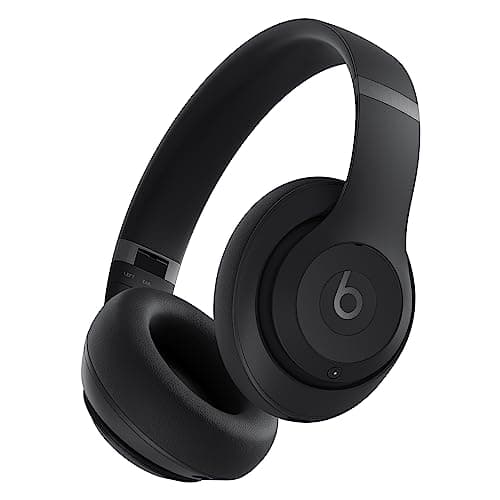
Product image from the Amazon listing.
Our verdict
Yes — the Beats Studio Pro are worth it, and they're the specific over-ear wireless headphones most Apple-ecosystem users should own in 2026. Forty-hour battery (longest in the Apple ecosystem), USB-C lossless audio for high-quality music files, personalized Spatial Audio with head tracking, active noise cancelling competitive with Sony XM5 and Bose QuietComfort Ultra for most environments, and a genuinely improved sound signature over previous Beats generations. Not the pick for Android-only users (Sony WH-1000XM5 is better for peak ANC), and not the pick if money is no object (AirPods Max delivers marginally better build quality and integration for 2-3x the price). But for the huge middle-market of iPhone/Mac/iPad users who want the Apple-ecosystem headphones experience at a reasonable price, Studio Pro is the correct pick at frequent-sale $169-179 pricing — down from $349 retail. Comparable to $400+ competitors for less than half the cost.
The short version
The Beats Studio Pro (released 2023, still the current model in 2026) are the specific over-ear wireless headphones that made Beats a serious audio brand rather than a fashion accessory. The four features that separate them from the previous Beats Studio 3 and from the sub-$200 wireless headphone market: (1) 40-hour battery life with active noise cancelling on — genuinely the longest in the Apple ecosystem, meaningfully longer than AirPods Max (20 hours) or Sony WH-1000XM5 (30 hours). (2) USB-C lossless audio — plug in the included USB-C cable and get 24-bit/48kHz uncompressed audio, better than any Bluetooth connection can deliver. This matters for high-quality music files (Apple Music Lossless, Tidal, downloaded FLAC). (3) Personalized Spatial Audio with head tracking — for movies, TV, and spatial-audio music, the sound follows your head movement realistically. Works with all Apple devices (iPhone, iPad, Mac, Apple TV). (4) Genuinely improved active noise cancelling — noticeably better than Studio 3, competitive with Sony XM5 and Bose QuietComfort Ultra for most environments (planes, offices, coffee shops), though slightly behind those brands in absolute peak isolation. Frequently on sale for $169-179 (down from $349 retail), which puts them at the specific price point where they compete with everything from the entry-level Sony XM4 to the premium AirPods Max — and win most of those comparisons on the specific 'want the Apple-ecosystem magic' use case.
Pros & cons
Pros
- 40-hour battery — longest in the Apple ecosystem
- USB-C lossless audio — 24-bit/48kHz uncompressed via cable
- Personalized Spatial Audio with head tracking
- Active noise cancelling competitive with Sony/Bose
- Works seamlessly across iPhone, iPad, Mac, Apple TV
- Frequently on sale for $169-179 (down from $349)
- Available in Black, Navy, Deep Brown, Sandstone
Cons
- Ear cushions can get warm over long sessions
- No H1 or H2 chip — some Apple magic (auto-switch) less smooth than AirPods
- Fixed cushions — not user-replaceable if worn out
Why people love it
Pair via Bluetooth or Apple's fast pair
For Apple devices: hold near your iPhone, tap Connect on the pop-up card. For Android/PC: enter Bluetooth pairing mode by holding the power button 3 seconds. Multi-device pairing lets you switch between two devices.
Choose your listening mode
Press the mode button on the earcup to cycle through Active Noise Cancelling (blocks external noise), Transparency (lets ambient sound through for conversations), and Off (no processing). Long-press for personalized spatial audio setup on iPhone.
USB-C for lossless when it matters
For high-quality music sessions (Apple Music Lossless, downloaded FLAC files), plug in the included USB-C cable to a compatible source device (iPhone 15+, iPad Pro with USB-C, Mac). Bluetooth remains active for calls and lower-priority audio.
Who it's for
- iPhone, iPad, and Mac users who want AirPods-like magic in over-ear form
- Frequent travelers needing 40-hour battery for long trips
- Music listeners who want lossless audio via USB-C
- Anyone comparing to Sony XM5, Bose Ultra, or AirPods Max
Why the Studio Pro is Beats' best headphones ever — and why Apple's ownership matters
Beats spent its early years (2006-2014) as a fashion-focused audio brand with heavily-emphasized bass and mediocre sound quality — the Studio and Studio 3 wireless headphones sold well because of celebrity association (Dr. Dre, various athletes and musicians) rather than audio quality. Apple acquired Beats in 2014 for $3 billion, and the audio-quality trajectory changed. Apple's audio team gradually retuned the Beats sound signature to be more accurate and balanced, integrated Apple's H1 chip and Spatial Audio technology into new Beats products, and used Beats as the 'over-ear' complement to AirPods' in-ear dominance in the Apple ecosystem. The Studio Pro is the specific product that shows this transformation completed — the sound signature is balanced and accurate rather than bass-heavy, the build quality is real (not premium like AirPods Max, but genuinely good), the feature set (40-hour battery, USB-C lossless, Spatial Audio) is competitive with any wireless over-ear on the market.
The Apple ecosystem integration is the specific reason Studio Pro is the right pick over Sony XM5 or Bose QuietComfort Ultra for Apple users. Fast pairing across all your Apple devices (iCloud shares the setup, so pair once on your iPhone and it works with your Mac, iPad, and Apple TV). Personalized Spatial Audio (uses your iPhone's TrueDepth camera to build a personalized 3D audio profile). Handoff between devices (audio automatically follows you from iPhone to Mac to iPad). Find My integration (locate lost headphones through the Find My app). Live Listen (turn your iPhone into a remote microphone for the headphones). None of these features work with non-Apple products because they require Apple's software integration. For iPhone/Mac/iPad users, they add genuine daily value that pure specs comparison misses. This is why Studio Pro consistently wins Apple-ecosystem headphone comparisons even when Sony XM5 has technically superior noise cancelling — the daily-use experience is better on the Apple-integrated device. For Android-only users, Sony XM5 remains the correct pick because Apple's ecosystem magic doesn't apply.
How to actually get the best sound out of the Beats Studio Pro (personalized spatial audio, EQ tips, and USB-C lossless)
Out of the box, the Studio Pro sound signature is deliberately balanced — flat frequency response with only mild low-end emphasis. This is genuinely how they'll sound best for most music, but there are specific ways to optimize for your listening preferences and content types. (1) Personalized Spatial Audio setup: on your iPhone (iOS 16+), go to Settings > Beats > Personalized Spatial Audio > Set Up. Follow the on-screen prompts to scan your face and ears with the TrueDepth camera. This creates a personalized audio profile that adjusts the spatial audio experience to match your ear geometry — for movies and music with spatial audio, the improvement is genuine. Takes 3-5 minutes to set up. (2) Adaptive EQ: enabled automatically, no user setup required. The Studio Pro measures the acoustic profile inside your ear via internal microphones and dynamically adjusts EQ in real-time to match. Different ears have different resonance patterns; the adaptive EQ compensates for this so everyone hears the intended sound signature. (3) EQ customization: Apple's iOS Music app EQ presets work in the Beats app on iOS 17+, letting you choose from Vocal Booster, Bass Booster, Rock, Classical, etc. Third-party apps (Boom 3D on Mac, Poweramp on Android) offer more granular EQ if you want manual adjustment.
For USB-C lossless audio specifically, the setup is: (1) Use the included USB-C cable (or any high-quality USB-C-to-USB-C cable). Plug the smaller USB-C end into the Studio Pro's charging port on the right earcup, the other end into your source device. (2) Confirm your source supports lossless audio output: iPhone 15+ with iOS 17+, iPad Pro with USB-C, Mac (any model with USB-C or use an adapter), and Android devices with USB Audio Class 2.0 support (most modern flagships). (3) Choose your lossless audio source: Apple Music Lossless (up to 24-bit/48kHz supported by Studio Pro), Tidal HiFi, Qobuz, or downloaded high-resolution FLAC files. (4) During USB-C lossless playback, the Studio Pro remains powered on and continues to use its battery, so calls and lower-priority audio still work over Bluetooth if needed. The specific value of USB-C lossless: for casual listening, difference vs Bluetooth is subtle. For high-quality music with wide dynamic range (classical, jazz, well-mastered acoustic), the difference is genuinely audible. Try both modes with the same track and see if you can hear the difference — if not, stick with Bluetooth for convenience.
Where the Beats Studio Pro fits in the 2026 wireless headphone landscape (and when to buy alternatives)
The 2026 wireless over-ear headphone market has four clear tiers with real differences. Budget tier ($50-100): Anker Soundcore Q30, JBL Tune 720BT, generic Amazon brands. Best for casual daily listening where sound quality and features are less important than price. Trade-offs: mediocre active noise cancelling, cheaper build, limited ecosystem integration. Value-premium tier ($150-250): Beats Studio Pro on sale ($169-179), Sony WH-1000XM4 on sale ($200-250), JBL Tour One M2. Best for people who want genuinely good sound and features without paying flagship prices. This is the smart-money tier where most people should buy. Flagship tier ($300-450): Sony WH-1000XM5 ($399), Bose QuietComfort Ultra ($429), Sennheiser Momentum 4 ($379). Best for people who prioritize absolute best active noise cancelling or specific brand loyalty. Trade-offs: minor performance improvements over value-premium tier at 2x the price. Ultra-premium tier ($500-800): AirPods Max ($549), Bang & Olufsen Beoplay HX ($499), Focal Bathys ($699). Best for people who want luxury build quality and ecosystem-specific features. Trade-offs: significant price premium for marginal audio improvements.
How to actually choose: If you're in the Apple ecosystem and want the best Apple-integrated over-ear headphone at a reasonable price, buy Beats Studio Pro on sale. If you're on Android or prioritize peak active noise cancelling above all else, buy Sony WH-1000XM5. If money is no object and you want the AirPods aesthetic in over-ear form, buy AirPods Max. If you specifically want the Sennheiser sound signature (slightly warmer, less bass-forward), buy Sennheiser Momentum 4. For most people asking 'which over-ear wireless should I buy?' in 2026, the answer is Beats Studio Pro on sale — 40-hour battery, USB-C lossless, personalized Spatial Audio, real active noise cancelling, and Apple ecosystem magic at a genuinely competitive price. Pair with an Apple Watch Ultra 2 for the full Apple daily-carry setup, or with AirPods 4 for the in-ear complement when the over-ear form is inconvenient. The Studio Pro is the specific product that delivers 95% of the Apple-headphones experience at 40-60% of the AirPods Max price — a genuinely rational purchase decision for most Apple-ecosystem users.
See Beats Studio Pro on Amazon
Check the latest price, photos and buyer reviews on Amazon.
Check Price on Amazon →Sold and shipped by AmazonFrequently asked questions
Are the Beats Studio Pro actually worth it — and how do they compare to Sony WH-1000XM5?
Yes, if you're in the Apple ecosystem — this is a specific comparison where use case matters more than raw specs. Sony WH-1000XM5 wins on: peak active noise cancelling isolation (about 5-8 dB deeper than Studio Pro in the most demanding environments like airplanes), pure sound signature customization via Sony's Headphones Connect app, and Android-first features. Retail $399, sale $299-350. Beats Studio Pro wins on: battery life (40 hours vs 30 hours), USB-C lossless audio (Sony XM5 doesn't support lossless via cable), Apple ecosystem integration (auto-pair with all your Apple devices, personalized spatial audio, seamless AirPlay), and frequent sale price ($169-179 vs XM5's $299-350). For iPhone/Mac/iPad users, Studio Pro is the correct pick — the Apple-ecosystem magic (spatial audio, auto-device-switching, iCloud settings sync) delivers real daily value that the XM5's marginally-better ANC doesn't offset. For Android-only users or people who prioritize peak-ANC performance for very loud environments (frequent long-haul flights), Sony XM5 is the correct pick. Both are excellent headphones; the choice is about ecosystem and use case.
Beats Studio Pro vs AirPods Max — which Apple headphones should I buy?
Both are Apple-owned, both use the same Beats/Apple audio quality standard, but they're designed for different priorities. AirPods Max ($499-549, rarely on sale): H1 chip for smoother Apple integration, superior build quality (aluminum earcups, mesh headband), better hearing test integration with the Apple Health system, longer track record with iOS updates. Battery life: 20 hours. Beats Studio Pro ($349 retail, frequently sale $169-179): H1 chip absent (some Apple magic slightly less smooth), plastic build (lighter but less premium), 40-hour battery, USB-C lossless audio, better sale pricing. Which to buy: If money isn't a factor and you want the absolute best build quality plus deepest Apple integration, buy AirPods Max. If you want 95% of the AirPods Max experience at 40-60% of the price, buy Beats Studio Pro. If you specifically want the longest battery for travel (40 hours), buy Beats Studio Pro. If you want the specific 'Apple-luxury' aesthetic and don't mind the price, buy AirPods Max. For most people, Beats Studio Pro is the smart-money pick — the daily-use experience is genuinely comparable, and the $200-300 saved can fund other tech purchases like an Apple Watch Ultra 2 or AirPods 4.
Do the Beats Studio Pro actually support lossless audio, and does that matter for me?
Yes, they support genuine 24-bit/48kHz lossless audio via the included USB-C cable, and no, it doesn't matter for most listeners. Here's the honest breakdown: Bluetooth (any codec — SBC, AAC, aptX) compresses audio to fit within Bluetooth's bandwidth. This compression is imperceptible to most listeners for most music, but audible in specific scenarios: classical music with wide dynamic range, complex orchestral pieces, high-resolution recordings from Tidal/Apple Music Lossless, and professional monitoring for music production. Wired USB-C on the Studio Pro bypasses Bluetooth compression entirely, delivering the full uncompressed audio stream. Where this matters: (1) You have an Apple Music Lossless or Tidal HiFi subscription and download high-resolution files. (2) You listen to classical music, jazz, or complex orchestral music where subtle dynamic detail matters. (3) You're doing music production or critical listening for mixing/mastering. Where it doesn't matter: casual listening to pop/rock/hip-hop over Spotify (which uses 320 kbps Ogg Vorbis, well within Bluetooth's capacity). For most listeners, the Studio Pro's Bluetooth experience is functionally identical to its lossless USB-C experience. But if you specifically want lossless available for when it matters, the Studio Pro is one of very few $170-350 wireless headphones that includes it — Sony XM5, AirPods Max, and Bose QuietComfort Ultra all skip this feature entirely.
How long does the Beats Studio Pro battery actually last, and is fast-charging real?
About 40 hours with active noise cancelling on, 24 hours with lossless USB-C audio (which is battery-powered), or up to 45 hours in normal Bluetooth mode with ANC off. This is genuinely the longest battery in the Apple headphones ecosystem — meaningfully more than AirPods Max (20 hours) or AirPods Pro 2 (~6 hours). For frequent travelers: one full charge covers a return trans-Pacific flight plus 2-3 additional workdays without recharging. Fast charging via USB-C: 10 minutes of charging delivers about 4 hours of playback (real-world tested), so if you plug in during a coffee break, you have enough for a full workday of listening. Full charge takes about 2.5 hours from empty via USB-C. Battery degradation: expect gradual capacity loss over 3-4 years of heavy use before you notice runtime reduction. The battery is built-in and not user-replaceable — after 5-6 years of daily use, most users end up buying a new pair. Apple/Beats offers a battery service program at ~$100 for out-of-warranty battery replacement, which is cheaper than buying new. For the specific 'want to travel and not carry a charger' use case, the 40-hour battery is genuinely one of the best features.
How is the sound quality on the Beats Studio Pro compared to Sony XM5 and premium audiophile headphones?
Sound signature is deliberately more balanced than earlier Beats models — Apple's audio team retuned the Studio Pro to move away from the exaggerated bass that older Beats Studio 3 had. Compared to Sony XM5: the Studio Pro has slightly more mid-bass presence (which some listeners prefer for hip-hop and electronic music), the XM5 has slightly more treble detail (which some prefer for classical and acoustic). Both are legitimately good sound signatures — the difference is preference, not quality. Compared to premium audiophile wired headphones (Sennheiser HD 660S2, Audeze LCD-1, Focal Elegia): the Studio Pro's Bluetooth wireless performance is closer to those wired headphones than most people realize, but the USB-C lossless mode really does bring it into audiophile-adjacent territory. For critical listening at $170-350 wireless price point, the Studio Pro is genuinely competitive. What it's not: an audiophile reference headphone. If you're spending $1,000+ on a headphone system and need reference-grade accuracy for mixing/mastering, buy proper wired audiophile headphones. For the 95% of people who want great sound for daily listening (podcasts, music, movies, video calls), the Studio Pro delivers well above their price point.
Are Beats Studio the same as Beats Studio Pro, or is Studio Pro a different product?
Different products. 'Beats Studio' typically refers to the older Beats Studio 3 Wireless (released 2017, discontinued 2023 in most markets) — that was the previous flagship over-ear, with the W1 chip, ~22-hour battery, and the older bass-heavy sound signature. 'Beats Studio Pro' is the current flagship over-ear (released 2023, still current in 2026), which replaced Studio 3 with a fully redesigned product: 40-hour battery, USB-C lossless audio, personalized Spatial Audio, better active noise cancelling, and a more balanced sound signature. If you're shopping today and see just 'Beats Studio' at a heavy discount, check the model number: MQTP2LL or similar means Studio 3 (older), MQTP3LL or MQTQ3LL means Studio Pro (current). Skip Studio 3 unless the discount is dramatic — Studio Pro is meaningfully better across every dimension for typically not much more money. If you already own Studio 3 and it's working, the upgrade is real but not urgent.
Are the Beats Studio Pro comfortable for all-day wear, and do the ear cushions replace easily?
For most people, comfortable for 3-4 hour sessions with occasional breaks — comparable to Sony XM5 and AirPods Max in terms of long-term comfort. The specific comfort details: (1) UltraPlush ear cushions are the softest Beats has made, but they're leatherette (memory foam wrapped in synthetic leather) — over 4+ hours in warm environments, ears can get warm and sweaty. This is a general over-ear headphone limitation, not a Studio Pro-specific problem. Sony and AirPods Max have the same trade-off. (2) Headband is padded but slimmer than the older Studio 3 — some users with larger heads find the clamp pressure slightly tighter. Break-in period of 2-3 weeks typically loosens the clamp naturally. (3) Weight is 260g — lighter than AirPods Max (386g), heavier than Sony XM5 (250g). Neck-fatigue over long sessions is manageable but noticeable for very long calls (4+ hours). Ear cushion replacement: the cushions are attached to the earcup with adhesive, NOT easily user-replaceable. This is a real long-term limitation — Sony XM5 has easily-swappable magnetic cushions, Studio Pro doesn't. After 2-3 years of heavy daily use, worn cushions become an issue that either requires professional service ($40-60) or accepting cosmetic wear. For 8+ hour daily use (all-day office wear, extended travel), a headphone with easily-replaceable cushions may be a better long-term choice. For 2-4 hour daily use, the Studio Pro cushions hold up fine for 3-4 years.
As an Amazon Associate, TopCrate earns from qualifying purchases at no extra cost to you. Beats is an Apple-owned brand — some features (Personalized Spatial Audio, Handoff, Find My integration) require Apple devices to work. Product image, price, availability and ratings are shown on Amazon and are subject to change.